Some links on this page are affiliate links: if you buy through them we may earn a commission, at no extra cost to you.
Betty Boop was not a one-to-one portrait of a single woman. Her early human persona was most directly modeled on singer and performer Helen Kane, while her “boop-boop-a-doop” style belonged to a broader vaudeville tradition. Baby Esther—Esther Jones—became central to the legal dispute over that vocal style, and actresses including Margie Hines and Mae Questel helped create the voice audiences came to recognize.
Betty Boop began as a dog, not a woman
Betty Boop made her screen debut on August 9, 1930, in Dizzy Dishes, the seventh Talkartoons short from Fleischer Studios. She was initially an unnamed supporting character: a singing, talking French poodle with floppy ears.
As the character returned, the floppy ears were transformed into earrings and the design gradually became human. Betty developed the features now associated with her—large eyes, short dark curls, a short dress, garters, a high-pitched voice and a flirtatious flapper-era persona.
She received her own named series in 1932. The series continued through 1939 and ultimately comprised 90 cartoons. That evolution matters because the earliest canine Betty and the later human Betty were not created from one fixed model at one moment.
Popular on Amazon

- Superb reproduction of the famous American Pin-Up
- Betty Boop Dance Collection
- 12 cm
- PVC
- An original gift for any collector
Her design, voice and personality emerged from several strands of 1930s popular entertainment. Among the women connected with the character, however, Helen Kane is the clearest documented influence on Betty’s public persona.
Helen Kane was the strongest documented model
Helen Kane was a popular white Broadway, recording and film performer known as the “Boop-Boop-A-Doop Girl.” Her act combined a high, childlike singing voice with flirtatious delivery, short dark curls and large eyes—features that closely echoed the human version of Betty Boop.
The most direct production evidence comes from animator Grim Natwick. According to Natwick, Dave Fleischer gave him the music for Kane’s song “Boop-Boop-A-Doop” and asked him to design a girl character to accompany it. That account connects Kane directly to the character brief, rather than merely identifying a later visual resemblance.
PC Slower Than It Used to Be?
A free scan shows the junk files, broken settings and background clutter dragging Windows down - then fixes them in one click.Free scan · Windows 10 & 11Outdated Drivers Are Slowing You Down
One free scan finds every outdated or missing driver and matches the right update for your exact hardware.Free scan · exact hardware matchBetty’s first appearance also used a song resembling Kane’s “I Wanna Be Loved by You” and included repeated “boop-boop-a-doop” vocalizations. In Dizzy Dishes, Betty sang but did not speak, making the musical and vocal association especially important.
Kane herself treated Betty as a caricature of her act. After Betty’s debut, she published a comic titled The Original Boop-Boop-A-Doop Girl, a presentation that referenced the cartoon and asserted Kane’s connection to the character.
Also popular on Amazon

- Superb reproduction of the famous American Pin-Up
- Betty Boop Dance Collection
- 12 cm
- PVC
- An original gift for any collector
That evidence does not mean Betty was simply an animated copy of Kane. Cartoonists also exaggerated contemporary fashion, celebrity types and performance conventions. But if the question is which real performer was most directly associated with Betty’s early look and persona, the best-supported answer is Helen Kane.
History.com’s account of the Betty Boop legal dispute and the production history reported by Tech Times both document Kane’s central place in the story.
The Tool Desk
Outbyte PC Repair FREEClear out junk files and repair common Windows errorsFree Scan →Outbyte Driver Updater FREEScan for outdated or missing drivers - takes under a minuteDriver Scan →Baby Esther and the lawsuit that complicated the story
The most persistent alternative answer is Baby Esther, the stage name of African-American child performer Esther Jones. Her importance comes primarily from the legal history surrounding Betty Boop, not from conclusive proof that she was the character’s visual model.
In 1934 litigation, Jones’s manager, Lou Walton, testified that she had performed in a New York cabaret in 1928 using childlike scat syllables such as “boo-boo-boo” and “doo-doo-doo.” Walton also testified that Kane and Kane’s manager had seen Jones perform. History.com reports that Kane’s manager corroborated that Kane had attended one of Jones’s performances.
The testimony became part of Helen Kane’s lawsuit against Fleischer Studios, Max Fleischer and Paramount. Kane sued during the 1932–1934 period, seeking $250,000 and alleging that Betty Boop was a deliberate caricature of her “baby vamp” persona that exploited her image and act.
Also popular on Amazon
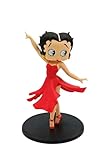
- Superb reproduction of the famous American Pin-Up
- Betty Boop Dance Collection
- 12 cm
- PVC
- An original gift for any collector
The surviving evidence has serious limits. The Jones performance used in the case was a screen test or sound-on-disc film that is now lost. Jones herself did not testify, and no confirmed photograph or recording of her performance is currently known. The court therefore did not establish that Baby Esther was the sole or direct physical model for Betty Boop.
What’s actually slowing this PC down?
Pick the symptom - the matching free tool is one click away.
The ruling favored Fleischer Studios because the evidence did not show that Kane had originated the “baby” singing technique or its associated vocal sounds. That finding is narrower than the claim often repeated online. It supports the possibility that Baby Esther influenced the vocal tradition Kane used; it does not prove that Jones was “the real Betty Boop.”
In other words, Baby Esther is essential to understanding the dispute over who originated the vocal style, but the surviving record does not support presenting her as the confirmed source of Betty’s appearance.
Did Betty Boop copy Clara Bow?
Clara Bow is frequently mentioned because Betty shared Bow’s flapper-era image: short hair, sexuality, confidence and the persona of an independent “It Girl.” The comparison is understandable, but it is not the same as documented production evidence.
The available testimony specifically identifies Helen Kane as the performer Fleischer artists were asked to caricature. Bow is therefore best understood as a plausible cultural comparison, not a confirmed primary model.
Also popular on Amazon

- Superb reproduction of the famous American Pin-Up
- Betty Boop Dance Collection
- 12 cm
- PVC
- An original gift for any collector
A 1933 Hollywood on Parade short featured Bonnie Poe playing a live-action version of Betty Boop in a sequence involving Clara Bow’s husband, Rex Bell. The appearance shows that audiences recognized an association between Bow’s image and Betty’s character. It does not prove that Bow inspired Betty’s original design.
The women who created Betty’s voice
Margie Hines
Margie Hines supplied Betty’s voice in Dizzy Dishes, the character’s debut. Hines reportedly entered show business after winning a Helen Kane “Boop-a-doop” contest, which further illustrates how Kane’s performance influenced the vocal style surrounding Betty from the beginning.
Mae Questel
Mae Questel became the best-known voice associated with Betty Boop. She gave the character a distinctive New York accent and vocal personality, and later voiced Betty in the 1988 film Who Framed Roger Rabbit.
Questel’s fame in the role sometimes creates another historical misunderstanding: she is occasionally described as if she were the woman Betty Boop was based on. She was not. Questel was a voice performer who helped define Betty for audiences, but she did not originate the character and was neither Helen Kane nor Esther Jones.
Recommended Free Tools
Other Betty voices
Other performers associated with Betty’s voice included Bonnie Poe, Kate Wright and Little Ann Little. Several Betty voice performers later appeared in Fleischer’s post-lawsuit Victory Newsreel, which mocked Kane’s claim.
Also popular on Amazon

- Superb reproduction of the famous American Pin-Up
- Betty Boop Dance Collection
- 12 cm
- PVC
- An original gift for any collector
The distinction is important: the woman who inspired a character’s persona, the actress who supplied a particular performance and the performer whose act influenced a vocal technique can all be different people.
Independent reader supportYour contribution helps us test, update, and keep practical guides available for everyone.Betty’s “boop” came from a larger performance tradition
Helen Kane made “boop-boop-a-doop” famous, but she did not invent every element of baby-talk singing or scat-style vocalization. The 1934 proceedings highlighted that such techniques predated Kane and belonged to a broader vaudeville tradition. Performers including Fanny Brice and Irene Franklin used related styles before and around Kane’s rise to fame.
Betty Boop’s cartoons also drew on other performers. In Stopping the Show (1932), Betty imitated Jewish vaudeville star Fanny Brice and performed material associated with Brice’s act. This shows that the Fleischer cartoons were not built around a single celebrity reference. They were also playful showcases for contemporary music-hall styles and recognizable performance types.
So who was the real Betty Boop?
The most accurate answer depends on what “inspired” means:
| Question | Best-supported answer | What the evidence shows |
|---|---|---|
| Who most directly informed Betty’s early human persona? | Helen Kane | Natwick linked the design brief to Kane’s music, and Betty echoed Kane’s look, voice and stage persona. |
| Who was connected to the disputed origins of the vocal style? | Baby Esther / Esther Jones | Her manager testified about her 1928 cabaret act, but the key film evidence is lost and Jones did not testify. |
| Who is often compared with Betty’s flapper image? | Clara Bow | The resemblance is culturally plausible, but Bow is not documented as the character’s confirmed primary model. |
| Who helped audiences hear Betty as a recognizable character? | Margie Hines, Mae Questel and other voice performers | They supplied the performances that shaped Betty’s voice over different periods. |
Betty Boop was therefore a composite creation. Helen Kane was the clearest documented model for the early human character; vaudeville and Jazz Age performers supplied a wider vocabulary of baby talk, scat singing and flirtatious stage performance; Baby Esther became central to the dispute over Kane’s originality; and voice actresses such as Mae Questel helped establish the sound that later audiences remembered.
Calling Baby Esther “the real Betty Boop” goes beyond the surviving evidence. Calling Betty nothing more than Helen Kane is also too simple. The character was created at the intersection of celebrity imitation, animation, vaudeville tradition and the work of several performers—one reason she remained recognizable long after the original performers had disappeared from the spotlight.






Say something about this film