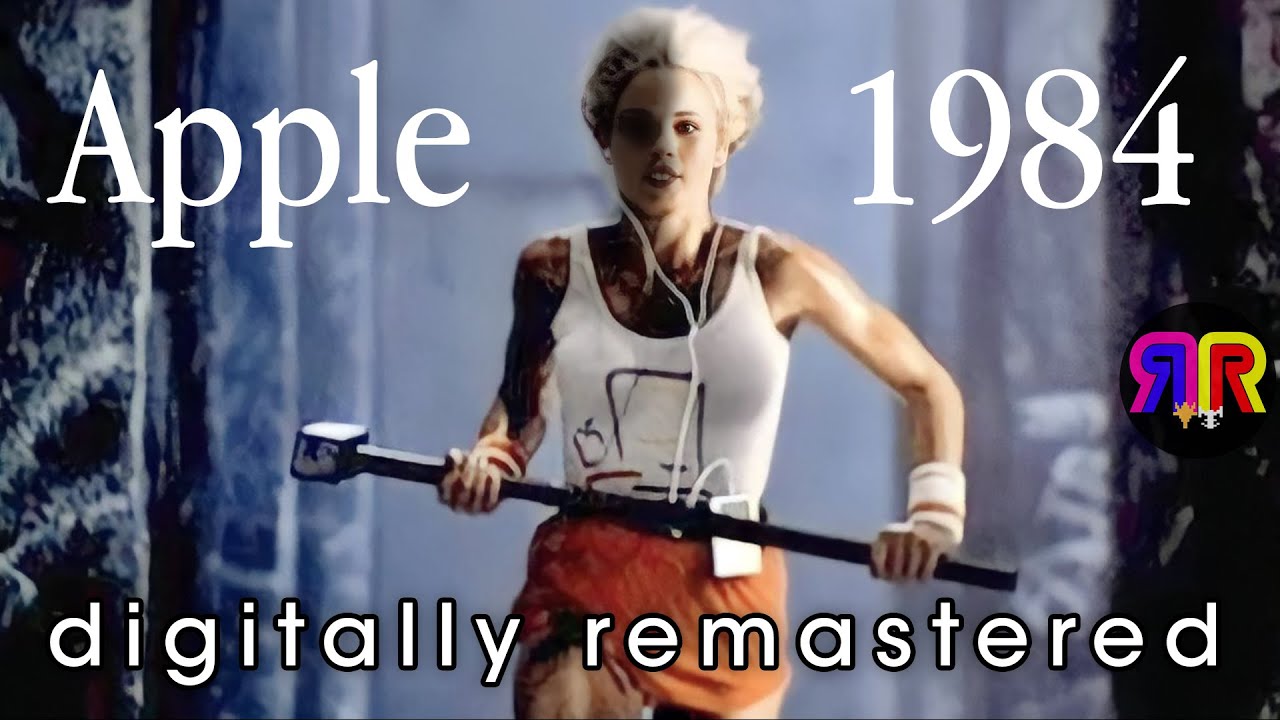
Apple’s Super Bowl history is far shorter than its mythology suggests. The company’s direct national advertising record is centered on three major Macintosh commercials—“1984” in 1984, “Lemmings” in 1985, and “HAL” in 1999. Apple’s modern presence began in a different form: Apple Music became the Super Bowl halftime-show sponsor in 2023.
That distinction matters. A commercial bought by Apple, a partner’s advertisement promoting an Apple service, and Apple Music’s sponsorship of the halftime show are three different things.


The short timeline
| Year | Type of presence | What happened |
|---|---|---|
| 1984 | Direct Apple commercial | Ridley Scott’s “1984” introduced the forthcoming Macintosh during Super Bowl XVIII. |
| 1985 | Direct Apple commercial | “Lemmings” promoted Macintosh Office and attempted to follow “1984.” |
| 1986–1998 | No major direct spot identified in the cited retrospective | Apple did not establish an annual Super Bowl advertising tradition. |
| 1999 | Direct Apple commercial | “HAL” used the Y2K scare and 2001: A Space Odyssey reference to promote the Mac. |
| 2004 | Partner commercial | Pepsi promoted its iTunes partnership in “I Fought the Law.” |
| 2005–2022 | No comparable direct presence identified in the cited retrospective | Apple remained largely absent from the event as an advertiser. |
| 2023 | Apple Music sponsorship | Rihanna performed in the first Apple Music-sponsored halftime show. |
| 2024 | Apple Music sponsorship | Usher headlined the Super Bowl LVIII Halftime Show. |
| 2025 | Apple Music sponsorship | Kendrick Lamar headlined the Super Bowl LIX Halftime Show. |
| 2026 | Announced Apple Music sponsorship | Bad Bunny was announced as the halftime performer; the supplied evidence does not establish the completed event or any separate Apple commercial. |
The chronology is based primarily on Macworld’s retrospective, with cultural context from the Smithsonian National Museum of American History. The absence claims should be read as “no major spot identified in the cited coverage,” not as proof of an official Apple boycott.
1984: the commercial that created Apple’s Super Bowl mythology
Apple’s most famous Super Bowl appearance came during Super Bowl XVIII on January 22, 1984. Directed by Ridley Scott and inspired by George Orwell’s novel Nineteen Eighty-Four, the commercial showed a gray, dystopian crowd watching a giant authoritarian figure on a screen. A lone female runner burst into the room and destroyed the screen with a sledgehammer.
#1 Best Overall
The Macintosh itself was not shown. Instead, the commercial ended by announcing that Apple would introduce Macintosh on January 24, 1984. That choice made the advertisement a declaration of identity rather than a conventional product demonstration: Apple presented the Mac as a tool for individual expression and positioned its rival, implicitly, as centralized technological control.
The ad’s cultural force came from its timing, cinematic scale, and refusal to list specifications. The Smithsonian describes it as significant in both computing and advertising history. It is reasonable to call “1984” one of the defining Super Bowl advertising moments; claims that it is the “greatest” commercial ever are matters of ranking or opinion, not objective fact.
The commercial aired nationally during the Super Bowl. Some histories also report an earlier local airing in December 1983, a claim that should be kept distinct from its nationally televised Super Bowl appearance. Contemporary and archival references include the Apple 1984 archive and an NFL Films Presents reference.
1985: “Lemmings” and the failed sequel
One year later, Apple returned during Super Bowl XIX with “Lemmings,” directed by Tony Scott, Ridley Scott’s brother. The commercial promoted Macintosh Office, software designed to connect a Mac with a printer and file server.
Recommended Free Tools
Its imagery deliberately echoed “1984.” Office workers marched blindly through a bleak landscape, evoking the popular—though scientifically inaccurate—idea that lemmings blindly follow one another to their deaths. Apple’s message was that conventional office workers were trapped in conformity and needed Macintosh Office to escape it.
The problem was the tone. “1984” invited viewers to imagine themselves as rebels. “Lemmings” appeared to insult them for being ordinary. The workers seemed depressing rather than liberated, and the campaign’s aggressive promotion—including reported seat-cushion and newspaper tactics urging viewers not to leave before the fourth quarter—could not solve the underlying creative problem.
Rank #2
“Lemmings” became important precisely because it failed. It demonstrated that repeating the visual grammar of a successful campaign is not the same as recreating its meaning. Apple’s rebellion-against-conformity theme worked when it suggested possibility; applied contemptuously to office workers, it became patronizing.
1986–1998: the long silence
Apple did not turn its early Super Bowl appearances into a yearly tradition. The cited retrospective describes a 15-year gap between “Lemmings” and the next major Apple Super Bowl commercial, “HAL,” in 1999.
The reasons should not be stated as settled fact without internal documents or executive testimony. Apple’s financial and strategic difficulties changed substantially during this period, Steve Jobs left and later returned, and the company used other channels—including product launches, retail, print, and events—to communicate with customers. The Super Bowl’s cost and general-audience scale may also have made it a poor fit for some product-specific messages.
What can be said confidently is that Apple did not behave like a brand committed to buying the game every year. The legend of Apple as a permanent Super Bowl advertiser rests heavily on the cultural afterlife of “1984,” not on a continuous record of annual spots.
1999: “HAL,” Y2K, and technological reassurance
Apple returned to the Super Bowl in 1999 with “HAL,” a commercial featuring HAL 9000 from Stanley Kubrick’s 2001: A Space Odyssey. The approaching year 2000 supplied the immediate hook: many computer users and businesses feared that systems would mishandle the transition from 1999 to 2000.
In the advertisement, HAL’s anxiety about the date change became a way to position the Macintosh as safe and dependable. The message was not simply a technical demonstration. Apple borrowed the cultural authority of a famous science-fiction film to sell confidence in its technology.
Quick wins for a faster PC:
Repair Windows errors before they cause bigger problemsFix Now →Fix the driver behind crashes, sound loss and screen glitchesFind Drivers →Rank #3
The broader HAL-themed campaign was reportedly connected with Macworld San Francisco and WWDC. The retrospective also reports an advertising claim that Macs could understand dates through the year 29,940. That should be treated as the campaign’s claim, not as an independently established technical conclusion.
“HAL” benefited from a cultural fear that ultimately proved far less catastrophic than many predictions. Even so, the commercial remains a useful example of Apple adapting a familiar cultural reference to a timely technology concern.
2004: the Pepsi commercial that was almost an Apple ad
This belongs in Apple’s Super Bowl story, but not in the same category as “1984,” “Lemmings,” and “HAL.” Pepsi commissioned the commercial, while Apple supplied the iTunes connection and benefited from the association with legal digital music.
Free tools Windows power users keep installed
One-click scans. No signup required.
The campaign captured Apple’s changing cultural position. The company was no longer being represented only as a computer maker; iTunes was becoming a mainstream gateway to music at a moment when the industry was still dealing with the consequences of Napster and unauthorized downloading.
The example also explains why a simple list of “Apple Super Bowl ads” can mislead. Apple’s influence could travel through music-industry partnerships, hardware placement, distribution agreements, and celebrity culture without appearing as an Apple-produced spot.
Why did Apple largely stay away?
No single documented explanation is established by the supplied evidence. Several strategic possibilities are more useful than an invented definitive answer.
- Apple preferred controlled launches. Product events and keynotes allowed the company to explain hardware and software on its own terms.
- The Super Bowl is a difficult product environment. A general-audience spectacle rewards emotional clarity, while many Apple products require explanation or demonstration.
- “1984” created an unusually high standard. Any later commercial risked being judged against a cultural landmark rather than against ordinary advertising.
- Apple gained its own distribution. Apple’s website, stores, events, online video, and later services gave the company ways to generate attention without relying entirely on a single broadcast placement.
- Attention is not the same as sales. A Super Bowl spot can be famous without producing a clearly measurable product-selling effect.
These are informed strategic interpretations, not confirmed statements of Apple’s internal decision-making. The defensible historical conclusion is simply that Apple’s direct appearances were sporadic.
The Tool Desk
Outbyte PC Repair FREERepair Windows errors before they cause bigger problemsFix Now →Outbyte Driver Updater FREEScan for outdated or missing drivers - takes under a minuteDriver Scan →2023: Apple Music changes the model
Apple returned to the event in a new role in 2023, when Apple Music became the presenting sponsor of the Super Bowl halftime show. Rihanna performed the first show under the arrangement.
This was not equivalent to buying a Macintosh or iPhone commercial. Apple Music became associated with the entertainment property itself, while Apple used its service to extend the event through interviews, playlists, radio programming, and “Road to Halftime” material.
The difference is strategic. A commercial occupies one short slot. A sponsorship can create repeated exposure before, during, and after the broadcast, while connecting the brand to artists, music discovery, and premium production. The artist is not simply an Apple booking: the NFL and entertainment partners remain involved, and the cited coverage says Roc Nation selects the performer while Apple Music serves as sponsor and platform.
Independent reader supportYour contribution helps us test, update, and keep practical guides available for everyone.2024: Usher and the service-content playbook
Apple Music sponsored the Super Bowl LVIII Halftime Show featuring Usher in 2024. The surrounding promotion expanded beyond a logo or title card to include behind-the-scenes material, set-list information, interviews, DJ mixes, live radio programming, and Spatial Audio versions.
Windows Errors? Fix Them Before They Spread
Repair common Windows errors and clear accumulated junk for a smoother, more stable PC - no reinstall needed.Free scan · no reinstallCrashes, No Sound, or Screen Glitches?
Random freezes, missing sound and display glitches usually trace back to one bad driver. Find and replace yours safely.Free scan · under a minuteAvailability varied by feature, country, and subscription status, so Apple Music sponsorship should not be confused with universal free access to every associated item. The larger point is that Apple was marketing an audio service through editorial programming and fan engagement, not using the halftime show merely as a backdrop for a hardware launch.
Best Value

- non-fiction african american book set
- non-fiction black book set
- non-fiction african american children's book set
- non-fiction black children's book set
2025: Kendrick Lamar and record audience claims
Apple Music sponsored the Super Bowl LIX Halftime Show featuring Kendrick Lamar in 2025. The performance drew additional attention from the public dispute between Lamar and Drake.
The NFL reported an audience of 133.5 million viewers, described in the cited retrospective as a record for a Super Bowl halftime show. That figure should remain attributed to the NFL, and comparisons with older halftime audiences require care because audience definitions and measurement methods can differ. Apple Music also provided a replay and related content.
2026: Bad Bunny and the limits of the available record
Bad Bunny was announced as the performer for the 2026 Apple Music halftime show. Pre-event coverage described Apple Music “Road to Halftime” material including Spatial Audio, an interview, a trailer, and an exclusive visual connected with Apple’s Invites app.
Do these 3 things before closing this tab:
1Clear out junk files and repair common Windows errors2Scan for outdated or missing drivers - takes under a minute3Repair Windows errors before they cause bigger problemsHowever, the supplied evidence comes from a February 5, 2026 article written before the game. It does not establish whether Bad Bunny ultimately performed, the final halftime branding, the completed campaign assets, post-event audience figures, or whether Apple ran a separate commercial. It therefore cannot support a definitive post-event account of Apple’s Super Bowl LX activity.
That qualification is important: the 2026 announcement belongs in the chronology, but it should not be presented as verified evidence of everything that happened during or after the broadcast. The 2026 commercial archive is a relevant reference for checking any separate Apple spot, alongside official NFL and Apple Music records.
What Apple’s Super Bowl history means
| Era | Core message | Marketing mechanism |
|---|---|---|
| 1984 | Break centralized control | Cinematic Macintosh launch |
| 1985 | Office users need liberation and productivity | Sequel campaign |
| 1999 | The Mac is safe and reliable | Y2K technology reassurance |
| 2004 | Digital music can be legitimate and accessible | Partner promotion through Pepsi and iTunes |
| 2023 onward | Apple is part of global music culture | Recurring Apple Music entertainment sponsorship |
Apple first used the Super Bowl to announce a new computing category. It then tried to repeat the cultural shock and produced a cautionary failure. It returned with a timely technology message, benefited from a partner’s digital-music campaign, and eventually shifted from buying isolated attention to sponsoring a recurring entertainment environment.
So the precise answer is not that Apple has advertised at every Super Bowl since 1984. It is that “1984,” “Lemmings,” and “HAL” form a short direct-advertising history; Pepsi’s iTunes spot shows the power of partnership; and Apple Music’s halftime sponsorship represents Apple’s modern, recurring relationship with the event.
Quick Recap
Product prices and availability are accurate as of the date/time indicated and are subject to change. Any price and availability information displayed on Amazon at the time of purchase will apply.






Say something about this film