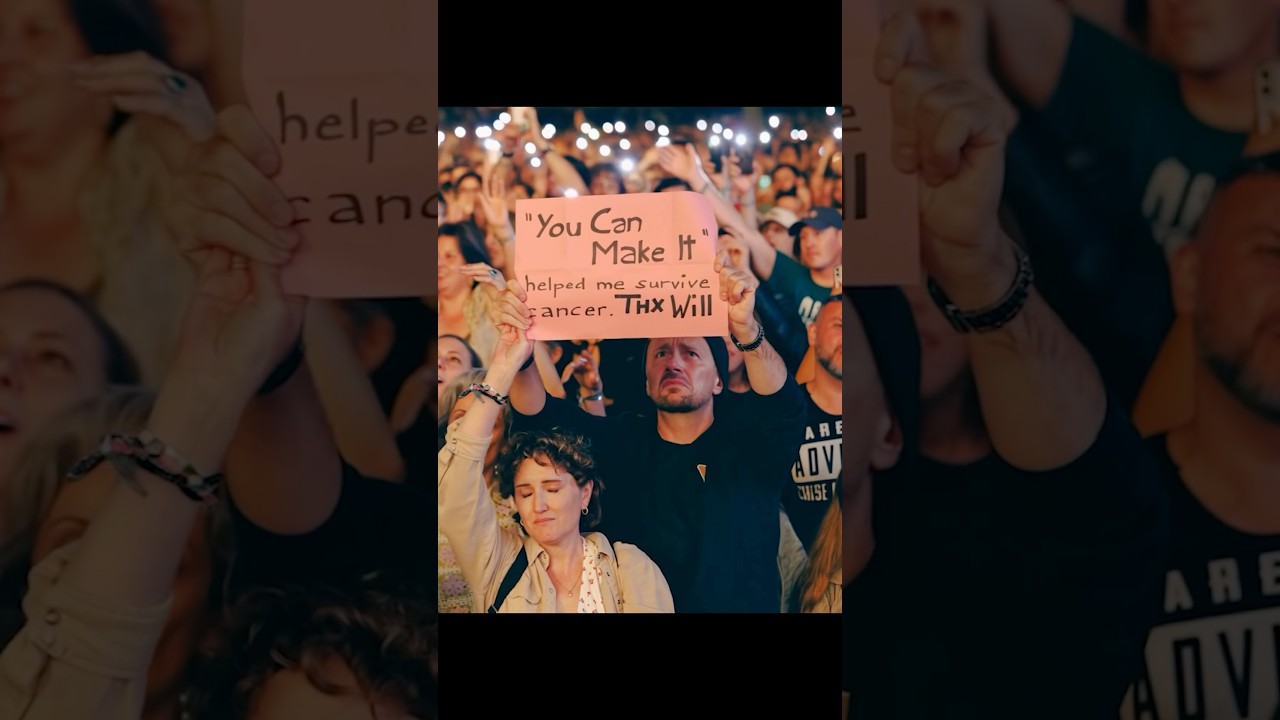
The viral claim that Will Smith’s tour promo showed a completely fake, AI-generated audience is misleading. The video appears to combine genuine concert footage with real crowd photographs that were digitally altered or animated, likely using AI-assisted image-to-video processing. The people shown do not appear to have been wholly fabricated, and available reporting does not establish that Smith personally approved the manipulation.
What video caused the controversy?
Smith posted the roughly one-minute promotional montage through his official social accounts on August 12, 2025, including YouTube, Instagram and Facebook. Its caption read: “My favorite part of tour is seeing you all up close. Thank you for seeing me too.”
| # | Preview | Product | Price | |
|---|---|---|---|---|
| 1 |

|
Farewell I Tour: Live from Melbourne | $29.95 | Buy on Amazon |
| 2 |

|
The Sound of the Smiths | $24.58 | Buy on Amazon |
| 3 |

|
Eagles: Farewell 1 Tour - Live From Melbourne | $6.24 | Buy on Amazon |
| 4 |

|
Six Degrees of Separation | Buy on Amazon |
The post promoted Smith’s Based on a True Story tour and used his song “You Can Make It.” The YouTube Short identified in coverage is titled “My favourite part of tour is seeing you all up close. Thank you for seeing me too ❤️”.
Why viewers suspected AI
People began pausing and circulating frames from the crowd sections because several details looked visibly unstable. Reported examples included:
What’s actually slowing this PC down?
Pick the symptom - the matching free tool is one click away.
#1 Best Overall
- Factory sealed DVD
- faces that appeared melted, blurred, unnaturally smooth or oddly expressive;
- hands with malformed or excessive fingers;
- body parts that seemed to merge between adjacent people;
- a headband apparently crossing into or blending with another person’s wrist;
- knuckles and fingers appearing to melt into a hand-held sign; and
- placards whose lettering changed, warped or became nonsensical.
One sign reportedly appeared to read, “’You Can Make It’ helped me survive cancer. THX Will.” Another seemed to shift between wording resembling “Lov U Fresh Prince” and a garbled version such as “Lov U Fr6sh Crince.” Other lettering was described as resembling “From West Philly to West Swiggy.”
These are strong clues that the images were digitally processed. They are not, by themselves, proof that the people depicted were generated from nothing, nor do they identify the software, editor or person who authorized the work.
Was the entire crowd AI-generated?
No reliable evidence supports that stronger conclusion. A later fact-check reported that people visible in the suspicious shots also appeared in genuine still photographs associated with Smith’s concerts.
The more likely explanation is photo-to-video animation: real still images of concertgoers were converted into short moving clips. Image-to-video systems can invent motion between frames, and that process can distort hands, faces, hair, jewelry and text. The result may look like a fully generated crowd even when the source image contains real people.
Quick wins for a faster PC:
Fix the driver behind crashes, sound loss and screen glitchesFind Drivers →Clear out junk files and repair common Windows errorsFree Scan →Scan for outdated or missing drivers - takes under a minuteDriver Scan →That distinction matters. “AI-generated crowd” can mean several different things:
| Phrase | What it would imply |
|---|---|
| AI-generated people | The audience members were created synthetically rather than photographed. |
| AI-generated motion | Real photographs were animated, with the system inventing movement. |
| AI-enhanced footage | Existing video or images were upscaled, restored or otherwise processed. |
| Digitally composited crowd | Images or video elements were combined through conventional editing or visual effects. |
The available evidence points more strongly to the second category—AI-generated motion applied to real crowd imagery—possibly alongside ordinary editing and other processing.
Rank #2
- Shrink-wrapped
What part of the video appears authentic?
The opening performance footage was reported as genuine concert video of Smith singing “You Can Make It” to a packed audience at the Théâtre Antique d’Orange in Orange, France. The performance was reported as taking place on July 31 or August 1, 2025; the precise date was not conclusively established in the available coverage. A regional version of the fact-check provided additional detail about the performance.
That makes the montage a mixed-media edit rather than a video proven to be fabricated from beginning to end:
The Tool Desk
Outbyte Driver Updater FREEFix the driver behind crashes, sound loss and screen glitchesFind Drivers →Outbyte PC Repair FREEClear out junk files and repair common Windows errorsFree Scan →- authentic performance footage of Smith;
- genuine still images of fans;
- synthetic or AI-assisted motion applied to at least some stills; and
- conventional editing, compression or other image processing.
What early coverage got right—and wrong
Initial reports and viewer posts were justified in calling attention to the visual anomalies. Coverage from outlets including The Independent, NME and Futurism described the distorted faces, hands and signs that made the clip look synthetic.
The overstatement came when “AI-manipulated crowd footage” was treated as synonymous with “imaginary fans.” A strange hand can show that a frame was altered. It cannot establish that the person in the original photograph never existed.
The chronology helps explain the confusion. The video appeared on August 12, 2025. Viewers and media accounts began highlighting the artifacts around August 26–28. A later fact-check published around August 29 challenged the interpretation that the audience members themselves were nonexistent.
Could YouTube have caused the artifacts?
Possibly in part, but that is not the leading explanation for the whole controversy. The later fact-check noted that YouTube had disclosed work involving “traditional machine learning technology” to enhance the visual quality of some Shorts.
Do these 3 things before closing this tab:
1Fix the driver behind crashes, sound loss and screen glitches2Repair Windows errors before they cause bigger problems3Scan for outdated or missing drivers - takes under a minuteRank #3
- Without doubt, the Eagles are one of the all-time biggest acts in popular music since the dawn of the rock'n'roll era. The band's roots go back to their role as defining artists in the phenomenally popular Southern California rock scene of the '70s, a decade in which they delivered four consecutive #1 albums. Their momentous 2004 farewell tour filled stadiums around the world, and
Platform compression or enhancement could intensify blurry edges and other artifacts. However, the same questionable material was also shared on Instagram and Facebook. That makes a purely YouTube-generated explanation insufficient. Platform processing may have contributed to the final appearance, but it does not explain why the underlying crowd shots contained unstable faces, hands and signs.
Did Smith approve the AI manipulation?
That remains unresolved. Reports said journalists contacted Smith’s representatives and, in some cases, YouTube for comment. The available coverage did not establish a public explanation from Smith confirming or denying the use of AI.
It is therefore too strong to say that Smith personally used AI, ordered the crowd to be altered or intended to mislead viewers. The defensible claim is narrower: a video posted through Smith’s official accounts appears to contain AI-manipulated or AI-animated crowd material. The identity of the editor, the exact workflow and Smith’s knowledge of the process were not established.
There is also no solid evidence that the edit was designed to inflate attendance, make the tour appear more successful or suggest that the concert was empty. Those are possible interpretations of the online reaction, not verified motives.
Recommended Free Tools
Why “fake fans” is the wrong shorthand
“Fake fans” collapses several separate questions into one accusation:
- Were the people real? Later fact-checking found evidence that at least some were real concertgoers shown in genuine photographs.
- Was the movement real? The crowd sections appear to contain generated or digitally manipulated motion.
- Was the final image edited? Yes, the visible inconsistencies strongly suggest that some form of digital processing occurred.
- Who made or approved it? The available reporting does not establish that.
This is a useful way to evaluate other viral AI-video claims too. Ask whether AI created the subject, the movement, the surrounding background, the text or merely the enhancement. “AI-generated” is not a complete description unless the specific layer of the image or video is identified.
Rank #4
Why the clip spread so widely
The video combined a major celebrity, an uncanny visual that rewarded frame-by-frame inspection and a wider backlash against low-quality synthetic media. It also appeared during Smith’s 2025 European tour, while he was promoting an album and tour titled Based on a True Story.
That context made the imagery especially easy to interpret as a statement about authenticity. A promotional video showing adoring fans carries an implicit promise that the audience reaction is real. When faces and signs visibly break apart, viewers naturally question not only the editing but also what the footage is claiming.
Free tools Windows power users keep installed
One-click scans. No signup required.
What the controversy shows about AI disclosure
The central issue is not simply whether an AI tool appeared somewhere in the production chain. Modern promotional videos can contain ordinary footage, photographs, visual effects, upscaling, frame interpolation and generative motion in the same edit.
The trust problem arises when viewers cannot tell which parts are documentary evidence and which parts are synthetic reconstruction. In this case, an obvious disclosure that still photographs had been animated—or that AI-assisted effects had been used—would have given viewers a more accurate understanding of what they were seeing.
That does not make every AI-assisted edit deceptive. It does mean that promotional material built around apparently spontaneous crowd reactions carries reputational risk when synthetic alterations are not clearly identified.
Bottom line
Will Smith’s tour video was not proven to show an entirely fabricated audience. The strongest available account is that it combines authentic concert footage with real crowd photographs that were likely animated or otherwise altered using AI-assisted processing. The malformed hands, melted faces and unstable signs are consistent with synthetic manipulation, but they do not prove that the fans were fictional.
What remains unknown is who performed the manipulation, which tools were used, whether every crowd shot was processed, how much platform enhancement contributed and whether Smith personally approved the final edit.
Quick Recap
Product prices and availability are accurate as of the date/time indicated and are subject to change. Any price and availability information displayed on Amazon at the time of purchase will apply.






Say something about this film