What’s actually slowing this PC down?
Pick the symptom - the matching free tool is one click away.
Some links on this page are affiliate links: if you buy through them we may earn a commission, at no extra cost to you.
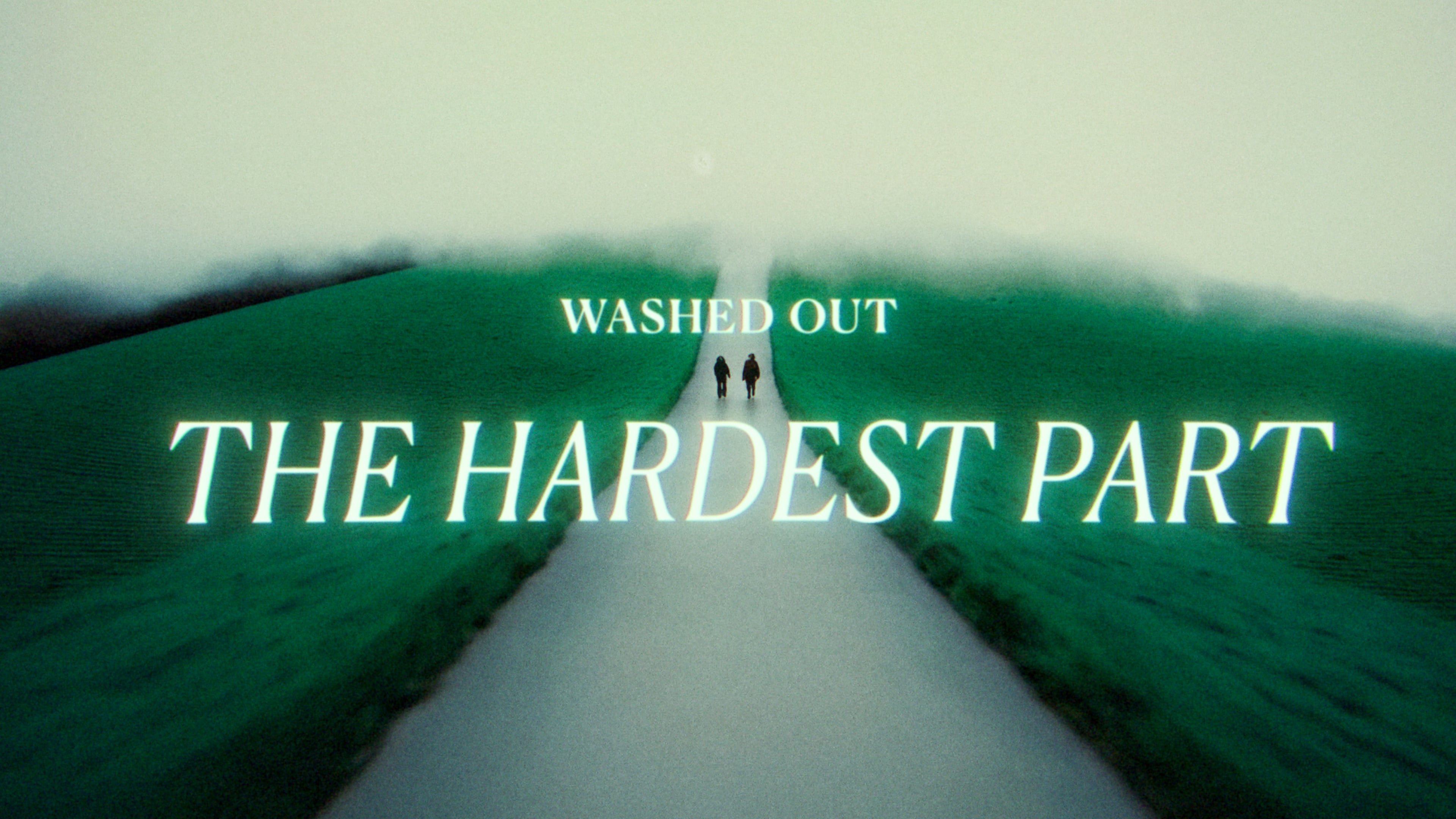
The headline refers to Washed Out’s “The Hardest Part,” released on May 2, 2024. Written, directed, and edited by filmmaker Paul Trillo, the approximately four-minute video was created with OpenAI’s then-unreleased Sora text-to-video model, with support from Sub Pop. It was widely described as Sora’s first official commissioned music-video collaboration between a recording artist and filmmaker—not as a video autonomously made by OpenAI.
Watch the video
Watch Washed Out’s “The Hardest Part” on Vimeo.
| # | Preview | Product | Price | |
|---|---|---|---|---|
| 1 |

|
Notes From a Quiet Life | $11.55 | Buy on Amazon |
| 2 |

|
Within And Without | $11.88 | Buy on Amazon |
| 3 |

|
Mister Mellow (CD/DVD) | $10.99 | Buy on Amazon |
| 4 |

|
Paracosm | $26.14 | Buy on Amazon |
A love story told through unstable memory
Washed Out is the music project and stage name of Ernest Greene. In “The Hardest Part,” a couple’s relationship unfolds across decades. They meet as young people in the early 1980s, grow older together, have a child, and eventually face the death of one partner. The surviving partner continues to dream about the relationship, leaving the viewer with a story shaped by grief, memory, and imagination.
The video moves rapidly through locations and periods of the couple’s life. Rather than presenting each scene as a perfectly self-contained moment, it creates the sensation of sliding through one long, unstable recollection. Faces, bodies, rooms, and landscapes shift as the narrative progresses.
Popular on Amazon
- Notes From a Quiet Life arrives after delivering more than a decade of distinct and disparate creative re-imaginations at a remarkably high level.
That structure is central to the video’s emotional idea. Memory is not shown as a reliable recording of the past. It is fragmented, subjective, and capable of changing as it is recalled.
What Sora actually did
Sora generated the visual footage. Trillo remained responsible for the creative and editorial decisions that turned those generations into a finished music video.
The reported workflow involved developing a life-spanning visual concept, writing detailed prompts for movements, settings, characters, and transitions, generating many short visual attempts, selecting usable material, and assembling the results in an edit synchronized to Washed Out’s existing song. The available reporting does not establish a complete production log or a definitive number of prompts, generations, or editing hours, so precise production statistics should not be inferred.
Free tools Windows power users keep installed
One-click scans. No signup required.
In practical terms, Sora supplied raw visual possibilities; Trillo supplied the concept, direction, selection, pacing, structure, and final edit. Ars Electronica and industry coverage credit Trillo as the project’s writer, director, and editor.
This distinction matters. Descriptions such as “Sora-made” or “fully generative” generally refer to the video’s generated visual material. They do not mean that the model wrote the song, performed the music, directed the project, or eliminated human post-production.
Why Sora suited this particular idea
Trillo had reportedly considered a concept involving a couple’s entire life unfolding in a continuous visual journey before Sora made the project feasible. Producing that idea through conventional filming, sets, locations, makeup, aging effects, visual effects, and editorial work would have been difficult and expensive for a music video.
Also popular on Amazon
Sora made it possible to approximate the concept through generated transitions and rapidly changing scenes. The model’s ability to produce dreamlike imagery and transformations became part of the film’s visual language.
The result is not strongest when judged as conventional continuity filmmaking. It is strongest as an experiment in using generative video’s instability to represent the instability of recollection.
The glitches are both limitations and design elements
The video contains the kinds of discontinuities associated with early generative video:
- Characters do not always retain the same appearance from one segment to the next.
- The couple and their child can change in ways that would be unacceptable in a conventional continuity edit.
- Objects, bodies, and physical spaces sometimes behave unpredictably.
- The apparent single flowing journey is constructed from separate generated clips rather than captured as one uninterrupted shot.
- Some transitions and images remain visibly chaotic or imperfect.
These are genuine technical shortcomings. The video should not be treated as evidence that Sora had solved character identity, physical continuity, or reliable long-form scene construction.
At the same time, the inconsistencies support the subject matter. A shifting face or unstable setting can feel like a memory losing detail. The creative achievement lies partly in recognizing that the model’s failures could be shaped into an aesthetic rather than simply concealed.
PC Slower Than It Used to Be?
A free scan shows the junk files, broken settings and background clutter dragging Windows down - then fixes them in one click.Free scan · Windows 10 & 11Outdated Drivers Are Slowing You Down
One free scan finds every outdated or missing driver and matches the right update for your exact hardware.Free scan · exact hardware matchWhat “first official music video” means
The most accurate description is that “The Hardest Part” was widely presented as the first official commissioned music-video collaboration made with OpenAI’s Sora between a music artist and filmmaker. Arts and industry organizations also described it as Sora’s first official or fully generative music video.
Also popular on Amazon
That wording has important limits:
- It was not necessarily the first music video to use any form of artificial intelligence.
- It does not rule out unofficial experiments made with Sora.
- “Official” describes the sanctioned release and commissioning context, not ownership by OpenAI.
- “Generated” refers primarily to the visual footage, not the song’s audio.
- It was not a single autonomous production created without human direction or editing.
The video premiered on May 2, 2024, before Sora was available as a public product. Trillo was among the filmmakers given early access to the unreleased model.
The human work behind the AI
It is easy to read the project’s publicity language as if Sora were the filmmaker. The credits tell a more useful story: Paul Trillo wrote, directed, and edited the video, while Washed Out supplied the music and Sub Pop supported the project.
Human authorship appears at every major stage. Someone had to decide what the video should mean, describe the desired images, judge which generations were usable, determine how one moment should transform into another, control the relationship between image and music, and remove or rearrange material that did not work.
Do these 3 things before closing this tab:
1Fix the driver behind crashes, sound loss and screen glitches2Clear out junk files and repair common Windows errors3Scan for outdated or missing drivers - takes under a minuteThe project therefore demonstrates a new production tool rather than the disappearance of the director. Sora changed the means of creating footage, but it did not replace the need for taste, narrative judgment, or editorial control.
Why the project drew backlash
“The Hardest Part” attracted attention because it was among the first high-profile examples of generative video used for an official commercial music release. That visibility also made it a focal point for concerns about AI’s effect on creative labor.
Critics questioned whether systems trained on large collections of human-made work could be used without adequately addressing copyright and consent. Others worried that AI video could reduce demand for cinematographers, animators, editors, designers, performers, and production crews. The debate also exposed an important difference between describing a work as AI-assisted and describing it as AI-generated: the latter can obscure the human labor involved in directing, curating, and finishing the result.
Also popular on Amazon
The response was not simply admiration or rejection. The video could be artistically ambitious while still raising difficult questions about training data, labor displacement, attribution, and the acceptable role of generative systems in commercial culture.
Recommended Free Tools
How to judge the video
A fair assessment separates several questions:
- Conceptual fit: Do the transformations express the song’s themes of love, loss, and memory?
- Narrative coherence: Can viewers follow the relationship despite changes in appearance and setting?
- Technical consistency: How well does the footage maintain characters, objects, and spaces?
- Human authorship: What did Trillo shape through prompting, selection, direction, and editing?
- Production significance: Did the workflow make an otherwise impractical visual concept possible?
- Ethical cost: What questions does the method raise about rights, consent, and creative employment?
On these measures, the video is more persuasive as a conceptual and production experiment than as a demonstration of flawless simulated cinematography. Its novelty is not merely that a model produced attractive images. It is that a filmmaker organized the model’s unpredictability around a narrative purpose.
What the video predicted—and what it did not
The project showed how generative video could help artists prototype images and attempt visual ideas that might otherwise exceed a music-video budget. It also suggested a workflow in which a director searches through large numbers of generated possibilities instead of controlling every photographic variable in advance.
But it did not establish a fully autonomous filmmaking system. The footage still required human interpretation, curation, editing, and synchronization. Nor did it prove that generated video could reliably replace conventional crews for every type of production. Continuity-heavy stories, precise performances, repeatable characters, and legally cleared likenesses remain separate challenges from producing a compelling montage of dreamlike transformations.
What happened to Sora afterward?
The Washed Out video belongs to Sora’s pre-release history. OpenAI launched Sora publicly on December 9, 2024, initially positioning it as a product for ChatGPT Plus and Pro users. OpenAI later announced Sora 2 and a Sora app on September 30, 2025.
For current readers, there is an important status update: OpenAI’s current announcement page says the Sora product was no longer available as of April 26, 2026. The original workflow should therefore be understood as a historical example, not as a currently available Sora subscription or production pipeline.
Readers pursuing a similar workflow should evaluate current tools for character consistency, clip length, image-to-video support, editing controls, commercial-use rights, watermarking, provenance metadata, copyright and likeness safeguards, audio features, export formats, generation limits, and availability in their country. In most professional workflows, generated footage still needs to be assembled and finished in an editor, with music and other assets properly cleared.
Quick Recap
Sources
- Los Angeles Times: reporting on the release and production
- Ars Electronica press material
- STARTS Prize project description
- Directors’ Library credits
- Promonews industry coverage
- Shots on the concept and production
- OpenAI’s Sora launch announcement
- OpenAI’s Sora 2 announcement
- OpenAI’s current Sora status information






Say something about this film