
Some links on this page are affiliate links: if you buy through them we may earn a commission, at no extra cost to you.
“Defying Gravity” is Elphaba’s declaration that she would rather be condemned for following her conscience than praised for obeying the Wizard. Her flight is literal, but it also represents independence from Oz’s political system, social hierarchy, and definition of who is “good” or “wicked.”
The complete lyrics are copyrighted and cannot be reproduced here. An authorized illustrated lyric book, published by Insight Editions with Universal Pictures’ official film lyrics, is the appropriate source for the full text. A representative line—“Something has changed within me”—captures Elphaba’s turning point.


What happens in “Defying Gravity”?
Near the end of Wicked’s first act, Elphaba discovers that the Wizard’s government is exploiting and silencing Oz’s Animals. When she refuses to cooperate, the Wizard and Madame Morrible turn public opinion against her.
What’s actually slowing this PC down?
Pick the symptom - the matching free tool is one click away.
Glinda urges Elphaba to apologize and accept the position she has been offered. Elphaba rejects that bargain. She is not merely unable to obtain approval; she no longer wants approval if it requires surrendering her principles. After taking the Grimmerie and using magic, she rises into the air while the regime presents her as a dangerous enemy.
Popular on Amazon

- Wicked: The Soundtrack features performances by the stars of Universal Pictures' cinematic event with music and lyrics by legendary composer/lyricist Stephen Schwartz
Stephen Schwartz has described the title as having both a literal meaning—Elphaba will fly—and a metaphorical meaning tied to her defiant state of mind. His explanation appears in the songwriting notes for Wicked.
The song’s dramatic structure
- Friendship comes under pressure. Elphaba and Glinda accuse each other of making the wrong choice. Their conflict is painful because they still care about one another.
- Glinda offers accommodation. She believes Elphaba may still return to the Wizard’s favor and gain the status she once wanted.
- Elphaba rejects “someone else’s game.” This is the psychological pivot. She stops measuring her life by the Wizard’s standards.
- Private conviction becomes public rebellion. The regime converts dissent into proof that Elphaba is dangerous.
- Flight becomes transformation. Elphaba gains agency, but loses institutional protection, respectability, and the possibility of an ordinary life.
Why it closes Act I
“Defying Gravity” is the first-act climax because it creates a point of no return. Before the number, Elphaba is attempting to work within Oz’s institutions. After it, she is officially cast as the enemy.
Schwartz wrote the song in summer 2000 specifically for the end of Act I, and it was present in the first reading of that act later that year. He has also said that its core melody, accompaniment, and final-show lyrics remained substantially intact while surrounding dramatic material changed, including the extent of Glinda’s participation. See the composer’s account.
The number sounds triumphant, but it is not a victory over the Wizard. Elphaba’s ascent marks the beginning of her persecution. The intermission separates the world she hoped to join from the life she must now create outside it.
Is “Defying Gravity” an empowerment song?
Yes—but not a simple one. Elphaba is not becoming powerful for the first time; she already possesses exceptional ability. Her decisive change is ideological. She stops asking whether Oz will accept her and starts asking whether Oz deserves her obedience.
Also popular on Amazon
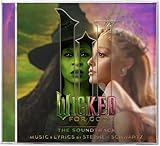
- Wicked: For Good - The Soundtrack features performances by the stars of the electrifying conclusion to Universal Pictures' global cinematic Wicked sensation, Wicked: For Good
Her freedom does not make her safe. She chooses moral independence while knowing that the consequences include isolation, fear, and public hatred. The song celebrates self-determination while showing how authoritarian systems punish people who refuse an assigned role.
Elphaba and Glinda’s opposing choices
The duet is also a conflict between two responses to power:
PC Slower Than It Used to Be?
A free scan shows the junk files, broken settings and background clutter dragging Windows down - then fixes them in one click.Free scan · Windows 10 & 11Crashes, No Sound, or Screen Glitches?
Random freezes, missing sound and display glitches usually trace back to one bad driver. Find and replace yours safely.Free scan · under a minute- Elphaba chooses resistance. She refuses to compromise with a system she believes is harming vulnerable people.
- Glinda chooses accommodation. She stays inside the system, hoping status and influence may still allow her to do some good.
Glinda is not simply cowardly or villainous. She is frightened, emotionally attached to Elphaba, and convinced that compromise may prevent a catastrophe. Elphaba is not simply fearless: she is angry, isolated, and willing to sacrifice safety for principle.
Their friendship breaks because they choose incompatible ways of surviving injustice—not because they stop caring about each other.
What does “unlimited” mean?
The song’s idea of being “unlimited” is both personal and relational. Personally, Elphaba believes her future no longer has to be restricted by prejudice or institutional approval. Relationally, the word recalls the earlier possibility that Elphaba and Glinda could accomplish anything together.
Also popular on Amazon
That shared future collapses here. Elphaba leaves the system, while Glinda remains associated with it. An optimistic idea about friendship and ambition becomes a separation scene.
Recommended Free Tools
Why “wicked” is a political label
At the beginning of Wicked, “wicked” appears to describe an objective moral identity. By the end of the song, it is also revealed as a label imposed by those in power.
Elphaba’s principles have not suddenly become evil. What changes is the official story about her. Once she refuses the Wizard, the regime reframes dissent as villainy while preserving its own appearance of order and goodness. The song’s political core is this reversal: authority names its challenger the threat.
Stage musical and 2024 film versions
The 2024 film preserves the song’s basic dramatic and lyrical identity but expands it for cinema. Schwartz confirmed that the film has an extended ending. The sequence also includes additional dialogue, transitions, and visual action, giving the movie more time to show Elphaba’s isolation, Glinda’s inability to follow, the Wizard’s propaganda, the mechanics of flight, and the danger of her decision. Schwartz discussed the film’s songs and expanded ending with TIME.
Cynthia Erivo plays Elphaba and Ariana Grande plays Glinda. The official soundtrack was released on November 22, 2024, with Schwartz credited as composer and lyricist; the official recording is available on YouTube.
The Tool Desk
Outbyte Driver Updater FREEFix the driver behind crashes, sound loss and screen glitchesFind Drivers →Outbyte PC Repair FREERepair Windows errors before they cause bigger problemsFix Now →Also popular on Amazon
The film ends with Elphaba’s ascent because the number provides a natural cinematic cliffhanger. Wicked: For Good, released on November 21, 2025, adapts the stage musical’s second act; see Universal Pictures’ official page.
What does the “holding space” discussion mean?
During the 2024 press tour, journalist Tracy E. Gilchrist told Erivo and Grande that queer audiences were “holding space” with the lyrics of “Defying Gravity.” The exchange became an internet meme after Erivo reacted emotionally and Grande appeared uncertain about the phrase. Reports from The Independent and Heart explain the context.
In ordinary terms, Gilchrist meant that some queer viewers use the song to express experiences of being treated as abnormal, dangerous, or unacceptable—and the strength of refusing that imposed identity. That is not the song’s literal plot meaning, but it is a coherent cultural interpretation of Elphaba’s othering and resistance.
- In the story: Elphaba rejects the Wizard’s authority and accepts exile.
- In queer interpretation: the song can express self-recognition and resistance to stigma.
- In the meme: “holding space” became a humorous phrase detached from its original context.
Common misunderstandings
Elphaba becomes evil
No. She is branded evil after refusing to support the Wizard’s policies. Her public image changes more than her moral principles do. The official Wicked page from Schwartz supports this broader understanding of the story.
Quick wins for a faster PC:
Repair Windows errors before they cause bigger problemsFix Now →Scan for outdated or missing drivers - takes under a minuteDriver Scan →Clear out junk files and repair common Windows errorsFree Scan →The film completely rewrote the song
That overstates the changes. The film expands and restructures the sequence, but the core song remains substantially continuous with the stage version.
Also popular on Amazon
Glinda is the villain
That is too simple. Glinda chooses accommodation, but she is also frightened, attached to Elphaba, and trying—however unsuccessfully—to prevent disaster.
Elphaba wins because she can fly
Flight is the visible symbol, not the central decision. Her real act of defiance is rejecting the Wizard’s offer and accepting the consequences.
The queer reading is the song’s secret official meaning
There is no evidence of one exclusive hidden interpretation. Schwartz emphasizes literal and metaphorical defiance, while queer audiences have developed a powerful, culturally specific reading from Elphaba’s othering and resistance.
The meaning in one sentence
“Defying Gravity” means choosing conscience over acceptance—even when liberation means losing safety, belonging, and the protection of the people in power.
Quick Recap
Product prices and availability are accurate as of the date/time indicated and are subject to change. Any price and availability information displayed on Amazon at the time of purchase will apply.






Say something about this film