Some links on this page are affiliate links: if you buy through them we may earn a commission, at no extra cost to you.
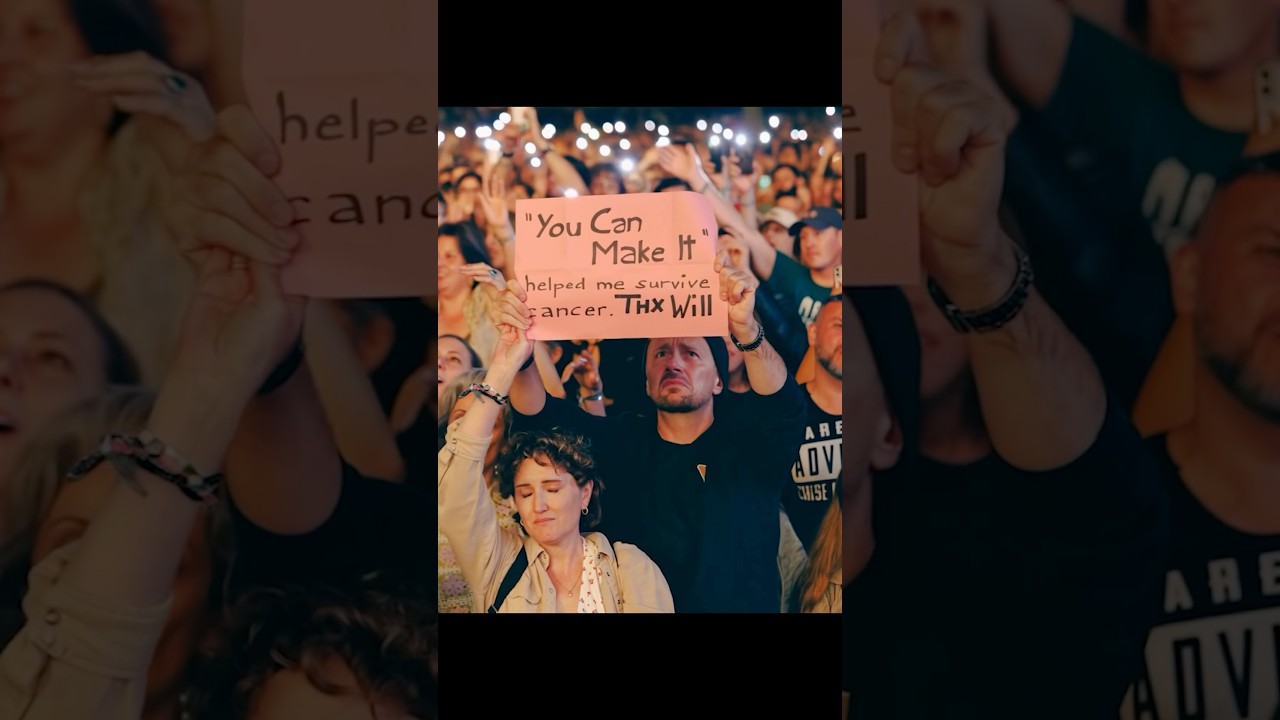
A promotional video linked to Will Smith’s 2025 Based on a True Story tour appears to combine real concert footage with AI-generated or heavily AI-altered crowd imagery. The giveaway is not simply that the audience looks unusually ecstatic: faces seem to melt, hands become anatomically wrong, phones blur into unfamiliar objects, and fan signs collapse into nonsense.
That evidence makes AI manipulation plausible, but it does not prove that Smith personally used AI, that the entire audience was fabricated, or that the video was created to conceal poor attendance. The strongest conclusion is narrower: the clip appears to contain synthetic-looking or digitally altered crowd inserts, while the technique, intent and approval chain remain unconfirmed.
| # | Preview | Product | Price | |
|---|---|---|---|---|
| 1 |

|
Will Smith - Live In Concert | $5.42 | Buy on Amazon |
| 2 |

|
Michael W.Smith: A New Hallelujah The Live Worship | $25.83 | Buy on Amazon |
| 3 |

|
Jazz Icons: Jimmy Smith Live in '69 | $8.04 | Buy on Amazon |
| 4 |

|
Legal Eagles [DVD] | $9.04 | Buy on Amazon |
The video shows Smith performing for an uncanny crowd
The clip at the center of the controversy is an approximately one-minute social-media video posted to YouTube and Instagram in connection with Smith’s Based on a True Story tour. It presents Smith performing before what appears to be a packed audience overcome with emotion.
The Tool Desk
Outbyte PC Repair FREERepair Windows errors before they cause bigger problemsFix Now →Outbyte Driver Updater FREEScan for outdated or missing drivers - takes under a minuteDriver Scan →The reported YouTube Short is available at this link, although social-media posts can be edited, relabeled or removed. The original reporting appeared in Futurism on August 27, 2025.
Popular on Amazon
Smith himself appears in conventional live-action performance footage. The most questionable material is concentrated in close-up views of audience members and their signs. That distinction matters: there is no evidence here that the concert venue, Smith’s performance or the entire crowd was generated.
Why viewers suspected generative AI
Several visual defects reportedly recur across the crowd footage:
- Faces merge, melt or lose clear boundaries around the forehead and hairline.
- Hands appear to have incorrect numbers of fingers or malformed shapes.
- Phones seem to blend with older camera designs or unrelated objects.
- Facial expressions look exaggerated, ecstatic or distressed in ways that do not remain anatomically stable from frame to frame.
- Signs contain misspelled, unstable or nonsensical lettering.
One sign reportedly referenced Smith’s song “You Can Make It” and cancer survival. Another appeared to say something resembling “From West Philly to West Swiggy, we [heart] you Will,” with the lettering breaking down into gibberish.
Recommended Free Tools
Malformed text and unstable anatomy are familiar warning signs in synthetic imagery, particularly when a system must maintain many faces, hands and objects over successive frames. But they are not a unique fingerprint for one AI model—or conclusive proof of AI at all. Aggressive upscaling, frame interpolation, face replacement, traditional compositing and deliberate visual distortion can create some similar effects.
It does not appear to be an entirely AI-generated video
The available reporting supports a hybrid interpretation: live-action footage of Smith and perhaps parts of the distant audience, combined with synthetic-looking or digitally altered close-ups.
Also popular on Amazon
- Factory sealed DVD
Possible workflows include generating crowd shots from text prompts, animating still images, altering selected people in existing footage, extending a background, replacing faces or applying AI enhancement that introduced temporal distortions. Traditional editing could also have copied, enlarged or composited crowd elements without generative AI.
No public evidence identifies the software, model or editor involved. There is also no reported source-file audit, metadata analysis or frame-by-frame forensic assessment establishing exactly how the clip was made. Calling it “AI-generated” without qualification therefore overstates what the footage proves. “AI-generated or AI-altered crowd imagery” is more accurate.
Does the video make the concert look more successful?
Visually, the clip communicates a very specific message: Smith is playing to a large, intensely adoring audience. That is different from proving why the video was edited that way.
One possibility is that the footage was intended to make attendance and audience enthusiasm look stronger. Other explanations remain possible. It could have been a deliberately surreal social-media effect, an experiment with AI video, a fan-made or unofficial edit, or a promotional montage assembled without enough quality control. The available report does not establish the motive.
Concert marketing already relies on selective close-ups, favorable camera angles, footage from different performances, crowd audio and editing that avoids empty areas. The unresolved question is whether synthetic imagery crossed the line from ordinary promotional selection into a misleading representation of turnout or reception.
Also popular on Amazon
What other tour footage can—and cannot—show
Futurism contrasted the promotional clip with other publicly available footage from the tour, describing more modest crowd reactions and less overwhelming attendance than the promotional video implied. An alleged Frankfurt attendee said the hall was only somewhat more than half full, that expensive seats were sparsely sold, and that the strongest reactions came during clips from The Fresh Prince of Bel-Air—particularly the Carlton dance—and during dancers’ 1990s hip-hop routines.
Those claims are attributed to an anonymous, unverified attendee. They are context, not attendance data or an objective review.
Nor can one performance establish the reception of an entire tour. Venue layouts, ticket configurations, camera positions and the timing of a recording can make a crowd appear larger, smaller, louder or quieter. A subdued recording from one show does not prove that every concert was poorly attended, just as a packed-looking promotional angle does not prove that every seat was filled.
Independent reader supportYour contribution helps us test, update, and keep practical guides available for everyone.Was the clip labeled as AI?
Futurism reported that the video did not appear to carry an AI-generated-content label on YouTube or Instagram at the time of its review. That was a time-specific observation, not a permanent status. Posts may later receive labels, captions or edits, and availability can vary by platform and country.
The report also said Smith’s representatives had not provided a substantive response when it was published. There is no basis in the available evidence to say that Smith admitted using AI, denied the allegation or personally approved the edits.
PC Slower Than It Used to Be?
A free scan shows the junk files, broken settings and background clutter dragging Windows down - then fixes them in one click.Free scan · Windows 10 & 11Crashes, No Sound, or Screen Glitches?
Random freezes, missing sound and display glitches usually trace back to one bad driver. Find and replace yours safely.Free scan · under a minuteAlso popular on Amazon
- Factory sealed DVD
Why the episode matters
The controversy illustrates a growing problem in AI-assisted advertising: synthetic imagery can undermine an otherwise ordinary claim. A concert promoter can select the most enthusiastic real fans without inventing people. Once faces, hands and signs begin to deform, viewers may question not only the edited shots but the truthfulness of the entire advertisement.
Crowds are especially difficult for generative systems. A scene may contain hundreds of faces, overlapping arms, phones, signs, changing lights and rapid camera movement. Each element must remain consistent over time. A single unstable hand might pass unnoticed in a fast montage; repeated anatomy errors and impossible lettering make the manipulation conspicuous.
Disclosure would also clarify the stakes. Extending a background or stylizing a transition is materially different from fabricating audience members or intensifying their reactions. “AI-assisted” can cover both minor enhancement and extensive synthetic reconstruction, so responsible marketing should explain what was changed rather than relying on a vague label.
The evidence, separated from the allegation
| Question | What the available evidence supports |
|---|---|
| Was Smith’s entire concert video generated? | No. Smith appears in live-action footage, and the suspected manipulation is concentrated in audience material. |
| Do the crowd shots contain apparent AI artifacts? | Yes. Distorted anatomy, unstable faces and garbled signs are consistent with generative manipulation. |
| Is AI involvement proven? | No. Conventional effects and other postproduction methods could explain some defects. |
| Was the audience fabricated to hide poor attendance? | That is an inference about motive, not an established fact. |
| Did Smith approve or acknowledge the edits? | No substantive response or approval statement was available in the cited report. |
The clip therefore should not be described as proof that Will Smith “faked his entire audience.” It is better understood as an apparently manipulated promotional video whose most visible crowd shots look synthetic, while the production method and responsibility remain unresolved.
Free tools Windows power users keep installed
One-click scans. No signup required.
Quick Recap
Product prices and availability are accurate as of the date/time indicated and are subject to change. Any price and availability information displayed on Amazon at the time of purchase will apply.






Say something about this film