What’s actually slowing this PC down?
Pick the symptom - the matching free tool is one click away.
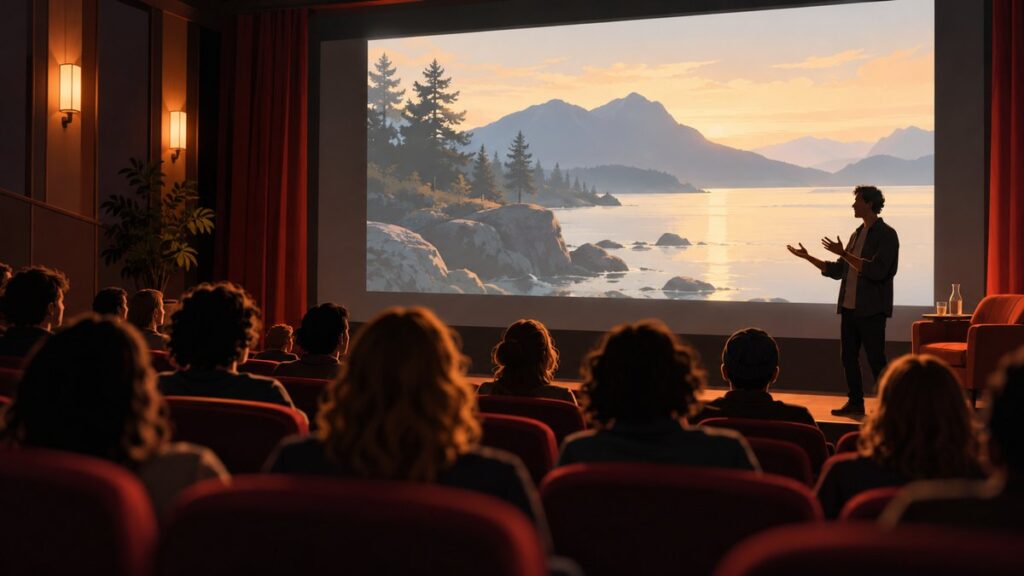
The strongest post-screening question starts with something specific in the film—a scene, claim, interview, image, omission, or creative decision—and asks the guest to explain, add context, or describe what remains unresolved. Ask one concise, open-ended question, match it to the person answering, then yield the microphone. A filmmaker can address research, access, ethics, editing, and storytelling; an expert or community panelist can explain context, implications, local experience, and possible next steps.
Choose the right question in 30 seconds
Before raising your hand, identify the one thing you genuinely want to understand. Your question will be easier to answer if it contains three parts:
- A precise reference: name the sequence, argument, interview, archival image, or absence that prompted you.
- An open invitation: begin with “how,” “what,” “which,” or “could you talk about,” rather than asking for a yes-or-no verdict.
- A clear guest fit: ask the filmmaker about making the film and the panelist about the issue, their work, or their lived perspective.
For example, “In the final sequence, you move from the family interview to archival footage. How did you decide that was the context viewers needed?” is more useful than “Why did you make this?” It gives the guest a concrete starting point without dictating the answer.
Questions for a filmmaker
Use these prompts when the person on stage directed, produced, edited, photographed, researched, or otherwise helped make the documentary. Choose the prompt that connects to something visible in the finished film; do not ask for confidential information about participants or locations.
PC Slower Than It Used to Be?
A free scan shows the junk files, broken settings and background clutter dragging Windows down - then fixes them in one click.Free scan · Windows 10 & 11Crashes, No Sound, or Screen Glitches?
Random freezes, missing sound and display glitches usually trace back to one bad driver. Find and replace yours safely.Free scan · under a minute#1 Best Overall

- HD streaming made simple: With America’s number 1 TV streaming platform,* exploring popular apps—plus tons of free movies, shows, and live TV—is as easy as it is fun. *Based on hours streamed—Hypothesis Group
- Compact without compromises: The sleek design of Roku Streaming Stick won’t block neighboring HDMI ports, and it even powers from your TV alone, plugging into the back and staying out of sight. No wall outlet, no extra cords, no clutter.
- No more juggling remotes: Power up your TV, adjust the volume, and control your Roku device with one remote. Use your voice to quickly search, play entertainment, and more.
- Shows on the go: Take your TV to-go when traveling—without needing to log into someone else’s device.
- TV, simplified: With setup that only takes minutes, a simple-to-navigate Home Screen, and an uncluttered remote control that does all you need—Roku makes it easier to watch the TV you love.
Origins and changing understanding
- “What first drew you to this subject, and how did your understanding change while making the film?”
- “What question did you begin with, and what question replaced it by the end?”
- “Was there a moment during reporting or filming that changed the direction of the project?”
- “What did your early research or footage suggest that the final cut had to reconsider?”
These questions invite a development story rather than a promotional pitch. They also leave room for the filmmaker to describe uncertainty, disagreement, or a conclusion that evolved over time.
Access, trust, and responsibility
- “How did you approach gaining access and building trust with the people in the film?”
- “What boundaries did participants set, and how did those boundaries affect the film?”
- “How did you handle a moment when your presence or the camera might have changed what happened?”
- “Were there ethical choices that viewers cannot see in the finished film?”
Ask about methods and decisions, not private details that could identify or endanger someone. If the subject involves trauma, violence, immigration status, health, or discrimination, avoid pressing the filmmaker to disclose information the film intentionally protects.
Scenes, structure, and editing
- “Could you talk about the choice to include this scene or perspective, and what alternatives you considered?”
- “Why does the film begin or end where it does?”
- “What changed most between the early assembly and the final cut?”
- “How did you balance a character’s personal story with the larger system or history around it?”
- “Was there an important scene that had to be removed, and what did removing it change?”
A question about editing works best when you identify the transition, omission, or repeated motif you noticed. Asking “How did you decide what context to include in that sequence?” opens a craft discussion without assuming the edit was right or wrong.
Interviews and point of view
- “How did you decide whose voices were necessary for this story?”
- “What did you do when interviewees disagreed with one another?”
- “How did you avoid making one person stand in for an entire community?”
- “Which perspective would you still like the audience to hear?”
Documentaries are constructed points of view, even when they pursue factual accuracy. Asking how the team selected, arranged, and challenged testimony helps an audience examine the film’s evidence without treating every interpretation as equally supported.
Rank #2

- Ultra-speedy streaming: Roku Ultra is 30% faster than any other Roku player, delivering a lightning-fast interface and apps that launch in a snap.
- Cinematic streaming: This TV streaming device brings the movie theater to your living room with spectacular 4K, HDR10+, and Dolby Vision picture alongside immersive Dolby Atmos audio.
- The ultimate Roku remote: The rechargeable Roku Voice Remote Pro offers backlit buttons, hands-free voice controls, and a lost remote finder.
- No more fumbling in the dark: See what you’re pressing with backlit buttons.
- Say goodbye to batteries: Keep your remote powered for months on a single charge.
Archives, evidence, and uncertainty
- “How did you decide what archival material or historical context the audience needed?”
- “What steps did you take to verify the records, images, or claims used in the film?”
- “Where does the film signal uncertainty, and where did you have to make an interpretive choice?”
- “Did new evidence arrive after filming or during editing, and if so, how did you respond?”
These prompts are especially useful for films that translate complex history, science, law, or public policy. They ask the filmmaker to distinguish documented fact, participant testimony, reconstruction, and interpretation.
Impact and what remains unresolved
- “What remains uncertain or unresolved for you after completing the film?”
- “What do you hope viewers will discuss or investigate after leaving the screening?”
- “What response from an audience member has challenged your own reading of the film?”
- “What would responsible engagement with this subject look like after the screening?”
Do not assume the filmmaker can promise a specific social outcome. These questions ask about intention and reflection while allowing the guest to acknowledge limits.
Questions for an expert, practitioner, or community panelist
A panelist may not have made the documentary and may speak from professional knowledge, local work, research, or personal experience. State which part of their perspective you are asking for; do not treat one person as a spokesperson for everyone affected.
Context and accuracy
- “What context would help us understand the issue the film presents?”
- “Which part of the film most closely matches what you see in your work, and where does your experience differ?”
- “What evidence or history should viewers examine alongside the film?”
- “What important term or distinction might the audience be missing?”
Missing perspectives and consequences
- “Whose perspective or evidence would add something important to this conversation?”
- “What does the film leave out that viewers should keep in mind?”
- “Who is most affected by the situation shown, and how are those effects different across communities?”
- “What consequence of this issue is easy to overlook after watching the film?”
Action and local resources
- “What local resources, education, support, or advocacy options can people explore?”
- “What is one practical step that is useful rather than merely symbolic?”
- “Where can viewers find reliable information if they want to learn more?”
Screening guides from the National Fentanyl Awareness Day toolkit and other community-event organizations recommend ending issue-based discussions with relevant education, support, or advocacy resources. The appropriate resource depends on the subject and locality, so let the panelist name options rather than assuming a universal referral.
The Tool Desk
Outbyte PC Repair FREERepair Windows errors before they cause bigger problemsFix Now →Outbyte Driver Updater FREEFix the driver behind crashes, sound loss and screen glitchesFind Drivers →Rank #3

- 4K streaming made simple:With America’s number 1 TV streaming platform,* exploring popular apps—plus tons of free movies, shows, and live TV—is as easy as it is fun. *Based on hours streamed—Hypothesis Group
- 4K picture quality: With Roku Streaming Stick Plus, watch your favorites with brilliant 4K picture and vivid HDR color.
- Compact without compromises: Our sleek design won’t block neighboring HDMI ports, and it even powers from your TV alone, plugging into the back and staying out of sight. No wall outlet, no extra cords, no clutter.
- No more juggling remotes: Power up your TV, adjust the volume, and control your Roku device with one remote. Use your voice to quickly search, play entertainment, and more.
- Shows on the go: Take your TV to-go when traveling—without needing to log into someone else’s device.
Questions for a mixed panel
When filmmakers and subject-matter guests share the stage, ask a question that makes their roles distinct rather than forcing identical answers.
- “Did you interpret that moment differently from one another? What shaped your readings?”
- “Where do you agree, and what is the main point on which your experience differs?”
- “For the filmmaker: how did you make this choice? For the practitioner: what does that choice mean in practice?”
- “What is one question about the film you would want the audience to keep thinking about?”
A moderator should invite one person to begin, then offer the others a chance to add or disagree. Panelists do not need to repeat the same response, and equal participation does not mean every answer must be the same length.
Turn a long observation into a useful question
Audience members often have a thoughtful comment but no concise question. Keep the insight, remove the speech, and end with one request.
| Instead of | Try |
|---|---|
| “I worked in this field for years, and your film reminded me of several problems in my own project. I think the media always gets this wrong, and I have a lot to say about it. What do you think?” | “In the section about media coverage, what evidence most changed your approach?” |
| “Why did you ignore the obvious solution and focus on this one family?” | “How did following one family change what the film could show about the wider issue?” |
| “Was everything in the film staged?” | “Which scenes were observed, reconstructed, or otherwise shaped for the camera?” |
| “Do you agree that the policy is a disaster?” | “What outcome did the reporting support, and what evidence remains contested?” |
Avoid wording that presumes a single correct interpretation. “How did you decide,” “what did you find,” and “where does your experience differ” create room for a specific answer without surrendering critical inquiry.
Quick wins for a faster PC:
Clear out junk files and repair common Windows errorsFree Scan →Fix the driver behind crashes, sound loss and screen glitchesFind Drivers →Rank #4
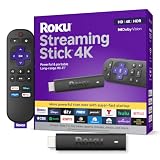
- Stunning 4K and Dolby Vision streaming made simple: With America’s number 1 TV streaming platform,* exploring popular apps—plus tons of free movies, shows, and live TV—is as easy as it is fun. *Based on hours streamed—Hypothesis Group
- Breathtaking picture quality: Stunningly sharp 4K picture brings out rich detail in your entertainment with four times the resolution of HD. Watch as colors pop off your screen and enjoy lifelike clarity with Dolby Vision and HDR10+.
- Seamless streaming for any room: With Roku Streaming Stick 4K, watch your favorite entertainment on any TV in the house, even in rooms farther from your router thanks to the long-range Wi-Fi receiver.
- Shows on the go: Take your TV to-go when traveling—without needing to log into someone else’s device.
- Compact without compromises: Our sleek design won’t block neighboring HDMI ports, so you can switch from streaming to gaming with ease. Plus, it’s designed to stay hidden behind your TV, keeping wires neatly out of sight
How to ask the question in the room
- Write one sentence before the event. Note the scene or claim and the question you want answered. If you have several ideas, rank them instead of combining them.
- Wait for the moderator’s instructions. Some screenings use a microphone, a queue, or written cards. Follow the stated process so the room can hear and the event can stay on time.
- Identify yourself briefly if requested. Your name and relevant role are enough. Do not use the introduction to promote a project, organization, or personal review.
- Give the reference, then ask. “In the interview with …, you mention … . How did you decide …?” is usually sufficient.
- Stop after one question. A second clause that begins “and also” is often a second question. Let the guest answer before deciding whether a follow-up is needed.
- Listen fully. A short pause is normal while a guest gathers a response. Do not fill the silence or interrupt to correct an answer.
If the room cannot hear, the moderator should repeat or paraphrase the question. Written cards can help when people are hesitant to speak, and a microphone is important in a large room so the entire audience receives the same context.
Follow-ups that deepen the answer
A follow-up should clarify something the guest just said, not introduce an unrelated topic. Useful forms include:
- “When you say ‘access,’ what did that look like in practice?”
- “Could you give an example from the sequence we just discussed?”
- “What evidence led you to that conclusion?”
- “How did that decision affect the people represented in the film?”
- “What would you want viewers to verify or read next?”
If the first answer already addresses your concern, thank the guest and yield the microphone. A good follow-up develops the conversation; it does not cross-examine someone until they give the answer you expected.
Independent reader supportYour contribution helps us test, update, and keep practical guides available for everyone.Handling sensitive subjects respectfully
Health, trauma, discrimination, violence, and grief require more care than a routine craft question. Keep the focus on the film or the guest’s stated role, and do not demand a personal story to prove expertise.
Recommended Free Tools
Best Value

- The Google TV Streamer (4K) delivers your favorite entertainment quickly, easily, and personalized to you[1,2]
- HDMI 2.1 cable required (sold separately)
- See movies and TV shows from all your services right from your home screen[2]; and find new things to watch with tailored recommendations for everyone in your home based on their interests and viewing habits
- Watch live TV and access over 800 free channels from Pluto TV, Tubi, and more[3]; if you find an interesting show or movie on your TV, mobile app, or Google search, you can easily add it to your watchlist, so it’s ready when you are[2]
- Up to 4K HDR with Dolby Vision delivers captivating, true-to-life detail[4]; and you can connect speakers that support Dolby Atmos for more immersive 3D sound
- Ask, “What context would help us understand this experience?” rather than “Have you personally suffered this?”
- Ask the filmmaker about consent, safety, and representation without requesting identifying details.
- Do not ask one panelist to represent an entire culture, profession, diagnosis, or community.
- Use neutral language and avoid labels or conclusions the film itself does not establish.
- Allow the guest to decline. A refusal can protect participants or acknowledge limits in the available evidence.
For issue-based events, the moderator should explain the tone of the discussion, identify each guest’s role, and close with subject-appropriate support or information. A resource list should be adapted to the event’s location and audience rather than copied without checking.
If you are moderating the screening
Prepare several open prompts tied to the film’s purpose, but do not read a fixed list regardless of what the guests say. Guidance from the National Fentanyl Awareness Day 2025 toolkit puts the balance plainly: “Prepare a list of questions to guide the discussion but be flexible to let the conversation flow naturally.”
Before the event
- Confirm each guest’s role, preferred name and pronunciation, relevant expertise, and topics they should not be asked to address.
- Choose panelists with complementary perspectives rather than several people who will repeat one another.
- Share the event objective, approximate format, and expected audience questions in advance.
- Prepare opening prompts about the film’s central choice, context, and unresolved question.
During the discussion
- Introduce the film and guests briefly, then explain how audience questions will work.
- Ask one focused question at a time and vary who answers first.
- Watch for unequal speaking time; invite a quieter panelist in without putting them on the spot.
- Paraphrase an inaudible or overly long audience question before directing it to the panel.
- If a comment leaves the film’s subject, acknowledge it and redirect: “That is a useful related issue; for this discussion, how does it connect to the sequence we saw?”
- Offer to continue highly personal or off-topic matters privately after the event when appropriate.
Closing the event
End with a question that leaves the audience with a clear avenue for reflection, learning, or support: “What should viewers investigate next?” or “What resource would you want people here to know about?” Thank the guests, repeat any verified resource information, and make clear where attendees can find follow-up material.
Choose the format that fits your goal
| Format | Best questions | What to protect |
|---|---|---|
| Filmmaker Q&A | Research, access, interviewing, archives, editing, structure, ethics, uncertainty, and intended audience conversation. | Do not assume the filmmaker can speak for every participant or predict a social outcome. |
| Expert or community panel | Context, professional or local experience, missing evidence, consequences, resources, and practical next steps. | Do not treat one panelist as a spokesperson for an entire group. |
| Hybrid conversation | Move deliberately between how the film was made and what the subject means in practice. | Identify whose perspective is answering so craft, evidence, and lived experience are not blurred. |
Festival programs such as Full Frame’s Speakeasy demonstrate that conversation formats can be paired with the subject and guests rather than forced into one universal template. A moderator can shift from “How did you make this?” to “What does this mean locally?” while signaling that the answers come from different kinds of authority.
Common mistakes to avoid
- Asking a disguised speech: If the audience needs to hear your full review, publish it separately; at the microphone, retain only the issue you want answered.
- Combining several questions: A long chain gives the guest no clear place to begin and consumes time that could go to another audience member.
- Demanding a verdict: “Was it right or wrong?” can be useful in a carefully framed ethics discussion, but “What considerations shaped the decision?” usually reveals more.
- Assuming access equals consent: A filmmaker may not be able to discuss private agreements, security measures, or participants’ identities.
- Ignoring the film’s limits: Ask what is absent or uncertain instead of treating the documentary as a complete account.
- Repeating an answered question: Listen closely and build on the response rather than returning to a point the guest has already covered.
- Using a panelist as a symbol: Address people by their role and experience, not as representatives of everyone who shares an identity.
A compact question card
Write one prompt from each line before you enter the room:
- Film detail: “In the scene where …”
- Request: “How did you decide …?” or “What context would help us understand …?”
- Perspective: “Where does your experience match or differ from the film?”
- Next step: “What should viewers investigate or do after this screening?”
Choose one card, ask it in a single breath, and leave space for the answer. That combination—specific evidence from the film, a guest-appropriate invitation, and disciplined listening—produces a more revealing conversation than a clever but unfocused question.
Quick Recap
Product prices and availability are accurate as of the date/time indicated and are subject to change. Any price and availability information displayed on Amazon at the time of purchase will apply.






Say something about this film