Do these 3 things before closing this tab:
1Fix the driver behind crashes, sound loss and screen glitches2Repair Windows errors before they cause bigger problems3Scan for outdated or missing drivers - takes under a minute“2026 is the new 2016” is a loose, cross-platform nostalgia trend—not an official TikTok challenge or a literal claim that history has reset. The phrase became prominent in late December 2025 and January 2026 as users recreated the music, filters, fashion, memes, photos, and supposedly carefree internet mood associated with 2016. It was sometimes ironic, but often expressed a sincere desire for a less anxious, less synthetic-feeling online culture.
What does “2026 is the new 2016” mean?
The slogan frames 2026 as an opportunity to recover the feeling of 2016: colorful, spontaneous, socially connected, and comparatively unserious. Users pair old photos and mid-2010s songs with captions such as “2016 was the last good year,” “2026 feels like 2016,” or “2026 = 2016.”
That does not mean participants believe that politics, technology, fashion, or culture have exactly returned to 2016. The year functions as a symbol. For many people, it represents a pre-pandemic period, childhood or adolescence, and an internet that now seems less saturated by relentless optimization and generative-AI uncertainty.
The most accurate description is that this was a collective attempt to reconstruct the visual language, cultural references, and perceived emotional atmosphere of the mid-2010s. It spread through TikTok, Instagram, Snapchat, Reddit, and meme communities rather than through one standardized campaign. Contemporary explainers from Know Your Meme and Fast Company document the trend as a broad collection of related formats.
Recommended Free Tools
#1 Best Overall
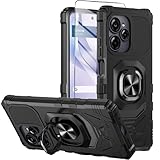
- Compatible With:This case is specially designed for BLU View Speed Ultra 5G.
- Built-in 9H Glass Screen Protector:Merchandise Comes with tempered glass screen protectors. Protect your phone screen from scratches and bumps. Effectively reduces fingerprints and smudges, maintains original responsiveness, ultra-clear.
- Dual Layer Protection:Composed of a The hard PC outer shell and soft TPU inner layer, We provide extra protection for both by raising, the edges around the screen and camera, to avoid everyday scratches, and provide greater shock resistan.
- Built in Metal Kickstand:It provides multiple adjustable angles to watch videos, freeing your hands. You can also pass your finger through the ring to prevent it from falling off. the built-in metal sheet can be directly stably attached to the magnetic car phone mount.
- Anti-Slip Design:Anti-slip grooves on the sides and back enhance grip and prevent accidental drops of your smartphone.
What did the posts and videos look like?
Although there was no single template, several recognizable ingredients appeared repeatedly:
- Deliberately imperfect images: grainy, low-resolution, overexposed, warm, yellow, pink, or heavily saturated photos intended to resemble an older smartphone camera.
- Throwback photo dumps: old camera-roll images, childhood pictures, school photos, holiday snapshots, and “then versus now” comparisons.
- Snapchat-era lenses: dog ears, flower crowns, face distortion, and other playful lenses associated with the platform’s mid-2010s identity.
- Tumblr-style layouts: handwritten text, collages, quotes, mood boards, indie imagery, and scrapbook-like compositions.
- Period captions: statements presenting 2016 as “the last good year,” or suggesting that 2026 should deliberately bring its energy back.
- Current edits of old material: 2016 photos and songs are often processed with modern TikTok editing tools, creating a new version of an old aesthetic rather than restoring the original platform environment.
Snapchat itself leaned into the revival. On January 16, 2026, it promoted a “2016 Flashback” featuring dog ears, flower crowns, low-fi selfies, and throwback music. That platform response is evidence that the nostalgia had become commercially useful as well as organically popular; it does not make the trend an official cross-platform campaign. See Snap’s announcement.
Which 2016 trends are being revived?
Visual and social-media culture
The revival borrows from a period when bright Instagram filters, Snapchat lenses, Tumblr collages, and informal smartphone photos were immediately recognizable. Instagram Stories also launched on August 2, 2016. Meta described Stories as a way to share casual photos and videos without permanently placing every moment on a user’s profile; the feature became an important part of the era’s more temporary, less polished posting culture. The original announcement is available from Meta.
It is important not to turn this into a claim that social media was unfiltered or non-algorithmic in 2016. Platforms already used recommendation systems, advertising, metrics, and carefully managed feeds. The difference is more accurately described as a user perception: the internet now feels more saturated, commercialized, optimized, and difficult to distinguish from synthetic or AI-assisted content.
Outdated Drivers Are Slowing You Down
One free scan finds every outdated or missing driver and matches the right update for your exact hardware.Free scan · exact hardware matchPC Slower Than It Used to Be?
A free scan shows the junk files, broken settings and background clutter dragging Windows down - then fixes them in one click.Free scan · Windows 10 & 11Fashion and beauty
Posts and commentary have revived or referenced:
- Chokers, skinny jeans, bomber jackets, and oversized flannels.
- Festival clothing, bright colors, and casual streetwear.
- “King Kylie”-era makeup references.
- Heavy contour, bold brows, matte foundation, overlined lips, cut creases, and dramatic lashes.
- Wired headphones, brightly colored drinks, and other lifestyle props used to signal a mid-2010s mood.
This is usually a selective revival rather than a complete return of the 2016 wardrobe. A creator may borrow a choker, a filter, or a makeup technique without adopting the entire period look. Fashion references work as quick visual shorthand: viewers recognize the decade from a few isolated markers.
Music
Frequently cited songs include Zara Larsson’s “Lush Life,” Justin Bieber’s “Sorry,” “One Dance,” “Lean On,” “Let Me Love You,” “Black Beatles,” “Panda,” and “Starboy.” The list spans pop, dance, EDM, and hip-hop rather than representing one official soundtrack.
“Lush Life” is the clearest measurable example of the revival. The song was released in 2015, but became strongly associated with the 2016 cultural moment. Forbes reported that it re-entered the U.S. Billboard Hot 100 at No. 70, reached No. 8 on the U.K. singles chart, and rose on Spotify during the January 2026 nostalgia wave. Calling it a 2016 song is understandable as shorthand, but technically imprecise.
Memes, challenges, and viral references
The wider nostalgia package has included references to Pokémon Go, the Mannequin Challenge, the Bottle Flip Challenge, dabbing, “Catch me outside, how ’bout dat?”, Harambe, Doge, Nyan Cat, Trollface, Big Chungus, and Ugandan Knuckles.
Quick wins for a faster PC:
Fix the driver behind crashes, sound loss and screen glitchesFind Drivers →Repair Windows errors before they cause bigger problemsFix Now →These examples should be treated as mid-2010s internet references, not a perfectly dated list of things invented in 2016. Some predate 2016, some became prominent later, and some are simply associated with the era in popular memory. The broad label “2016” often compresses several years of online culture into one recognizable period.
When and where did the trend start?
There is no verified single origin point. The evidence suggests that the idea developed across several communities before becoming highly visible on TikTok. An early post, the first widely viewed video, the first media report, and the person credited with a related movement are different things; they should not be treated as interchangeable.
Rank #2
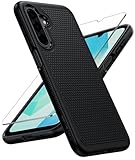
- Compatibility: Engineered exclusively for Galaxy A17 5G / A16 5G with precision cutouts that give full access to ports, speakers, and buttons without interfering with wireless charging. Our 24/7 dedicated support team resolves any model or quality concerns instantly.
- Military-Grade Protection: A shock-absorbing TPU interior with reinforced corner airbags and a heat-dissipating honeycomb core is wrapped in a hard polycarbonate outer shell. Certified 14ft drop protection guards your phone against high-impact falls onto concrete warehouse floors and rocky hiking terrain.
- 360 Screen Defense with Tempered Glass: Each case includes a separate HD tempered glass protector that delivers full edge-to-edge coverage while preserving original touch sensitivity and clarity. It shields against pocket-key scratches and face-down drops on gym tiles or concrete floors.
- Practical Design for Secure Grip: Textured side panels and a non-slip matte back provide a confident hold during sweaty gym workouts, one-handed texting, and fast-paced daily commutes. The fingerprint-resistant finish stays clean, and soft-touch buttons deliver crisp, responsive feedback.
- All-Scenario Versatility: The minimalist, low-profile matte design blends effortlessly into any environment, from business commutes to weekend hikes. It pairs rugged durability with everyday pocketability for heavy-duty protection without the bulk.
- August 12, 2025: An early Reddit discussion suggested that 2026 might become “the new 2016,” partly in connection with anticipated entertainment and sports events. This is an early trace, not proof that the poster invented the trend.
- October 29, 2025: Student publication Sequoit Media published “Could 2026 be the new 2016?”, discussing the return of 2016 aesthetics and pop-culture references.
- November 2025: The related “Great Meme Reset of 2026” began circulating. Forbes connected the initial concept to TikTok creator @joebro909, while WIRED noted that the movement’s exact origin was difficult to establish.
- December 17, 2025: A Reddit post explicitly asking whether people should try to make 2026 the new 2016 reportedly received substantial engagement.
- December 20–31, 2025: Instagram posts using 2016 imagery and “2026 = 2016” language gained attention. Know Your Meme’s tracking includes a December 31 montage reported to have received millions of views.
- January 1–16, 2026: The phrase spread broadly across TikTok, Instagram, Snapchat, and other platforms. Major media coverage and Snapchat’s own figures documented its peak visibility during this period.
So, did TikTok start it? The safest answer is that TikTok was a major amplifier, but publicly available evidence does not establish one TikTok creator as the unquestionable originator. The trail includes Reddit and Instagram activity before the January TikTok spike. Know Your Meme’s chronology is useful for the documented sequence, while Sequoit Media’s October article confirms that the idea was circulating before the viral peak.
Is it the same as the Great Meme Reset?
No. The two ideas overlap, but “2026 is the new 2016” is the broader concept.
| “2026 is the new 2016” | The Great Meme Reset |
|---|---|
| A broad nostalgia wave | A more specific meme-culture proposal |
| Includes photos, music, filters, fashion, makeup, and personal memories | Focuses on older meme formats and internet humor |
| Often emotional, personal, or aesthetic | More collective, ironic, and participatory |
| Spread across TikTok, Instagram, Snapchat, Reddit, and other communities | Circulated primarily through meme discourse and TikTok-related communities |
| Has no fixed launch event | Proposed a return to older memes on January 1, 2026 |
The Great Meme Reset was a reaction against what participants saw as a 2025 “meme drought,” forced niche humor, increasingly layered irony, and AI-generated or AI-looking “brainrot” content. It invoked formats and characters such as Harambe, Doge, Big Chungus, Ugandan Knuckles, and Trollface. Forbes and The Daily Dot describe it as a proposed cultural reboot rather than a technical reset of TikTok.
Nothing actually erased existing memes on January 1. The internet did not uniformly revert to 2016, and TikTok did not activate a reset feature. The “reset” was itself a participatory internet premise: people could join by posting old memes, joking about the movement, or arguing that it would fail. A partial or unsuccessful event can still be culturally significant because the proposal becomes the meme.
Why is 2016 the target?
It is exactly ten years earlier
In 2026, 2016 is a clean ten-year marker. That distance is long enough for a visible change in technology, fashion, and personal circumstances, but short enough for many participants to remember the period vividly. Fast Company presents the ten-year gap as one reason the year became an especially convenient target. This is a useful cultural pattern, not a universal scientific rule that nostalgia always arrives after exactly a decade.
People may be remembering an age, not a year
Someone who was 14, 16, or 22 in 2016 may now be looking back at school, friendships, a first phone, a formative relationship, or the last stage of life before adult pressures intensified. The emotional object of nostalgia may therefore be:
- Adolescence or childhood.
- A particular friend group or relationship.
- Music discovered during a formative period.
- A pre-adult routine with fewer responsibilities.
- A pre-pandemic version of everyday life.
This also explains why different generations interpret the trend differently. Older Gen Z may remember 2016 as adolescence, younger Gen Z as childhood, and some Gen Alpha users as a second-hand era reconstructed through older siblings, archived videos, and reposted memes. Millennials may see the trend as a revival of their own late-20s or early-30s culture. Geography matters too: people outside the United States experienced different politics, celebrities, music markets, and social conditions.
2016 symbolizes the pre-pandemic world
2016 preceded the COVID-19 disruption that changed schooling, work, travel, social routines, and ideas about public space. Many users use the year as a convenient dividing line between an earlier normality and the instability that followed. The Associated Press connected the current revival with the political, technological, and social changes that followed 2016, including Brexit, rising populism and polarization, and the pandemic.
It represents a pre-mainstream-generative-AI internet
Some users describe 2016 as a time when online material felt more obviously made by people. That does not mean the web was free from bots, manipulation, recommendation algorithms, or commercial content. It means that today’s scale of content saturation—and the widespread uncertainty about whether an image, voice, or post is synthetic—was not yet a mainstream anxiety.
The Great Meme Reset makes this concern especially visible. Its rejection of AI-looking brainrot is less a demand to return to a technically pure past than a complaint about the current difficulty of finding material that feels spontaneous, legible, and human.
Rank #3

- Compatible With:This case is specially designed for Consumer Cellular Iris Connect 2/SpeakEasy Smart 6.8".
- Built-in 9H Glass Screen Protector:Merchandise Comes with tempered glass screen protectors. Protect your phone screen from scratches and bumps. Effectively reduces fingerprints and smudges, maintains original responsiveness, ultra-clear.
- Dual Layer Protection:Composed of a front hard pc bumper and soft rubber silicone back cover, We provide extra protection for both by raising, the edges around the screen and camera, to avoid everyday scratches, and provide greater shock resistan.
- Shock-Absorbing Corners:4 Shock-absorbing corners on the edges absorb shock and provide excellent drop and crash protection for your phone.
- Precise Cutouts:The snug fit and precise cutouts give you easy access to the ports and buttons, microphone, camera and speaker.
2016 has a strong visual identity
Some years are difficult to recreate because their style is diffuse. 2016 has a convenient bundle of recognizable signals: Snapchat lenses, bright filters, Instagram Stories, Tumblr-inspired layouts, chokers, skinny jeans, heavy contour, wired headphones, and instantly identifiable pop songs. A creator can communicate “2016” with one filter and one chorus.
Why can nostalgia feel useful during an uncertain present?
Psychological research treats nostalgia as a socially grounded emotion that can be associated with positive affect, self-esteem, continuity, and social connection. A review published through the Association for Psychological Science provides relevant context.
That does not mean every participant is using the trend as therapy, or that nostalgia automatically improves mental health. It does help explain why an old song or a familiar filter can have social power:
- Continuity: old photos connect a person’s past self with their present self.
- Belonging: shared songs and memes create an instant reference point between strangers and friends.
- Emotional compression: a caption such as “bring back 2016” expresses dissatisfaction with the present without requiring a political essay.
- Manageable uncertainty: a familiar aesthetic can make a rapidly changing online environment feel easier to interpret.
There is also a social reward in recognizing the reference. A dog lens, a “Lush Life” edit, or a Bottle Flip reference can signal that the poster and audience share—or are willing to perform—the same cultural memory.
The Tool Desk
Outbyte Driver Updater FREEScan for outdated or missing drivers - takes under a minuteDriver Scan →Outbyte PC Repair FREERepair Windows errors before they cause bigger problemsFix Now →Was 2016 actually a good year?
Not in any objective, universal sense. The slogan “2016 was the last good year” is the emotional premise of some posts, not a historical conclusion.
The year included the Brexit referendum, the U.S. presidential election, the Orlando and Dallas shootings, the Zika outbreak, terrorist attacks, the deaths of major cultural figures, and increasing political polarization. AP’s reporting and Vogue’s fashion and culture analysis both emphasize the gap between the bright, highly shareable imagery of 2016 and the difficult realities of the year.
Nostalgia is selective. It preserves the soundtrack, the friend group, the makeup look, or the feeling of being young while pushing political crises and personal difficulties into the background. That does not make the emotion fake. It means that people may be nostalgic for how 2016 felt to them, rather than arguing that every part of the year was safe, stable, or good.
What does the data actually show?
The trend was measurable, but its numbers need careful interpretation. Search growth, hashtag use, filter uses, sound uses, and video views are different metrics and cannot be added together as if they measured the same audience.
TikTok figures reported in the United States
In a January 15, 2026 report, Forbes cited figures supplied by TikTok showing that:
- The hashtag #2016 rose by more than 450% in recent weeks.
- Searches for “2016 songs” rose 290% from January 1–11 compared with the preceding 11 days.
- Searches for “2016 makeup” rose 600% over the same comparison period.
- The “2016” and “Late night 17’s” filters were receiving strong use.
These are relative increases during the January peak. They do not reveal the total number of participants, prove that the trend dominated every region or demographic, or describe activity across all platforms.
Rank #4

- Fine micro-matte surface enhances the feel and reduces most fingerprints, and the side wave grip design makes it more comfortable and secure to hold.
- 2MM thicker all-round protection, can protect the phone from 2 meters height after a fall intact, above the camera as well as the screen design.
- Adhesive metal finger ring support [you can choose to stick to Case, or separate use], 360 degree rotation + car bracket magnetic suction
- Includes 1* tempered glass screen protector, allowing you to save the cost of purchasing a screen protector
- 100% dedicated open mold design with precise hole positions
Some secondary reports also repeated a claim that more than 55 million videos had used TikTok’s “2016” filter. That figure should be attributed to TikTok as relayed by secondary outlets, rather than presented as an independently audited total. Filter uses should not be directly compared with hashtag-post counts.
Snapchat figures
Snapchat announced on January 16, 2026, that searches for “2016” lenses were up 613% year-to-date compared with the prior year. It also reported a 352% increase in searches for the Dog Lens and a 621% increase in searches for “2016” in its music library.
These are first-party Snapchat figures. The announcement does not provide enough methodological detail to treat them as an independent measurement of all social-media activity. They do, however, show that the revival was visible on a platform strongly associated with the original aesthetic.
Independent reader supportYour contribution helps us test, update, and keep practical guides available for everyone.The TikTok paradox: recreating an internet before TikTok
The trend’s central irony is that TikTok became its main distribution mechanism even though TikTok did not exist in its current global form in 2016. According to TikTok’s official history, TikTok and musical.ly united into the global TikTok app on August 1, 2018.
That makes the movement a reconstruction, not a genuine return. A modern creator uses a recommendation-driven platform, contemporary editing tools, and current engagement incentives to simulate an older style of posting. A low-fi filter can reproduce the appearance of a 2016 selfie, but it cannot recreate the original social network, audience, economic conditions, or cultural expectations around that selfie.
The same tension applies to the idea of authenticity. Unpolished photos may look more spontaneous, but the 2026 posts are still selected, edited, captioned, and distributed by algorithmic systems. The trend recreates the appearance of casual internet culture through highly contemporary infrastructure.
Free tools Windows power users keep installed
One-click scans. No signup required.
Was the trend sincere, ironic, or commercial?
It was all three, depending on the post.
Some users genuinely wanted a more colorful and socially relaxed year. Others used the slogan as a joke, especially when exaggerating the idea that a calendar change could restore an entire cultural era. The Great Meme Reset was particularly suited to this mixture of sincerity and irony: users could call for a return to Doge and Harambe while simultaneously mocking the idea of a coordinated internet revolution.
Platforms also had an incentive to package the mood. Snapchat’s “2016 Flashback” shows that nostalgia could be turned into lenses, music discovery, and engagement. That commercialization does not invalidate users’ memories, but it complicates the idea that the movement represented a completely anti-commercial or “authentic” internet. The same system that users criticized for being too optimized could also profit from selling them a version of the past.
Is “2026 is the new 2016” still happening?
As of August 10, 2026, the major viral wave is best understood as a January 2026 phenomenon whose peak visibility has passed. A February or January article could accurately describe it as taking over social media; a current article should not make that claim without new platform-wide data. Trill Mag’s April 23 coverage described the trend as having faded from its peak.
That does not mean every reference disappeared. Songs, filters, makeup ideas, fashion markers, memes, and the broader desire for a more human-feeling internet can persist after a slogan stops trending. Internet trends often leave behind an aesthetic and a vocabulary rather than continuing as one dominant hashtag.
What’s actually slowing this PC down?
Pick the symptom - the matching free tool is one click away.
Best Value

- Compatible With:This case is specially designed for Consumer Cellular Iris Connect 2/SpeakEasy Smart 6.8".
- Built-in 9H Glass Screen Protector:Merchandise Comes with tempered glass screen protectors. Protect your phone screen from scratches and bumps. Effectively reduces fingerprints and smudges, maintains original responsiveness, ultra-clear.
- Dual Layer Protection:Composed of a front hard pc bumper and soft rubber silicone back cover, We provide extra protection for both by raising, the edges around the screen and camera, to avoid everyday scratches, and provide greater shock resistan.
- Shock-Absorbing Corners:4 Shock-absorbing corners on the edges absorb shock and provide excellent drop and crash protection for your phone.
- Precise Cutouts:The snug fit and precise cutouts give you easy access to the ports and buttons, microphone, camera and speaker.
How to understand the trend in one sentence
“2026 is the new 2016” was not a literal reset and not one official TikTok challenge; it was a cross-platform attempt to use mid-2010s music, images, fashion, memes, and personal memories to make the present feel more familiar, spontaneous, and hopeful.
Frequently Asked Questions
Did TikTok start the “2026 is the new 2016” trend?
TikTok helped amplify the phrase, but available evidence does not establish one TikTok creator as its sole originator. Early traces appeared on Reddit and Instagram before the January 2026 TikTok peak, so it is more accurate to call the trend cross-platform.
Is “2026 is the new 2016” the same as the Great Meme Reset?
No. The 2026-is-the-new-2016 trend covered music, fashion, filters, photos, makeup, and personal nostalgia. The Great Meme Reset was a narrower proposal to revive older meme formats on January 1, 2026, partly in reaction to AI-looking content and “brainrot.”
Why are people nostalgic for 2016?
For some, 2016 is tied to adolescence, childhood, friendships, music, or a less demanding stage of life. It also symbolizes the pre-pandemic world and an internet before today’s level of content saturation and generative-AI anxiety. The nostalgia is personal rather than proof that 2016 was objectively better.
What songs are associated with the trend?
Commonly cited songs include Zara Larsson’s “Lush Life,” Justin Bieber’s “Sorry,” “One Dance,” “Lean On,” “Let Me Love You,” “Black Beatles,” “Panda,” and “Starboy.” “Lush Life” was released in 2015 but became strongly associated with 2016.
What was the 2016 filter?
The term refers to TikTok and other social-media effects that give posts a mid-2010s appearance, often with warm, bright, grainy, or oversaturated imagery. TikTok’s “2016” filter became one of the visible tools in the 2026 revival, alongside Snapchat-style dog ears and flower crowns.
Did TikTok exist in 2016?
Not in its current global form. TikTok and musical.ly united into the global TikTok app on August 1, 2018. The trend therefore recreates a 2016 aesthetic on a newer platform rather than returning to the original online environment.
Was 2016 really the last good year?
That is a subjective slogan used in some posts, not a historical fact. 2016 also included Brexit, the U.S. presidential election, mass shootings, the Zika outbreak, terrorist attacks, celebrity deaths, and increasing polarization. The trend usually reflects selective personal nostalgia.
Is the trend still popular?
The strongest visibility was in early January 2026. By April, available secondary coverage described it as having declined from its peak. As of August 10, 2026, its aesthetic and references may still circulate, but it should not be described as a platform-wide takeover without newer data.
The Bottom Line
Bottom line: “2026 is the new 2016” was a nostalgia wave about recreating a remembered mood, not restoring a historical reality. Its filters, songs, fashion, and memes offered a shared language for missing youth, pre-pandemic routines, and a more recognizably human-feeling internet—while the trend’s selective memory left much of 2016’s actual turmoil out of frame.
Quick Recap
Product prices and availability are accurate as of the date/time indicated and are subject to change. Any price and availability information displayed on Amazon at the time of purchase will apply.






Say something about this film