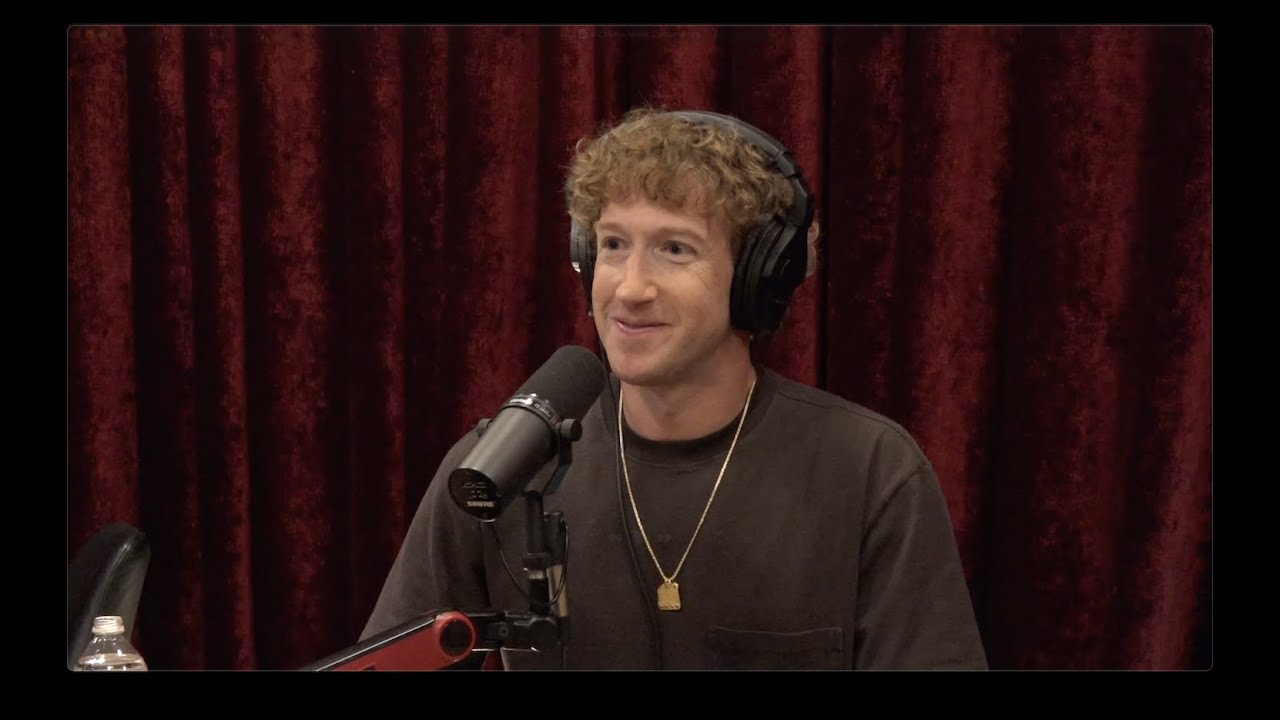
Mark Zuckerberg’s nearly three-hour appearance on The Joe Rogan Experience was published on January 10, 2025—more than a year before the current date, not a new 2026 interview. In episode #2255, Zuckerberg defended Meta’s recently announced shift away from its U.S. third-party fact-checking program, toward a Community Notes-style system and higher thresholds for some automated removals.
He presented the change as a return to free expression after Meta had, in his view, overcorrected following the 2016 election and the COVID-19 pandemic. The interview also carried clear political significance: it came shortly before Donald Trump’s January 20 inauguration and as Meta sought to reset its relationship with conservative users and the incoming administration.

The short version
- Meta announced an end to its U.S. third-party fact-checking program.
- It planned a user-contributed, Community Notes-style replacement.
- It said it would raise the threshold for some automated removals, potentially reducing false positives while leaving more borderline material online.
- Zuckerberg described the shift as a free-expression correction, not the end of content moderation.
- The interview explained and promoted an already announced policy direction; it did not itself create the change.
Meta’s announcement was described as U.S.-focused. It should not be summarized as the end of professional fact-checking everywhere, nor as an abandonment of all moderation.
What Meta actually changed
Third-party fact-checking
Meta said it would end its U.S. program using outside fact-checking organizations to assess disputed claims. That was a change in the company’s method for handling misinformation, not a declaration that false or harmful content would no longer be subject to any intervention.
#1 Best Overall
A Community Notes-style system
Meta planned to move toward a model broadly similar in concept to the system used by X. Instead of relying primarily on designated professional fact-checkers, contributors would propose contextual notes. Publication would generally depend on agreement among contributors with differing viewpoints.
The models are not identical, and neither guarantees accuracy. Professional fact-checking uses designated organizations and editorial standards. Community Notes depends on the participation, knowledge, diversity and good faith of contributors. It may reduce accusations that one institution controls the truth, but it can also be slower, vulnerable to coordination and unable to address every claim.
A note is also not the same as removal. A post can remain online while receiving context, being shown to fewer people, being excluded from recommendations or being subject to other ranking decisions.
Higher thresholds for some automated removals
Meta said it would adjust automated enforcement so that fewer posts were removed automatically. The likely trade-off is straightforward: fewer lawful posts wrongly taken down, but a greater chance that borderline or harmful material remains visible while it is reviewed—or is not reviewed at all.
Political and news content
The moderation shift occurred alongside Meta’s broader move to reintroduce or increase the recommendation of political and news content after an earlier period of reducing its prominence. That makes distribution important. More speech being allowed to remain online does not necessarily mean that every post will be recommended widely.
DEI changes
TechCrunch also reported that Meta was eliminating its largest diversity, equity and inclusion initiative. That was a separate corporate change and should not be treated as one of the formally announced content-moderation mechanics without additional documentation.
What Zuckerberg argued on Rogan
Zuckerberg framed Meta’s original mission around allowing people to share and express themselves. He said the company had drifted from that purpose as it responded to political pressure, criticism surrounding the 2016 election and the extraordinary information environment of the COVID-19 pandemic.
He also criticized what he described as pressure from government officials over COVID-related content. Axios reported that Zuckerberg characterized Meta’s earlier approach as a form of censorship and compared it to something “out of 1984.” Those statements are Zuckerberg’s account of events. The interview does not independently establish that government requests were illegal, coercive or the sole reason for particular moderation decisions.
The conversation extended beyond moderation into artificial intelligence, Meta’s hardware strategy, augmented-reality glasses, the Orion prototype and the company’s relationship with Apple. Those subjects helped present Zuckerberg as a technology leader looking beyond the controversy, but the central message was that Meta had become too willing to suppress lawful speech and needed a less centralized system.
Why Joe Rogan mattered
Rogan provided an unusually large and politically influential audience, including listeners skeptical of mainstream media and traditional institutional gatekeepers. The informal, long-form format also gave Zuckerberg time to explain the pivot in his own terms, without the structure of a conventional press conference, hearing or earnings call.
The timing was equally important. The episode appeared ten days before Trump’s inauguration, when major technology companies were reassessing their relationship with the incoming administration and conservative audiences. That proximity does not prove the policy was made solely to curry favor with Trump, but it created an unmistakable political context.
The appearance therefore served two purposes: it defended a real policy change and helped reposition Zuckerberg and Meta as more committed to free expression and less aligned with the Biden administration’s regulatory and moderation environment.
What’s actually slowing this PC down?
Pick the symptom - the matching free tool is one click away.
Rank #4

- Used Book in Good Condition
Is the pivot philosophical or political?
Zuckerberg’s explanation and the skeptical interpretation are not mutually exclusive.
Under Zuckerberg’s account, Meta’s moderation systems had become too aggressive. Fear of criticism and pressure from officials encouraged over-removal, while a community-based model could distribute responsibility and reduce the role of centralized arbiters.
The skeptical view focuses on timing and incentives. Meta had reasons to improve relations with conservative users and the incoming Trump administration. A public commitment to fewer removals and less reliance on outside fact-checkers could serve that goal even if executives also genuinely believed the old system produced too many mistakes.
The available material does not conclusively establish Zuckerberg’s private motive. The defensible conclusion is narrower: the policy direction was genuine, and its political timing made reputational repositioning a plausible part of the strategy.
Free tools Windows power users keep installed
One-click scans. No signup required.
Best Value

- Convenient Documentation Storage - Makes it easy to comply with audits and regulations like 21 U.S.C. 827 (b), 21 U.S.C. 827 (c)-DEA, and 42 CFR 483.60-CMS
- All Your Documentation in One Place - Makes it easy to track things like intake and usage; keep your records together for DEA audits
- Controlled Substance Logging - Makes it easy to track drugs intake and expenditure; helps track things like loss and destruction
- High Page Count Makes Tracking Easy - Makes it easy to track prescriptions and narcotics during the entire retention period
- Great for Tracking - Schedule 2 intakes from the pharmacy, narcotic emergency drug kit usage, and the count of narcotic emergency drug kits at the beginning and end of each shift
The strongest case for the change
- Fewer false positives: automated systems and professional reviewers can wrongly remove satire, political argument or legitimate reporting.
- More room for debate: raising enforcement thresholds may allow lawful political speech to remain available.
- Less institutional gatekeeping: Meta would rely less on a small set of outside organizations to determine which claims receive intervention.
- More context: user-generated notes can sometimes explain why a claim is disputed without deleting the original post.
The strongest case against it
- Misinformation may remain visible: false claims can spread before contributors review them, or never receive a note.
- Coordination risks: organized groups could attempt to influence which notes appear or fail to appear.
- Silence is ambiguous: the absence of a warning does not prove that a post is accurate.
- Harassment and abuse: higher removal thresholds may expose marginalized users to more harmful content.
- Accountability can become less clear: replacing professional fact-checkers changes who makes decisions, but does not eliminate the need for consequential decisions about reach and safety.
What the interview did—and did not—prove
The interview established how Zuckerberg wanted the change understood: as a correction toward free expression after years of excessive intervention. It did not prove that Meta’s previous system was broadly illegal, that government officials unlawfully controlled the company’s decisions, or that the new model would produce more accurate information.
It also did not show that all political content had become unrestricted, that moderation had ended, or that every Meta service would be affected in the same way. WhatsApp, for example, was not established by the supplied evidence as part of this specific policy change.
What users should watch for
For Facebook, Instagram and Threads users, the practical questions are separate:
- Will a disputed post stay online?
- Will it receive a Community Note or another label?
- Will its ranking or recommendation reach change?
- Will automated systems remove it under existing rules?
- What appeal or review process applies?
The supplied evidence does not resolve every implementation detail, including how contributor disagreement would work in practice, the precise scope of appeals, or whether the new system would perform better across accuracy, reach and abuse. Those outcomes require evidence from implementation rather than statements made during the interview.
Do these 3 things before closing this tab:
1Scan for outdated or missing drivers - takes under a minute2Clear out junk files and repair common Windows errors3Fix the driver behind crashes, sound loss and screen glitchesOne identification note
Zuckerberg has appeared on Rogan more than once. The episode relevant here is #2255, published January 10, 2025. It should not be confused with episode #1863, published August 25, 2022, which also lasted about three hours and covered Facebook moderation, the 2020 election, the Hunter Biden laptop story and virtual reality.
Marquette’s transcript archive, the Spotify episode listing and the YouTube video identify the 2025 appearance. The policy details and political context were reported by TechCrunch and Axios.
Quick Recap
Product prices and availability are accurate as of the date/time indicated and are subject to change. Any price and availability information displayed on Amazon at the time of purchase will apply.






Say something about this film