Quick wins for a faster PC:
Repair Windows errors before they cause bigger problemsFix Now →Scan for outdated or missing drivers - takes under a minuteDriver Scan →Some links on this page are affiliate links: if you buy through them we may earn a commission, at no extra cost to you.
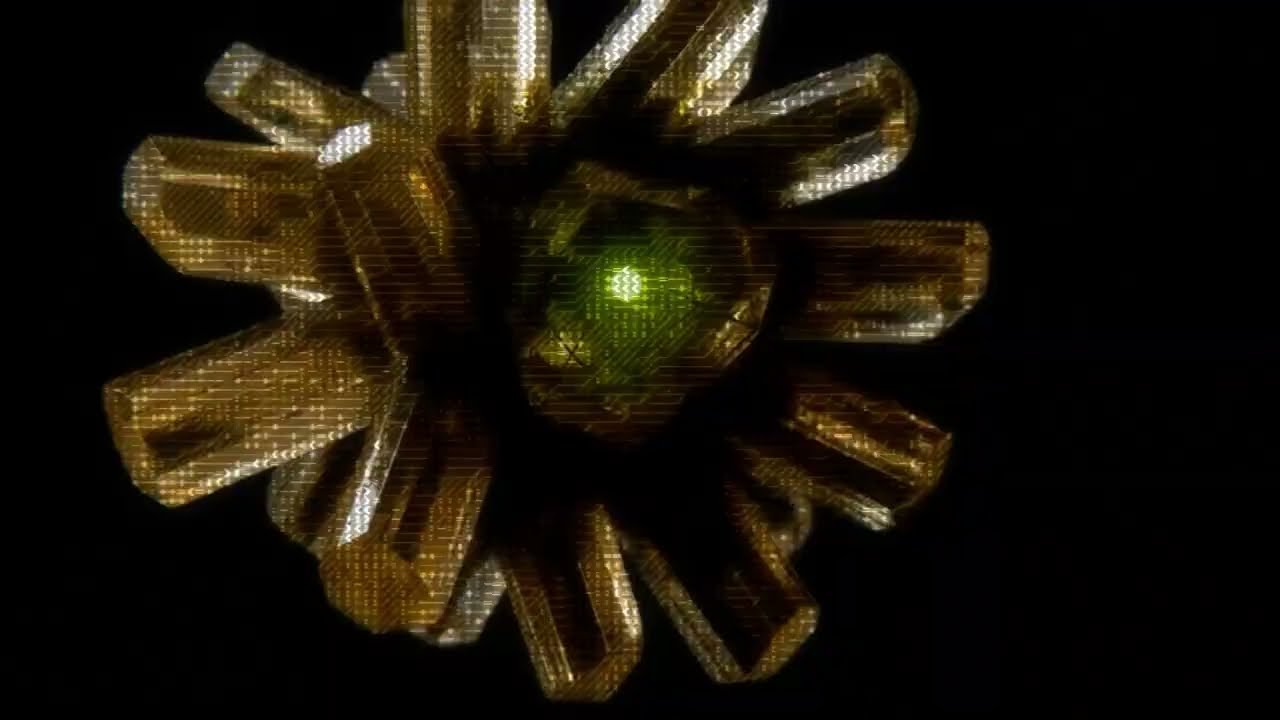
Lamina1 and Wētā Workshop’s collaboration was an announcement about Artefact, a participatory storytelling and worldbuilding project—not the launch of a finished, fully immersive metaverse. Revealed on August 22, 2024, the project was designed to let fans and creators investigate mysterious digital relics, interpret the lore around them and help expand a shared fictional setting. Lamina1 was to provide blockchain infrastructure and creator tools; Wētā Workshop was to contribute creative development; and Lamina1 co-founder Neal Stephenson supplied the narrative context.
Later, Stephenson described Artefact as closer to an online board or card game than a conventional 3D virtual world. That evolution is important: the partnership’s ambition was broad, but the available descriptions point to a more focused game and storytelling experience. GeekWire’s announcement coverage and Stephenson’s later account provide the clearest picture of the project’s proposed mechanics and format.

What Lamina1 and Wētā Workshop announced
The August 2024 announcement introduced Artefact, a collaboration among Lamina1, Wētā Workshop and science-fiction author Neal Stephenson. It was presented as an experiment in participatory worldbuilding: instead of consuming a story entirely authored by a studio, fans and creators would be invited to discover clues, interpret them and contribute to the fictional universe.
The announcement described an experience to come, with fan and creator engagement planned for the fall of 2024. It did not establish a finished public product, a conventional launch date, a price, device support or detailed technical requirements. Calling it a partnership to “facilitate virtual worlds” captures the broad ambition, but should not be mistaken for evidence that a complete virtual world was already available.
Popular on Amazon

- From Weta Workshop
- From the classic film trilogy
- Measures 8 x 6 inches
- Made of polystone
- Sculpted with equisite detail by sculptor Daniel Cockersell
Who was involved?
- Lamina1 positioned itself as a creator-oriented platform for digital worlds and content, built around blockchain infrastructure and a digital currency or token. Neal Stephenson co-founded the company. Lamina1 announced its mainnet in May 2024, a few months before the Artefact reveal.
- Wētā Workshop was the creative partner, expected to bring worldbuilding, design and visual development. It is important not to confuse Wētā Workshop with Weta Digital, a separate visual-effects business that became part of Unity; the 2024 reports named Wētā Workshop.
- Neal Stephenson provided more than a famous name. His fiction and ideas about virtual worlds informed the project’s conceptual setting, and his later account says he wrote fictional vignettes while collaborators worked on art, game design and engineering. The sources describe thematic connections to his body of work, not a direct adaptation of a particular novel.
GamesBeat reported Lamina1’s claim that the platform had onboarded 65,000 active users over the preceding two years. That was a company-reported figure in 2024, not an independently audited measure or a current user count. GamesBeat’s report also describes Artefact as a showcase for Lamina1’s creator-oriented platform.
How Artefact was supposed to work
The original concept centered on mysterious digital “Artefacts” or relics. GamesBeat described the initial material as narrative scaffolding: 2D relics and metadata for the community to decode and remix, with further chapters to be unlocked as the story developed. The intended flow was roughly:
Also popular on Amazon

- Lord of the Rings Mini Statue Sauron 20 cm
- Peter Jackson's Lord of the Rings film trilogy comes this high quality statue.
- The detailed statue is approx. 13 x 20.5 x 8 cm and is made of high-quality resin.
- Discover the relics. Participants encounter digital objects that hint at a larger fictional setting.
- Investigate the clues. They examine the objects and their metadata for meaning and connections to the lore.
- Interpret or remix. Fans and creators add their own readings or creative responses.
- Develop the story. Community participation is meant to help reveal or expand later layers of the fictional universe.
- Move from audience to contributor. The larger promise is a world shaped in part by its participants, not only by its original authors.
The announcement did not spell out how contributions would be selected, whether community voting or professional curation would decide what became canonical, or what rights contributors would receive. A collaborative story still needs rules for moderation, authorship and continuity; the proposal did not settle those questions in the reporting available.
What blockchain was meant to add
Lamina1’s role was to offer infrastructure for digital content, creator participation and a potential creator economy. In principle, blockchain records can help establish the provenance of a digital asset, support attribution, enable token-based transactions and provide a shared layer for a community. Those were part of Lamina1’s broader pitch for an alternative to centralized platform economics.
Also popular on Amazon

- The Lord of the Rings Vinyl Figure
- Super-stylized, ultra-expressive characters created by Weta Workshop collectibles team
- Collect Bilbo Baggins, Frodo, Gimli, Gandalf the grey, Legolas, Aragorn, Samwise,
- Made in China
They are goals, not automatic results. A token or on-chain record does not by itself grant copyright, commercial rights or control over a fictional universe. The announcement did not provide the legal terms for fan contributions, explain revenue sharing, establish whether users would be paid, or demonstrate interoperability with other platforms. Wallet setup, key security, transaction fees and token-price volatility can also make participation more complicated than an ordinary web game.
For Artefact, key practical details were not established in the announcement: whether a crypto wallet would be required, whether participation would be free, what assets or tokens users might obtain, and whether creators could export their work. Nor did the reporting show that assets could move freely between platforms. Blockchain can record a claim or transaction; it cannot alone guarantee useful ownership, portability or a fair creator economy.
Also popular on Amazon
Is Artefact a metaverse?
In the broad promotional sense, Lamina1 and its coverage framed Artefact as an open-metaverse or virtual-worldbuilding initiative. But “metaverse” can suggest a persistent, immersive 3D space where people meet and explore. Stephenson’s later description is narrower: he characterized the developed experience as more like an online board or card game than a fully immersive 3D video game.
Recommended Free Tools
The most careful description, then, is a participatory digital game and storytelling project marketed within a wider metaverse vision. The available accounts do not establish its scale, how immersive it is, whether it works across devices, or whether users can enter a general-purpose 3D world. The distinction matters because a compelling worldbuilding game can be valuable without being the expansive virtual universe the word “metaverse” sometimes implies.
Also popular on Amazon

- WETA860104172
- 9420024741726
How the project’s description evolved
- May 2024: Lamina1 announced its mainnet, establishing the blockchain platform ahead of the collaboration reveal. Lamina1’s company updates provide its own account of the platform.
- August 22, 2024: Lamina1 and Wētā Workshop announced Artefact, with fan and creator engagement planned for that fall.
- 2025: Stephenson described Artefact as an online board- or card-game-like experience set in a near-future world shaped by competing artificial-intelligence systems, where human communities contend with scarce resources. He said he wrote short vignettes while Wētā artists, game designer Álvaro González and Lamina1 personnel developed the broader experience. A later Lamina1 teaser said the project was built on Lamina1 and planned to debut on the Linea network in fall 2025.
A planned network debut is not confirmation that a launch occurred. The sources cited here do not independently establish Artefact’s public availability as of August 2026, its user numbers, commercial performance or whether the Linea roadmap was completed. Readers interested in joining should check current project announcements rather than assume the original target dates remain valid.
What the partnership does—and does not—show
The collaboration brought together three different strengths: Lamina1’s proposed creator-platform infrastructure, Wētā Workshop’s worldbuilding experience and Stephenson’s narrative vision. It offered a way to test whether fans could become contributors to a story world, and whether blockchain tools could support that activity. But an announcement and a later product description do not establish that the project solved the harder questions behind that pitch.
Those questions include how creators are credited and compensated, who controls canon, what participants legally own, how the experience handles moderation, and whether users can take their work elsewhere. There is also a product-scope question: whether Artefact is primarily a game, a collectible experience, interactive fiction or some combination. Until access, rights and operation are documented, claims about creator ownership or an “open” metaverse should be treated as aims rather than proven outcomes.
Do these 3 things before closing this tab:
1Repair Windows errors before they cause bigger problems2Fix the driver behind crashes, sound loss and screen glitches3Clear out junk files and repair common Windows errors





Say something about this film