Some links on this page are affiliate links: if you buy through them we may earn a commission, at no extra cost to you.
Yes—if you choose subscriptions deliberately. Streaming still accounts for nearly half of U.S. TV viewing, and it offers on-demand access to films, series and documentaries without committing to a traditional channel package. But keeping a long list of paid services active all year can recreate a cable-sized bill, with more apps and less certainty about where a title is available.
For most households, the better approach is one or two services they use often, a rotating subscription for specific releases, and free or library-based options for casual viewing. Whether streaming is worth it depends on what your household watches, how often, and what you pay for the convenience.
The short answer
| Your viewing habits | Likely verdict |
|---|---|
| You watch one service most days | Usually worth keeping, especially if several people use it. |
| You follow a few shows on different services | Often worth it if you rotate subscriptions instead of keeping all of them year-round. |
| You pay for six or more services continuously | Review the total. Some are likely costing more than their use justifies. |
| You mainly watch live sports | It depends on the leagues, local rights, blackouts and season-specific cost. |
| You watch casually or mostly in the background | Free ad-supported services may cover much of your viewing. |
| You need local news, many live channels or a reliable channel guide | Compare live-TV streaming, cable and an antenna rather than assuming on-demand apps will suffice. |
Streaming has not simply become cable. Most subscriptions remain easier to cancel, and you can turn them on only when you want them. But a stack of permanent subscriptions can become cable-like in cost and complexity.
Recommended Free Tools
Streaming is still where much of the viewing happens
Streaming represented 47.0% of U.S. television usage in January 2026, following a record 47.5% in December 2025, according to Nielsen’s January Gauge and its December report. The Gauge measures TV-screen use, not every video watched on phones and computers. It shows that streaming is central to television, not that every household needs every subscription.
#1 Best Overall

- HD streaming made simple: With America’s number 1 TV streaming platform,* exploring popular apps—plus tons of free movies, shows, and live TV—is as easy as it is fun. *Based on hours streamed—Hypothesis Group
- Compact without compromises: The sleek design of Roku Streaming Stick won’t block neighboring HDMI ports, and it even powers from your TV alone, plugging into the back and staying out of sight. No wall outlet, no extra cords, no clutter.
- No more juggling remotes: Power up your TV, adjust the volume, and control your Roku device with one remote. Use your voice to quickly search, play entertainment, and more.
- Shows on the go: Take your TV to-go when traveling—without needing to log into someone else’s device.
- TV, simplified: With setup that only takes minutes, a simple-to-navigate Home Screen, and an uncluttered remote control that does all you need—Roku makes it easier to watch the TV you love.
On-demand playback, downloads, device portability and the ability to cancel make streaming convenient. Its range also matters: a viewer might use a subscription for a weekly documentary series, then move to a service with a particular film collection, while relying on free services or library access in between.
There are meaningful free options. Tubi, Pluto TV and The Roku Channel offer ad-supported viewing; Kanopy and Hoopla provide access through participating libraries. Nielsen reported that Tubi represented 2.1% of total TV usage and The Roku Channel 3.0% in January 2026. Free does not mean equivalent to a paid catalog: the selection may be older, less predictable and more ad-heavy. But it can be entirely adequate for casual viewing.
Why the value feels worse
The main problem is not that streaming has stopped working. It is that the original bargain—many choices for relatively little money—has weakened as prices have risen and catalogs have split among providers.
What’s actually slowing this PC down?
Pick the symptom - the matching free tool is one click away.
- Recurring costs add up. A few individually manageable bills can become a substantial annual expense.
- Ads are back. Lower-priced plans may include commercial breaks, and paying extra to remove them does not always mean every live event or piece of content is ad-free.
- Shows and sports are scattered. Following a particular franchise, team or league can require a specific service or a live-TV package.
- Catalogs change. A title can leave a service, while a household may keep paying for the app because it once watched something there.
- Finding a program takes effort. Separate apps, passwords, search tools and parental controls create friction that belongs in the value calculation.
More titles do not automatically mean more value. In Deloitte’s 2025 Digital Media Trends survey, 41% of consumers said the content available on subscription video-on-demand services was not worth the price, up from 36% in the prior report. That is a finding about how respondents perceived value, not proof that the overall quality of programming has declined.
Rank #2

- Ultra-speedy streaming: Roku Ultra is 30% faster than any other Roku player, delivering a lightning-fast interface and apps that launch in a snap.
- Cinematic streaming: This TV streaming device brings the movie theater to your living room with spectacular 4K, HDR10+, and Dolby Vision picture alongside immersive Dolby Atmos audio.
- The ultimate Roku remote: The rechargeable Roku Voice Remote Pro offers backlit buttons, hands-free voice controls, and a lost remote finder.
- No more fumbling in the dark: See what you’re pressing with backlit buttons.
- Say goodbye to batteries: Keep your remote powered for months on a single charge.
What households are spending
Deloitte’s March 2026 Digital Media Monitor put average household streaming-video spending at $69 a month—about $828 a year. Treat that as a survey-reported average, not a bill every household pays. Deloitte’s 2025 survey also reported an average of about $125 a month for cable or satellite TV. The comparison is useful, but not decisive: the totals may reflect different households and viewing needs, and a streaming household may separately pay for broadband, live-TV service, sports add-ons, rentals or purchases.
Streaming prices have also climbed. S&P Global’s 2026 analysis found that entry-level subscription video-on-demand prices rose at a 4.6% compound annual growth rate from 2020 through 2026; its average ad-free price was just over $16 a month after 2026 increases. That is a market-level measure, not a quote for a particular service or tier.
To compare fairly, count the full video bill: monthly fees, annual plans divided by 12, ad-free upgrades, live-TV packages, sports add-ons, rentals, digital purchases, extra-user charges, taxes and regional fees. If broadband is needed for streaming, include it when comparing the total household cost with cable—but do not count an internet plan twice if you would keep it regardless for work or other uses.
Four ways to build a video lineup
- Keep an anchor service. A service used weekly or daily may earn a permanent place, particularly when several people rely on it or it supplies a distinct catalog.
- Rotate subscriptions. Subscribe for a month or two when a show, film collection or season of programming you want is available. Cancel when you have caught up; rejoin when there is a reason.
- Use free and library options. Ad-supported apps, official broadcaster sites and library services can cover casual viewing and selected films without another recurring subscription. Library availability and titles vary by location.
- Use a different format for a specific need. An antenna may bring in local broadcast stations where reception allows. Rentals or purchases can make more sense for an occasional new film than maintaining a service all year. Live-TV streaming or cable may fit a household that genuinely watches many channels live.
A bundle is worth considering only if you want the included services. Compare its actual tier, billing term and cancellation rules with the standalone options. A lower headline price is not a saving if one or more parts go unused.
Rank #3

- 4K streaming made simple:With America’s number 1 TV streaming platform,* exploring popular apps—plus tons of free movies, shows, and live TV—is as easy as it is fun. *Based on hours streamed—Hypothesis Group
- 4K picture quality: With Roku Streaming Stick Plus, watch your favorites with brilliant 4K picture and vivid HDR color.
- Compact without compromises: Our sleek design won’t block neighboring HDMI ports, and it even powers from your TV alone, plugging into the back and staying out of sight. No wall outlet, no extra cords, no clutter.
- No more juggling remotes: Power up your TV, adjust the volume, and control your Roku device with one remote. Use your voice to quickly search, play entertainment, and more.
- Shows on the go: Take your TV to-go when traveling—without needing to log into someone else’s device.
How to tell whether a service earns its place
Start with a simple calculation for each paid service:
Monthly service cost ÷ hours watched that month = rough cost per viewing hourFor example, $16 for 20 hours of viewing is $0.80 per hour; $9 for one hour is $9 per hour. This is a useful warning light, not a complete verdict. It does not account for the importance of a particular film, convenience, the number of household members watching or whether the subscription replaces another expense.
Once a month, record each service’s last-used date, hours watched, number of viewers, what they watched and whether those titles were exclusive to that service. Then give it a status:
- Keep: Someone uses it weekly, or it reliably serves a need other services do not.
- Rotate: It is most valuable around specific releases, seasons or sports events.
- Downgrade: You want the catalog, but the cheaper ad-supported plan is acceptable. Check its current limits on downloads, picture quality and simultaneous streams.
- Bundle: The bundle is genuinely useful and its terms fit how you watch.
- Cancel or replace: Nobody has a current reason to use it, or a free service, library loan, antenna, rental or purchase would do.
Annual plans lower the monthly equivalent only if you use the service enough over the year. They can also make it easier to forget a subscription or feel obliged to use one you have already paid for. A free trial can help you assess a catalog, but set a reminder when you sign up, check when access ends and read the current terms before entering payment details.
Rank #4
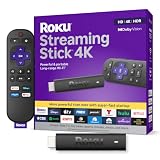
- Stunning 4K and Dolby Vision streaming made simple: With America’s number 1 TV streaming platform,* exploring popular apps—plus tons of free movies, shows, and live TV—is as easy as it is fun. *Based on hours streamed—Hypothesis Group
- Breathtaking picture quality: Stunningly sharp 4K picture brings out rich detail in your entertainment with four times the resolution of HD. Watch as colors pop off your screen and enjoy lifelike clarity with Dolby Vision and HDR10+.
- Seamless streaming for any room: With Roku Streaming Stick 4K, watch your favorite entertainment on any TV in the house, even in rooms farther from your router thanks to the long-range Wi-Fi receiver.
- Shows on the go: Take your TV to-go when traveling—without needing to log into someone else’s device.
- Compact without compromises: Our sleek design won’t block neighboring HDMI ports, so you can switch from streaming to gaming with ease. Plus, it’s designed to stay hidden behind your TV, keeping wires neatly out of sight
Are ad-supported plans worth it?
They are a normal part of the market, not an obscure compromise: Deloitte reported that 68% of households subscribing to SVOD had at least one ad-supported service in March 2026. The right question is whether the lower price compensates your household for the advertising and any feature restrictions.
An ad tier can be a sensible choice for casual viewing, background television or a service used alongside several others. Ad-free may be worth the premium when the household watches frequently, relies on downloads, or finds interruptions disruptive. Check the plan details rather than assuming tiers differ only in ads: downloads, supported video quality, simultaneous streams and available titles can vary.
Nor does “ad-free” necessarily mean no advertising in every circumstance. Amazon’s Prime Video Ultra announcement listed an ad-free upgrade at $4.99 a month while noting that some live events and select content may still contain ads. Plan names and terms can change, so verify them before signing up. In short: ad-supported means cheaper, not automatically better; ad-free means fewer interruptions, not necessarily an exception-free promise.
Quick wins for a faster PC:
Clear out junk files and repair common Windows errorsFree Scan →Fix the driver behind crashes, sound loss and screen glitchesFind Drivers →Repair Windows errors before they cause bigger problemsFix Now →Sports change the calculation
For committed fans, a service can be worth paying for during a season even if it would not be a year-round keeper. Compare the total seasonal cost—not just one monthly price—including the required tier, live-TV package, league pass, regional sports fees, taxes and any add-ons. Check whether the games you want are actually available in your area.
Best Value
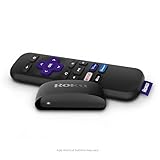
- Streaming made easy: Roku Express lets you stream free, live and premium TV over the Internet—right to your TV. It’s perfect for new users, secondary TVs and easy gifting—but powerful enough for seasoned pros
- Quick and easy setup: Just plug it into your TV with the included High Speed HDMI Cable and connect to the internet to get started
- Tons of power, tons of fun: Compact and power-packed, you’ll stream your favorites with ease; from movies and series on Apple TV, Prime Video, Netflix, The Roku Channel, HBO, Showtime and Google Play to cable alternatives like Hulu with Live TV and PlayStation Vue, enjoy the most talked about TV across free and paid channels
- Low cost, no extra fees: For under $30, Roku Express streaming device includes a High Speed HDMI Cable—and there’s no monthly equipment fee; with access to free TV on hundreds of channels, there’s plenty to stream without spending extra
- Simple remote: Incredibly easy to use, this remote features shortcut buttons to popular streaming channels
Blackouts, local-market rules, authentication requirements and device limits can undermine an apparently good deal. A service that carries some sports does not necessarily include every match or event. Nielsen has attributed recent streaming growth in part to live events, including NFL games on Netflix and Prime Video and sports simulcasts on Peacock, showing why sports can draw viewers to streaming while also making a simple rotation harder.
If the household watches only a few games, compare a season of access with other options and be honest about how many events you will actually watch. If it follows several leagues and wants local channels, a live-TV package or cable may be more practical—though not necessarily cheaper once fees and other subscriptions are included.
When live TV, cable or an antenna makes more sense
Live-TV services such as YouTube TV, Hulu + Live TV, Sling, Fubo and DirecTV Stream are aimed at households that need channels, news or sports in real time. Compare actual local-channel availability, the networks carrying your teams, DVR rules, simultaneous streams, regional sports fees, taxes and the standard price after any promotion. Also check whether you can pause service and how local channels work at your address.
For a household that watches mostly on-demand series and films, a live-TV package can be expensive overkill. For one that watches live news and many sports channels, consolidating those needs into a package may be worth paying for if it reduces app switching and delivers the channels reliably. Compare the complete bill, not a promotional starting price.
An over-the-air antenna can provide local broadcast channels without a monthly subscription, but reception depends on location, terrain, building materials, antenna placement and station signals. Check local reception before buying; an antenna will not provide premium cable channels or solve every sports-access problem.
Which setup suits your household?
- One-person household: Keep the service you use most, then rotate another for a particular series or film run. Free services may fill the gaps.
- Family with children: Count everyone’s use, not just the account holder’s. Profiles, parental controls, downloads and dependable children’s programming can justify a service, but check whether the children actually use it.
- Movie enthusiast: Rotate services with films you want, and compare subscriptions with rentals, library borrowing and theater visits. A large catalog does not help if its films are not your films.
- Sports fan: Price access by league and season, verify blackouts and local coverage, and compare live-TV packages with the services needed for entertainment.
- Budget-conscious or occasional viewer: Try free ad-supported apps, YouTube, participating library services and an antenna where reception is good before adding paid subscriptions.
- Documentary or niche-content viewer: Judge services by the depth and freshness of the topics you follow—documentaries, international films, anime, horror or classic TV—not by general catalog size. Consider library access where available.
- Heavy-TV household: Multiple permanent services may be justified if different household members use them regularly. Check the cost against a live-TV package only after listing the channels, catalogs and features you would actually use.
A 30-day streaming audit
- List every recurring video charge, including annual plans, add-ons, rentals and live-TV fees.
- Check the last-used date for each service and ask each household member what they watch there.
- Record approximate viewing hours for the next month and calculate rough cost per hour.
- Cancel services with no current viewing need. If an annual plan is already paid, note its renewal date and decide before it renews.
- Downgrade ad-free tiers you do not need, after checking the specific feature trade-offs.
- Replace casual viewing with free services or library options when they meet the need.
- Rotate subscriptions around release schedules and sports seasons instead of keeping every option active.
- Recheck the bill after a month, then repeat the review before renewals and price changes.
For trials, bundles and shared accounts, read current provider terms. Do not assume a service permits sharing beyond its household rules or that a bundle lets you cancel individual components. Prices, plan names, content availability and sports rights change; check the provider’s current signup information for your country before committing. Any quoted prices above are specific signals from the cited 2026 sources, not a comprehensive live price list.
The verdict
Streaming video remains worth paying for when it is a deliberate mix: a small number of services used often, rotating additions for specific interests, and free or library-based choices for everything else. It is much harder to justify a collection of subscriptions that stays on autopilot. Measure what your household watches, count the full annual cost, and cancel or rotate anything that no longer earns its place.
PC Slower Than It Used to Be?
A free scan shows the junk files, broken settings and background clutter dragging Windows down - then fixes them in one click.Free scan · Windows 10 & 11Outdated Drivers Are Slowing You Down
One free scan finds every outdated or missing driver and matches the right update for your exact hardware.Free scan · exact hardware matchQuick Recap
Product prices and availability are accurate as of the date/time indicated and are subject to change. Any price and availability information displayed on Amazon at the time of purchase will apply.

