Quick wins for a faster PC:
Scan for outdated or missing drivers - takes under a minuteDriver Scan →Clear out junk files and repair common Windows errorsFree Scan →Some links on this page are affiliate links: if you buy through them we may earn a commission, at no extra cost to you.
The fastest way to test a political documentary is to treat every dramatic sequence and number as a claim that must be reconstructed. Preserve the exact wording, obtain the underlying footage or data, then check chronology, question wording, sampling, denominators and uncertainty. A polished edit, a transparent methodology box or a precise percentage can still mislead when context has been removed.
Start with the claim, not the impression
Political documentaries persuade through accumulation: a sentence from an interview, a reaction shot, a chart, a poll headline and a narrator’s conclusion may arrive within seconds. Evaluate each element separately before deciding whether the overall argument is fair.
Write down the exact spoken or captioned claim. Include the sentence before and after it, the speaker, the date and geography, and whether it is presented as a fact, estimate, prediction or interpretation. Preserve qualifiers such as “may,” “according to,” “among respondents” and “at the time.” An edit can change meaning simply by removing one of those words.
Use a worksheet with one row per claim:
- Claim: the precise words or displayed figure.
- Subject: person, group, event or population.
- Time and place: the relevant date range and geography.
- Claim type: factual description, estimate, causal explanation, forecast or opinion.
- Evidence shown: interview, document, poll, administrative data, archive or illustration.
- Missing context: qualifications, uncertainty, contrary evidence or definitions that are not shown.
This “frozen” version gives you something testable. It also prevents a later voice-over or subtitle from quietly broadening what the original speaker said.
Popular on Amazon

- HD streaming made simple: With America’s number 1 TV streaming platform,* exploring popular apps—plus tons of free movies, shows, and live TV—is as easy as it is fun. *Based on hours streamed—Hypothesis Group
- Compact without compromises: The sleek design of Roku Streaming Stick won’t block neighboring HDMI ports, and it even powers from your TV alone, plugging into the back and staying out of sight. No wall outlet, no extra cords, no clutter.
- No more juggling remotes: Power up your TV, adjust the volume, and control your Roku device with one remote. Use your voice to quickly search, play entertainment, and more.
- Shows on the go: Take your TV to-go when traveling—without needing to log into someone else’s device.
- TV, simplified: With setup that only takes minutes, a simple-to-navigate Home Screen, and an uncluttered remote control that does all you need—Roku makes it easier to watch the TV you love.
How editing can change a politician’s meaning
Reconstruct the original sequence
Request the full interview, press conference or event recording when possible. Compare the documentary’s cut with the complete source, not merely with a short clip posted online. Transcribe the relevant passage and mark where the film cuts away.
For every cut, note what changes:
- Words: Is a condition, denial, correction or answer to a different question omitted?
- Chronology: Are remarks from different dates or topics arranged as if they were consecutive?
- Visual response: Does a reaction shot come from another moment, interview or event?
- Sound: Does music, silence or a change in room tone create an impression of hesitation or hostility?
- Text: Do subtitles, captions or an on-screen quotation differ from the spoken words?
- Narration: Does the narrator paraphrase an answer more strongly than the answer itself?
- Illustration: Is B-roll presented as evidence that a particular person or event appears in the frame?
A cut is not automatically deceptive. Documentaries must condense long conversations, remove repetition and improve clarity. The key question is whether the resulting sequence preserves the answer’s subject, time, conditions and uncertainty.
Separate editorial compression from substantive distortion
| Editing choice | Usually harmless when… | Warning sign |
|---|---|---|
| Removing pauses or repeated words | The answer’s meaning and order remain intact. | A pause or hesitation is manufactured by joining unrelated phrases. |
| Cutting to B-roll | The footage is clearly illustrative or labelled with its date and location. | Archive images are treated as proof of the event being discussed without identification. |
| Using a reaction shot | The reaction is from the same exchange and timing is clear. | A person’s expression is imported from another question or day. |
| Adding narration | The narration distinguishes fact, allegation and interpretation. | A narrator states an inference as though the interviewee admitted it. |
| Subtitling | Captions accurately reflect the language and preserve qualifications. | A translation drops negation, uncertainty or the answer’s limiting phrase. |
| Reordering material | The film signals a flashback or thematic arrangement. | Statements from different dates imply a false cause-and-effect sequence. |
Check documentary evidence and allegations
Ask what the film actually establishes. A document on screen may be genuine but irrelevant to the proposition being made. A screenshot can omit the surrounding paragraph, a cropped chart can hide its axis, and an allegation can be repeated without independent corroboration.
Free tools Windows power users keep installed
One-click scans. No signup required.
BBC accuracy guidance says content makers should gather first-hand material, check facts and caveats, validate documentary evidence, corroborate allegations and contextualise statistical claims. Apply those principles as viewer tests: identify the original document, inspect its date and scope, and look for an independent source before treating an accusation as established fact.
Archival and illustrative footage should be labelled clearly enough for viewers to understand whether it depicts the event under discussion. Check clothing, signage, weather, camera format and captions for chronological clues. If the film does not identify the footage, record that limitation rather than assuming the images are contemporaneous.
A poll is a snapshot, not an election result
The American Association for Public Opinion Research (AAPOR) states in its 2026 journalist guidance: “Election polls represent a snapshot in time, and they are not meant to be predictive of an outcome.” A poll describes responses collected during a specified field period. It does not establish who will win an election, and it cannot by itself explain why people hold those views.
Therefore, reject narration such as “the candidate is winning” when the only evidence is one survey. A poll can show a lead among its sampled population at the time of interviewing; turnout, events, undecided voters, late movement and sampling error remain separate questions.
Also popular on Amazon

- Ultra-speedy streaming: Roku Ultra is 30% faster than any other Roku player, delivering a lightning-fast interface and apps that launch in a snap.
- Cinematic streaming: This TV streaming device brings the movie theater to your living room with spectacular 4K, HDR10+, and Dolby Vision picture alongside immersive Dolby Atmos audio.
- The ultimate Roku remote: The rechargeable Roku Voice Remote Pro offers backlit buttons, hands-free voice controls, and a lost remote finder.
- No more fumbling in the dark: See what you’re pressing with backlit buttons.
- Say goodbye to batteries: Keep your remote powered for months on a single charge.
Capture the complete methodology
Pause the documentary and record the following details. If an item is absent, mark it as “not stated” rather than filling the gap from assumptions.
| Item | Why it changes the meaning |
|---|---|
| Pollster and commissioner or payer | Identifies who designed, funded and released the survey. |
| Field dates | Shows which events and news cycle the answers reflect. |
| Target and eligible population | Distinguishes all adults, registered voters, likely voters or another defined group. |
| Mode | Phone, text, web and in-person interviewing can reach different people and produce different responses. |
| Total sample size | Indicates the amount of information behind the estimate, but not its representativeness by itself. |
| Subgroup base | Shows how many respondents support a claim about age, region, race or another subgroup. |
| Question wording and response options | Small wording changes, balance and offered choices can shift answers. |
| Question order | Earlier questions can prime respondents and influence later answers. |
| Weighting variables and benchmarks | Shows how responses were adjusted and whether the benchmarks match the sampled population. |
| Completion, contact or response information | Helps readers assess participation and possible nonresponse bias. |
| Stated uncertainty | Defines the sampling-error interval or other limits reported by the pollster. |
AAPOR recommends checking these elements. BBC guidance likewise calls for methodology, sample size, pollster, commissioner and field dates when they are editorially relevant. A methodology box is useful evidence, but disclosure alone does not prove that the sample, weighting or questionnaire is sound.
Read the question, options and order
Find the exact questionnaire rather than relying on a headline. Compare the documentary’s wording with the pollster’s wording, including introductions, definitions and “don’t know” or “none” options. A forced choice between two candidates is not equivalent to a question that permits undecided, third-party or refusal responses.
Check balance. If one candidate receives a detailed description and another receives a negative label before the question, the wording may influence answers. Also inspect earlier questions: asking about inflation, scandals or a candidate’s qualities before asking for a vote preference can prime respondents. A result without question order is incomplete evidence.
Do these 3 things before closing this tab:
1Scan for outdated or missing drivers - takes under a minute2Repair Windows errors before they cause bigger problems3Fix the driver behind crashes, sound loss and screen glitchesUnderstand mode, sampling and weighting
Mode is not a technical footnote. People reached by a live interviewer may answer differently from people completing a web questionnaire, and text recruitment may reach a different mix of respondents from random phone contacts. The mode should be reported with the result.
Sample size is only the number of completed interviews. It does not guarantee that the sample mirrors the target population. Ask how people were selected, what eligibility screen was used and which variables were weighted. AAPOR notes that weighting benchmarks should align with the sampled population. Weighting a likely-voter sample to the characteristics of all adults, for example, would answer a different question from weighting it to an electorate model.
Do not treat a small subgroup percentage as equally reliable as the overall estimate. A poll may contain thousands of respondents overall but only a few dozen in a subgroup featured in the film. Report the subgroup base and any uncertainty supplied for it.
Also popular on Amazon

- 4K streaming made simple:With America’s number 1 TV streaming platform,* exploring popular apps—plus tons of free movies, shows, and live TV—is as easy as it is fun. *Based on hours streamed—Hypothesis Group
- 4K picture quality: With Roku Streaming Stick Plus, watch your favorites with brilliant 4K picture and vivid HDR color.
- Compact without compromises: Our sleek design won’t block neighboring HDMI ports, and it even powers from your TV alone, plugging into the back and staying out of sight. No wall outlet, no extra cords, no clutter.
- No more juggling remotes: Power up your TV, adjust the volume, and control your Roku device with one remote. Use your voice to quickly search, play entertainment, and more.
- Shows on the go: Take your TV to-go when traveling—without needing to log into someone else’s device.
What the margin of error does—and does not—mean
The margin of sampling error describes uncertainty from drawing a sample rather than contacting every member of the target population, under the assumptions of the stated sampling design. It is not a guarantee that the true value lies inside the interval, and it does not cover every source of error.
Sampling error does not automatically capture nonresponse, coverage gaps, inaccurate weighting, question wording, mode effects, measurement mistakes or changes between the field dates and election day. A documentary that displays “±3 percentage points” should not imply that all uncertainty is exactly three points.
Test whether a lead is distinguishable from sampling error
AAPOR’s 2026 guidance gives a rule of thumb: a candidate usually needs to be ahead by about 1.5 to 2 times the margin of sampling error for the lead to be statistically significant. This is an interpretive guide, not a forecast rule.
For an illustration, suppose a poll reports Candidate A at 48% and Candidate B at 45%, with a stated margin of sampling error of ±3 percentage points. The three-point lead is smaller than 1.5 times three points (4.5), so the film should not describe the difference as a clear, statistically significant advantage. The calculation also assumes the reported margin applies to that comparison and population; subgroup or weighted estimates may have different uncertainty.
When a documentary shows a trend, inspect overlapping uncertainty intervals and the field dates before calling it movement. Two estimates can differ numerically without demonstrating a real change.
Transparency is an invitation to audit, not a quality seal
The Roper Center explains: “Disclosure standards are not methodological standards; they do not ensure quality, but rather enable quality to be independently judged and verified.” A film can accurately display a pollster’s methodology while still presenting a weak sample, a leading question or an overconfident interpretation.
Use disclosure to reproduce the analysis. Can you locate the questionnaire, field dates, sample definition, weighting statement and uncertainty calculation? Can another reader see why the poll applies to the population named in the narration? If the answer is no, describe the result as insufficiently documented rather than automatically false.
Also popular on Amazon
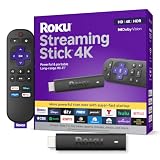
- Stunning 4K and Dolby Vision streaming made simple: With America’s number 1 TV streaming platform,* exploring popular apps—plus tons of free movies, shows, and live TV—is as easy as it is fun. *Based on hours streamed—Hypothesis Group
- Breathtaking picture quality: Stunningly sharp 4K picture brings out rich detail in your entertainment with four times the resolution of HD. Watch as colors pop off your screen and enjoy lifelike clarity with Dolby Vision and HDR10+.
- Seamless streaming for any room: With Roku Streaming Stick 4K, watch your favorite entertainment on any TV in the house, even in rooms farther from your router thanks to the long-range Wi-Fi receiver.
- Shows on the go: Take your TV to-go when traveling—without needing to log into someone else’s device.
- Compact without compromises: Our sleek design won’t block neighboring HDMI ports, so you can switch from streaming to gaming with ease. Plus, it’s designed to stay hidden behind your TV, keeping wires neatly out of sight
How to audit a statistic
Match the population, denominator, place and period
Every percentage needs a numerator and denominator. Determine whether the denominator is the whole population, respondents, voters who answered a particular question, households, cases, ballots or another subset. “Sixty percent support” has no stable meaning until the denominator and question are known.
Match the geography and time period. A national rate cannot be used to describe one city without evidence that the city is represented. A figure for a calendar year is not directly comparable with a figure for a six-month period, and a rate based on revised data may not match an earlier release. Write both periods beside the numbers before comparing them.
The Tool Desk
Outbyte Driver Updater FREEFix the driver behind crashes, sound loss and screen glitchesFind Drivers →Outbyte PC Repair FREERepair Windows errors before they cause bigger problemsFix Now →Recalculate when the underlying counts are available
Divide the stated numerator by the stated denominator and check the rounding. If a film says 30 cases out of 100, the displayed 30% is transparent. If it says “30% of participants” while the table contains 30 cases out of 80 respondents, the denominator has changed. Ask whether missing responses were excluded and whether the film silently switches between respondents and the full population.
Rates, counts and percentage-point changes are different measures. A rise from 10% to 15% is a five-percentage-point increase and a 50% relative increase. A documentary should identify which comparison it uses. Do not let a large relative percentage conceal a small absolute difference.
Look for selective baselines and false comparisons
Inspect the start date chosen for a trend. Beginning at an unusually low month can make ordinary variation look like a surge; ending before a reversal can make a temporary rise appear permanent. Use equal time windows and consistent definitions when comparing groups or periods.
BBC statistics guidance says figures should be contextualised, weighed, interpreted, challenged where appropriate and presented clearly. It also warns against false comparisons across groupings or time periods. Apply that test to maps and charts: are the categories mutually comparable, are boundaries consistent, and is the same measurement used throughout?
What’s actually slowing this PC down?
Pick the symptom - the matching free tool is one click away.
Demand appropriate precision and uncertainty
Decimal places imply measurement accuracy. A survey estimate reported to two decimal places may look more exact than the sampling and weighting support. Check whether the source itself reports an uncertainty range, confidence interval, revision status or missing-data warning.
Also popular on Amazon

- The Google TV Streamer (4K) delivers your favorite entertainment quickly, easily, and personalized to you[1,2]
- HDMI 2.1 cable required (sold separately)
- See movies and TV shows from all your services right from your home screen[2]; and find new things to watch with tailored recommendations for everyone in your home based on their interests and viewing habits
- Watch live TV and access over 800 free channels from Pluto TV, Tubi, and more[3]; if you find an interesting show or movie on your TV, mobile app, or Google search, you can easily add it to your watchlist, so it’s ready when you are[2]
- Up to 4K HDR with Dolby Vision delivers captivating, true-to-life detail[4]; and you can connect speakers that support Dolby Atmos for more immersive 3D sound
Ask what the number leaves out. A rate may omit people who were not counted, a poll may omit nonrespondents, and an average may hide a wide distribution. Missingness is not proof that the claim is wrong, but it is a reason to limit the conclusion to the observed data.
Compare competing claims without counting repetitions
When documentaries, campaigns and news reports disagree, compare their evidence on the same axes:
| Axis | Questions to ask |
|---|---|
| Provenance | Is this primary footage or data, or a recycled assertion with no underlying source? |
| Chronology | Do recording dates, field dates and publication dates fit the conclusion? |
| Wording | Are the same definitions, questions and response options being compared? |
| Population and denominator | Do both figures describe the same people and base? |
| Sampling and weighting | How were participants selected, screened and adjusted? |
| Uncertainty | Are sampling error, missing data and other limitations disclosed? |
| Incentives and conflicts | Who commissioned, funded or benefits from the claim? |
| Auditability | Can an independent reader inspect the footage, questionnaire, counts or code? |
Prefer the source that allows inspection of the original question, recording or data. Do not resolve disagreement by counting how many outlets repeat a statement; repetition is not independent corroboration.
Recommended Free Tools
A practical viewing workflow
- Freeze the claim. Transcribe the exact words or number, preserving nearby qualifications, and record the date and geography.
- Classify it. Mark whether it is a fact, estimate, prediction, causal claim or interpretation.
- Locate the source. Find the full interview, event recording, original poll release, questionnaire or underlying dataset.
- Audit the edit. Mark cuts, reaction shots, music cues, B-roll, subtitles, narrator paraphrases and chronology changes.
- Audit the poll. Record pollster, payer, mode, target population, total and subgroup samples, field dates, wording, order, weighting and stated uncertainty.
- Audit the statistic. Identify numerator, denominator, geography, period, definitions, missing data, baseline and precision.
- Test the inference. Decide whether the evidence supports a description, a comparison, a causal explanation or only a possibility.
- Write a bounded conclusion. State what is established, what is uncertain and what cannot be checked from the material provided.
Keep the original clip, transcript and calculation beside your notes. If you publish a correction or critique, quote enough surrounding context for another viewer to reproduce your finding.
When the source material is unavailable
Sometimes a documentary does not provide the full interview, questionnaire or data. Do not infer that missing material proves deception. Instead, narrow the claim: “The film does not show the surrounding exchange,” “The poll’s field dates are not stated,” or “The denominator is unclear.” That is a finding about verifiability, not an accusation about intent.
Distinguish three conclusions:
- Supported: the original material and context match the documentary’s claim.
- Misleading presentation: the underlying material may be genuine, but editing, omission or framing invites a stronger conclusion than it supports.
- Unverifiable from the film: essential footage, methodology or definitions are missing.
Use “misleading” carefully. It describes the effect on a reasonable viewer when context or presentation materially changes the apparent meaning; it does not by itself establish the filmmaker’s intent.
What historical poll evaluations can—and cannot—show
Pew Research Center’s 2021 evaluation found that 93% of national polls overstated the Democratic candidate’s support in 2020 and 88% did so in 2016. These are historical evaluations of final estimates, not a general finding that every poll is inaccurate. They show why a documentary should identify the election, polling average or individual survey being discussed and avoid turning a past polling error into a universal rule.
PC Slower Than It Used to Be?
A free scan shows the junk files, broken settings and background clutter dragging Windows down - then fixes them in one click.Free scan · Windows 10 & 11Outdated Drivers Are Slowing You Down
One free scan finds every outdated or missing driver and matches the right update for your exact hardware.Free scan · exact hardware matchLikewise, a poll that was close to the final result does not become a prediction of the outcome merely because it was later accurate. Its field dates and stated purpose still define what it measured.
Keep jurisdiction and edition in view
Polling regulation, disclosure practice, archival standards and broadcaster obligations differ by country and election system. The checks in this guide apply broadly, but legal requirements and professional codes may vary. Identify the jurisdiction, election type, documentary edition and release date before treating one broadcaster’s practice as universal.
For a final editorial decision, follow the strongest available primary material: the complete recording, the pollster’s questionnaire and methodology, the dataset or official statistical release, and a clearly dated correction or revision history. The more consequential the claim, the more important it is that a viewer can inspect the evidence rather than rely on the film’s confidence.
Quick Recap
Product prices and availability are accurate as of the date/time indicated and are subject to change. Any price and availability information displayed on Amazon at the time of purchase will apply.






Say something about this film