Free tools Windows power users keep installed
One-click scans. No signup required.
Some links on this page are affiliate links: if you buy through them we may earn a commission, at no extra cost to you.
Evaluate a documentary pitch as a promise: does it offer a distinctive idea, a reportable story, trustworthy evidence, fair treatment of people and disputes, and a format the team can actually deliver? Start with outlet eligibility and audience fit, then test the proposition, story engine, reporting plan, editorial independence, genre-specific risks, and production feasibility. A subject can be important and still make a weak pitch if nothing changes on screen, the access is speculative, or the evidence cannot support the promised conclusion.
The framework below is designed for commissioners, editors, development teams, and producers assessing science, nature, and current-affairs proposals. It draws on BBC commissioning guidance, PBS SoCal editorial principles, and FRONTLINE standards. Those are useful reference points, not a universal scorecard: each outlet sets its own thresholds, formats, deadlines, and submission rules.
1. Confirm the outlet, audience, and submission route
Before judging creativity, establish whether the proposal can legally and practically reach the outlet being pitched. A brilliant idea sent through the wrong channel is not an eligible proposal.
Check the audience promise
Ask who the intended viewer or listener is and what the outlet already promises that audience. A specialist science service may expect methodological detail and expert contributors; a broad current-affairs strand may need a clear human entry point and immediate public significance. “This matters to everyone” is not an audience strategy. The pitch should identify the relevant strand, slot, platform, territory, language, and likely duration, then explain why that audience would choose this treatment over existing coverage.
Popular on Amazon

- HD streaming made simple: With America’s number 1 TV streaming platform,* exploring popular apps—plus tons of free movies, shows, and live TV—is as easy as it is fun. *Based on hours streamed—Hypothesis Group
- Compact without compromises: The sleek design of Roku Streaming Stick won’t block neighboring HDMI ports, and it even powers from your TV alone, plugging into the back and staying out of sight. No wall outlet, no extra cords, no clutter.
- No more juggling remotes: Power up your TV, adjust the volume, and control your Roku device with one remote. Use your voice to quickly search, play entertainment, and more.
- Shows on the go: Take your TV to-go when traveling—without needing to log into someone else’s device.
- TV, simplified: With setup that only takes minutes, a simple-to-navigate Home Screen, and an uncluttered remote control that does all you need—Roku makes it easier to watch the TV you love.
Verify eligibility and materials
Read the outlet’s current terms rather than relying on industry folklore. BBC PiCoS says it formally considers proposals uploaded through its system and lists materials such as treatments, scripts, outlines, development documents, artwork, and synopses. Its terms state that it does not accept ideas from members of the public or individuals who are not working for a production company. Netflix likewise says it does not accept unsolicited submissions and requires a suitable intermediary with an existing relationship. These are outlet-specific rules, not a general rule that applies to every commissioner.
Record the exact submission route, who is eligible to submit, required attachments, rights information, deadlines, format limits, and whether simultaneous submissions are allowed. If the proposal depends on a co-production, archive licence, broadcaster referral, or development fund, state what is already secured and what remains conditional.
Separate fit from personal taste
An editor may dislike a subject yet recognise a strong fit, or love a subject that belongs elsewhere. Make the fit test explicit: audience need, strand remit, editorial ambition, duration, territory, and scheduling. This prevents a familiar brand preference from replacing a defensible commissioning decision.
Quick wins for a faster PC:
Scan for outdated or missing drivers - takes under a minuteDriver Scan →Repair Windows errors before they cause bigger problemsFix Now →Fix the driver behind crashes, sound loss and screen glitchesFind Drivers →2. Define the distinctive proposition
A pitch needs more than an important topic. It needs a fresh insight, a surprising connection, a new access point, or an original treatment that changes what the audience will understand or feel.
Reduce the idea to three sentences
- Subject: What is the documentary about in concrete terms?
- Insight: What does the proposal reveal, challenge, or newly connect?
- Treatment: How will viewers experience that insight through characters, investigation, observation, archive, data, or visual form?
If an editor cannot restate those three elements after one read, the proposition is not yet clear. A long list of themes—climate, biodiversity, inequality, technology, politics—usually signals that the idea has not chosen its centre.
Make the point of view visible
Every documentary makes choices about whose experience is foregrounded, which questions are pursued, and what evidence receives time. PBS SoCal allows a documentary to have a point of view, but says producers should be transparent about why they focus on that view and how sources were selected. A pitch should therefore name its working perspective without pretending to offer a view from nowhere. “We will investigate whether a new conservation policy is achieving its stated goals” is more honest than “We will present all sides of conservation.”
Distinguish novelty from novelty claims
“The first,” “untold,” and “ground-breaking” are claims requiring proof. Test what is genuinely new: exclusive access, newly available records, a scientific development not yet explained for this audience, an overlooked community, a longitudinal relationship, or a form that makes complex evidence legible. If the novelty is only a dramatic adjective, remove it and strengthen the reporting.
The BBC Radio 4 commissioning brief for its 2025–26 42-minute documentary-series slot put the requirement plainly: “Every idea commissioned in this slot will need to be driven by a fresh insight or original treatment.” That sentence belongs to a dated brief, but the editorial question remains useful.
3. Test the story engine and scope
The story engine is the force that keeps the film moving. Identify what changes, unfolds, is discovered, or is contested from the opening to the ending. A subject is not automatically a story: “the history of ocean pollution” has a topic, while “a coastal laboratory races to verify whether a suspected toxin is entering a community’s water supply” has a process, stakes, and uncertainty.
Also popular on Amazon

- Ultra-speedy streaming: Roku Ultra is 30% faster than any other Roku player, delivering a lightning-fast interface and apps that launch in a snap.
- Cinematic streaming: This TV streaming device brings the movie theater to your living room with spectacular 4K, HDR10+, and Dolby Vision picture alongside immersive Dolby Atmos audio.
- The ultimate Roku remote: The rechargeable Roku Voice Remote Pro offers backlit buttons, hands-free voice controls, and a lost remote finder.
- No more fumbling in the dark: See what you’re pressing with backlit buttons.
- Say goodbye to batteries: Keep your remote powered for months on a single charge.
Find the forward motion
Look for one or more of these engines:
- Investigation: the team tests a claim, follows documents, or resolves a disputed account.
- Observation: a project, expedition, trial, season, election, court process, or policy rollout develops in real time.
- Character journey: a participant’s decisions expose a larger system without turning the person into a proxy for every issue.
- Discovery: new evidence changes the working explanation.
- Conflict: people with consequentially different interests contest facts, decisions, or responsibility.
Ask what the audience will know at the end of each act or episode that it could not know at the beginning. If the answer is “more background,” the proposal may be an essay or explainer rather than a sustained documentary.
Match scope to access
For every promised scene, contributor, document, location, or event, identify the access status: confirmed, requested, plausible, or speculative. A pitch that depends on a closed laboratory, a confidential source, or a future political decision must explain the fallback if access fails. Do not treat a producer’s hope that someone will participate as access.
Design a series that can carry episodes
A series needs a clear architecture, not a single feature stretched into instalments. State the question, emotional or investigative turn, and evidence base for each episode. The BBC brief asked series proposers to explain how an idea would play across episodes and noted that a narrow slice can illuminate a broad subject better than attempting its entire history. Use that principle to constrain ambition: one watershed, trial, island, institution, family, or season may reveal a system more effectively than a tour of every example.
Set a defensible ending
Do not promise a verdict that reporting has not established. Describe the possible outcomes and what evidence would change the working thesis. An open ending can be editorially strong when the uncertainty is real and the reporting process makes it meaningful; it is weak when it simply conceals that the team has no conclusion.
4. Examine evidence and the reporting plan
Editors are not only buying an idea. They are assessing whether the production can know what it claims to know.
Build a source map
Require the pitch to identify the evidence categories it will use:
Recommended Free Tools
- Primary records, datasets, scientific papers, field observations, legal filings, official decisions, or contemporaneous documents.
- Named contributors with relevant expertise or direct experience.
- Independent corroboration for material claims.
- Records of uncertainty, missing data, conflicts of interest, and plausible alternative explanations.
“Experts will explain” is not a reporting plan. The proposal should say which experts, why they are qualified, what they can personally establish, and who will challenge or contextualise their interpretation.
Plan verification before filming ends
FRONTLINE’s standards require end-of-program fact-checking. Its long-form example checks every factual assertion in narration, interview synch, and pictures, with sources shown in a fact-checking document or annotated script. Adopt that discipline at development stage: create a claims log with the wording, source, date, status, and responsible researcher. Flag claims that could damage someone’s reputation for enhanced verification and legal review.
Separate observation from inference
A picture can be authentic and still mislead. A predator appearing after a dramatic cut does not prove it caused an ecological change; a graph showing correlation does not establish causation; an emotional interview does not establish the accuracy of every recalled detail. Ask what each sequence demonstrates, what it merely suggests, and what narration must qualify.
Also popular on Amazon

- 4K streaming made simple:With America’s number 1 TV streaming platform,* exploring popular apps—plus tons of free movies, shows, and live TV—is as easy as it is fun. *Based on hours streamed—Hypothesis Group
- 4K picture quality: With Roku Streaming Stick Plus, watch your favorites with brilliant 4K picture and vivid HDR color.
- Compact without compromises: Our sleek design won’t block neighboring HDMI ports, and it even powers from your TV alone, plugging into the back and staying out of sight. No wall outlet, no extra cords, no clutter.
- No more juggling remotes: Power up your TV, adjust the volume, and control your Roku device with one remote. Use your voice to quickly search, play entertainment, and more.
- Shows on the go: Take your TV to-go when traveling—without needing to log into someone else’s device.
State what remains unknown
Credibility increases when a pitch names limits: a short monitoring period, incomplete baseline data, inaccessible records, disputed methods, or a sample too small for broad conclusions. The reporting plan should explain how the team will avoid turning those limits into false certainty.
Do these 3 things before closing this tab:
1Repair Windows errors before they cause bigger problems2Fix the driver behind crashes, sound loss and screen glitches3Clear out junk files and repair common Windows errors5. Test fairness, context, and independence
Fairness is an evidence and process standard, not a requirement to give every claim equal airtime.
Represent arguments accurately
Read the strongest version of each significant position before deciding how much weight it deserves. PBS SoCal states: “Fairness does not require that equal time be given to conflicting opinions or viewpoints.” A well-supported scientific consensus does not need artificial balance with an unsupported claim, but the contrary view may still need examination if it explains a material uncertainty or a real consequence for people in the story.
Offer a meaningful right of response
PBS SoCal also says: “Producers must give those they cover the opportunity to present their strongest case, while always providing appropriate context to the audience, and producers must give those who are the subject of criticism a reasonable opportunity to respond.” Build that into the schedule, not the final afternoon before delivery. Send precise allegations or findings, allow reasonable time, preserve the response accurately, and record attempts when a subject declines.
Disclose influence
Map funders, access providers, institutional partners, contributors, owners of key data, and anyone with approval rights. Ask whether money, access, branding, contractual clauses, or personal relationships could shape story selection or conclusions. The pitch should state editorial safeguards, including who controls the final cut, how conflicts will be disclosed, and what happens if a funder withdraws after an unfavourable finding.
What’s actually slowing this PC down?
Pick the symptom - the matching free tool is one click away.
Protect vulnerable contributors
Consider consent, power imbalance, safeguarding, anonymity, retraumatisation, retaliation, and the consequences of publication in the contributor’s community. A compelling scene is not automatically an ethical scene. Explain how consent will be revisited when circumstances change and how identifying details will be handled where necessary.
6. Apply science and nature tests
PBS SoCal’s standard is direct: “Science and natural history program producers have the same obligation as those producing journalism to provide accurate, credible information and examine contrary views.” Apply that obligation to both the facts and the storytelling devices.
Check the quality and limits of the evidence
- What study, observation, model, or dataset supports the central claim?
- Was it peer reviewed, independently replicated, or still preliminary?
- What population, location, season, or time period does it cover?
- Are uncertainty ranges, sample limits, and competing explanations explained?
- Does an expert have a financial, institutional, or advocacy interest that viewers should know?
For field science, distinguish a dramatic individual encounter from a population-level conclusion. A rare animal sighting can establish presence at one time and place; it cannot by itself establish a population trend.
Audit visual inference
Use maps, animation, reconstructions, scale changes, sound design, and chronological edits transparently. Label reconstructions and illustrative graphics. Do not imply that an animal behaviour was captured in the stated sequence if shots were recorded at different times. Explain when a modelled image, laboratory demonstration, or archive clip stands in for an event that was not filmed.
Also popular on Amazon
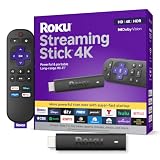
- Stunning 4K and Dolby Vision streaming made simple: With America’s number 1 TV streaming platform,* exploring popular apps—plus tons of free movies, shows, and live TV—is as easy as it is fun. *Based on hours streamed—Hypothesis Group
- Breathtaking picture quality: Stunningly sharp 4K picture brings out rich detail in your entertainment with four times the resolution of HD. Watch as colors pop off your screen and enjoy lifelike clarity with Dolby Vision and HDR10+.
- Seamless streaming for any room: With Roku Streaming Stick 4K, watch your favorite entertainment on any TV in the house, even in rooms farther from your router thanks to the long-range Wi-Fi receiver.
- Shows on the go: Take your TV to-go when traveling—without needing to log into someone else’s device.
- Compact without compromises: Our sleek design won’t block neighboring HDMI ports, so you can switch from streaming to gaming with ease. Plus, it’s designed to stay hidden behind your TV, keeping wires neatly out of sight
Handle contrary views proportionately
Identify credible disagreement about methods, interpretation, or policy. Do not manufacture a dispute where the evidence is settled, and do not hide a serious limitation because it complicates the narrative. The editorial question is whether the audience can understand why qualified people disagree and how the available evidence bears on that disagreement.
Plan safety and environmental care
Nature access can affect habitats, animals, field teams, and local communities. Detail permits, biosecurity, distance rules, weather contingencies, and non-interference practices. A sequence that creates the behaviour it claims to observe is both an ethical and evidentiary failure.
7. Apply current-affairs tests
Current-affairs proposals carry heightened risks because allegations, reputations, and public decisions may change while production is underway.
Specify the allegation or public-interest question
Define what is being tested, who is affected, and why the matter is timely. Avoid a vague promise to “expose corruption” or “reveal the truth.” Name the decision, conduct, policy, spending, harm, or accountability gap that reporting will examine.
The Tool Desk
Outbyte Driver Updater FREEScan for outdated or missing drivers - takes under a minuteDriver Scan →Outbyte PC Repair FREERepair Windows errors before they cause bigger problemsFix Now →Corroborate and test source motives
For each source, ask what they know first-hand, what they stand to gain, whether they have a dispute with the subject, and whether independent evidence supports their account. Anonymous sources may be necessary, but the pitch should explain verification, editorial approval, security, and why anonymity is proportionate.
Keep context current
Mark dates on documents, statistics, quotes, and policy positions. A claim that was accurate when recorded may be misleading after an election, court ruling, scientific retraction, or policy change. Build a late-stage update check into the production plan and decide how the programme will handle developments that contradict its working thesis.
Separate accusation from finding
Use precise language: “alleged,” “according to,” “the records show,” and “the available evidence does not establish” are not interchangeable. The stronger the reputational risk, the more exact the wording, documentation, and right-of-reply process must be.
Independent reader supportYour contribution helps us test, update, and keep practical guides available for everyone.8. Decide whether the promise is deliverable
Assess risk before commissioning, when there is still time to redesign the project.
Editorial risks
- The central question may be answered before filming begins.
- The proposed protagonist may withdraw or lack decision-making power.
- The evidence may not support the dramatic thesis.
- The subject may expand beyond the available duration.
Access and production risks
- Permits, travel, archive rights, data access, or institutional approvals may fail.
- Seasonal or time-sensitive events may not recur.
- Safety, weather, conflict, disease, or political restrictions may prevent filming.
- Specialist post-production, translation, legal review, or accessibility work may exceed the schedule.
Require fallback paths
For each critical dependency, ask what happens if it fails. A strong fallback preserves the question and evidence base rather than substituting a weaker subject at the last minute. Set decision gates: proceed after access confirmation, pause if a key source cannot be corroborated, and revise the thesis if reporting changes the facts.
Also popular on Amazon

- The Google TV Streamer (4K) delivers your favorite entertainment quickly, easily, and personalized to you[1,2]
- HDMI 2.1 cable required (sold separately)
- See movies and TV shows from all your services right from your home screen[2]; and find new things to watch with tailored recommendations for everyone in your home based on their interests and viewing habits
- Watch live TV and access over 800 free channels from Pluto TV, Tubi, and more[3]; if you find an interesting show or movie on your TV, mobile app, or Google search, you can easily add it to your watchlist, so it’s ready when you are[2]
- Up to 4K HDR with Dolby Vision delivers captivating, true-to-life detail[4]; and you can connect speakers that support Dolby Atmos for more immersive 3D sound
9. Compare competing pitches on the same axes
When several proposals are viable, compare them using a shared framework before debating taste. The table is a decision aid, not a mechanical score.
| Axis | Questions to ask | Evidence of strength |
|---|---|---|
| Outlet and audience fit | Does it belong in this strand, territory, duration, and platform? Can the team submit it through the permitted route? | Named audience, clear slot rationale, verified eligibility, complete materials. |
| Originality and insight | What is newly revealed or newly experienced? | A concise proposition supported by distinctive access, evidence, or treatment. |
| Story engine | What changes, unfolds, or is contested? | Concrete scenes, decisions, discoveries, or episode turns. |
| Evidence and verification | Can important claims be established and checked? | Primary material, credible contributors, corroboration plan, claims log. |
| Format and scope | Can the idea sustain the proposed length or series architecture? | Act or episode outline with a defensible ending and fallback. |
| Fairness and context | Are people represented accurately and given a meaningful response opportunity? | Source-selection rationale, context plan, right-of-reply timetable. |
| Independence | Could funders, access, or contributors influence editorial choices? | Conflict map, disclosure plan, final-cut safeguards. |
| Deliverability | Can the team obtain access, work safely, clear rights, and deliver on time? | Confirmed dependencies, risk register, budget and schedule assumptions. |
Use written reasons for each judgement. A proposal with a slightly less fashionable subject but confirmed access and verifiable evidence may be stronger than a spectacular concept resting on one uncommitted participant.
10. Use a repeatable editorial workflow
- Eligibility pass: confirm outlet, audience, submission route, rights, format, and deadline.
- One-page proposition: write the subject, insight, point of view, treatment, and intended audience in plain language.
- Story-engine pass: map the opening situation, turning points, evidence or events, and possible endings.
- Access audit: label every essential contributor, location, document, event, and archive element as confirmed, requested, plausible, or speculative.
- Evidence audit: list central claims, sources, corroboration, uncertainties, and claims that require specialist or legal review.
- Fairness review: identify affected parties, strongest opposing arguments, response opportunities, vulnerable contributors, and contextual material.
- Independence review: disclose funding, partnerships, access conditions, conflicts, and editorial controls.
- Genre review: apply the science-and-nature or current-affairs tests, including visual inference and allegation handling.
- Risk gate: decide which failure would make the project impossible and what fallback protects the editorial purpose.
- Decision memo: record the reasons to commission, develop, revise, defer, or decline, including the evidence that would change the decision.
11. Common red flags and how to repair them
“It is important, so it should be commissioned”
Problem: importance is substituted for a distinctive story. Repair: identify the specific unanswered question, access, event, or evidence that creates forward motion.
Windows Errors? Fix Them Before They Spread
Repair common Windows errors and clear accumulated junk for a smoother, more stable PC - no reinstall needed.Free scan · no reinstallOutdated Drivers Are Slowing You Down
One free scan finds every outdated or missing driver and matches the right update for your exact hardware.Free scan · exact hardware match“We will show both sides”
Problem: equal airtime is treated as fairness, even when evidence is unequal. Repair: define the relevant disagreement, assess credibility openly, and give each material position accurate representation and context.
“Experts will explain the science”
Problem: expertise is asserted without a source or verification plan. Repair: name qualifications, potential conflicts, primary evidence, contrary findings, and the limits each expert can responsibly address.
“Access is being arranged”
Problem: a central scene is speculative. Repair: state the access status, deadline for confirmation, editorial fallback, and whether the story still works without it.
“The film will reveal the truth”
Problem: the conclusion is predetermined. Repair: state the working hypothesis, disconfirming evidence, and how the treatment will change if reporting contradicts it.
“Dramatic footage will make the point”
Problem: images are asked to prove more than they show. Repair: distinguish observation from inference, label reconstruction, preserve chronology, and explain what the footage cannot establish.
12. What a commissioning-ready pitch should contain
- A working title and concise logline.
- The audience, outlet, strand, format, duration, territory, and submission eligibility.
- The distinctive insight or treatment, with an explicit point of view.
- The story engine: what unfolds, changes, is discovered, or is contested.
- Main characters or contributors, their access status, and why each is editorially necessary.
- Primary evidence, corroboration methods, experts, documents, data, and known uncertainties.
- A scene-led outline for a single film or an episode-by-episode architecture for a series.
- Fairness, context, right-of-reply, safeguarding, anonymity, and conflict-of-interest plans.
- Science, nature, or current-affairs safeguards appropriate to the subject.
- Rights, permits, safety, archive, accessibility, budget, schedule, and fallback assumptions.
- A clear statement of what would change the working thesis and what a responsible ending could be.
For a final quality check, ask an editor who has not developed the idea to summarise its proposition, story engine, evidence plan, and largest risk after one read. If those answers differ from the pitch, revise before submission. The strongest proposal is not the one with the biggest subject or most confident conclusion; it is the one whose insight, reporting, fairness, and production plan reinforce one another.
Quick Recap
Product prices and availability are accurate as of the date/time indicated and are subject to change. Any price and availability information displayed on Amazon at the time of purchase will apply.






Say something about this film