Free tools Windows power users keep installed
One-click scans. No signup required.
Some links on this page are affiliate links: if you buy through them we may earn a commission, at no extra cost to you.
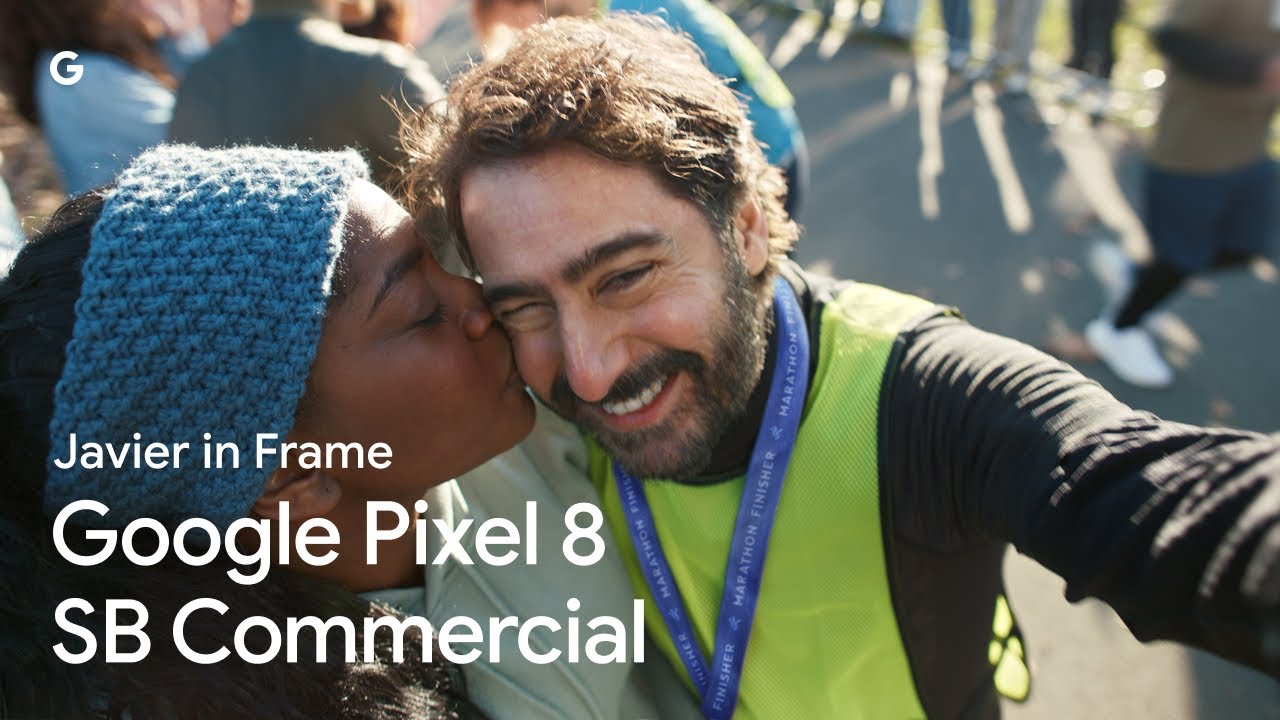
Google Pixel’s “Javier in Frame” was a 60-second Super Bowl LVIII commercial about a blind man using the phone’s Guided Frame feature to photograph the people and milestones in his life. Released ahead of the February 11, 2024 game, the ad made accessibility part of both its product story and its production: blind filmmaker Adam Morse directed it, blind actor Javier Kussrow played Javier, and Stevie Wonder narrated it. That makes the spot a notable example of disability-centered advertising—not proof that one phone works for every blind or low-vision user.
A life story, not just a camera demonstration
“Javier in Frame” follows Javier as he takes photographs of meaningful moments: time with a partner, travel, and eventually the arrival of a child. The commercial begins with indistinct, blurred imagery, then shows how Guided Frame can help him position the camera and capture recognizable pictures. Rather than treating the phone as a cure for blindness, the story presents it as a tool that gives Javier another way to make and keep photographs.

The ad was published by Google on February 2, 2024, before Super Bowl LVIII. It promoted the Pixel 8 and was listed as a 60-second spot in the game’s second quarter. Google’s campaign announcement explains the story and feature; iSpot’s Super Bowl advertiser listing records the placement and length.
What Guided Frame does
Guided Frame is a camera accessibility feature intended to help blind and low-vision users frame photographs. Google describes it as combining spoken cues, high-contrast animations, and haptic feedback. The guidance can indicate where a subject is in the frame, helping the user adjust the phone before taking a picture. Google says the feature expanded from front-camera selfies to rear-camera photography and can recognize faces, pets, food, and objects.
Popular on Amazon

- Attention-grabbing design meets the latest evolution of the Google Pixel Camera on the new Google Pixel 11 Pro; Gemini Intelligence helps manage details so you can live in the moment[1]; and the phone is available in two sizes
- Unlocked Android phone gives you the flexibility to change carriers and choose your own data plan: Works with Google Fi, Verizon, T-Mobile, AT&T, and other major carriers[2]
- Stay informed without looking at your screen: When your phone is face down, Pixel HiLight gently alerts you with subtle glowing lights when your favorite contacts are calling or you’re talking with Gemini; exclusive to Google Pixel 11 Pro phones
- Magic Capture catches the moment as you live it: With just one tap, Pixel 11 Pro captures video and photos, and automatically edits, crops, and unblurs a curated collection, ready to share – and you get the memory of how it felt to be in the moment
- Two new cameras for more brilliant photos: A larger telephoto sensor captures 30% more light for clear, beautiful photos and videos, even in the dark[3]; Pixel’s longest zoom ever helps you capture details from impressive distances[4]
Those are design goals and capabilities described by Google, not a guarantee of perfect recognition or a substitute for vision. The commercial demonstrates a polished use case; it does not establish accuracy in every setting, performance in difficult lighting, compatibility with every Pixel generation, or suitability for every user. Anyone considering a phone for accessibility should check current support for the specific model and software version and, where possible, try the feature in their own conditions.
Inclusion behind the camera
The production choices help explain why the spot drew attention beyond its emotional plot. Google identifies Adam Morse, a blind filmmaker, as the director. Javier Kussrow, a blind actor, takes the title role; campaign credits identify Stevie Wonder, who is blind, as narrator. The commercial was also released with an audio-described version, making the campaign itself more accessible to blind and low-vision viewers. The Made by Google video presents the spot, while campaign credits identify the featured talent.
Also popular on Amazon

- Google Pixel 10a is a durable, everyday phone with more[1]; snap brilliant photography on a simple, powerful camera, get 30+ hours out of a full charge[2], and do more with helpful AI like Gemini[3]
- Unlocked Android phone gives you the flexibility to change carriers and choose your own data plan; it works with Google Fi, Verizon, T-Mobile, AT&T, and other major carriers
- Pixel 10a is sleek and durable, with a super smooth finish, scratch-resistant Corning Gorilla Glass 7i display, and IP68 water and dust protection[4]
- The Actua display with 3,000-nit peak brightness shows up clear as day, even in direct sunlight[5]
- Plan, create, and get more done with help from Gemini, your built-in AI assistant[3]; have it screen spam calls while you focus[6]; chat with Gemini to brainstorm your meal plan[7], or bring your ideas to life with Nano Banana[8]
Google says it sought input from employees, subject-matter experts, community leaders, and the disabled community. That is the company’s account of its process, rather than an independent audit of who held decision-making authority. Still, putting disabled people in prominent creative and performance roles is more concrete than simply placing a disabled character in the background.
Morse also used petroleum jelly on the camera lens to create the commercial’s blurred visual treatment. The effect invites sighted viewers into a deliberately limited perspective, but it should not be mistaken for a universal picture of blindness. Blindness and low vision encompass many different experiences; blur represents one possible visual condition, not everyone’s.
Also popular on Amazon
Why the story feels different from a conventional “inclusion” spot
The campaign’s strongest case for inclusion is specific. Javier is the protagonist, not an object of pity. The story gives him relationships, travel, family life, and the desire to document ordinary as well as major moments. The advertised technology addresses a real access task—composing a photograph—and the feature is integrated into the narrative rather than appended as a vague pledge about accessibility.
That does not make the commercial neutral: it is advertising for a phone, and its uplifting arc serves a brand purpose. But its emotional presentation and its product message are not mutually exclusive. A campaign can make useful technology visible while still being evaluated critically for accuracy, usability, and the breadth of the representation.
Also popular on Amazon

- Google Pixel 10 Pro is the ultimate Pixel experience, featuring advanced AI with Gemini, unbelievable camera quality, impeccable design in two sizes, and the next-gen Google Tensor G5 chip[1]
- Unlocked Android phone gives you the flexibility to change carriers and choose your own data plan[2]; it works - Google Fi, Verizon, T-Mobile, AT&T, and other major carriers
- Get a head start on syncing your data before it even arrives: After you purchase your new Pixel, look for an email that explains how to transfer your photos, videos, passwords, and more in just a few quick steps[11]
- Pixel’s pro camera system makes everything look amazing, even in low light; capture more of the scene with advanced Google AI models, and bring out incredible details with 100x Pro Res Zoom, stunning 50 MP images, and super steady videos in 8K[10]
- Pixel 10 Pro is built with durable aluminum and Corning Gorilla Glass Victus 2 for scratch and drop resistance; the 6.3-inch Super Actua display with 3,300-nit peak brightness is easy on the eyes, even in direct sunlight[3,13,18]
Part of a longer Pixel advertising sequence
Google presented “Javier in Frame” as part of a continuing Pixel campaign around representation and camera technology. It followed “Seen on Pixel,” focused on Real Tone and skin-tone representation, and “Fixed on Pixel,” released in 2023. Google’s account frames the sequence as sustained work; the ads themselves show repeated campaign themes, but do not by themselves prove the accessibility of every product or service the company offers.
The spot later appeared in the American Advertising Federation’s consumer-selected Mosaic 10 list of impactful multicultural advertising, as recorded in the AAF’s 2025 annual report. That is a specific recognition, not a definitive or universal award for being the most inclusive Super Bowl ad.
What the commercial cannot prove
- One story is not every story. Javier’s experience cannot stand in for all blind and low-vision people.
- A feature demonstration is not an accessibility audit. The campaign does not independently test Guided Frame’s reliability, model availability, or performance across environments.
- Representation does not settle every production question. The named disabled director and performers matter, but the public campaign account does not establish how every decision was made or who controlled it.
- A commercial is not a substitute for broader access. A memorable ad can highlight one useful design feature without resolving the wider barriers disabled people encounter in technology.
Those limits do not erase what the ad does well. “Javier in Frame” connects an actual camera accessibility feature to a full, personal narrative and includes blind talent in prominent roles on both sides of the camera. Its achievement is best understood as a meaningful, specific example of inclusive storytelling—not a universal verdict on Pixel accessibility or on disability representation in advertising.






Say something about this film