Some links on this page are affiliate links: if you buy through them we may earn a commission, at no extra cost to you.
The Sundance Institute’s dedicated Documentary Film Program (DFP) began in 2002, when the Soros Documentary Fund became the Sundance Documentary Fund with founding support from Open Society Foundations. Its roots reach back to the Institute’s 1980–81 artist labs and the Sundance Film Festival’s early commitment to documentary. What started as a grant fund developed into a year-round, global support system combining grants, residential labs, editing and story work, producer development, and distribution strategy.
How did Sundance build the foundation for a documentary program?
The DFP was not created in isolation. It grew from an institutional model centered on artist development, independent production and public exhibition.
| Year | Development | Why it mattered for documentary support |
|---|---|---|
| 1961 | Robert Redford’s motorcycle trip brought him to Provo Canyon, where he bought two acres and built a cabin. | It established the Utah setting later associated with Sundance. |
| 1969 | Redford bought 5,000 acres, named the land Sundance after his role in Butch Cassidy and the Sundance Kid, and opened Sundance Mountain Resort. | The site became the physical home for later artist programs. |
| 1980 | Redford convened colleagues in Sundance, Utah, to consider an institute restoring craft, story and the human being to filmmaking. | This meeting marked the beginnings of the nonprofit Sundance Institute. |
| 1981 | The first Sundance lab brought 17 independent filmmakers to the resort, with advisors including Sydney Pollack and Waldo Salt. | The lab model established intensive, advisor-led development as a core form of support. |
| 1985 | Sundance assumed creative and administrative control of the U.S. Film Festival, later renamed the Sundance Film Festival. | The expanded 10-day event showcased new American narrative and documentary films alongside international work. |
| 1997 | The Institute partnered with UCLA to create the Sundance Collection at UCLA. | The archive added preservation of independent cinema to the Institute’s cultural role. |
When was the Sundance Documentary Film Program founded?
The dedicated program dates to 2002. That year, the Soros Documentary Fund became the Sundance Documentary Fund and was adopted as a core Sundance Institute program, with Open Society Foundations providing founding support. The change matters because 1981 refers to the first Sundance lab—not the founding of a documentary department.
Do these 3 things before closing this tab:
1Repair Windows errors before they cause bigger problems2Fix the driver behind crashes, sound loss and screen glitches3Clear out junk files and repair common Windows errorsAt its formal beginning, the DFP combined grantmaking with creative and strategic assistance for nonfiction filmmakers. Its mission was therefore broader than writing checks: the Institute sought to help filmmakers make stronger work and navigate the decisions that determine whether a documentary reaches an audience.
Popular on Amazon

- HD streaming made simple: With America’s number 1 TV streaming platform,* exploring popular apps—plus tons of free movies, shows, and live TV—is as easy as it is fun. *Based on hours streamed—Hypothesis Group
- Compact without compromises: The sleek design of Roku Streaming Stick won’t block neighboring HDMI ports, and it even powers from your TV alone, plugging into the back and staying out of sight. No wall outlet, no extra cords, no clutter.
- No more juggling remotes: Power up your TV, adjust the volume, and control your Roku device with one remote. Use your voice to quickly search, play entertainment, and more.
- Shows on the go: Take your TV to-go when traveling—without needing to log into someone else’s device.
- TV, simplified: With setup that only takes minutes, a simple-to-navigate Home Screen, and an uncluttered remote control that does all you need—Roku makes it easier to watch the TV you love.
How did the program expand beyond grants?
During the next decade, Sundance added interventions at specific points in a documentary’s life cycle.
Craft and post-production labs
In 2003–04, the program added a Composers Lab and an Edit and Storytelling Lab. These initiatives brought music, editorial structure and post-production decision-making into the support system, areas that can determine a film’s voice as much as its initial premise.
International and formally innovative work
From 2005 to 2007, the Festival launched its World Cinema Competition and New Frontier section. The changes increased visibility for international and formally experimental storytelling, including documentaries that did not fit conventional narrative expectations.
Distribution and ownership
In 2011, #ArtistServices—later renamed the Creative Distribution Initiative—helped alumni retain ownership while reaching audiences through digital platforms such as iTunes, Amazon and Netflix. This shifted the Institute’s role toward release strategy as well as development and production.
Also popular on Amazon

- Ultra-speedy streaming: Roku Ultra is 30% faster than any other Roku player, delivering a lightning-fast interface and apps that launch in a snap.
- Cinematic streaming: This TV streaming device brings the movie theater to your living room with spectacular 4K, HDR10+, and Dolby Vision picture alongside immersive Dolby Atmos audio.
- The ultimate Roku remote: The rechargeable Roku Voice Remote Pro offers backlit buttons, hands-free voice controls, and a lost remote finder.
- No more fumbling in the dark: See what you’re pressing with backlit buttons.
- Say goodbye to batteries: Keep your remote powered for months on a single charge.
The art of nonfiction
The pilot year of the Art of Nonfiction Initiative concluded in 2016. It explicitly elevated cinematic nonfiction as an art and craft, reinforcing the DFP’s interest in form, point of view and construction rather than treating documentaries solely as vehicles for information or advocacy.
What changed for Sundance documentary work from 2020 to 2025?
The Institute’s recent history shows how its support model adapted during disruption while preserving access to artists.
- 2020: In response to COVID-19 closures, Sundance created the Respond & Reimagine Plan to redistribute funds to artists and arts organizations. Summer labs moved online through Sundance Collab.
- 2021–22: The Festival was offered digitally alongside U.S. Satellite Screens. The Institute reported major accessibility gains and attendance that tripled during this period. Select labs, including documentary activity, returned in person in 2022.
- 2023: The Festival returned in hybrid form, combining in-person and online programming.
- 2024: The 40th edition drew a record-setting 17,000 film submissions, according to Sundance Institute reporting.
- 2025: The Institute’s timeline emphasized honoring Robert Redford’s legacy while preserving space for independent artists.
These changes made online participation and hybrid exhibition part of the Institute’s recent operating history rather than temporary exceptions.
What’s actually slowing this PC down?
Pick the symptom - the matching free tool is one click away.
How does Sundance support documentary filmmakers now?
The current DFP describes a worldwide, year-round system for cinematic documentaries on contemporary themes. Support can begin in development and continue through production, editing, post-production and distribution strategy.
Also popular on Amazon

- 4K streaming made simple:With America’s number 1 TV streaming platform,* exploring popular apps—plus tons of free movies, shows, and live TV—is as easy as it is fun. *Based on hours streamed—Hypothesis Group
- 4K picture quality: With Roku Streaming Stick Plus, watch your favorites with brilliant 4K picture and vivid HDR color.
- Compact without compromises: Our sleek design won’t block neighboring HDMI ports, and it even powers from your TV alone, plugging into the back and staying out of sight. No wall outlet, no extra cords, no clutter.
- No more juggling remotes: Power up your TV, adjust the volume, and control your Roku device with one remote. Use your voice to quickly search, play entertainment, and more.
- Shows on the go: Take your TV to-go when traveling—without needing to log into someone else’s device.
| Support element | What it does |
|---|---|
| Documentary Fund | Provides nonrecoupable development, production and post-production grants. |
| Documentary Producers Lab | Develops the producing practice and the strategic skills needed to sustain an independent project. |
| Documentary Edit and Story Lab | Works with filmmakers on structure, pacing, editorial choices and storytelling clarity. |
| Ongoing creative and strategic support | Provides customized advice after residential labs, including decisions connected to a film’s path toward audiences. |
| Distribution initiatives | Help alumni think about digital release, audience access and ownership. |
The labs are described as artist-centered and process-driven. A project may receive one form of help or move through several; there is no single mandatory sequence.
What does the Sundance Documentary Fund pay for?
The current Fund call, as described by the Institute, centers on independent feature documentaries of 52 minutes or longer. It prioritizes projects with budgets below $1.2 million USD, excluding distribution and impact expenses. The next open call is expected to be announced in early 2027; applications were not open on the Fund page reviewed.
| Grant purpose | Published amount | Key conditions |
|---|---|---|
| Development | $25,000–$40,000 | For developing an eligible feature documentary. |
| Production or post-production | $50,000–$100,000 | For making or completing an eligible feature documentary. |
Applicants do not need prior funding or a fiscal sponsor. Creative and editorial control must remain with the key creative team. The grants are nonrecoupable, and receiving one does not guarantee selection for the Sundance Film Festival.
What kinds of documentaries does the Fund prioritize?
Reviewers look for four connected qualities:
- Strong artistic vision. The project should have a distinctive point of view, not merely an important subject.
- Creative ambition and craft. Formal choices, storytelling construction and filmmaking execution matter.
- Accountability and rigor. The approach to participants, evidence and representation should be ethically serious.
- Contemporary cultural relevance and impact. The film should connect its subject to urgent present-day questions or meaningful public consequences.
The Fund does not support NGO, advocacy, educational or branded-content films. It generally avoids purely historical or biographical projects unless they demonstrate clear contemporary relevance or formal innovation.
Also popular on Amazon
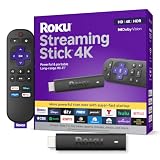
- Stunning 4K and Dolby Vision streaming made simple: With America’s number 1 TV streaming platform,* exploring popular apps—plus tons of free movies, shows, and live TV—is as easy as it is fun. *Based on hours streamed—Hypothesis Group
- Breathtaking picture quality: Stunningly sharp 4K picture brings out rich detail in your entertainment with four times the resolution of HD. Watch as colors pop off your screen and enjoy lifelike clarity with Dolby Vision and HDR10+.
- Seamless streaming for any room: With Roku Streaming Stick 4K, watch your favorite entertainment on any TV in the house, even in rooms farther from your router thanks to the long-range Wi-Fi receiver.
- Shows on the go: Take your TV to-go when traveling—without needing to log into someone else’s device.
- Compact without compromises: Our sleek design won’t block neighboring HDMI ports, so you can switch from streaming to gaming with ease. Plus, it’s designed to stay hidden behind your TV, keeping wires neatly out of sight
How competitive is the Sundance Documentary Fund?
The Fund reports approximately 1,300 proposals reviewed each year and 20–30 projects funded. That published ratio makes selection highly competitive: only roughly 1.5% to 2.3% of reviewed proposals receive funding in a typical year.
Decisions typically take up to eight months. Selected finalists are discussed with an external committee of artists and industry professionals, so the process involves both staff review and outside creative judgment.
Independent reader supportYour contribution helps us test, update, and keep practical guides available for everyone.How can a project move from Sundance support to an audience?
Sundance’s documentary work is best understood as a pathway rather than a single award. A film may receive Fund support, join the Producers Lab or Edit and Story Lab, receive continuing creative advice, gain Festival recognition and later find viewers through digital or direct distribution. The exact route differs by project.
The Tool Desk
Outbyte Driver Updater FREEFix the driver behind crashes, sound loss and screen glitchesFind Drivers →Outbyte PC Repair FREEClear out junk files and repair common Windows errorsFree Scan →The DFP’s featured-project list includes No Other Land, Sugarcane, Black Box Diaries, Cutting Through Rocks, Seeds, The Tallest Dwarf, River of Grass and Life After. The listings identify each title’s connection to the Documentary Fund, Sandbox Fund, Producers Lab or Edit and Story Lab, and several include online viewing or direct-film links.
Also popular on Amazon

- The Google TV Streamer (4K) delivers your favorite entertainment quickly, easily, and personalized to you[1,2]
- HDMI 2.1 cable required (sold separately)
- See movies and TV shows from all your services right from your home screen[2]; and find new things to watch with tailored recommendations for everyone in your home based on their interests and viewing habits
- Watch live TV and access over 800 free channels from Pluto TV, Tubi, and more[3]; if you find an interesting show or movie on your TV, mobile app, or Google search, you can easily add it to your watchlist, so it’s ready when you are[2]
- Up to 4K HDR with Dolby Vision delivers captivating, true-to-life detail[4]; and you can connect speakers that support Dolby Atmos for more immersive 3D sound
Why has this institutional model endured?
The DFP’s stated goals—community, excellence, ethical practice, experimentation in form, underrepresented voices, and social and cultural impact—explain why it combines money with time, expertise and peer exchange. Open Society Foundations provided founding support; later supporters listed by the Institute include the John Templeton Foundation, Sandbox Films, the John D. and Catherine T. MacArthur Foundation, Free People, The Asian American Foundation, The Charles Engelhard Foundation, Nion McEvoy & Leslie Berriman, Nancy Blachman, and Roger and Carin Ehrenberg.
Robert Redford described the purpose in human-rights terms: “Documentaries from around the globe that bear witness to issues of human rights, social justice, civil liberties, and freedom of expression bring forth truth in ways which can have a profound effect on societies and lives. Bringing these truths forward is critical, now more than ever.” The history of the DFP is the gradual construction of an institution designed to help those truths be made with care and reach people.
Frequently Asked Questions
What does “nonrecoupable” mean for a Sundance Documentary Fund grant?
A nonrecoupable grant is not structured as a loan that the filmmaker must repay from film revenue. The precise obligations still depend on the grant agreement, so applicants should read its reporting, credit and rights terms carefully.
Quick wins for a faster PC:
Clear out junk files and repair common Windows errorsFree Scan →Fix the driver behind crashes, sound loss and screen glitchesFind Drivers →Repair Windows errors before they cause bigger problemsFix Now →Why is the Sundance Collection at UCLA part of this history?
The 1997 archive partnership broadened Sundance’s role from developing new work to preserving independent cinema. It provides an institutional link between supporting filmmakers today and safeguarding films for future study and viewing.
Does the DFP publish a total amount awarded since 2002?
The official program information reviewed does not publish a cumulative dollar total awarded since the program began. Individual grant ranges and current eligibility are available, but they should not be presented as a lifetime sum.
What is Sundance Collab’s connection to the documentary program?
Sundance Collab is the Institute’s online environment used for learning and artist interaction. During the 2020 closures, it hosted summer labs remotely, allowing the lab model to continue when residential gatherings were not possible.
Quick Recap
Product prices and availability are accurate as of the date/time indicated and are subject to change. Any price and availability information displayed on Amazon at the time of purchase will apply.
Free tools Windows power users keep installed
One-click scans. No signup required.






Say something about this film