What’s actually slowing this PC down?
Pick the symptom - the matching free tool is one click away.
Some links on this page are affiliate links: if you buy through them we may earn a commission, at no extra cost to you.
Our pick: Apple Music is the best overall paid music-streaming service for most listeners in the United States in 2026. For $11.99 per month, it combines a catalog advertised at more than 100 million songs with lossless audio, Dolby Atmos, Apple Music Classical, offline downloads, strong editorial curation, and broad device support.
That is an editorial verdict, not a universal truth. Choose Spotify for discovery, playlists, and social listening; Qobuz for transparent hi-res audio and album-focused listening; YouTube Music for covers, live recordings, remixes, and rare uploads; Amazon Music Unlimited for Prime and Alexa value; TIDAL for hi-res, Dolby Atmos, and DJ tools; or Deezer for more control over recommendations and unusually visible AI-music policies.
Scope: United States. Regular prices and features were checked August 10, 2026. Prices are before tax, introductory offers are excluded, and plans, catalogs, promotions, and app-store prices can change.
Quick answer: which music service should you buy?
For a single paid subscription, Apple Music offers the most complete balance of price, sound quality, catalog depth, classical coverage, editorial material, and platform support. It is especially compelling if you use an iPhone, Mac, HomePod, Apple TV, or Apple One. It is also a strong choice for Android and Windows users because Apple Music is not restricted to Apple hardware.
Popular on Amazon

- Outdoor-Proof Speaker: Portable design with IPX7 waterproof protection to safeguard against splashes, waves, and water vapor. Get incredible sounds at home, on camping trips, or for outdoor adventures.
- 24H Non-Stop Music: With Anker's world-renowned power management technology and a 5,200mAh Li-ion battery, the soundcore 2 speaker delivers a full day of great sound.
- Powerful Sound: The speaker features 12W power with enhanced bass from dual neodymium drivers. An advanced digital signal processor ensures pounding bass and zero distortion at any volume.
- Intense Bass: Our exclusive BassUp technology and a patented spiral bass port boost low-end frequencies to make the beats hit even harder. The soundcore 2 speaker delivers vibrant audio for home theater nights, beach parties, and sitting around a campfire.
- Grab, Go, Listen: A classic design refined with simple controls and effortless portability. Easy to use and take anywhere, and supports wireless stereo pairing.
Spotify remains the better recommendation for listeners who discover most of their music through algorithms, collaborative playlists, and social features. Qobuz is the better specialist service for serious hi-res listening, while YouTube Music is unmatched when the desired recording is a concert version, cover, remix, DJ set, or obscure upload rather than the standard album track.
| If your priority is… | Choose… | Why |
|---|---|---|
| Best overall paid service | Apple Music | Lossless and Spatial Audio are included at $11.99, along with Classical, downloads, editorial content, and broad device support. |
| Discovery, playlists, and social listening | Spotify Premium | Daylist, DJ, Blend, Jam, personalized playlists, Spotify Connect, and extensive device support. |
| Best sound quality for audiophiles | Qobuz | FLAC lossless up to 24-bit/192 kHz, editorial album context, and a DRM-free download store. |
| Best Apple ecosystem choice | Apple Music | Deep integration with Apple devices, Classical, Spatial Audio, and Family Sharing. |
| Best for YouTube users and rare recordings | YouTube Music | Official releases sit alongside covers, live versions, remixes, DJ sets, and other YouTube recordings. |
| Best for Amazon Prime members | Amazon Music Unlimited | Prime members pay $10.99 per month and receive HD, Ultra HD, spatial audio, and Alexa integration. |
| Best free tier | Spotify Free | A large ad-supported catalog with unusually strong discovery tools. |
| Best for algorithm control and AI transparency | Deezer | Flow Tuner lets listeners include or exclude genres, and Deezer says detected AI-generated tracks are excluded from recommendations. |
| Best for DJs | TIDAL DJ | A dedicated DJ plan with compatible software integrations and select stem-separation and offline features. |
| Best for human-written music context | Qobuz | Reviews, credits, album information, and hi-res browsing are central to the experience. |
How this comparison defines best
There is no single objective winner because the services optimize for different listeners. Spotify can reasonably win a discovery-focused test, while Qobuz can win an audio-quality test. The recommendation here uses this editorial weighting:
| Criterion | Weight | What it measures |
|---|---|---|
| Catalog breadth and availability | 20% | Mainstream releases, independent labels, regional music, classical, live versions, and alternate editions. |
| Discovery and recommendations | 20% | New-music quality, editorial playlists, radio, personalization, and algorithm controls. |
| Audio quality | 20% | Lossy, CD-quality, hi-res, spatial formats, quality labeling, and hardware compatibility. |
| App and device experience | 15% | Phone, desktop, car, television, speakers, wearables, casting, and playback handoff. |
| Price and plan value | 15% | Regular pricing, family and student plans, bundles, free tiers, and annual payment options. |
| Offline listening and library management | 5% | Downloads, organization, travel, device limits, and retention of purchased files. |
| Extras and values | 5% | Podcasts, audiobooks, video, credits, artist-compensation transparency, and AI labeling. |
Under that balance, Apple Music wins because it avoids a major compromise: it has mainstream usability and broad platform coverage without charging extra for lossless or Spatial Audio. Change the weights and another service may be the better answer.
Free tools Windows power users keep installed
One-click scans. No signup required.
That explains why current expert comparisons disagree. Tom’s Guide ranks Apple Music first overall, while TechRadar favors Spotify for most people and TIDAL for audiophiles. What Hi-Fi? emphasizes different winners for hi-res, value, video, and album listening, and Clubic ranks Deezer first in its 2026 comparison.
2026 US price and feature comparison
These are regular advertised prices before tax, not trial rates. Billing directly through a service’s website may produce a different price or plan selection than subscribing through Apple or Google. Check the final checkout screen before paying.
| Service | Individual | Family and student information | Free option | Maximum published quality | Spatial audio | Other strengths |
|---|---|---|---|---|---|---|
| Apple Music | $11.99/month | Family $19.99/month; Student $6.99/month | No conventional free on-demand tier; free Apple Music Radio | Lossless up to 24-bit/192 kHz where available | Dolby Atmos | Classical, Sing, editorial radio and playlists |
| Spotify Premium | $12.99/month | Duo $18.99; Family $21.99; Student $6.99 | Yes | Lossless up to 24-bit/44.1 kHz | No comparable spatial tier listed here | Discovery, social tools, podcasts, video, audiobooks |
| YouTube Music Premium | $11.99/month | Confirm current family and student pricing at signup | Yes, ad-supported | Up to 256 kbps for supported music videos and Art Tracks | No lossless or hi-res tier | Covers, live versions, remixes, uploads, YouTube integration |
| YouTube Premium | $15.99/month | Family $26.99/month | No equivalent ad-free tier | Includes YouTube Music quality | No lossless or hi-res tier | Ad-free YouTube, background playback, and downloads |
| Amazon Music Unlimited | $10.99/month with Prime; $11.99 without Prime | Family pricing should be verified at checkout; single Echo/Fire TV plan listed at $5.99/month | Limited free and Prime access, but not equivalent to Unlimited | Ultra HD up to 24-bit/192 kHz | Dolby Atmos and Sony 360 Reality Audio where available | Alexa, Echo, Fire TV, podcasts, and audiobook ecosystem |
| TIDAL | $11.99/month | Family $19.99; Student $6.99; DJ $19.99 | No continuing free tier; eligible new users may receive a 30-day trial | Lossless and HiRes FLAC | Dolby Atmos, with platform limitations | Music-first interface and DJ tools |
| Qobuz Studio | $12.99/month or $129.99/year, equivalent to about $10.83/month | Duo and Family plans available; annual prices vary | Trial, but no permanent ad-supported tier | FLAC up to 24-bit/192 kHz | Not a primary Qobuz feature | Editorial content and DRM-free download store |
| Deezer Premium | $14.99/month in the US App Store listing | Family $22.99/month in that listing | Yes, in supported markets | HiFi lossless | Not a primary Deezer feature | Flow Tuner, SongCatcher, lyrics, translations, AI-music policy |
See the Apple Music plans, Spotify US Premium page, Amazon Music Unlimited, TIDAL pricing, and Qobuz offers pages for current terms. Google does not maintain a simple static public price table for every account; its support documentation directs users to Purchases and memberships. The 2026 YouTube price change was reported by 9to5Google.
Promotional pricing is not the real comparison
Apple currently advertises an introductory offer of three months for $1.99 for eligible new individual subscribers. Spotify advertises one month free and has promoted temporary student offers. Those deals can be useful, but they should not determine a long-term comparison: eligibility, duration, renewal price, and expiration dates differ.
Likewise, Qobuz’s $129.99 annual Studio offer lowers the monthly equivalent to about $10.83 but requires upfront payment and is described on the offer page as nonrefundable. App-store billing may cost more or omit a plan that is available through direct checkout.
Why Apple Music is the best overall choice
Apple Music gives most paid listeners the features they are most likely to notice: a broad mainstream catalog, ad-free on-demand playback, offline downloads, a polished library, lossless audio, and Spatial Audio without a separate audiophile tier. Its official page advertises more than 100 million songs, although catalog counts are marketing figures and do not guarantee that every edition is available in every country.
Lossless audio ranges from 16-bit/44.1 kHz to 24-bit/192 kHz depending on the recording. Dolby Atmos is available for compatible releases, and Apple Music Classical is included with Individual, Family, Student, and Apple One plans. Classical listeners also get a separate experience built around works, composers, performers, and recordings rather than treating every track as an ordinary pop single.
Apple Music supports iPhone, iPad, Apple Watch, Mac, Apple TV 4K, HomePod, Android, Windows, Sonos, smart televisions, Alexa devices, Google Nest, PlayStation, Xbox, and other platforms. That cross-platform reach matters: choosing Apple Music does not require owning an iPhone.
Recommended Free Tools
Apple also includes Apple Music Sing, with synchronized lyrics, adjustable vocals, duet view, translations, and pronunciation support. Its current product page promotes Playlist Playground, AutoMix, artist interviews, live performances, tour dates, radio, and collaborative playlists. Feature availability can vary by device, operating system, release, or market.
Apple Music’s real limitations
- There is no conventional permanent free on-demand tier. Apple Music Radio is available free, but it is not a replacement for an ad-free, fully on-demand subscription.
- Spotify generally feels more compelling for social listening and algorithm-led discovery.
- Hi-Res Lossless is wasted for many Bluetooth listeners and may require extra equipment.
- Apple’s catalog claim does not mean every obscure recording, regional release, or alternate edition is available everywhere.
How to enable Apple Music lossless audio
On current iPhone and iPad software:
- Open Settings.
- Select Apps.
- Select Music.
- Select Audio Quality.
- Turn on Lossless Audio.
- Choose Lossless for up to 24-bit/48 kHz or Hi-Res Lossless for up to 24-bit/192 kHz.
On a Mac, open Apple Music, choose Music > Preferences > Playback, enable Lossless audio, and select the streaming and download quality.
Apple says iPhone and iPad Hi-Res Lossless above 48 kHz requires external equipment such as a USB DAC. It also recommends a wired connection to headphones, receivers, or powered speakers for lossless listening. Apple further notes that the audible difference between AAC and lossless can be virtually indistinguishable in ordinary listening conditions. Read the company’s lossless audio guidance before buying equipment solely for a higher badge.
The best alternatives to Apple Music
Spotify Premium: best for discovery, playlists, and social listening
Spotify is the best choice for a listener who wants the service to continually suggest what to hear next. Daylist, DJ, Blend, Jam, personalized mixes, editorial playlists, and a mature playlist culture make it the easiest recommendation for discovery-oriented households.
Spotify also works across more than 2,000 devices, including cars, smart speakers, televisions, game consoles, and wearables. Spotify Connect lets one device control playback on another, which is particularly convenient when moving from a phone to a speaker, computer, or television.
Spotify Premium now includes lossless music up to 24-bit/44.1 kHz, so older reviews describing Spotify as lossless-free or capped at 320 kbps are outdated. Lossless is not available for music videos, podcasts, or audiobooks, and the actual result still depends on the source, device, connection, and playback path. Spotify documents the feature at Spotify Lossless.
The service extends beyond music. Current US plans include podcasts, music videos, workout content, and access to more than 700,000 audiobook titles. On current Individual, Duo, and Family plans, the plan manager receives 15 hours of audiobook listening per month; that is a defined allowance, not unlimited audiobook access.
Also popular on Amazon
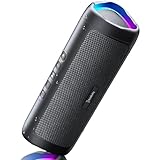
- [Immersive Sound & TWS Dual Pairing] Two full-range drivers deliver powerful, well-balanced sound with minimal distortion for music, movies and gaming. Pair two speakers together for true wireless stereo (TWS) - instant left and right channels that fill any room or backyard party.
- [IPX5 Waterproof & Built for Outdoors] Durable shell rated IPX5 against water splashes and spills - poolside, beach, shower steam and light rain are no problem (not for submersion). Rugged enough for camping, hiking and tailgates; just 13 oz to toss in any bag.
- [24-Hour Playtime & Bluetooth 5.3] Up to 24 hours per charge at 50% volume with lights off (expect less at full volume) plus a 100 ft wireless range on Bluetooth 5.3, stable through walls and outdoors. One press turns off the lights to stretch battery even further.
- [A Gift That Actually Gets Used] A dynamic LED light show pulses to the beat of the music and switches off with one button - party mode when you want it, invisible when you do not. A go-to white elephant gift, stocking stuffer, and Christmas or birthday gift for men, women, dads and moms.
- [Everything in the Box] 1 portable Bluetooth speaker, 1 Type-C charging cable, quick start guide and lifetime technical support. Built-in microphone for hands-free calls; 3.5mm AUX supported for non-Bluetooth devices (AUX cable not included).
Spotify says its DJ feature had reached 94 million Premium users since its 2023 launch. That is a Spotify-reported platform statistic, not an independent quality measurement, but it illustrates how central the feature has become to the service’s identity.
Why Spotify is not the overall winner
The US Individual plan costs $12.99 per month, more than Apple Music, TIDAL, and YouTube Music. Its lossless ceiling is also lower than the maximum published resolutions of Apple Music, Amazon Music Unlimited, and Qobuz. For listeners who only want an on-demand music library and do not use Spotify’s discovery, social, podcast, or audiobook features, Apple Music offers more audio value for less money.
Qobuz: best for audiophile hi-res streaming
Qobuz is the strongest choice for people who care about transparent quality labels, album context, and permanent ownership options. Qobuz advertises FLAC lossless and 24-bit audio up to 192 kHz, more than 100 million tracks, and more than 185,000 albums in 24-bit Hi-Res quality according to its help center.
Its editorial writing, reviews, credits, liner-note-style information, and hi-res browsing make it feel more like a serious music library than an algorithmic entertainment feed. Qobuz also sells DRM-free downloads. A purchased album is separate from a streaming download and remains available independently of the streaming subscription, subject to the purchase terms.
The Studio plan costs $12.99 monthly or $129.99 annually. The annual payment works out to approximately $10.83 per month, but the lower equivalent requires paying upfront and the offer page describes the annual payment as nonrefundable. The Sublime option adds discounts on eligible music purchases; it is not simply a higher-quality streaming tier.
Qobuz is less attractive if you want powerful social tools, a free tier, or highly aggressive algorithmic discovery. Hi-res catalog availability also varies by label and release. A 24-bit/192 kHz badge cannot overcome a poor master, Bluetooth conversion, a weak playback chain, or a listener who cannot hear a meaningful difference.
Qobuz and artist compensation
Qobuz has disclosed an independently audited average of $0.01873 per stream for royalties distributed to labels and publishers during its 2024 fiscal year. Qobuz explicitly says it does not directly pay artists; money flows through rights holders and contracts. That disclosure is useful transparency, but it is not the amount every artist receives.
Details are available in Qobuz’s payout disclosure.
YouTube Music: best for YouTube users, covers, and rare recordings
YouTube Music wins on breadth of recordings rather than on the cleanliness of a conventional album catalog. It can place an official release next to a concert recording, cover, fan upload, DJ set, remix, alternate performance, lyric video, or music video. If the recording you want is difficult to find on traditional streaming services, YouTube Music is often the first service to check.
Do these 3 things before closing this tab:
1Fix the driver behind crashes, sound loss and screen glitches2Clear out junk files and repair common Windows errors3Scan for outdated or missing drivers - takes under a minuteThat advantage creates its main problem. Search results may mix the official album track with user-uploaded material, duplicates, video-derived audio, unofficial remixes, and different edits. Before saving a recording, check whether it is the official album version, a music video, a live performance, or an upload. A large technical catalog is not the same as a clean, consistently tagged library.
YouTube Music has an ad-supported tier. Premium adds background play, audio-only playback, offline music and podcast downloads, Smart Downloads, casting to speakers, smart displays and TVs, and travel benefits. Google says the music library can travel with a subscriber for up to six months in supported circumstances, while downloaded content requires reconnecting at least every 30 days.
YouTube’s official documentation describes 256 kbps audio for music videos and Art Tracks when the original upload and network conditions support it. There is no lossless or hi-res music tier comparable to Apple Music, Amazon Music Unlimited, Qobuz, TIDAL, or Spotify Lossless.
YouTube Music or YouTube Premium?
YouTube Music Premium costs $11.99 per month after the 2026 US increase. YouTube Premium costs $15.99 and includes YouTube Music Premium plus ad-free YouTube, background playback, and downloads. If you watch YouTube regularly, the extra $4 may provide substantially more value than standalone Music Premium. If you only want music, standalone YouTube Music is the more relevant comparison.
Quick wins for a faster PC:
Fix the driver behind crashes, sound loss and screen glitchesFind Drivers →Repair Windows errors before they cause bigger problemsFix Now →Scan for outdated or missing drivers - takes under a minuteDriver Scan →Do not confuse YouTube Music’s free tier with Premium benefits: ad-free listening, background playback, and downloads require the paid plan. See YouTube Music Premium benefits and YouTube’s audio-quality documentation.
Amazon Music Unlimited: best value for Prime members
Amazon Music Unlimited is particularly attractive to existing Prime members. The regular price found for 2026 is $10.99 per month for Prime members and $11.99 for non-Prime customers. It includes more than 100 million songs, HD audio at 16-bit and at least 44.1 kHz, Ultra HD up to 24-bit/192 kHz, and Dolby Atmos and Sony 360 Reality Audio where available.
Alexa integration is the differentiator. Echo, Fire TV, and other compatible devices make voice requests and household playback straightforward. Amazon supports mobile, desktop, web, Fire TV, Echo, and compatible connected devices. The Family plan supports up to six family members and simultaneous listening; verify the current family price at checkout.
The critical distinction is between Amazon Music included with Prime and Amazon Music Unlimited. Prime Music is not a full replacement for Apple Music or Spotify Premium. Amazon describes limitations including shuffle playback for much of the included catalog and offline listening restricted to All-Access Playlists. Music Unlimited provides full on-demand access plus the higher-quality HD, Ultra HD, and spatial catalog.
The Tool Desk
Outbyte PC Repair FREEClear out junk files and repair common Windows errorsFree Scan →Outbyte Driver Updater FREEFix the driver behind crashes, sound loss and screen glitchesFind Drivers →Amazon’s app and recommendation experience is generally less distinctive than Spotify’s or Deezer’s, and the value calculation changes if you do not already use Prime. HD and Ultra HD labels also do not guarantee that a particular device or wireless connection is delivering that quality. See the Amazon Music FAQ for the current distinctions.
Also popular on Amazon

- Wireless Bluetooth streaming
- 12 hours of playtime
- IPX7 waterproof
- Pair multiple speakers with party boost
- Premium JBL sound quality
TIDAL: best balanced hi-res, Dolby Atmos, and DJ option
TIDAL’s current US Individual plan costs $11.99 per month and includes lossless audio, HiRes FLAC, Dolby Atmos, ad-free listening, offline listening, personalized mixes, and editorial playlists. TIDAL says its catalog contains more than 180 million songs.
The service is a good middle ground between Apple Music’s mainstream polish and Qobuz’s audiophile focus. It offers higher-resolution formats and Dolby Atmos without adding a separate hi-fi tier, while keeping the product focused primarily on music rather than podcasts, video, or audiobooks. Family costs $19.99, Student costs $6.99, and the dedicated DJ plan costs $19.99.
TIDAL’s updated prices apply to the first billing date on or after August 3, 2026. This is why older reviews describing TIDAL as a $10.99 service, or discussing separate MQA and HiFi Plus tiers, should not be used as current buying advice.
PC Slower Than It Used to Be?
A free scan shows the junk files, broken settings and background clutter dragging Windows down - then fixes them in one click.Free scan · Windows 10 & 11Crashes, No Sound, or Screen Glitches?
Random freezes, missing sound and display glitches usually trace back to one bad driver. Find and replace yours safely.Free scan · under a minuteTIDAL Dolby Atmos compatibility
TIDAL says Dolby Atmos can be enabled or disabled under Settings > Audio & Playback on supported mobile devices. It does not support Dolby Atmos playback on desktop clients or Pixel devices. When hardware is incompatible, TIDAL switches to the stereo version, and not every release is available in Atmos.
TIDAL DJ is the best choice for DJs who want a dedicated subscription rather than an ordinary personal plan. It requires compatible DJ software, and supported software, stems, and offline capabilities should be confirmed before subscribing. See TIDAL’s current pricing and Atmos support documentation.
Deezer: best for recommendation control and AI transparency
Deezer is the most interesting alternative for listeners who like algorithmic radio but do not want an opaque algorithm making every decision. Its Flow Tuner lets users activate or deactivate genres and subgenres, add genres to broaden discovery, and steer recommendations more directly.
Deezer also says detected AI-generated tracks are excluded from algorithmic recommendations and editorial playlists. In June 2026, it launched an AI music detector that can scan playlists from multiple streaming platforms. That makes Deezer the clearest choice for readers who want a visible platform policy around synthetic music, although detection is not proof that every AI-generated or partially AI-generated recording has been identified.
The US App Store listing shows Premium at $14.99 per month and Family at $22.99. Direct-web, promotional, regional, and app-store prices may differ, so verify the direct Deezer checkout. The listing describes HiFi lossless listening, offline mode, lyrics and translations, SongCatcher, and support for Apple Watch, Fitbit, Wear OS, Alexa, HomePod Mini, Sonos, and Automotive OS.
Deezer’s drawbacks in the United States are its less dominant ecosystem and potentially higher price through app-store billing. Read the Flow Tuner announcement, AI detector announcement, and US App Store listing.
Audio quality: lossless, hi-res, spatial, and Bluetooth explained
Audio quality is the area where streaming comparisons most often confuse theoretical capability with actual listening. These terms describe different things:
- Lossy: Some source information is discarded to reduce file size and bandwidth.
- Lossless: The encoded data is preserved. CD-quality lossless is generally 16-bit/44.1 kHz, using formats such as FLAC or ALAC.
- Hi-Res Lossless: Lossless audio above 16-bit/44.1 kHz, commonly up to 24-bit/96 or 24-bit/192 kHz.
- Spatial audio: An immersive format such as Dolby Atmos. It is not the same as lossless stereo or hi-res stereo.
A higher sample-rate number does not automatically mean better sound. Mastering quality, the original recording, playback hardware, room acoustics, and personal preference can matter more. A badly mastered hi-res file is not automatically preferable to a well-mastered lossless or lossy version.
Quick wins for a faster PC:
Clear out junk files and repair common Windows errorsFree Scan →Scan for outdated or missing drivers - takes under a minuteDriver Scan →The complete signal path matters
A service may deliver a lossless file to a phone, but Bluetooth headphones typically receive a separately encoded wireless signal. Bluetooth can therefore be the limiting factor even when the subscription advertises 24-bit/192 kHz. Listeners seeking a genuinely lossless end-to-end path generally need compatible wired headphones, speakers, or a receiver. Hi-res playback can also require a USB DAC, especially above 48 kHz on iPhone and iPad.
Spatial audio is a separate decision. It depends on whether a particular album has a Dolby Atmos mix and whether the listener’s phone, headphones, receiver, television, or speaker system supports it. An Atmos mix may sound more immersive, but it can also sound different from the stereo master rather than universally better.
Lossless and hi-res files use more bandwidth and storage. If you have a mobile-data limit, set streaming to a sensible quality and download over Wi-Fi. If you enable lossless after downloading an album in a lower quality, Apple says you must redownload it to obtain the higher-quality version.
Which services offer the best sound?
- Qobuz: Best for transparent hi-res FLAC up to 24-bit/192 kHz and serious album browsing.
- Apple Music: Best all-round audio value because lossless up to 24-bit/192 kHz and Dolby Atmos are included at the standard price.
- Amazon Music Unlimited: Best hi-res value for Prime members, with Ultra HD up to 24-bit/192 kHz.
- TIDAL: Best combination of lossless, HiRes FLAC, and Dolby Atmos, subject to device limitations.
- Spotify: Now offers lossless up to 24-bit/44.1 kHz, but not the highest published resolution.
- YouTube Music: Best for recording breadth, not technical audio quality; it has no lossless or hi-res tier.
- Deezer: Offers HiFi lossless, but it is not the specialist hi-res choice in this group.
Discovery is not the same as catalog breadth
The service that finds the most unusual recording is not necessarily the service that best introduces you to unfamiliar artists. YouTube Music has an enormous YouTube recording ecosystem, while Spotify’s strength is turning listening behavior into playlists, mixes, and shared sessions. Qobuz is better at album context and editorial browsing, and Deezer gives users more explicit control over the genres shaping its recommendations.
| Service | Strongest discovery mechanism | User control | Main risk |
|---|---|---|---|
| Spotify | Daylist, DJ, personalized playlists, Blend, Jam, and editorial playlists | High through likes, skips, playlists, and social tools | Recommendations can become repetitive or overly personalized. |
| Apple Music | Human editorial playlists, personalized recommendations, radio, and current playlist tools | Moderate | Less socially expressive than Spotify for some users. |
| YouTube Music | Search, mixes, recommendations, and the wider YouTube corpus | Broad catalog control, but less clean catalog organization | Uploads, duplicates, and unofficial versions can muddy results. |
| Amazon Music | Curated playlists, stations, and Alexa requests | Moderate | Less distinctive discovery identity. |
| TIDAL | Editorial playlists, mixes, and music-first browsing | Moderate | Smaller feature ecosystem. |
| Qobuz | Human editorial writing, reviews, credits, and hi-res album browsing | High for album-focused browsing | Less algorithmically adventurous and less social. |
| Deezer | Flow, Flow Tuner, and editorial playlists | Very high through genre inclusion and exclusion | Smaller US ecosystem. |
Which service fits your devices?
iPhone, AirPods, HomePod, and Apple TV
Apple Music is the natural choice when most of the household uses Apple hardware. It combines Apple device integration, Apple Music Classical, Spatial Audio, Family Sharing, and Apple One value. AirPods are convenient, but ordinary Bluetooth AirPods do not create a true lossless path; Apple’s lossless benefits are more relevant with a wired or compatible home-audio setup.
Android, Pixel, Chromecast, and Google households
YouTube Music is the obvious ecosystem fit for people who already live in YouTube, Android, and Chromecast. Spotify also has very broad Android, car, television, speaker, and wearable support. TIDAL’s Dolby Atmos support needs special attention for Pixel owners because TIDAL says Atmos playback is not supported on Pixel devices.
Alexa, Echo, and Fire TV
Amazon Music Unlimited has the strongest native fit for Alexa and Echo households. Prime membership reduces its monthly price to $10.99, and Amazon’s HD, Ultra HD, and spatial catalog make it more than merely a voice-controlled convenience service.
Also popular on Amazon

- RICH JBL ORIGINAL PRO SOUND: The legendary JBL signature sound delivers surprisingly big audio and punchy bass from Go 3's small size.
- ULTRA-PORTABLE DESIGN: JBL Go 3's ultra-portable design goes great with the latest styles, and its colorful fabrics and expressive details make it look as great as it sounds.
- 5 HOURS OF PLAYTIME: Don't sweat the small stuff like charging your battery. Go 3 gives you up to 5 hours of battery life on a single charge.
- WIRELESS BLUETOOTH STREAMING: Wirelessly stream music from your phone, tablet, or any other Bluetooth-enabled device.
- IP67 WATERPROOF AND DUSTPROOF: To the pool. To the park. In the shower. JBL Go 3 is fully waterproof and dustproof, so you can bring your speaker anywhere.
Mac, Windows, Sonos, hi-fi systems, and game consoles
Apple Music works on Mac, Windows, Sonos, smart TVs, PlayStation, Xbox, Android, and other platforms. Spotify’s support for more than 2,000 devices and Spotify Connect is especially useful for mixed-device households. Qobuz is the better pick when the computer or network streamer is part of a deliberate hi-fi system and album information matters. TIDAL is worth considering when the equipment supports its HiRes FLAC or Dolby Atmos formats.
What’s actually slowing this PC down?
Pick the symptom - the matching free tool is one click away.
Family and student plans
Family plans should be compared by household rules and account separation, not just by the word family in the price table.
| Service | Relevant household details | Price note |
|---|---|---|
| Apple Music | Family Sharing supports up to six people. | $19.99/month; a strong family value for Apple households. |
| Spotify | Duo and Family members must reside at the same address. Current Family plans also include a defined audiobook allowance for the plan manager. | Duo $18.99; Family $21.99; Student $6.99. |
| Amazon Music Unlimited | Family supports up to six family members and simultaneous listening. | Verify current family pricing at checkout; Prime changes the individual comparison. |
| TIDAL | Family supports up to six members. | $19.99/month. |
| Qobuz | Family supports up to six accounts, with same-household language on the offer page. | Monthly and annual prices vary. |
| Deezer | Family is available, but US price and billing channel should be checked directly. | The US App Store listing shows $22.99/month. |
Best family choice: Apple Music is the strongest default because six-person Family Sharing costs less than Spotify Family and includes lossless and Classical. Spotify can be better for a family that values shared playlists, discovery, and its broader extras. Amazon may be the best value if the household already pays for Prime and uses Alexa.
Best student choice: Spotify, Apple Music, and TIDAL each list a $6.99 student price in the supplied 2026 US snapshot. Choose Spotify for discovery and social tools, Apple Music for lossless, Classical, and Apple integration, or TIDAL for a music-first hi-res and Atmos focus. Student eligibility must be verified, and the plan may revert to individual pricing when eligibility expires.
Family plans are not automatically licenses to share with friends who live elsewhere. Spotify explicitly requires the same address for Duo and Family; Qobuz’s offer page includes same-household language. Taxes, billing channels, simultaneous streams, and plan availability can change.
The Tool Desk
Outbyte Driver Updater FREEFix the driver behind crashes, sound loss and screen glitchesFind Drivers →Outbyte PC Repair FREERepair Windows errors before they cause bigger problemsFix Now →Best free music streaming options
Spotify Free: best free all-purpose option
Spotify Free is the best default free tier because it combines a large ad-supported catalog with strong discovery tools. The trade-off is advertising and restrictions compared with Premium, including fewer controls over the listening experience and no Premium offline experience.
YouTube Music Free: best free option for broad recordings
YouTube Music’s free tier is useful when you want official tracks, live performances, covers, remixes, and uploads without paying. Premium is required for background playback and offline downloads, so it is less convenient for phone listening than a paid plan.
Amazon’s free and Prime access
Amazon offers limited free and Prime access, but neither should be confused with Music Unlimited. Prime Music has catalog and playback limitations, including shuffle access for much of its catalog. It is a benefit for Prime members, not a full on-demand substitute.
Deezer Free and Apple Music Radio
Deezer Free is available in supported markets and is worth checking if it is offered in your area. Apple Music has free radio, but not a permanent free on-demand tier. If you specifically want radio-style listening rather than selecting individual albums and tracks, a radio-focused service such as Pandora may deserve a separate comparison; it is outside this ranking.
Do these 3 things before closing this tab:
1Fix the driver behind crashes, sound loss and screen glitches2Clear out junk files and repair common Windows errors3Scan for outdated or missing drivers - takes under a minuteOffline listening and travel
Streaming downloads are licensed app files, not ownership. In most services, downloaded tracks stop working when the subscription ends and the app must periodically verify the account.
- Apple Music: If you enable lossless after downloading music at a lower quality, redownload the tracks to obtain the new quality. Downloads remain tied to the active subscription.
- Spotify: Premium supports offline downloads, and Offline Backup can automatically provide downloaded listening options. Lossless downloads use more storage than standard-quality files.
- YouTube Music: Premium supports downloads and Smart Downloads. Google says downloads require reconnection at least every 30 days, while its travel documentation describes paid benefits traveling for up to six months in supported circumstances.
- Amazon Music Unlimited: Paid Unlimited supports offline listening; Prime’s included music benefit has more limited offline functionality.
- TIDAL: Paid plans support offline listening. Dolby Atmos and other formats still depend on the device and downloaded release.
- Qobuz: Streaming downloads are separate from purchased downloads. Purchased DRM-free albums are the ownership option and are not dependent on continuing the streaming subscription.
- Deezer: Premium supports offline mode, according to its US App Store listing.
For travel, download playlists over Wi-Fi, confirm that the files appear in offline mode, and open the app before leaving cellular or Wi-Fi coverage. Do not cancel the old service until you have confirmed that the new service has downloaded the correct versions.
How to switch services without losing your playlists
Playlist migration is no longer a reason to stay with a service you dislike, but no transfer is perfect. YouTube Music supports importing playlists, albums, artists, and tracks through built-in transfers or tools such as TuneMyMusic and Soundiiz. TuneMyMusic supports transfers among Spotify, Apple Music, YouTube Music, Amazon Music, Deezer, TIDAL, Qobuz, and other platforms. Soundiiz supports more than 40 platforms and can synchronize playlists, although service limitations apply.
- Export, screenshot, or otherwise preserve important playlists before starting.
- Transfer one small playlist first rather than your entire library.
- Review the missing-track report and identify unmatched songs.
- Check explicit and clean versions.
- Confirm album editions, remasters, live versions, and regional releases.
- Look for duplicate recordings and video-versus-audio mismatches, especially when moving to or from YouTube Music.
- Transfer liked songs separately if the chosen tool supports them.
- Download music only after the new library has been checked.
- Keep the old subscription active until the transfer and offline tests are complete.
Expect some manual cleanup. A song may exist on both services under different metadata, an album may have been replaced by a remaster, or licensing may make a track unavailable in the destination country. See YouTube Music’s transfer help and Soundiiz’s transfer guidance.
Free tools Windows power users keep installed
One-click scans. No signup required.
Artist compensation: which service is best for supporting musicians?
There is no honest universal per-stream winner. Services generally pay rights holders rather than sending a fixed amount directly to the performer for every individual play. Money can pass through labels, distributors, publishers, collection societies, and contracts. Territory, subscription type, ownership, publishing rights, and the artist’s agreement all affect the final amount.
Qobuz has published an independently audited average of $0.01873 per stream for royalties distributed to labels and publishers during its 2024 fiscal year, but it explicitly says it does not directly pay artists. Spotify explains its model using streamshare and payments to rights holders rather than a universal fixed rate. A comparison based on one platform’s average distribution should not be presented as an artist’s take-home pay.
If supporting artists is your main concern, use the service your favorite artists are legally available on, buy music or merchandise directly when possible, attend shows, and consider Qobuz if its transparency and download store appeal to you. The US market is large enough for these choices to matter: the RIAA reported 106.5 million US paid subscription accounts and $6.4 billion in subscription revenue for 2025.
AI-generated music and recommendation control
Deezer is the clearest choice for readers who want a stated policy rather than an assumption that every recommendation is human-made. Deezer says detected AI-generated tracks are excluded from algorithmic recommendations and editorial playlists, and its AI Music Detector can scan playlists from multiple streaming platforms.
That is not a guarantee that every synthetic, partially synthetic, or mislabeled recording has been detected. No service in this comparison should be described as completely free of AI-generated music. For more control over what the algorithm introduces, Deezer’s Flow Tuner is the strongest tool in this group because it allows users to activate or exclude genres and subgenres.
Also popular on Amazon

- Outdoor-Proof Speaker: Portable design with IPX7 waterproof protection to safeguard against splashes, waves, and water vapor. Get incredible sounds at home, on camping trips, or for outdoor adventures.
- 24H Non-Stop Music: With Anker's world-renowned power management technology and a 5,200mAh Li-ion battery, the soundcore 2 speaker delivers a full day of great sound.
- Powerful Sound: The speaker features 12W power with enhanced bass from dual neodymium drivers. An advanced digital signal processor ensures pounding bass and zero distortion at any volume.
- Intense Bass: Our exclusive BassUp technology and a patented spiral bass port boost low-end frequencies to make the beats hit even harder. The soundcore 2 speaker delivers vibrant audio for home theater nights, beach parties, and sitting around a campfire.
- Grab, Go, Listen: A classic design refined with simple controls and effortless portability. Easy to use and take anywhere, and supports wireless stereo pairing.
Common outdated claims to ignore
- Spotify is lossless-free: Incorrect for 2026. Spotify Premium now offers lossless up to 24-bit/44.1 kHz.
- Apple Music costs $10.99: The regular US Individual price in this snapshot is $11.99, excluding promotions.
- TIDAL has the old MQA or HiFi Plus structure: Older tier descriptions do not reflect the current pricing page and 2026 price update.
- YouTube Music costs $10.99: The current US price found for 2026 is $11.99 per month.
- Amazon Prime Music equals Music Unlimited: Prime access has catalog and playback limitations; Unlimited is the full subscription product.
- The largest catalog number wins: Counts may combine official tracks, videos, uploads, duplicates, podcasts, and regional licenses.
- Hi-res always sounds better: The recording, mastering, equipment, connection, and listener matter more than a number alone.
- A per-stream payout is what an artist receives: Published averages usually describe money distributed to rights holders, not the performer’s final payment.
Prices and features change frequently. Recheck the direct service page immediately before publication or purchase, especially if you are comparing a promotion, app-store billing, an annual plan, or a family subscription.
Frequently Asked Questions
Is Apple Music better than Spotify in 2026?
For most US paid listeners, Apple Music is our overall pick because it costs $11.99 per month and includes lossless audio, Dolby Atmos, Apple Music Classical, downloads, and broad device support. Spotify is better if discovery, social listening, playlists, Spotify Connect, podcasts, audiobooks, and music video features matter more to you.
Is Spotify lossless now?
Yes. Spotify Premium now offers lossless music up to 24-bit/44.1 kHz. Lossless is not available for music videos, podcasts, or audiobooks, and Bluetooth headphones may still prevent a truly lossless end-to-end signal. See Spotify’s lossless documentation.
Outdated Drivers Are Slowing You Down
One free scan finds every outdated or missing driver and matches the right update for your exact hardware.Free scan · exact hardware matchPC Slower Than It Used to Be?
A free scan shows the junk files, broken settings and background clutter dragging Windows down - then fixes them in one click.Free scan · Windows 10 & 11Which music service has the best sound quality?
Qobuz is the best specialist choice for transparent hi-res FLAC and album-focused listening. Apple Music and Amazon Music Unlimited also publish support up to 24-bit/192 kHz, while TIDAL combines lossless, HiRes FLAC, and Dolby Atmos. The highest number does not guarantee better sound, particularly over Bluetooth.
Is Qobuz worth choosing over Apple Music?
Choose Qobuz if you want hi-res album browsing, extensive editorial context, and a DRM-free download store. Choose Apple Music if you want a more mainstream and integrated app, Classical, Dolby Atmos, and a broader general-purpose ecosystem. Qobuz’s annual Studio price is about $10.83 per month when paid upfront, but the annual payment is described as nonrefundable.
Is YouTube Music included with YouTube Premium?
Yes. YouTube Premium includes YouTube Music Premium as well as ad-free YouTube, background playback, and downloads. In the US snapshot, YouTube Premium costs $15.99 per month and standalone YouTube Music Premium costs $11.99.
Is Amazon Music Unlimited included with Prime?
No. Prime includes a more limited Amazon Music benefit, while Music Unlimited is the full on-demand subscription with HD, Ultra HD, and spatial audio. Prime members pay $10.99 per month for Music Unlimited in the current US snapshot; non-Prime customers pay $11.99.
Which service has the best free plan?
Spotify Free is the best general free tier because it combines ad-supported listening with strong discovery tools. YouTube Music Free is especially useful for covers, live recordings, remixes, and uploads. Free plans do not provide the same playback control, ad-free listening, or offline benefits as paid subscriptions.
Which service has the best family plan?
Apple Music is the best default family choice: its Family Sharing plan costs $19.99 per month and supports up to six people. Spotify can be better for households that prioritize social playlists and discovery, while Amazon Music Unlimited is attractive to Prime and Alexa households. Spotify requires Duo and Family members to live at the same address.
Can I transfer Spotify playlists to another service?
Yes. YouTube Music offers transfer options, and services such as TuneMyMusic and Soundiiz can move playlists among Spotify, Apple Music, YouTube Music, Amazon Music, Deezer, TIDAL, Qobuz, and others. Review missing tracks, duplicate versions, explicit edits, and album editions before canceling Spotify.
Does Bluetooth support lossless audio?
Bluetooth can re-encode audio and may prevent a genuinely lossless signal from reaching wireless headphones. For the best chance of lossless or hi-res playback, use a compatible wired path, receiver, or powered speaker system. Apple says iPhone and iPad playback above 48 kHz requires external equipment.
Recommended Free Tools
Which service is best for classical music?
Apple Music is the easiest general recommendation because Apple Music Classical is included with Individual, Family, Student, and Apple One plans. Qobuz is a strong alternative for listeners who prioritize hi-res recordings, reviews, credits, and album context.
Which services offer Dolby Atmos?
Apple Music, Amazon Music Unlimited, and TIDAL offer Dolby Atmos where compatible recordings and devices support it. TIDAL says Atmos playback is not supported on desktop clients or Pixel devices and switches to stereo on incompatible hardware. Not every album has an Atmos mix.
Which music service is best for DJs?
TIDAL DJ is the strongest dedicated option in this comparison. Its DJ plan costs $19.99 per month and supports compatible DJ software, with select stem-separation and offline features. Confirm that your preferred software and workflow are supported before subscribing.
Which streaming service is best for supporting artists?
No service pays a universal fixed amount directly to every artist per stream. Qobuz publishes an average amount distributed to labels and publishers, while Spotify describes a streamshare model. The actual artist payment depends on rights ownership, contracts, territory, distributor, and publishing. Buying music or merchandise directly is also meaningful support.
Does any service remove AI-generated music?
Deezer says it excludes detected AI-generated tracks from algorithmic recommendations and editorial playlists, and it offers an AI Music Detector for playlists from multiple platforms. Detection is not perfect, so no service should be described as completely free of AI-generated music.
The Bottom Line
Bottom line: Buy Apple Music if you want the best all-round US paid subscription in 2026, especially for lossless audio, Classical, Apple devices, and family value. Choose Spotify for discovery and social listening, Qobuz for hi-res albums and downloads, YouTube Music for the widest variety of recordings, Amazon Music Unlimited for Prime and Alexa value, TIDAL for hi-res, Atmos, or DJ use, and Deezer for recommendation control and AI-music transparency.
Before subscribing, compare the regular direct-web price—not just the trial offer—check family eligibility, verify your devices, and test whether your favorite albums and playlists exist in the desired versions.
Quick Recap
Product prices and availability are accurate as of the date/time indicated and are subject to change. Any price and availability information displayed on Amazon at the time of purchase will apply.






Say something about this film