What’s actually slowing this PC down?
Pick the symptom - the matching free tool is one click away.
YouTube audio quality is not one number. The source file sets the ceiling; YouTube processes and delivers it according to the product and playback conditions; your device, connection, enhancements, and headphones or speakers determine the final result. YouTube Music Premium documents settings up to 256 kbps, and YouTube documents up to 256 kbps for qualifying Premium music playback—but neither claim applies automatically to every YouTube video.
The short answer: YouTube does not have one universal audio bitrate or codec. What you hear is the result of a chain: the creator’s source file, YouTube’s processing and delivery settings, your account and app, your internet connection, your device, and any audio enhancements applied during playback.
A Premium subscription, a “High” setting, a 4K video, or expensive headphones cannot restore detail that was absent from the original upload. They can improve the conditions under which YouTube delivers or reproduces audio, but the uploaded master still sets the ceiling.
What audio quality does YouTube use?
There is no single answer because “YouTube” includes ordinary video playback, YouTube Premium music playback, and YouTube Music. YouTube’s documented figures apply to particular products and settings—not automatically to every video on the platform.
Crashes, No Sound, or Screen Glitches?
Random freezes, missing sound and display glitches usually trace back to one bad driver. Find and replace yours safely.Free scan · under a minutePC Slower Than It Used to Be?
A free scan shows the junk files, broken settings and background clutter dragging Windows down - then fixes them in one click.Free scan · Windows 10 & 11#1 Best Overall

- FLIP EAR CUP DESIGN: Innovative flip ear cups give these headphones a versatile design that adapts to different listening situations. The rotating ear cups allow quick adjustment depending on how and where you want to enjoy your audio.
- BLUETOOTH 5.0 CONNECTIVITY: These Bluetooth headphones connect quickly using Bluetooth 5.0, delivering a stable wireless link and up to 10 m range. Enjoy music, calls, and audio without tangled cables while moving freely.
- DUAL HEADPHONE / SPEAKER MODES: Flip the ear cups inward for private listening that helps block outside distractions. Flip them outward to activate speaker-style stereo sound so others nearby can hear and enjoy the music.
- HIGH-DEFINITION SOUND WITH 40MM DRIVERS: Powerful 40mm drivers combined with soft memory foam ear cushions deliver clear audio and balanced bass. These over ear headphones provide comfortable listening during workouts, travel, and everyday use.
- EASY ON-EAR CONTROLS: Extra-clicky buttons on the headphones allow quick control of music, volume, and calls directly from the ear cup, making adjustments simple without reaching for your phone during workouts or daily activities.
YouTube Premium
YouTube says Premium can provide audio at up to 256 kbps when listening to music videos and Art Tracks in the YouTube and YouTube Music apps. That is a conditional ceiling, not a guarantee for every upload.
The original file and the internet connection still matter. YouTube gives the example that a music video uploaded with 128 kbps audio will not become a 256 kbps-quality source simply because the viewer has Premium. Premium cannot recreate information removed before upload. Source: YouTube Help, “Premium audio quality and playback conditions.”
YouTube Music quality settings
YouTube Music Premium exposes clearer quality controls for both streaming and downloads:
| Setting | Documented maximum | What it means |
|---|---|---|
| Low | Up to 48 kbps | Uses less data and storage. |
| Normal | Up to 128 kbps | A middle setting for everyday listening. |
| High | Up to 256 kbps | Uses more data for higher-quality playback. |
| Always high | 256 kbps | Attempts to maintain the higher quality even when the connection is poor, using additional data. |
These figures describe YouTube Music’s quality controls. They do not prove that every video on the general YouTube website is delivered at 256 kbps. YouTube also notes that changing download quality affects future downloads; songs already downloaded keep their existing quality until they are downloaded again.
Free tools Windows power users keep installed
One-click scans. No signup required.
Source: YouTube Help, “YouTube Music quality settings.”
Why there is no universal “YouTube bitrate”
Bitrate measures how much data is used to represent audio over time, usually in kilobits per second. It is useful, but it is not the same thing as sound quality. Codec efficiency, the source recording, the mix, the platform’s processing, and the playback system all matter.
Rank #2

- Universal Compatibility: Perfectly compatible with any devices with a 3. 5mm aux port. Such as Apple iPhone, iPod, iPad, Headphones, Hi-Fi, Car Stereos, Tablet, Laptop, Smartphones, MP3 Player, Speaker and any other audio-playing devices. (ATTENTION: Incompatible with Life proof Cases And Otter Box cases)
- Unparalleled Sound Quality: Polished 24K gold-plated connectors ensure reliability and eliminate signal loss and noise possible, offer clear and stereo sound to your devices.
- Ultra Durable And Tangle-Free: With an 15000+ ultra-durable bend lifespan several times longer than original audio cables. You can wind it without having to worry about knots or kinks.
- Easy Carrying And Storage: Double shielding significantly enhances protection against interference, and with the specially designed organizer, no messy or tangled cable any more.
- What You Get - Sync wire 3.3 ft. Nylon Braided Aux Cable, 3 Years Free Card, User Guide and Customer Service
That is why claims such as “all YouTube audio is 128 kbps,” “YouTube always uses 256 kbps,” or “YouTube audio is 320 kbps” are too broad. The official information supports different values for different products and settings, not one profile for every ordinary YouTube video.
The audio-quality chain
- Source quality: the recording and master supplied by the creator.
- Platform delivery: the version YouTube processes and makes available under the relevant account, app, and connection conditions.
- Playback quality: the phone, computer, operating-system audio processing, headphones, speakers, and room.
- Perceived quality: the combined effect of loudness, mixing, enhancements, listening conditions, and expectation.
A technically higher bitrate cannot fix clipping, a bad mix, excessive processing, phase problems, or an already-compressed source. Conversely, an adequate YouTube stream can sound disappointing if it is played through a damaged speaker, an incorrect output device, or an audio chain that folds stereo down to mono.
Does 4K YouTube video have better audio?
No—not automatically. YouTube’s upload guidance treats video resolution and audio settings separately and explicitly says that audio playback bitrate is not related to video resolution. Selecting or uploading 4K can improve the picture, but it does not inherently increase the audio bitrate or make the audio lossless.
A 1080p upload can have an excellent audio master, while a 4K upload can contain poor, clipped, or heavily compressed audio. Judge the audio and video as separate parts of the upload.
How creators should prepare audio for YouTube
The best protection against avoidable quality loss is to give YouTube a clean, high-quality source. YouTube’s upload guidance recommends audio such as AAC-LC, Opus, or Eclipsa Audio at a 48 kHz sample rate. Its practical troubleshooting guidance also lists AAC-LC at 128–256 kbps and a 44.1 or 48 kHz sample rate for common video-export workflows.
For music-video delivery, YouTube supports lossless formats and recommends high-quality source material. YouTube transcodes delivered media, so starting with a lossless master is preferable to exporting a low-bitrate MP3, embedding that already-lossy file in a video, and then having YouTube process it again.
Rank #3
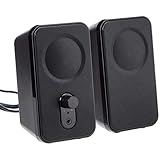
- AC-powered (10W) wired computer speakers plug directly into a wall outlet for maximum power
- Turn the speakers on and adjust the volume using one simple control (located on the front of the speakers); volume control includes On/Standby
- Plug and play―simply plug in the power and insert 3.5mm jack into your audio device; built-in headphone jack on front of speaker for easily plugging in headphones
- Frequency range of 68 Hz - 20 KHz; 4.6 watts of total RMS power (2.3 watts per speaker)
- Measures approximately 3 by 5.3 by 3.2 inches; weighs approximately 1.695 pounds
This does not mean YouTube will preserve a lossless upload as a lossless stream. The point is to avoid unnecessary lossy compression before YouTube’s own processing. A clean master gives the platform better material from which to create its delivery versions.
Creator pre-publish checklist
- Start with the highest-quality master available; use a lossless source where practical.
- Avoid repeatedly exporting and re-importing MP3 or other already-lossy files.
- Use YouTube’s current upload guidance for the codec, bitrate, and sample rate appropriate to your workflow.
- Check that the final mix is not clipped or excessively limited.
- Listen for phase or polarity problems that may become obvious when the mix is played in mono.
- Check left/right balance and stereo compatibility before publishing.
- Listen to the uploaded result—not only the file on your editing computer.
- Test with headphones, ordinary speakers, and a single-speaker or mono-like setup.
- Do not promise viewers that a 4K upload automatically improves audio.
Mono compatibility: why stereo can disappear
Stereo audio uses separate left and right channels. If those channels contain elements that cancel each other when combined, a mono playback system can make parts of the program quieter or remove them entirely. YouTube documents a related device issue: stereo intended for left and right speakers, including headphones, may be converted to mono on a device with one speaker. Poor mono compatibility can reduce quality or mute audio.
This matters to music producers, documentary makers, interview editors, and anyone combining multiple recordings. A voice, musical instrument, or ambient layer that sounds fine in stereo can become weak if it was placed or processed in a way that does not survive mono playback.
Before publishing, check the mix in stereo and mono. Then listen to the final YouTube upload on more than one system. This catches problems that a bitrate comparison will not.
Do these 3 things before closing this tab:
1Fix the driver behind crashes, sound loss and screen glitches2Clear out junk files and repair common Windows errors3Scan for outdated or missing drivers - takes under a minuteWhy the same YouTube video can sound different on different devices
The stream is only one part of reproduction. Differences between a phone, laptop, television, Bluetooth speaker, and wired headphones can come from:
- the selected output device;
- different speaker or headphone frequency responses;
- phone or computer volume normalization;
- operating-system equalizers and spatial-audio effects;
- Bluetooth processing and connection conditions;
- a single-speaker or mono playback path;
- damaged cables, loose connections, or faulty hardware;
- the room and listening position.
Wired headphones can be useful when you are evaluating stereo separation, small artifacts, or a subtle mix problem because they provide a more consistent left/right listening path than many built-in speakers. They do not increase YouTube’s bitrate and cannot restore detail removed by lossy encoding.
Do not judge technical quality from loudness alone. A louder signal often seems more detailed or exciting in a quick comparison, even when it contains no more information. Match levels as closely as possible before deciding that one version sounds better.
Rank #4

- Stereo Audio Performance – 2.0 speaker system delivers clear sound for music, video, and voice applications.
- Compact Design for Small Spaces – Space-saving size fits desks, workstations, or limited setups without taking up much room.
- Simple Wired Connection – Connects via 3.5mm audio jack to compatible devices including desktops, laptops, and Chromebooks; powered by included AC adapter.
- Accessible Controls – Front panel on the right speaker includes power, volume control, headphone jack, and LED power indicator.
- What’s Included – CA-2014 2.0 stereo speakers, AC power adapter, and user guide, one year warranty.
YouTube audio enhancements can change what you hear
YouTube documents playback enhancements that alter presentation without changing the original uploaded file. Stable volume can reduce loudness variation. Voice boost can make dialogue easier to hear by reducing background sound and emphasizing speech.
The Tool Desk
Outbyte PC Repair FREEClear out junk files and repair common Windows errorsFree Scan →Outbyte Driver Updater FREEFix the driver behind crashes, sound loss and screen glitchesFind Drivers →These features may be helpful for a spoken documentary, but they can also change the balance, dynamics, or perceived clarity of music and sound design. Viewers’ settings are therefore another variable when two people describe the same upload differently. When evaluating a mix, compare with enhancements disabled where possible, then test the practical listening experience with them enabled.
How to choose the best settings as a listener
- Use the relevant app. YouTube Music’s Low, Normal, High, and Always high controls should not be confused with a universal setting for ordinary YouTube video playback.
- Select the highest available quality if data use and storage are not concerns.
- Keep expectations realistic. High quality or Premium cannot turn a poor original upload into a lossless master.
- Check the output path. Confirm that the app is using the intended headphones, speakers, television, or Bluetooth device.
- Check enhancements and normalization. Stable volume, Voice boost, equalizers, and operating-system effects can change the presentation.
- Use a reliable comparison setup. Wired headphones are useful for checking stereo separation, but they do not alter the stream itself.
- Check mono behavior if vocals, instruments, or background sounds seem to vanish on a phone or single speaker.
Windows troubleshooting: when the problem is not YouTube quality
If YouTube audio is missing, distorted, routed to the wrong device, or noticeably different from other applications on Windows, troubleshoot the playback chain before blaming compression:
- Confirm that Windows has selected the intended output device.
- Check the browser’s tab and application volume in the Windows volume mixer.
- Reconnect the cable, headphones, or Bluetooth device and check its battery and connection.
- Check browser permissions and make sure the tab is not muted.
- Temporarily disable equalizers, spatial-audio effects, and other operating-system enhancements.
- Install or reinstall the audio driver supplied by the device or computer manufacturer.
- Test the same video with another output device and another browser.
Only after those basic checks should you consider a third-party utility. Windows audio driver troubleshooting software such as Outbyte Driver Updater may help identify missing or outdated sound-device drivers, according to Outbyte’s documentation. It is an optional compatibility step—not a way to raise YouTube’s bitrate, undo lossy encoding, or create hi-fi sound from a poor source. Prefer the manufacturer’s official driver and Windows’ own troubleshooting options when they resolve the problem.
For creators: continuous YouTube channels and audio quality
A creator running a 24-hour music mix, radio-style channel, replay channel, or continuous event program has two separate concerns:
Recommended Free Tools
Run a Continuous YouTube Music Channel From the Cloud
StreamNeo lets creators upload prerecorded video and paste a YouTube stream key so the stream runs in the cloud while the PC and encoder stay off. This fits a nonstop music mix, replay channel, or continuous event program when the goal is reliable YouTube availability rather than a change to the source audio.
StreamNeo checks stream health every 30 seconds and automatically restarts dropped streams. A 24-hour 720p/30fps trial is free with no card at signup, giving creators a practical way to test the continuous-broadcast workflow before committing to it.
Best Value

- 【Hi-Fi Sound Quality】: 24k gold-plated connector, Enameled wire core, which ensure seamlessly transmit stereo audio for premium sound experience.
- 【Copper connector】: Pure copper shell of this stereo aux cable provides reliable performance and reducing signal loss.
- 【Incredibly Durable】: 20000+ bend lifespan & double-braided nylon exterior make audio cables adding to the durability and tangle free.
- 【Universal Compatibility】: Our AUX cord works perfectly with any device with a 3.5mm aux port. Such as car stereos, speaker, iPod, headphones, etc.
- 【Plug and Play】: Tangle free design makes our 3.5mm audio cable more convienient to carry and storage. You can enjoy your music anytime and anywhere while commuting. Let the fun begin.
- Fidelity: the quality of the original audio and the settings used to prepare the upload.
- Operations: whether the program stays online and recovers from interruptions.
24/7 YouTube livestreaming services such as StreamNeo are relevant to the second concern. StreamNeo describes a workflow in which a creator uploads prerecorded video, connects a YouTube stream key, and runs the content continuously from the cloud with automatic recovery. That can suit a nonstop music mix or replay channel, but it does not improve the codec, bitrate, mastering, or fidelity of the underlying YouTube audio.
If the source itself needs improvement, the appropriate category is music production or mastering: supply YouTube with a clean, high-quality or lossless master before the platform transcodes it. Choose any such service based on its actual technical workflow and current availability rather than assuming that a distribution or livestreaming service fixes audio quality.
Myths and facts about YouTube audio
| Claim | Fact |
|---|---|
| All YouTube audio is 128 kbps. | Unsupported. Documented quality varies by product, setting, and playback conditions. |
| All YouTube audio is 256 kbps. | Unsupported. YouTube documents up to 256 kbps for particular Premium music playback and YouTube Music settings, not every ordinary video. |
| Premium makes every upload 256 kbps. | False. The original upload can limit the quality available to the listener. |
| A 4K video automatically has better audio. | False. YouTube separates video resolution from audio playback bitrate. |
| A lossless upload will play losslessly on YouTube. | Not necessarily. YouTube transcodes media; lossless input is recommended because it avoids unnecessary lossy compression before that process. |
| Better headphones increase YouTube’s bitrate. | False. They may make the existing signal easier to assess, but cannot restore discarded information. |
| A louder video has better audio. | Not necessarily. Loudness can bias perception; compare at matched levels. |
| If stereo sounds fine, the mix is safe everywhere. | False. Mono or single-speaker playback can expose phase and compatibility problems. |
The most accurate way to describe YouTube audio is therefore conditional: the creator’s master establishes the ceiling, YouTube creates and delivers versions under product-specific conditions, and the playback chain determines how much of that result reaches the listener.
Frequently Asked Questions
What is YouTube’s audio bitrate?
YouTube does not use one universal audio bitrate. YouTube Music Premium lists up to 48 kbps for Low, 128 kbps for Normal, and 256 kbps for High and Always high. YouTube also documents up to 256 kbps for qualifying Premium music-video and Art Track playback. These figures should not be applied to every ordinary YouTube video.
Does YouTube Premium improve audio quality?
Premium can provide up to 256 kbps for qualifying music videos and Art Tracks, but it cannot improve a source that was uploaded at lower quality. YouTube specifically notes that a 128 kbps upload does not become a 256 kbps source because the listener has Premium.
Does 4K YouTube mean better audio?
No. YouTube states that audio playback bitrate is separate from video resolution. A 4K upload can have poor audio, while a lower-resolution upload can have a strong audio master.
How should I upload the best audio to YouTube?
Use a clean, high-quality or lossless master where practical, follow YouTube’s current codec and sample-rate guidance, and check the final upload in stereo, mono, headphones, speakers, and a single-speaker setup.
Why does YouTube audio sound different or disappear on one speaker?
A single-speaker device may fold stereo into mono. If the mix has phase or polarity problems, sounds can become quieter or disappear. Check mono compatibility before publishing.
The Bottom Line
Bottom line: There is no universal YouTube audio bitrate. Use the highest relevant YouTube Music or Premium setting available, but remember that the original upload remains decisive. Creators should supply a clean master, follow YouTube’s current audio guidance, check mono compatibility, and test the final upload on multiple playback systems.
Quick Recap
Product prices and availability are accurate as of the date/time indicated and are subject to change. Any price and availability information displayed on Amazon at the time of purchase will apply.
Quick wins for a faster PC:
Scan for outdated or missing drivers - takes under a minuteDriver Scan →Clear out junk files and repair common Windows errorsFree Scan →Fix the driver behind crashes, sound loss and screen glitchesFind Drivers →