Windows Errors? Fix Them Before They Spread
Repair common Windows errors and clear accumulated junk for a smoother, more stable PC - no reinstall needed.Free scan · no reinstallCrashes, No Sound, or Screen Glitches?
Random freezes, missing sound and display glitches usually trace back to one bad driver. Find and replace yours safely.Free scan · under a minuteSome links on this page are affiliate links: if you buy through them we may earn a commission, at no extra cost to you.
The Twelve Olympians were a conventional grouping of major Greek gods, not a universally fixed membership list. The roster used here is Zeus, Hera, Poseidon, Demeter, Athena, Apollo, Artemis, Ares, Aphrodite, Hephaistos, Hermes and Dionysos. Ancient Greek religion was more than a collection of myths: people prayed, poured libations, dedicated objects, attended civic festivals and sacrificed animals at sanctuaries whose temples, altars and landscapes connected a deity with a particular community.
The Twelve Olympians were a flexible convention
“Olympian” refers to the gods traditionally associated with Mount Olympus, but ancient worshippers did not apply one immutable list everywhere. The British Museum identifies evidence for worship focused on twelve gods by the late sixth century BCE. A Homeric Hymn to Hermes, dated around 500 BCE, describes Hermes dividing a sacrifice into twelve portions, while Thucydides says that Pisistratus established an altar of the Twelve Gods in Athens around 522 BCE. These references show that the idea of twelve important gods was established early, not that every Greek city recognized exactly the same twelve.


Modern summaries often substitute Hades for Dionysos or use other local variations. Hades was an important god of the underworld, but he was not normally counted among the Olympians because his realm was below the earth. Dionysos, whose worship became central to wine, theatre and ecstatic celebration, is included in the widely used roster below. The list is therefore a practical framework for understanding Greek religion rather than a constitutional roster shared identically by every sanctuary.
Recommended Free Tools
The conventional twelve gods and their domains
| Deity | Common associations | How the association appeared in worship or art |
|---|---|---|
| Zeus | Sky, thunder and divine kingship | Major civic and pan-Hellenic festivals, including the games at Olympia, honored him. |
| Hera | Queen of the gods, marriage and legitimate sovereignty | Her sanctuaries connected divine authority with marriage and the status of the household. |
| Poseidon | Sea, earthquakes and horses | Coastal communities sought his favor; the temple at Sounion made the sea part of the sacred setting. |
| Demeter | Agriculture, grain and fertility of the earth | Rituals for her addressed the food supply and seasonal renewal. |
| Athena | Wisdom, strategic warfare, crafts and Athens | The Acropolis and the Panathenaia presented her as the city’s patron. |
| Apollo | Music, prophecy, healing and order | Delphi became his principal sanctuary and an oracle consulted by Greeks. |
| Artemis | Hunting, wild animals and transitions in life | Her cults linked wilderness, protection and the passage from childhood to adulthood. |
| Ares | Brutal, immediate violence of war | His identity differed from Athena’s disciplined, strategic form of warfare. |
| Aphrodite | Love, sexual attraction and beauty | Offerings and rites addressed desire, fertility and relationships. |
| Hephaistos | Fire, furnaces, metalworking and skilled manufacture | Craft workers could honor him as the divine model of the smith. |
| Hermes | Messages, travel, trade, boundaries and transition | His worship reflected movement between places and social states. |
| Dionysos | Wine, theatre, altered states and communal celebration | Festivals used performance, procession and wine to explore his power. |
These domains are identifying associations, not exclusive job descriptions. Greek gods overlapped: Athena could protect a city and its craftspeople, Apollo could be invoked for healing as well as prophecy, and Dionysos could be honored in both public theatre festivals and private groups. Myths tell stories about divine personalities; cult practice shows how real communities organized relationships with those gods.
Popular on Amazon
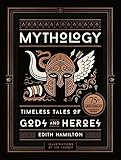
- A good option for a Book Lover
- Good one for reading
- Comes in Good condition
What a Greek sanctuary contained
A temple was one element of a larger sacred precinct, or temenos. The Metropolitan Museum describes a temenos as a bounded area that could contain a temple with a monumental cult image, an outdoor altar, statues, votive gifts and natural features such as sacred trees or springs. The temple provided a house for the deity’s image and a storehouse for offerings, but the altar outside was where the community’s central ceremonies occurred.
This arrangement explains why a ruined temple alone cannot represent the whole of Greek worship. Processions approached the precinct, priests and worshippers gathered in the open air, animals were prepared at the altar, and dedicated objects accumulated around the sacred image. A spring, grove, hilltop or view toward the sea could carry religious meaning alongside the architecture.
How prayer, offerings and sacrifice worked
Prayer and reciprocal gifts
Worshippers addressed gods with spoken prayers, requests and thanks. The relationship was often understood as reciprocal: a person or community asked for protection, health, victory, good harvests or safe travel and responded with an offering. A votive gift—a statue, vessel, weapon, plaque or other valued object—made gratitude visible and could commemorate a favor believed to have been received.
The Tool Desk
Outbyte PC Repair FREEClear out junk files and repair common Windows errorsFree Scan →Outbyte Driver Updater FREEScan for outdated or missing drivers - takes under a minuteDriver Scan →Also popular on Amazon
Libations
Libations poured liquid such as wine, water or oil onto an altar or the ground. They accompanied prayers, meals, processions and sacrifices. The act mattered because it transferred a valued substance into a divine sphere; it was not simply a toast or a decorative gesture.
Animal sacrifice
Animal sacrifice was the central ritual act in ancient Greece, especially sacrifice of oxen, goats and sheep, as Colette Hemingway and Séan Hemingway write in the Metropolitan Museum’s overview. The animal, altar, fire, prayers and participants formed one public ceremony. Meat could be cooked and shared by the human community while portions associated with the gods were burned or otherwise set apart.
There was no single pan-Greek ritual manual. The animal chosen, the wording of prayers, the timing, the division of meat and the people allowed to participate varied by deity, festival and city. A source that establishes common forms of sacrifice does not justify claiming that every god received the same animal or that every ceremony followed an identical sequence.
Also popular on Amazon
Four places where gods, communities and landscape met
| Sanctuary or festival | Deity | Location and role | What it demonstrates |
|---|---|---|---|
| Delphi | Apollo | Apollo’s principal sanctuary and a destination for people seeking an oracle’s answer. | Prophecy made a sanctuary an international consultation center as well as a place of sacrifice. |
| Acropolis and Parthenon | Athena | Athenian hilltop complex; the Parthenon celebrated the city’s patron deity. | Architecture could express civic identity and divine protection. |
| Sounion | Poseidon | Temple above the sea at the southern tip of Attica. | A sanctuary’s physical setting could echo a god’s sphere and serve travelers at sea. |
| Olympia and the Olympic Games | Zeus | Pan-Hellenic sanctuary where the ancient games were held every four years in his honor. | Religious festivals could bring rival communities together under a shared cult. |
| Greater Panathenaia | Athena | Athenian festival held every four years for the city’s patron. | Procession, offerings and competition joined worship to civic membership. |
These examples should not be read as exclusive headquarters. Apollo had many cults beyond Delphi, Athena was worshipped throughout the Greek world, and each community could combine major gods with local heroes and powers. A god’s importance was often defined by the city, calendar and sanctuary in which worship occurred.
Festivals made mythology public
Festivals translated divine stories and attributes into shared action. Processions moved people and sacred objects through civic space; music, dance and sacrifice organized time; athletic contests displayed excellence before Zeus; and theatrical performances gave Dionysos a public role. The Greater Panathenaia connected Athena with the political identity of Athens, while the Olympic festival created a recurring meeting point for Greeks from different cities.
Festival religion also linked households to institutions. Families might bring offerings or participate in a procession, while magistrates, priests, performers and athletes represented the city. The scale could range from a household prayer to a major pilgrimage, but both belonged to the same world of negotiated relationships with divine powers.
Also popular on Amazon
Myth is not a complete record of cult
Stories about the Olympians explain divine births, rivalries, marriages, punishments and heroic encounters. They are indispensable for recognizing the gods in art, but they do not provide a neutral transcript of ordinary worship. A myth may emphasize conflict between Hera and Zeus without describing how a particular city honored Hera; a poem may portray Athena as a warrior while an actual sanctuary also focused on weaving, carpentry or civic protection.
Archaeological remains, inscriptions, votive objects, sacrificial deposits, festival calendars and ancient historians answer different questions. A temple’s plan can show where worshippers gathered, an inscription can identify a dedication, and a literary story can reveal an imagined divine character. Reliable interpretation keeps those kinds of evidence distinct while considering how they overlap.
What varied from place to place
- The roster: communities could emphasize different gods, heroes or local powers, and lists of twelve were not identical in every period.
- The ritual: offerings, animals, prayers, festival dates and rules of participation depended on local custom.
- The sanctuary: some cults centered on monumental temples, while others used modest altars, groves, springs or household spaces.
- The social purpose: a rite could address farming, marriage, seafaring, warfare, healing, trade or the identity of a city.
- The setting: a coastal headland, mountain sanctuary, urban acropolis and rural field each shaped how worshippers experienced a god.
The Metropolitan Museum characterizes Greek observance as conservative and rooted in older traditions, while historical references also reveal change and local innovation. “Ancient Greek religion” is therefore best understood as a family of related practices rather than one centrally administered institution.
Also popular on Amazon

- New
- Mint Condition
- Dispatch same day for order received before 12 noon
- Guaranteed packaging
- No quibbles returns
Why the Twelve Olympians still matter as a historical framework
The twelve-god scheme helps readers organize a complex religious landscape: Zeus and Hera represent sovereignty and marriage, Poseidon the sea, Demeter agriculture, Athena civic intelligence, Apollo prophecy and music, Artemis the wild, Ares war, Aphrodite desire, Hephaistos craft, Hermes movement and Dionysos wine and theatre. Its value lies in orientation, not in pretending that every Greek worshipper used the same chart.
To understand what these gods inspired, look beyond statues and stories to the complete sacred environment: the altar where animals were sacrificed, the liquid poured as a libation, the object dedicated in thanks, the procession through a city, the festival calendar and the landscape chosen for a sanctuary. Those practices show how mythology became lived religion.






Say something about this film