Recommended Free Tools
Spotify is usually the better choice for music discovery, collaborative listening, Spotify Connect, mixed-device households, and anyone who wants a free ad-supported tier. Apple Music is usually the better choice for Apple-device integration, Dolby Atmos and Hi-Res Lossless options, Apple Music Classical, and Apple Family Sharing.
Neither service is universally better, and there is no reliable basis for declaring that one has the larger catalog in every country. The right decision depends on which feature would be hardest for you to replace: Spotify’s discovery and social tools, or Apple Music’s audio formats and Apple ecosystem integration.
| # | Preview | Product | Price | |
|---|---|---|---|---|
| 1 |
|
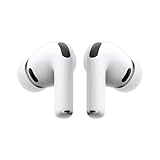
Apple AirPods Pro 3 Wireless Earbuds with Active Noise Cancellation | $179.00 | Buy on Amazon |
| 2 |

|
Apple AirPods 4 Wireless Earbuds | $75.05 | Buy on Amazon |
The quick decision
| If your priority is… | Choose | Why |
|---|---|---|
| Finding unfamiliar artists and songs | Spotify | Discover Weekly, Release Radar, daylist, Spotify DJ, Mixes, Blend, and other discovery-focused features. |
| Sharing playlists or listening with friends | Spotify | Blend and Jam are designed around shared tastes and group listening. |
| Controlling playback across varied devices | Spotify | Spotify Connect and broad support for phones, computers, cars, consoles, smart speakers, TVs, and wearables. |
| iPhone, Mac, Apple Watch, HomePod, CarPlay, Siri, or Apple One integration | Apple Music | Apple Music is deeply integrated into Apple’s hardware and services, although it also works on Android, Windows, smart TVs, consoles, Roku, Sonos, Alexa, and Google Nest. |
| Dolby Atmos, Spatial Audio, or Hi-Res Lossless | Apple Music | Apple offers Dolby Atmos and explicitly separates standard Lossless from Hi-Res Lossless up to 192 kHz. |
| A dedicated classical-music experience | Apple Music | Apple Music Classical is included with Student, Individual, and Family plans. |
| A free music-streaming plan | Spotify | Spotify has a free, ad-supported service. Apple Music is primarily a paid, ad-free subscription. |
| Local audio files inside the same music app | Spotify | Spotify supports playback of legally stored local audio files and extensive playlist organization. |
This is a priorities-based recommendation, not a claim that one service wins every category. Both provide offline listening and lossless options, so basic access to streamed music is no longer the main dividing line.
U.S. pricing: Apple Music is slightly cheaper for individuals
The following is the supplied U.S. pricing snapshot. The research snapshot does not include a retrieval date, so verify the live price and promotional terms before subscribing. Temporary introductory offers should not be mistaken for the normal recurring price.
#1 Best Overall
- WORLD’S BEST IN-EAR ACTIVE NOISE CANCELLATION — Removes up to 2x more unwanted noise than AirPods Pro 2* so you can stay fully immersed in the moment.*
- BREAKTHROUGH AUDIO PERFORMANCE — Experience breathtaking, three-dimensional audio with AirPods Pro 3. A new acoustic architecture delivers transformed bass, detailed clarity so you can hear every instrument, and stunningly vivid vocals.
- HEART RATE SENSING — Built-in heart rate sensing lets you track your heart rate and calories burned for up to 50 different workout types.* With iPhone, you will have access to the Move ring, step count, and the new Workout Buddy,* powered by Apple Intelligence.*
- LIVE TRANSLATION — Communicate across language barriers using Live Translation,* enabled by Apple Intelligence.*
- EXTENDED BATTERY LIFE — Get up to 8 hours of listening time with Active Noise Cancellation on a single charge. Or up to 10 hours in Transparency using the Hearing Aid feature.*
| Plan | Spotify | Apple Music | Important condition |
|---|---|---|---|
| Individual | $12.99/month | $11.99/month | Prices shown after the promotional period. |
| Student | $6.99/month | $6.99/month | Eligibility and student verification apply. |
| Duo | $18.99/month | Not offered in the cited Apple plans | Spotify Duo is for two people who live at the same address. |
| Family | $21.99/month | $19.99/month | Both support up to six accounts, subject to each service’s household or Family Sharing rules. |
Spotify Individual includes 15 hours of audiobook listening per month from Spotify’s subscriber audiobook catalog. On Duo and Family, the audiobook time is listed for the plan manager rather than every member. Audiobook availability and plan terms can change, so this should not be treated as an unlimited audiobook benefit.
Spotify Student has another U.S.-specific advantage: Spotify says the plan includes Hulu with ads at no extra cost for eligible students, subject to eligibility and current terms. Apple Music Student includes the same Apple Music features and benefits as the Individual plan, including access to Apple Music Classical.
For a full six-person household, Apple Music Family is less expensive in this snapshot. Spotify may still be better value if the household needs separate Duo availability, Spotify’s discovery and device features, or the included student Hulu offer.
Audio quality: both have lossless, but Apple offers more explicitly defined formats
It is too simplistic to say that Apple Music always sounds better. The audible result depends on the recording, mastering, playback device, connection method, software settings, and the listener. Lossless also does not automatically make a recording better mastered or more enjoyable.
What’s actually slowing this PC down?
Pick the symptom - the matching free tool is one click away.
Spotify Premium lossless
Spotify Premium supports lossless playback up to 24-bit/44.1 kHz FLAC on eligible plans, supported apps, and compatible hardware. Spotify identifies mobile, desktop, tablet, and compatible Spotify Connect devices as supported paths, but not every third-party device or connection preserves the same quality.
Bluetooth and other wireless connection methods can alter the signal path. A lossless setting inside the app does not guarantee that a Bluetooth connection will deliver an untouched lossless stream to the headphones. Spotify Connect-compatible equipment can be a particularly useful route for listeners who want to control playback remotely while keeping their existing multi-room or speaker setup.
Apple Music Lossless, Hi-Res Lossless, and Dolby Atmos
Apple Music offers lossless audio at multiple resolutions across its catalog. Apple’s labels distinguish:
- Lossless: up to 48 kHz.
- Hi-Res Lossless: above 48 kHz and up to 192 kHz.
- Dolby Atmos: immersive or Spatial Audio mixes on available tracks and compatible devices.
Apple says Hi-Res Lossless requires external equipment such as a USB digital-to-analog converter. Ordinary lossless listening and Hi-Res Lossless are therefore different setup questions. You do not need a DAC merely to subscribe to Apple Music or to play standard Lossless content, but you may need one if you are intentionally building a wired high-resolution setup.
The Tool Desk
Outbyte PC Repair FREEClear out junk files and repair common Windows errorsFree Scan →Outbyte Driver Updater FREEScan for outdated or missing drivers - takes under a minuteDriver Scan →Equipment note: If your decision hinges on audio quality, compare wireless headphones for lossless music carefully rather than assuming any Bluetooth model will preserve a lossless stream. For Apple Music Hi-Res Lossless, a USB DAC for Apple Music Hi-Res Lossless is an optional upgrade for a compatible wired setup—not a requirement for everyday listening. Disclosure: DocumentaryTube may earn a commission from qualifying equipment purchases if approved shopping links are added to these category recommendations.
Apple Music’s Dolby Atmos support is also not universal surround sound for every song. The track must have an available Dolby Atmos version, and the device and playback settings must support it. Compatible Apple or Beats headphones can make Apple’s automatic Spatial Audio behavior convenient, but they are not the only way to listen to compatible immersive content.
Audio verdict: Pick Apple Music if Dolby Atmos, a clearly defined Hi-Res Lossless option, or Apple-device audio integration is a primary reason for subscribing. Pick Spotify if you want lossless playback within a service whose strongest advantage is still discovery and whose Connect ecosystem is central to your listening. For ordinary headphones and speakers, the difference between the services may be less important than the recording and the hardware.
Music discovery and playlists: Spotify has the stronger discovery identity
Spotify is generally the safer choice for listeners who want the service to keep surfacing unfamiliar music. Its discovery system includes:
- Discover Weekly: a personalized playlist that refreshes weekly.
- Release Radar: new releases from artists connected to your listening habits.
- Spotify Mixes: personalized mixes built around listening patterns.
- DJ: a personalized listening mode that helps guide a session.
- daylist: a playlist that changes with listening habits and time of day.
- Blend: a shared playlist combining the tastes of multiple listeners.
Spotify has also added controls intended to let listeners shape discovery recommendations, rather than treating the algorithm as completely fixed. The exact features and labels can vary by market, account, and app version.
Apple Music also has personalized recommendations, curated playlists, artist access, interviews, exclusive performances, and tour-date information. It can be a strong fit for someone who already knows what they want, maintains a deliberate library, or prefers editorial curation. That is a reasoned distinction, not a laboratory ranking: recommendation quality changes with a person’s listening history, habits, and tolerance for algorithmic suggestions.
Choose Spotify if you often ask, “What should I hear next?” Choose Apple Music if you more often search for a known album, follow a carefully maintained library, or prefer a combination of human-curated and personalized recommendations.
Social and collaborative listening
Spotify has the clearer advantage for active music sharing. Blend combines listening tastes, while Jam is designed for people listening together, including remote group sessions. Spotify also emphasizes playlist sharing, collaboration, and social discovery throughout its service.
Quick wins for a faster PC:
Clear out junk files and repair common Windows errorsFree Scan →Fix the driver behind crashes, sound loss and screen glitchesFind Drivers →Repair Windows errors before they cause bigger problemsFix Now →Apple Music supports profiles, following artists, and seeing what friends are listening to. That makes it socially capable, but the cited Apple documentation does not establish feature parity with Spotify’s Blend and Jam toolkit. If your music service is part of how your friend group communicates, Spotify is the safer choice.
Devices and ecosystem: choose the service that fits your household
Spotify says its service works on more than 2,000 devices. Supported categories include phones, tablets, desktop computers, cars, smart speakers, televisions, game consoles, wearables, and other connected equipment. Its most distinctive control feature is Spotify Connect: one device, often a phone, can control playback on another compatible device without requiring the phone to remain the actual audio source.
Apple Music works on iPhone, iPad, Apple Watch, Mac, Apple Vision Pro, HomePod, Apple TV 4K, and CarPlay. It also works beyond Apple’s ecosystem on Android, Windows, smart TVs, game consoles, Roku, Sonos, Alexa, Google Nest, and other listed platforms. Apple Music is therefore not Apple-only; its advantage is that Apple users can integrate it more closely with existing hardware and services through features such as Siri, CarPlay, HomePod, Apple Watch, and Apple One.
| Household situation | Better starting point | Reason |
|---|---|---|
| iPhone, Mac, Apple Watch, HomePod, and CarPlay are used every day | Apple Music | Native Apple integration may be more valuable than small differences in subscription price. |
| Android phones, Windows PCs, consoles, smart TVs, and multiple speaker brands | Spotify | Spotify’s broad device continuity and Connect control are a strong mixed-platform fit. |
| Everyone uses Apple hardware but one person uses Android or Windows | Test both | Apple Music supports non-Apple platforms, but the household should verify the exact devices and controls it needs. |
| Whole-home playback from a phone | Usually Spotify | Spotify Connect is a major convenience if the speakers or receivers support it. |
If whole-home listening is central, compare a smart speaker for Apple Music with a Spotify Connect speaker based on the equipment you already own. Compatibility matters more than the service’s general platform list: confirm the exact speaker, receiver, television, console, or car system before buying.
Offline listening, downloads, and local files
Spotify
Spotify Premium lets subscribers download albums, playlists, and podcasts for offline playback. Spotify states that users can download up to 10,000 tracks on each of up to five devices. The app must connect to the internet at least once every 30 days to retain downloads.
Spotify also supports playback of legally stored local audio files through its apps. That can be useful if your listening system includes recordings that are not available in the streaming catalog. Spotify playlist folders can be created on desktop, web, and mobile and displayed across devices, which makes the service attractive to listeners who organize their libraries around playlists.
Rank #2
- REBUILT FOR COMFORT — AirPods 4 have been redesigned for exceptional all-day comfort and greater stability. With a refined contour, shorter stem, and quick-press controls for music or calls.
- PERSONALIZED SPATIAL AUDIO — Personalized Spatial Audio with dynamic head tracking places sound all around you, creating a theater-like listening experience for music, TV shows, movies, games, and more.*
- IMPROVED SOUND AND CALL QUALITY — AirPods 4 feature the Apple-designed H2 chip. Voice Isolation improves the quality of phone calls in loud conditions. Using advanced computational audio, it reduces background noise while isolating and clarifying the sound of your voice for whomever you’re speaking to.*
- MAGICAL EXPERIENCE — Just say “Siri” or “Hey Siri” to play a song, make a call, or check your schedule.* And with Siri Interactions, now you can respond to Siri by simply nodding your head yes or shaking your head no.* Pair AirPods 4 by simply placing them near your device and tapping Connect on your screen.* Easily share a song or show between two sets of AirPods.* An optical in-ear sensor knows to play audio only when you’re wearing AirPods and pauses when you take them off. And you can track down your AirPods and Charging Case with the Find My app.*
- LONG BATTERY LIFE — Get up to 5 hours of listening time on a single charge. And get up to 30 hours of total listening time using the case.*
Apple Music
Apple Music subscribers can download music for offline listening, including lossless and Dolby Atmos content where supported. Apple Music also provides library synchronization and a built-in workflow for transferring songs, albums, and user-created playlists from other music services.
The transfer process reduces the friction of moving from Spotify to Apple Music, but it is not guaranteed to be perfect. Apple warns that some tracks may not have an exact catalog match, and service-created playlists do not transfer. Check the resulting library before cancelling the old subscription.
Downloads are access to subscription content, not permanent ownership. If the subscription ends, downloaded subscription music is no longer playable as subscription content. Keep separately purchased or legally owned local files backed up independently.
Family, Duo, and student value
Spotify Family and Duo
Spotify Duo provides two Premium accounts for people who reside at the same address. Spotify Family supports up to six Premium accounts and includes parental controls and managed accounts for young listeners. Separate accounts matter because each person receives individual recommendations, playlists, and listening history.
Apple Music Family Sharing
Apple Music Family supports up to six people through Apple’s Family Sharing system. Apple says the family group receives access to the full Apple Music catalog and features. This is especially convenient when the household already uses Family Sharing for other Apple services.
Do not assume that a family plan can be shared with anyone in any location. Household eligibility, account rules, Family Sharing requirements, and regional availability vary. Confirm the current terms for your country before joining or creating a plan.
Free tools Windows power users keep installed
One-click scans. No signup required.
Student plans
Both services list a $6.99/month U.S. student plan in the supplied snapshot. Spotify’s plan includes Hulu with ads for eligible students, subject to verification and terms. Apple Music Student includes the standard Apple Music features and Apple Music Classical.
If you would use Hulu, Spotify’s bundle can be the more valuable offer. If you want Apple’s audio formats, Classical app, or Apple-device integration, the identical listed student price makes Apple Music more compelling.
Independent reader supportYour contribution helps us test, update, and keep practical guides available for everyone.Classical music and library management
Apple Music Classical is a meaningful advantage for people who regularly listen to classical recordings. It is a dedicated app included with Apple Music Student, Individual, and Family plans, rather than merely a classical category inside the general Apple Music interface. A dedicated classical experience can make it easier to browse works, composers, performers, and recordings.
Spotify’s advantage is flexibility for playlist-centered organization. Its playlist folders can be created on desktop, web, and mobile and shown across devices. Spotify’s local-file support also makes it useful for listeners who combine streaming with legally stored recordings.
For classical listeners, the practical question is whether you want a dedicated classical browsing experience or whether your collection is primarily a set of personal playlists and local files. Apple Music is the clearer recommendation for the former; Spotify can work well for the latter.
Free listening and advertising
Spotify offers a free, ad-supported music service. Premium removes music ads and adds features such as offline downloads and fuller playback control. The exact restrictions of free listening can vary by device, playlist, market, and current Spotify policy, so do not expect the free tier to behave exactly like Premium.
Apple describes Apple Music as ad-free, but it is primarily a paid subscription service rather than a comparable free music tier. If you are unwilling to pay monthly, Spotify is the obvious first service to try. If you already know you want a paid, ad-free experience, the free-tier difference may not matter.
A practical decision framework
Use this five-minute test instead of comparing feature checklists indefinitely:
Do these 3 things before closing this tab:
1Fix the driver behind crashes, sound loss and screen glitches2Clear out junk files and repair common Windows errors3Scan for outdated or missing drivers - takes under a minute- List the three devices you use most. Include your phone, car, primary computer, speaker, television, or game console. Check whether the exact models support the features you want.
- Identify your normal listening behavior. If you mostly browse recommendations, Spotify has the stronger case. If you search for albums, manage a library, or follow editorial programming, either service may fit.
- Decide whether immersive or high-resolution audio is a real priority. If you own compatible equipment and will use Dolby Atmos or Hi-Res Lossless, Apple Music deserves the first trial. If you mainly use Bluetooth earbuds, the theoretical maximum resolution may matter less than comfort and connection stability.
- Calculate the household price using recurring rates. Do not use a one-month promotion. Account for whether all members qualify, live at the required address, or already use Apple Family Sharing.
- Test the feature that would be hardest to replace. Try Spotify’s discovery and Connect features, or Apple Music’s integration, Classical app, lossless settings, and transfer workflow. Cancel only after confirming your playlists and downloads behave as expected.
Who should choose Spotify?
- You want algorithmic discovery through Discover Weekly, Release Radar, DJ, daylist, or Spotify Mixes.
- You regularly share playlists or listen with friends through Blend and Jam.
- Your household mixes Apple, Android, Windows, gaming, smart-speaker, car, and wearable platforms.
- You want to control compatible speakers and other devices with Spotify Connect.
- You want a free, ad-supported listening option.
- You are eligible for the Spotify Student plan and value the Hulu with ads bundle.
- You want local audio files and playlist folders inside a playlist-oriented music system.
Who should choose Apple Music?
- You use Apple hardware and want close integration with Siri, CarPlay, HomePod, Apple Watch, Mac, or Apple TV.
- Dolby Atmos, Spatial Audio, Lossless, or Hi-Res Lossless is important to your listening setup.
- You want Apple Music Classical included with the subscription.
- You want to migrate songs and user-created playlists through Apple’s built-in transfer workflow.
- You prefer an ad-free paid service and do not need Spotify’s free music tier.
- Your household already uses Apple Family Sharing or Apple One.
- You would rather maintain a deliberate library than have the service constantly push unfamiliar music.
What to do before switching
- Record your current playlists and favorites. Note which ones are personal playlists and which are created by the service.
- Check regional availability. Catalogs, plan benefits, student eligibility, family rules, audiobook access, and Dolby Atmos tracks can vary by country.
- Use Apple’s native transfer workflow if moving to Apple Music. Expect some unmatched songs and do not expect service-created playlists to transfer exactly.
- Download nothing until the new service is confirmed. Offline downloads are tied to the active subscription and do not represent ownership.
- Test your car, speakers, television, and headphones. A service can support a platform in general while a particular device has limited controls or format support.
- Keep the old subscription temporarily. Compare recommendations, library matches, family access, and offline playback before cancelling.
Important limitations to keep in mind
- Prices and promotional offers are for the U.S. snapshot supplied for this guide and may change.
- Student plans require verification, and bundle benefits such as Hulu are subject to eligibility and terms.
- Family eligibility and household rules vary by service and region.
- Neither service should be declared the universal catalog winner without a current, independently comparable catalog study.
- Lossless availability is not the same as audible superiority. Hardware, settings, connection paths, and mastering all matter.
- Apple Music Classical is a dedicated app included with eligible Apple Music plans; it should not be confused with the general availability of classical recordings.
- Downloads provide offline access while the subscription is active; they are not permanent ownership.
Frequently Asked Questions
Which is better, Spotify or Apple Music?
Spotify is generally better for discovery, playlist sharing, Jam, Blend, Spotify Connect, mixed-device households, and free ad-supported listening. Apple Music is generally better for Apple-device integration, Dolby Atmos, Hi-Res Lossless, Apple Music Classical, and Apple Family Sharing. Your priorities should decide the result.
Does Apple Music have better sound quality than Spotify?
Apple Music offers Dolby Atmos and explicitly defined Hi-Res Lossless up to 192 kHz, while Spotify Premium supports lossless playback up to 24-bit/44.1 kHz on eligible setups. That does not prove that Apple Music always sounds better: the recording, mastering, hardware, connection, settings, and listener all affect the result.
Can I transfer my Spotify playlists to Apple Music?
Apple Music provides a built-in transfer workflow for songs, albums, and user-created playlists from other music services. Apple warns that some tracks may not have exact catalog matches and that service-created playlists do not transfer, so check the result before cancelling Spotify.
Is Spotify free while Apple Music is not?
Spotify offers a free, ad-supported music service. Apple Music is primarily a paid, ad-free subscription. Spotify Premium adds offline downloads, fuller playback control, and removes music ads.
Windows Errors? Fix Them Before They Spread
Repair common Windows errors and clear accumulated junk for a smoother, more stable PC - no reinstall needed.Free scan · no reinstallOutdated Drivers Are Slowing You Down
One free scan finds every outdated or missing driver and matches the right update for your exact hardware.Free scan · exact hardware matchWhich service is better for families?
Apple Music Family costs less than Spotify Family in the supplied U.S. pricing snapshot and works through Apple Family Sharing for up to six people. Spotify Family also supports up to six accounts and adds parental controls and managed accounts for young listeners. Spotify Duo is useful for two people living at the same address.
The Bottom Line
Choose Spotify if the feature you would miss most is discovery, collaborative listening, cross-device control, a free tier, or playlist-centered organization. Choose Apple Music if that feature is Apple integration, Dolby Atmos, Hi-Res Lossless, Apple Music Classical, or Family Sharing. Since both services now offer offline listening and lossless audio, the best choice is usually determined by ecosystem, listening habits, and household needs rather than catalog size alone.