Some links on this page are affiliate links: if you buy through them we may earn a commission, at no extra cost to you.
Yes—David Greene filed a lawsuit against Google LLC and Alphabet Inc. on January 23, 2026. The longtime broadcaster alleges that the male synthetic host in Google NotebookLM’s “Audio Overviews” resembles and improperly appropriates his distinctive voice. Google denies the allegation and says the voice is based on a paid professional actor. The case remains unresolved: no court has found that Google cloned Greene’s voice, trained on his recordings or violated his rights.
What David Greene says happened
Greene reportedly first encountered the disputed NotebookLM voice in fall 2024, after a former colleague asked whether he had licensed his voice to Google. He listened to the product’s AI-generated podcast conversations and concluded that the male host sounded like him—not only in its general tone, but in its cadence, intonation, delivery and use of filler words.
Friends, family members and former colleagues reportedly recognized similarities as well. Greene has described the experience as disturbing because the system could make a voice resembling his say things he had never said or endorsed.
Recommended Free Tools
Those reactions are part of the evidence described in reporting and the complaint, but they are not proof that Google copied Greene’s recordings or deliberately designed the voice to imitate him. A listener’s perception of similarity, technical evidence of acoustic resemblance, proof of training-data use and proof of legal liability are separate questions.
Popular on Amazon

- 【PCM Recording and Automatic Noise Reduction】:This digital voice recorder is equipped with advanced dual noise reduction microphones and supports 1536 kbps PCM HD audio recording, ensuring crystal-clear sound capture in any environment. Recorder device with automatic noise reduction and voice-activated recording, the recorder only picks up the sound when there’s speech, reducing background noise,Excellent sound quality can meet the needs of students, journalists, music lovers and more people
- 【136GB Memory and Long Battery Life】Voice Recorder with Playback with 8GB built-in storage and includes a complimentary 128GB TF card, this digital voice recorder can hold up to 9775 hours of recordings in MP3 format or WAV format;Recorder for lectures with a built-in 1100mAh rechargeable lithium battery, this voice recorder can continuously record for up to 68 hours on a single charge, making it perfect for back-to-back meetings, interviews, or extended classroom sessions
- 【One Click Record and Save】: Our voice recorder supports one click recording and saving functions. Even when the product is in a powered-off state, simply push up the side recording button to immediately enter recording mode, and push down the recording button to save the recording. This allows for capturing as much information as possible.Easily transfer your recordings to your computer using the USB-C connection, allowing for fast and secure file management
- 【Easy-to-Use】This portable voice recorder is designed with a simple, user-friendly interface featuring a large, easy-to-read LCD screen. The voice-activated recording (VOR) feature makes hands-free operation a breeze. With one-touch recording, users can start or stop recording instantly, even during busy moments. A-B repeat function and password protection ensure that important segments are easily accessible and secure
- 【Portable and Durable Design】Designed with portability in mind, this lightweight screen recorder fits comfortably in your pocket or bag, weighing only 97 grams. Its sleek and durable metal casing ensures longevity and protection from everyday wear and tear. Whether you’re traveling, in the office, or attending a lecture, this compact recorder is always ready to capture clear, high-quality audio
What NotebookLM’s Audio Overviews does
NotebookLM is Google’s AI research and note-taking product. Users provide documents or other source material, and the Audio Overview feature turns that material into a conversational, podcast-like discussion between synthetic hosts.
The voices are presented as AI-generated hosts, not as recordings identified as David Greene. The dispute concerns the male host’s alleged resemblance to Greene and the commercial value of using a recognizable broadcaster-like voice as part of a consumer-facing product. Audio Overviews became widely known after its 2024 launch and was later used in high-profile experiments, including Spotify’s 2024 Wrapped experience.
That context matters. Greene is not simply alleging that Google reproduced one broadcast word for word. He says the product reproduced aspects of a voice and professional persona that are closely associated with his work.
What Greene’s complaint alleges
The complaint, filed in Santa Clara County Superior Court on January 23, 2026, names Google LLC and Alphabet Inc. as defendants. A copy of the filing is available through the complaint record.
According to the allegations, Google used Greene’s voice without authorization or compensation and used copies of his voice to develop, train and refine NotebookLM. Greene also alleges that Google replicated distinctive elements of his delivery, cadence and persona, commercially benefited from the resulting voice and interfered with his ability to control or license his professional identity.
The complaint identifies Greene’s work on programs including NPR’s Morning Edition, Up First, Left, Right & Center and Sports in America with David Greene, along with other radio and podcast projects. His argument is that a broadcaster’s voice can be a central commercial asset used for hosting, narration, endorsements, podcasts and licensing.
Also popular on Amazon
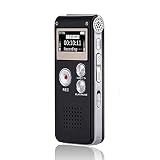
- 【Simple Operation】- switch on your voice recorder, one button for recording. press the "REC", start the recording, press "STOP", end the recording, press “PLAY”, listen what you just recorded, and then Press A-B, select your important section to repeat. Easy to playback with inner powerful speaker, support external sound speaker playback, let you enjoy superior recording quality.
- 【Clear Voice Record】- high quality recording with noise redution, you will get super clear recorded voice, the sensitive microphone help you to catch speaker's words in an interview, lectures, meetings.
- 【Voice Activated Recording】- automatic voice reduction function, it starts recording when sound is detected or turn to standby state, saving recording time and reduce power consumption.
- 【 Player Function】- this voice recorder can be used as an music player, you could enjoy the music after your tired study, meeting and so on. Also can function as a detachable data storage device.you can take along your favorite pictures and documents whenever you go.Simply cut-and-paste or drag-and -drop files to or from it via USB connection, the player will appear as a removeable drive in Windows.
- 【High quality and long time】 uses DSP noise reduction technology to filter out environmental noise, has high-quality recording, 【1536kbps】to restore the real scene. It can continuously record for more than 30 hours and play for 7 hours.
The complaint reportedly asserts claims involving:
- California’s statutory right of publicity under California Civil Code § 3344;
- Common-law misappropriation and right-of-publicity theories;
- California unfair-competition claims;
- Privacy-related theories; and
- Unjust-enrichment allegations.
These are allegations in a pleading, not findings of fact.
Do these 3 things before closing this tab:
1Fix the driver behind crashes, sound loss and screen glitches2Clear out junk files and repair common Windows errors3Scan for outdated or missing drivers - takes under a minuteWhat evidence is publicly described?
Public reporting describes several different categories of evidence, none of which should be treated as conclusive on its own.
Listener recognition
Greene, acquaintances and former colleagues reportedly heard similarities in the AI host’s voice. That may support an argument that ordinary listeners could associate the synthetic voice with Greene, but it does not establish how the voice was created.
A reported forensic comparison
The complaint cites an unnamed AI-forensics company that compared Greene’s voice with the NotebookLM voice. The analysis reportedly produced a 53% to 60% confidence rating that Greene’s voice was used to train the system.
That number is not a court finding, and it does not mean there is a 53%–60% probability that Google copied Greene. Its significance depends on the tool used, what material was compared, how the score was calculated and whether the method has been independently validated. The methodology and evidentiary weight would likely be examined if the case reaches expert discovery or trial.
What has not been established publicly
The publicly described evidence does not establish which recordings, if any, Google used to develop or train the voice. It also does not establish that Google intentionally instructed a model or actor to imitate Greene.
Also popular on Amazon
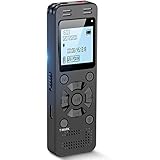
- Clear PCM Recording: Adopts upgraded noise cancelling microphone with professional recording chip. Capture 1536Kbps premium quality sound. Voice recorder with playback function, which is well designed for the users to easily access. Customer Service includes real life phone call from a specialist to give instructions on this high-quality recording device. We ensure your satisfaction on this product.
- 128GB Digital Recorder, Computers Compatible: stores 9296hours of recording, or 40,000songs, up to 54 hours of continuous recording with full battery. Recording can be pre-set into mp3 128kbps,192kbps, or wav 1536kbps format. A wonderful voice recording device for lectures, meetings, and conversations.
- Voice Activated Recorder: This recorder device can set voice decibels at 6 different levels. Regardless the level of the volume, with correct voice decibel level, this recorder will catch talking voice only, reduce blank and whispering snippet.
- Powerful Feature: Multi-usage as a voice recorder, an USB flash drive, and a Mp3 Player. Newly developed 4-folder storage(A/B/C/D) for file management make your recording and other files more organized. Many other helpful features like password protection, A-B repeat, auto record, bookmark, ideal recorder for lectures, meetings, speeches, and interviews.
- Fast File Download: V618 can easily transfer files onto computers. A rechargeable voice recorder that can be quickly recharged, suit for students, teachers, seniors, businesspeople, writers, and bloggers
It is useful to separate five propositions:
- Perceived resemblance: people think the voice sounds like Greene.
- Acoustic similarity: a comparison system detects similarities between the voices.
- Training-data proof: Greene’s recordings were included in model training, tuning or evaluation.
- Intentional imitation: Google deliberately designed the voice to evoke Greene.
- Legal liability: a court finds that the conduct violated an applicable law.
The first two propositions are described in the public record. The others remain disputed or unproven.
Google’s defense
Google has called Greene’s allegations baseless and said that the male voice in NotebookLM’s Audio Overviews is based on a paid professional actor whom Google hired. The company has not, in the cited public statement, conceded that Greene’s recordings were used or that the voice was designed to imitate him.
That response raises factual questions the litigation may address:
What’s actually slowing this PC down?
Pick the symptom - the matching free tool is one click away.
- Who is the actor?
- What recordings or voice materials were used to create the synthetic host?
- Was the actor’s voice modified or synthesized?
- What instructions or design brief did Google provide?
- Did Google test the voice against recognizable broadcasters?
- Were Greene’s recordings included in training or evaluation data?
- Did Google receive complaints before the lawsuit?
- Has Google changed, replaced or restricted the voice?
Unless supported by evidence, those questions should remain questions. Hiring another actor may help Google argue that it did not copy a particular recording, but it does not automatically defeat a claim based on commercial appropriation of a person’s identity.
The legal issue: voice identity, not just copyright
The central theory is likely unauthorized commercial use of an identity-associated voice. That differs from a conventional copyright dispute over a particular broadcast or audio file.
Copyright generally concerns protected works and recordings. Right of publicity concerns unauthorized commercial exploitation of a person’s identity, which can include voice. A plaintiff may not need to show that an AI system reproduced one specific recording word for word if the resulting performance allegedly evokes the plaintiff’s recognizable identity and is used commercially.
Also popular on Amazon

- Capture every conversation clearly: Four microphones capture voices from up to 5 meters (16.4 feet) away. Note Pro detects in-person conversations and phone calls, while Plaud Desktop covers online meetings.
- Award-winning design: Winner of the iF, Red Dot Design, and the 2026 Good Design Awards. Just 2.99 mm (0.12 inches) thin and 30 g (1.06 oz), with a 0.95-inch display for recording status, battery level and more.
- Everything Included: Includes Plaud Note Pro, magnetic case, magnetic ring, charging cable, and a free Starter Plan with 300 transcription minutes per month. Upgrade anytime in the Plaud app to Pro Plan (1,200 min/mo) or Unlimited Plan(Up to 24 hours of transcription per user per day)
- Notes tailored to you: Plaud combines transcripts, highlights, notes, images, and files into a tailored summary with key decisions, details, and next steps. Record for 30 hours in Enhance mode or 50 hours in Endurance mode, with 64 GB of storage for months of conversations.
- Turn conversations into finished work: Plaud Agent turns conversations into structured emails, reports, presentations, spreadsheets, and more, ready to review and share.
Several questions could become decisive:
- Would ordinary listeners identify the synthetic voice as David Greene?
- Are the allegedly copied characteristics distinctive enough to identify Greene, or are they common traits of professional broadcasters?
- Did Google deliberately seek to imitate Greene, or did the resemblance arise unintentionally?
- Was the voice used in connection with promoting or selling NotebookLM?
- Can Greene prove that his recordings were used in training, tuning or evaluation?
- Did the alleged use reduce his licensing value, harm his reputation or interfere with professional opportunities?
- Did Greene or any employer, broadcaster or production partner grant Google relevant rights?
- Would damages, an injunction, removal of the voice or another remedy be appropriate?
Public availability is not the same as blanket permission. Greene may have personal publicity rights in his voice even where a broadcaster or production company owns copyright in particular recordings. Conversely, ownership of an individual recording does not automatically settle who controls the underlying personal identity.
Why Midler v. Ford is relevant
Greene’s lawyers and commentators have pointed to Midler v. Ford Motor Co., a 1988 case in which Bette Midler prevailed after Ford used a different singer to imitate her distinctive voice in an advertisement.
The comparison is important because it shows why using a different performer does not necessarily end a voice-identity dispute. But it is not an automatic answer for Greene. Midler involved a commercial advertisement and an intentional imitation of a famous singer. Greene’s case involves an AI product voice that Google says was based on a hired actor.
A court may therefore have to assess whether the resemblance was intentional, whether the voice is sufficiently distinctive, whether listeners would associate it with Greene and whether users could reasonably believe Greene endorsed or appeared in NotebookLM. The factual and procedural differences between the cases are substantial.
Independent reader supportYour contribution helps us test, update, and keep practical guides available for everyone.Latest procedural status
As of August 18, 2026, the reported July 23 development concerned where the case would proceed—not who was right. A federal judge reportedly rejected Google’s argument that the dispute belonged in federal court because it arose under copyright law and allowed Greene’s claims to proceed in California state court.
Quick wins for a faster PC:
Scan for outdated or missing drivers - takes under a minuteDriver Scan →Clear out junk files and repair common Windows errorsFree Scan →That ruling does not establish that Google copied Greene’s voice, trained NotebookLM on his recordings or violated California law. It does not determine whether the voice is legally recognizable as Greene’s, and it is not a ruling that Greene will win. It means the litigation’s next major phase remains in state court, subject to further motions or appeals. The reported case listing is available through Law360’s case page.
Also popular on Amazon

- 【One Click Record and Save】This voice recorder features instant one-click recording and saving. Even when powered off, simply push up the side button to start recording and push down to save. Designed with ergonomic controls, this digital voice recorder ensures fast operation so you never miss important moments—perfect as a voice recorder with playback, mini recorder device, or portable recorder for interviews, lectures, and field work
- 【64GB Memory & High-Capacity Battery】Equipped with a built-in 64GB TF card, this recorder device stores up to 4,600 hours of recordings. Its 600mAh battery supports up to 48 hours of continuous use (MP3 at 32kbps). Ideal for students, journalists, and professionals, this tape recorder portable mini excels in lectures, meetings, interviews, and even for paranormal sound research
- 【PCM Recording & Automatic Noise Reduction】Capture audio in MP3 and WAV format with up to 1536kbps PCM quality. Advanced noise reduction minimizes background sounds, delivering crystal-clear playback on headphones or professional gear. This makes it an excellent audio recorder, digital audio recorder, or sound recorder for music creation, interviews, and high-detail sound archiving
- 【Voice-Activated Recorder, Big Screen & Password Protection】The voice activated recorder automatically starts/stops when sound reaches your set level, helping save storage and battery. A large 1.44-inch screen offers easy navigation, while password protection safeguards your files—perfect for storing personal memos and important audio files when using it as a dictaphone voice recorder or recording device for professional use
- 【Multi-Function Recorder】This versatile digital recorder supports internal and external recording, file segmentation, scheduled recording, A-B loop playback, MP3 music, and bookmarking. Functions as a USB storage drive and MP3 player with quick transfer via USB cable. Great as a pocket recorder, lecture recorder, mini voice recorder, or recording devices for travel and daily use
Why the lawsuit matters beyond David Greene
The case could become an important test of how existing publicity and misappropriation laws apply to synthetic voices that resemble real people without being literal recordings.
For voice actors and broadcasters, the stakes are practical. A voice may be the principal asset used to secure hosting, narration, advertising, podcasting and licensing work. If a company can deploy a synthetic sound-alike without permission, a performer may argue that the technology competes with the very identity they have spent a career building.
For AI developers, the case highlights several risk points:
Crashes, No Sound, or Screen Glitches?
Random freezes, missing sound and display glitches usually trace back to one bad driver. Find and replace yours safely.Free scan · under a minutePC Slower Than It Used to Be?
A free scan shows the junk files, broken settings and background clutter dragging Windows down - then fixes them in one click.Free scan · Windows 10 & 11- how source recordings are collected and documented;
- whether consent covers model training, tuning and evaluation;
- how voice actors are contracted and compensated;
- whether synthetic voices are screened against recognizable public figures;
- how complaints are investigated and resolved; and
- whether a model can generate new statements in a person’s apparent voice.
The last issue may create a reputational or endorsement concern beyond the question of training data. A synthetic voice that merely resembles a broadcaster is one issue; a system that makes new claims in that broadcaster’s apparent voice could create a different kind of harm.
The case is unlikely, by itself, to decide whether AI training is lawful in general. It may instead clarify how California law treats commercial voice imitation, especially when a defendant says the underlying performance came from a different professional actor.
What happens next
The next stages may include motions in state court, discovery and expert testimony. The parties could seek internal records about model development, training and evaluation; contracts and materials relating to the hired actor; design instructions; testing procedures; and communications about the disputed voice.
Experts may be asked to explain the acoustic comparison, its methodology and its limits. The court or a jury could then weigh listener recognition, technical evidence, Google’s creation process, the distinctiveness of Greene’s voice and the alleged commercial use. The case could settle, produce a request for an injunction or proceed toward trial; the available public information does not justify predicting which outcome will occur.
Free tools Windows power users keep installed
One-click scans. No signup required.
The clearest way to understand the dispute
Greene is suing Google because he says NotebookLM’s male AI host appropriates a recognizable professional voice that he never licensed. Google says the voice belongs to a paid actor and is unrelated to Greene. The lawsuit may ultimately turn less on whether one audio file was copied than on whether Google commercially used a synthetic voice that ordinary listeners would identify with Greene—and whether the evidence shows that this resemblance was legally actionable.
For now, “Google cloned David Greene’s voice” is an allegation, not an established fact.





Say something about this film