Quick wins for a faster PC:
Clear out junk files and repair common Windows errorsFree Scan →Scan for outdated or missing drivers - takes under a minuteDriver Scan →Repair Windows errors before they cause bigger problemsFix Now →Some links on this page are affiliate links: if you buy through them we may earn a commission, at no extra cost to you.
The most reliable route is to begin with the Library of Congress Veterans History Project (VHP), then connect each veteran’s testimony to National Archives records and other contemporary documents. Search by name, branch, unit, location and role; read the collection description and transcript rather than assuming that every interview is digitized or transcribed. Treat each account as one person’s memory and interpretation, not as a stand-in for all Black Vietnam veterans.
You can also create a new oral history. A careful pre-interview, quiet recording setup, informed release, redundant file storage and the current VHP Field Kit requirements will make the interview more useful to families and future researchers.
What the archives can—and cannot—tell you
The Veterans History Project at the Library of Congress is the strongest first stop for firsthand accounts by U.S. veterans. Its holdings include audio and video interviews, memoirs, photographs, letters and diaries. The Library’s 2026 Vietnam War Veterans research guide reports over 25,000 Vietnam veteran personal narratives available through the project. That is a count of Vietnam veteran narratives generally, not a count of Black veterans or of oral-history interviews alone.
Crashes, No Sound, or Screen Glitches?
Random freezes, missing sound and display glitches usually trace back to one bad driver. Find and replace yours safely.Free scan · under a minutePC Slower Than It Used to Be?
A free scan shows the junk files, broken settings and background clutter dragging Windows down - then fixes them in one click.Free scan · Windows 10 & 11No authoritative, comprehensive count of Black Vietnam veteran oral histories is established in the official materials described here. The National Archives likewise describes many Vietnam-era record formats but does not publish a total for records concerning Black veterans. Your project should therefore report exactly what you found, where you found it and what remains outside the catalog.
Popular on Amazon

- 9800 Hours Audio Storage: The digital voice recorder offers an enormous capacity with an impressive 128GB TF card to expand the memory for storing up to 9800 hours of audio files (at 32kbps). A perfect tool for reliably storing worth of audio files, making it an excellent choice for professionals, works, journalists, and anyone who needs to record and store lectures, meetings, and interviews
- AI - Intelligent Noise Cancellation: Recorder with AI Intelligent Triple Noise Cancellation. Equipped with Triple Intelligent Digital Noise Reduction technology and intelligent AI DSP 4.0 chip, it automatically and optimally identifies ambient sounds for clearer vocals! The best partner for office and study~
- One Touch Recording: No complicated operation process, just turn on the switch with one touch to turn on the recording! It's very easy to use. It also comes with an instructional video and a concise user manual with clear step-by-step instructions.
- Voice Activation And USB-C Connection: The Digital Voice Recorder has a voice activation feature that automatically starts recording when sound is detected. It also comes with a convenient bundle that includes a clip-on microphone, headphones, OTG-C, OTG-Lighting, and a USB-C cable.The USB-C connection cable allows for quick transfer of recordings to a computer (MAC/PC) or its other mobile devices.
- Large Memory Storage And Long Battery Life: The digital voice activated recorder with playback,128GB RAM,can store up to 9800 hours (300 days) of audio recordings that are time and date stamps,the audio recorder can also be used as an MP3 player or USB flash drive. Its Built-in rechargeable battery supports up to 100 hours continuous recording and 100 hours of headphone playback on fully charge. Tips: When the battery power is low, the recording file will be automatically saved and the device shut down.
Oral history and administrative records answer different questions. A veteran can describe fear, racism, friendship, grief or the meaning of service in ways that a personnel file cannot. A unit chronology or deck log can test a date or location but cannot replace the speaker’s interpretation. Keep both kinds of evidence in view.
Start with the Library of Congress Veterans History Project
Use the Vietnam research guide as your map
Open the Library of Congress Vietnam War Veterans research guide and the Veterans History Project collection pages. Read the guide’s scope notes before searching so you understand which materials are in the project and how descriptive records were created. Online detail depends on information supplied by the veteran or donor; a short record does not mean the experience was insignificant.
Search the collection in several ways
Run separate searches for:
- the veteran’s full name, including alternate spellings;
- “Vietnam” combined with a branch, unit, duty station, aircraft, ship or specialty;
- locations such as bases, provinces, hospitals or ships;
- terms such as medic, infantry, pilot, mechanic, nurse, engineer or air ambulance; and
- “Black” and “African American,” while recognizing that these may not be catalog fields.
Search a person’s name with “Vietnam” first, then repeat the search with a unit, location and role. A catalog may describe the same service in different language across a collection record, transcript and finding aid.
Inspect the item-level record
For every result, record the collection title or identifier, veteran’s name, branch, unit or role, interview date when stated, interviewer, format, transcript status and any access or reuse restrictions. Determine whether the page offers a playable recording, downloadable file, transcript, photographs, correspondence, a memoir or only a description. Never assume that an interview is transcribed, digitized or unrestricted because it appears in a search result.
Use Black veteran examples as entry points, not a roster
Willie H. Boyd
The Library’s feature “African Americans: The Next Generation” profiles Willie H. Boyd, who served two tours in Vietnam and flew an air ambulance. In that account he says, “Once you get with a unit and you start working as a team, color never comes up.” Preserve the quotation as Boyd’s own description of his unit experience; it is not evidence that race was irrelevant in every unit or for every veteran. Follow the feature to the associated collection record, then inspect the materials available there.
Also popular on Amazon

- 【PCM Recording and Automatic Noise Reduction】:This digital voice recorder is equipped with advanced dual noise reduction microphones and supports 1536 kbps PCM HD audio recording, ensuring crystal-clear sound capture in any environment. Recorder device with automatic noise reduction and voice-activated recording, the recorder only picks up the sound when there’s speech, reducing background noise,Excellent sound quality can meet the needs of students, journalists, music lovers and more people
- 【136GB Memory and Long Battery Life】Voice Recorder with Playback with 8GB built-in storage and includes a complimentary 128GB TF card, this digital voice recorder can hold up to 9775 hours of recordings in MP3 format or WAV format;Recorder for lectures with a built-in 1100mAh rechargeable lithium battery, this voice recorder can continuously record for up to 68 hours on a single charge, making it perfect for back-to-back meetings, interviews, or extended classroom sessions
- 【One Click Record and Save】: Our voice recorder supports one click recording and saving functions. Even when the product is in a powered-off state, simply push up the side recording button to immediately enter recording mode, and push down the recording button to save the recording. This allows for capturing as much information as possible.Easily transfer your recordings to your computer using the USB-C connection, allowing for fast and secure file management
- 【Easy-to-Use】This portable voice recorder is designed with a simple, user-friendly interface featuring a large, easy-to-read LCD screen. The voice-activated recording (VOR) feature makes hands-free operation a breeze. With one-touch recording, users can start or stop recording instantly, even during busy moments. A-B repeat function and password protection ensure that important segments are easily accessible and secure
- 【Portable and Durable Design】Designed with portability in mind, this lightweight screen recorder fits comfortably in your pocket or bag, weighing only 97 grams. Its sleek and durable metal casing ensures longevity and protection from everyday wear and tear. Whether you’re traveling, in the office, or attending a lecture, this compact recorder is always ready to capture clear, high-quality audio
Mark Ryan Black
The Vietnam guide identifies a Marine Corps collection for Mark Ryan Black. Use it to practice the same procedure: read the description, identify the formats present, check for transcript text and note the dates and service details that are actually documented. These examples demonstrate how to enter the collection; they do not establish a complete directory of Black Vietnam veterans.
Confirm identity without guessing
Do not infer that a person was Black from a surname, photograph or a search-engine snippet. Prefer the veteran’s own description or a reliable collection description. If identity is not stated, describe the uncertainty in your notes rather than assigning a label.
Free tools Windows power users keep installed
One-click scans. No signup required.
Broaden the investigation with National Archives records
The National Archives Vietnam War research page points to photographs, textual and electronic records, audiovisual recordings and service-record guidance. It also identifies Marine Corps command chronologies and Navy deck logs. These sources can provide documentary context for a testimony’s dates, unit, role or operational setting.
| Source type | Useful for | Limits |
|---|---|---|
| VHP interview, memoir or diary | First-person memory, interpretation, chronology as remembered, relationships and emotional meaning | One person’s perspective; memory can be selective; access and transcription vary by item |
| Service personnel records and DD-214 guidance | Dates of service, branch, discharge information and documented assignments | Administrative fields do not capture daily experience or every temporary duty |
| Unit command chronology | Operations, movements and major events recorded by a unit | Often written for official purposes; may omit individual experience and some sensitive details |
| Navy deck log | Ship movements, watches, incidents and dated operational entries | Applies to ships and recorded activities; silence is not proof that an event did not occur |
| Photographs, electronic files and audiovisual records | People, equipment, places and contemporaneous documentation | Captions, provenance and coverage can be incomplete |
Use a contemporary record to test a specific proposition—for example, whether a unit was at a location on a stated date. If the record conflicts with a recollection, report the discrepancy and explain what each source actually documents. A mismatch or silence in one record is not proof that a veteran’s memory is false.
Requesting a veteran’s military records
- Identify the veteran’s full name used during service, branch, approximate dates and service number or other identifying information if available.
- Use the National Archives service-record guidance to determine which repository and request process applies.
- Ask for the record type that answers your question instead of requesting “everything” without a defined purpose.
- Compare the returned dates and assignments with the oral-history record, noting whether each detail comes from a contemporaneous document or a later recollection.
Explain the provenance of every document in your notes. A later summary, a family copy and an original service record should not be presented as interchangeable evidence.
Also popular on Amazon
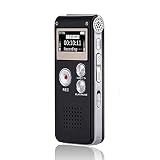
- 【Simple Operation】- switch on your voice recorder, one button for recording. press the "REC", start the recording, press "STOP", end the recording, press “PLAY”, listen what you just recorded, and then Press A-B, select your important section to repeat. Easy to playback with inner powerful speaker, support external sound speaker playback, let you enjoy superior recording quality.
- 【Clear Voice Record】- high quality recording with noise redution, you will get super clear recorded voice, the sensitive microphone help you to catch speaker's words in an interview, lectures, meetings.
- 【Voice Activated Recording】- automatic voice reduction function, it starts recording when sound is detected or turn to standby state, saving recording time and reduce power consumption.
- 【 Player Function】- this voice recorder can be used as an music player, you could enjoy the music after your tired study, meeting and so on. Also can function as a detachable data storage device.you can take along your favorite pictures and documents whenever you go.Simply cut-and-paste or drag-and -drop files to or from it via USB connection, the player will appear as a removeable drive in Windows.
- 【High quality and long time】 uses DSP noise reduction technology to filter out environmental noise, has high-quality recording, 【1536kbps】to restore the real scene. It can continuously record for more than 30 hours and play for 7 hours.
Place multiple accounts side by side without flattening them
The Library’s guide emphasizes that veterans had different occupational specialties, backgrounds and opinions about the war. Thomas L. Hagel’s observation, “There are millions of Vietnam Wars,” is a useful reminder that no single narrative is representative by default.
| Comparison question | What to record | Why it matters |
|---|---|---|
| Branch and role | Army, Marine Corps, Navy, Air Force, Coast Guard, medical or other specialty | Shapes duties, risks, hierarchy and contact with local populations |
| Unit and location | Unit designation, base, ship, province or hospital and dates | Shows whether accounts describe the same operational setting |
| Interview circumstances | Interview date, interviewer, age or life stage if stated and format | Later reflection and interview relationship can influence emphasis |
| Coverage | Training, deployment, combat, race relations, return home, family or veterans’ organizations | Prevents a brief excerpt from being treated as a complete life story |
| Access to the words | Recording, transcript, memoir, photographs and restrictions | Lets readers distinguish direct quotation from catalog summary |
| Stated perspective | How the speaker frames race, service, the war and its aftermath | Preserves disagreement and individual meaning instead of forcing consensus |
Compare accounts when your question requires it, but retain each speaker’s framing. For example, two veterans may describe the same kind of assignment while differing sharply about discrimination, leadership or the war’s purpose. That variation is evidence, not a problem to be averaged away.
Build a source and citation worksheet
Create one record for each interview or document. Include:
- repository and collection title;
- item or collection identifier;
- veteran or creator;
- interviewer and interview date, if stated;
- branch, unit, role and locations as documented;
- format and whether a transcript is available;
- time stamp or page number for every quotation;
- access date and any restrictions or permissions shown; and
- your own distinction between what the source says and what you infer.
Quote the veteran’s language accurately and preserve context around edits. If you summarize a recording because no transcript exists, label it as a summary and do not put your wording in quotation marks. Check the individual item record and current Library guidance before reproducing photographs, audio, video or extended text. The sources described here do not establish identical reuse terms for every item.
Independent reader supportYour contribution helps us test, update, and keep practical guides available for everyone.How to record a new oral history
1. Hold a pre-interview
The VHP Field Kit recommends a preliminary conversation to learn the veteran’s service background and prepare relevant questions. Ask what the person wants included or avoided, which names and places may need checking, and whether family members or photographs should be available. Use open prompts such as “What do you remember about arriving at your unit?” rather than questions that assume an answer.
Also popular on Amazon

- 【9800 Hours Audio Storage】Equipped with 72GB of built-in memory, this digital voice recorder can hold up to 9800 hours of recordings (192kbps). A dependable option for keeping your audio safe, perfect for professionals, journalists, students, and anyone needing to capture lectures, meetings, or interviews with ease!
- 【Long Battery Life & Auto-Save】No more worrying about lost recordings. This digital voice recorder automatically saves files when the battery is low, ensuring your data stays secure. With up to 72 hours of continuous recording on a single charge and fast Type-C charging (fully charged in just 2 hours), it’s a dependable companion for all your recording needs.
- 【AI Noise Cancellation】Powered by AI noise reduction and an upgraded DSP 4.0 chip, this audio recorder intelligently filters background noise for crisp, clear sound. Its advanced processing delivers professional-grade audio quality, making it perfect for lectures, meetings, interviews, or any recording scenario.
- 【Magnetic & Ultra-Portable Design】Designed with a powerful built-in magnet, this recording device securely attaches to any metal surface such as desks, cars, or refrigerators. Slim at only 0.4 inches thick and weighing just 1 ounce, it slips easily into pockets, wallets, or bags—perfect for recording lectures, business meetings, or hands-free interviews anytime, anywhere.
- 【Voice Activation & Timer Recording】The Voice activated recorder offers both voice-activated and timer recording modes. In voice-activated mode, it automatically starts recording when sound above 45dB is detected, skipping silent pauses to save battery and storage—perfect for lectures or interviews. By default, the Voice activated recorder is set to “On”; you can switch it “Off” anytime via the settings menu (see user manual for details).
2. Prepare the room and equipment
- Choose a quiet indoor location and silence phones, alarms and appliances.
- Test sound and lighting from the position where the veteran will sit.
- Use an audio or video recording device and, where possible, an external microphone.
- Record a short test, play it back and correct background noise before beginning.
- Keep spare batteries, power and storage available.
You do not need to buy equipment to consult existing digitized archives. For a new interview, reliable sound and a stable recording are more important than elaborate production.
3. Explain consent and release terms
Before recording, explain where the interview may be stored, who may access it, whether excerpts may be quoted and how corrections or restrictions will be handled. The VHP submission uses required release forms. Under the Field Kit’s description, the veteran retains copyright while granting the Library specified permissions through the release. Read the current forms aloud if necessary and give the veteran a copy.
4. Record an unedited interview
The Field Kit says audio and video interviews submitted to the VHP should be unedited and at least 30 minutes long. State the date, participants and recording location at the beginning, then let the veteran set the pace. Mark a pause and restart rather than cutting material during the session. Ask follow-ups about dates, units and people without challenging the speaker’s character or demanding a single “official” interpretation.
5. Preserve files and paperwork
Keep the original camera or recorder files, a working copy and a second backup in a separate location. Preserve release forms, notes and a simple file list with dates and formats. Do not overwrite the original when creating a compressed listening copy. The Field Kit recommends keeping copies of recordings and paperwork.
What’s actually slowing this PC down?
Pick the symptom - the matching free tool is one click away.
6. Check the VHP material thresholds
The Field Kit’s “30-20-10 Rule” describes minimums for a submission: a 30-minute interview, 20 pages for a memoir, diary or journal, and 10 photographs, letters, maps or pieces of two-dimensional artwork. These are submission thresholds, not a requirement that every private family interview meet them. Technology standards and submission instructions can change, so consult the current Field Kit and forms before donating materials.
Also popular on Amazon
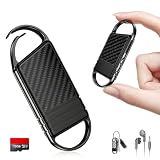
- 【136GB Massive Storage & 18800 Hours Capacity】 With 136GB built-in storage, this high-capacity voice recorder and spacious audio recorder holds 18800 hours of audio files. This roomy recording device eliminates the hassle of frequent file deletion. This durable recorder offers more storage than most similar recording devices on the market.
- 【Smart Voice-Activated Recording】 This intelligent voice recorder and responsive audio recorder automatically activates when sound is detected and pauses during silence. This energy-saving recording device eliminates wasted storage on empty gaps. This attentive recorder ensures you never miss a single key word, standing out among comparable recording devices for its precise sound detection.
- 【OTG Data Transfer and Versatility】 This versatile voice recorder and multi-functional audio recorder supports seamless OTG transfer. This practical recording device connects directly to phones and computers without extra software. This flexible recorder works with most popular devices, making it one of the most adaptable recording devices available.
- 【DSP 5.0 AI Intelligent Noise Reduction & HD Recording】 Powered by DSP 5.0 AI chip, this digital voice recorder and high-fidelity audio recorder delivers crisp natural sound. This precision-engineered recording device filters up to 97% of ambient noise. This consistent recorder outperforms many comparable recording devices in busy classrooms and offices.
- 【1.5H Fast Charge & Long-Lasting Battery】 This efficient voice recorder and dependable audio recorder features optimized fast charging technology. This power-efficient recording device fully charges in just 1.5 hours and delivers up to 48 hours of continuous recording. This long-lasting recorder supports multi-day use, making it one of the most reliable recording devices for travel and business trips.
Common problems and responsible fixes
The search returns few or no Black veterans
Broaden the query beyond race terms. Search names, branches, units, locations and specialties, then inspect related collection records and the “African Americans: The Next Generation” feature. Catalogs may not provide a consistent race facet, and a small result set is not evidence that few Black veterans contributed records.
A recording has no transcript
Listen in sections, create a time-stamped working transcript and identify uncertain words with a note rather than a guess. Quote only what you can verify from the audio or video. Describe the item as a recording without implying that a transcript exists.
The official record disagrees with the interview
Define the exact point of disagreement, check whether the sources refer to different dates or levels of assignment and report both accounts. A personnel record may show a permanent unit while a veteran remembers a temporary duty location. Neither source automatically answers every question.
The collection is restricted or only described online
Follow the access instructions on the item-level record and do not repost a file simply because you can view its catalog entry. Contact the repository or donor contact identified by the record if clarification is needed, and cite the description when the underlying media is unavailable.
The interview becomes a debate about the war
Return to the veteran’s experience: what happened, who was present, what the person understood then and how that understanding changed. You are documenting testimony, not cross-examining it. Separate the speaker’s interpretation from independently documented facts in your notes and captions.
Quick Recap
A practical workflow for a finished project
- Define a question narrow enough to answer, such as how medics described race and unit cohesion in a particular period.
- Locate VHP records using names, service details and the Library’s curated Black veteran examples.
- Read every collection description and mark which formats and transcripts are actually available.
- Build a worksheet for each item, including restrictions and exact quotation locations.
- Use National Archives service records, command chronologies, deck logs, photographs or audiovisual material to test specific dates and settings.
- Compare several accounts by role, unit, location, interview circumstances and stated perspective.
- Write conclusions at the same scale as the evidence: one veteran’s testimony, a set of accounts or a documented institutional record—not “the Black veteran experience” as a single story.
- If you conduct an interview, complete the pre-interview, recording, release, backup and current VHP submission steps before sharing it publicly.






Say something about this film