The Tool Desk
Outbyte PC Repair FREERepair Windows errors before they cause bigger problemsFix Now →Outbyte Driver Updater FREEFix the driver behind crashes, sound loss and screen glitchesFind Drivers →Some links on this page are affiliate links: if you buy through them we may earn a commission, at no extra cost to you.
The under-the-radar skincare ingredient that best matches this description is azelaic acid, a topical dicarboxylic acid derived from grains such as rye, wheat and barley. Dermatologist Joshua Zeichner has described it as offering anti-inflammatory and skin-brightening benefits, with uses discussed for facial acne, rosacea-related redness and bumps, and dark marks.
It is not an overnight treatment. Secondary dermatologist coverage says visible improvement can take several weeks or months of continuous use, and mild dryness or irritation is possible. Product forms and formulas differ, so the label on the product you buy matters as much as the ingredient name.
Why azelaic acid is the likely ingredient
The wording “under-the-radar skincare ingredient” closely matches two pieces of secondary coverage: a February 23, 2026 Daily Beast article and a November 28, 2022 Best Products article. Both identify azelaic acid while discussing dermatologist guidance. The exact origin of the headline is not established, so the most accurate way to read it is that azelaic acid is the ingredient most closely associated with that description.
Azelaic acid is used topically in skincare. In the cited Daily Beast coverage, Joshua Zeichner, a board-certified dermatologist in New York City, explains its source and broad cosmetic rationale:
Popular on Amazon

- [Target Stubborn Spots And Breakouts] Contains 10% Azelaic Acid to effectively fade the look of post-blemish dark spots. This solution refines uneven texture and bumps without irritation.
- [Gentle Hydration For Sensitive Skin] Formulated with 3 types of Hyaluronic Acid and Panthenol to deeply hydrate. The lightweight, watery texture absorbs fast, making it easy to layer without drying out the skin.
- [Natural Green Redness Relief] Powered by the Anua Gentle Calming Complex including Cica and Blue Tansy Oil. The naturally derived green tint helps instantly soothe irritated skin and redness with no artificial fragrance.
- [Clinically Proven Non-Comedogenic Formula] Tested to Immediate(temporary) calm after use, proving to be non-comedogenic.
- [How to Use] Start with 1-2 drops per use to begin with gradually increasing to up to 5 drops. Please start slow by using 1-2 times a week and gradually increase to twice daily, always finishing with sunscreen for daytime use.
“Azelaic acid is a dicarboxylic acid derived from grains like rye, wheat, or barley,”
“Instead, it offers significant anti-inflammatory and skin-brightening benefits.”
Those statements describe the ingredient’s category and the benefits discussed by that dermatologist; they do not establish that every azelaic-acid product will deliver the same result or that it is suitable for every skin condition.
Recommended Free Tools
What azelaic acid is used for
The coverage links topical azelaic acid with several concerns that often overlap. Treat them as areas of potential use rather than guaranteed outcomes.
Also popular on Amazon

- BRIGHTENS SKIN TONE: Azelaic Acid Suspension 10% targets dullness, uneven tone, and rough skin texture.
- SUITABLE FOR ROSACEA-PRONE SKIN: A gentle cream-like formula, suitable for all skin types and daily use.
- SMOOTHS SKIN TEXTURE: Azelaic Acid, an antioxidant helps combat the look of uneven skin texture and enhances radiance.
- SAFE FOR DAILY USE: Ideal for use in both AM and PM skincare routines, suitable for 12 months after opening.
- APPLICATION INSTRUCTIONS: Apply a small amount to the face in the morning and evening. Avoid the eye contour, eyes, and mouth. Use sun protection during the day.
Facial acne
Azelaic acid is discussed as an option for facial acne. The available coverage does not provide a comparative success rate, a percentage of people who improve, or a head-to-head result against another acne ingredient. If you are evaluating a product for acne, judge it by the current label, the rest of the formula and your own tolerance rather than by the ingredient name alone.
Rosacea-related redness and bumps
The dermatologist coverage also mentions rosacea, including facial redness and red bumps. Rosacea has different triggers and patterns, so a cosmetic product should not be treated as a diagnosis or as a substitute for professional care. Persistent, painful or rapidly changing redness warrants an assessment by a qualified clinician.
Dark spots and post-inflammatory hyperpigmentation
Azelaic acid is also described as a skin-brightening ingredient for dark spots, including marks left after inflammation. Improvement in uneven tone is gradual, and the source does not establish a universal time frame beyond saying that benefits may take several weeks or months of continuous use.
Do these 3 things before closing this tab:
1Clear out junk files and repair common Windows errors2Scan for outdated or missing drivers - takes under a minute3Repair Windows errors before they cause bigger problemsHow the ingredient is described as working
The clearest description in the cited coverage is functional rather than a detailed biochemical explanation: azelaic acid is presented as both anti-inflammatory and skin-brightening. That combination explains why it appears in discussions of redness, acne-related concerns and lingering dark marks.
Also popular on Amazon

- [Sebum Balancing & Blemish-Prone Skin Care] Formulated with a 3X Azelaic Active Formula, this face serum helps balance excess sebum and support smoother-looking skin texture, making it ideal for oily and blemish-prone skin.
- [Triple Azelaic Formula] This face serum combines 10% Azelaic Acid to help reduce excess oil and pore-clogging buildup, 1% Potassium Azeloyl Diglycinate to help balance oil and hydration, and 0.5% Azelamide MEA to improve the look of uneven skin texture and tone, making it ideal for oily skin.
- [Niacinamide-Free Formula For Sensitive Skin] Specially formulated without niacinamide for those who prefer an azelaic acid routine without niacinamide. Gentle yet effective for blemish-prone and sensitive skin while providing soothing hydration with Centella Asiatica.
- [Lightweight Watery Texture] A lightweight, watery serum that absorbs quickly into the skin without feeling sticky or heavy, leaving a fresh, comfortable finish that fits easily into any skincare routine.
- [How To Use] Apply 2 to 3 drops of SKIN1004 Azelaic Acid 10% Ampoule evenly over the face and gently pat until fully absorbed. Follow with a soothing moisturizer to complete your daily skin care routine.
“Brightening” should be read as helping the appearance of uneven tone, not as bleaching healthy skin or changing your natural skin color. Likewise, “anti-inflammatory” is a description of the benefit attributed to the ingredient in the article, not a promise that it will control every inflammatory skin disorder.
How long results can take
Azelaic acid requires consistency. Zeichner is quoted in the Daily Beast coverage saying:
“The benefits of azelaic acid take several weeks or months of continuous use, so be patient with it and stick to the routine.”
PC Slower Than It Used to Be?
A free scan shows the junk files, broken settings and background clutter dragging Windows down - then fixes them in one click.Free scan · Windows 10 & 11Outdated Drivers Are Slowing You Down
One free scan finds every outdated or missing driver and matches the right update for your exact hardware.Free scan · exact hardware matchSpecial offer. See more information about Outbyte and uninstall instructions. Please review EULA and Privacy policy.
This expectation matters because stopping after a few applications can make a potentially useful product seem ineffective, while changing several products at once makes it difficult to tell what is helping or irritating your skin. The cited sources do not specify one guaranteed number of days, a universal concentration or a fixed schedule that works for everyone.
Also popular on Amazon

- ADVANCED CLARIFYING SERUM FOR REDNESS, DARK SPOTS AND BLEMISHES. One targeted step for three concerns at once. Azelaic acid is the rare multi-tasker connected to redness, dark spots and blemish-prone skin, used by dermatologists for decades.
- 5 HERO INGREDIENTS. 10% Azelaic Acid and 5% Glycinated Azelaic Acid to help reduce redness, improve the look of dark spots and support blemish-prone skin. Niacinamide and Acetyl Glucosamine promote even tone. Vitamin B12 and Beta-Glucan soothe.
- BOARD-CERTIFIED DERMATOLOGIST-CREATED SKINCARE. 10% azelaic acid plus 5% glycinated azelaic acid, two forms working across two pathways in a single serum. Created by Dr. Muneeb Shah, the most followed dermatologist in the world.
- FULLY SOLUBILIZED, SO IT FEELS LIKE WATER. Traditionally azelaic acid is suspended as solid, gritty particles. Ours is fully dissolved, so it spreads clear and layers under makeup and SPF. 100 percent said it applied with no grit or crystallization.
- DO NO HARM PHILOSOPHY. No propylene glycol, no harsh alcohols, no fragrance, no animal testing, soothed with Centella and beta-glucan. Tested for sensitive skin. Apply to dry skin after cleansing, once daily to start, building to twice daily.
Tolerance, dryness and irritation
Some users may experience mild dryness or irritation. The coverage suggests using moisturizer alongside azelaic acid, but it does not provide an individualized routine for every skin type.
- Read the product’s directions before applying it, because a suspension, serum and cream may have different instructions.
- Introduce one new active product at a time so that a reaction can be traced to a likely cause.
- Use moisturizer if the product leaves your skin dry or tight.
- Stop and seek professional advice if you develop severe burning, swelling, blistering or a reaction that does not settle.
These are general precautions, not a personalized treatment plan. A clinician can help distinguish ordinary adjustment from contact dermatitis, an acne flare or a rosacea trigger.
Azelaic acid products are not interchangeable
Retail products may use the same ingredient name while differing substantially in texture, concentration, supporting ingredients and intended concern. The secondary articles mention suspensions, serums and creams or boosters. A product’s current package is the authoritative source for its formula; online descriptions and older articles can become outdated.
Free tools Windows power users keep installed
One-click scans. No signup required.
| Formulation type | What it can mean for use | What to verify |
|---|---|---|
| Suspension | A creamier or particulate texture that may feel different from a clear serum | Stated azelaic-acid concentration, directions and any texture warnings |
| Serum or solution | A lighter vehicle that may layer differently with moisturizer or sunscreen | Whether the formula contains azelaic acid itself or a derivative, plus other active ingredients |
| Cream or booster | A richer or more concentrated-feeling format designed to be mixed or layered, depending on its directions | How it is intended to be applied and whether the stated percentage is current |
“Ten percent” is not a universal performance guarantee. It is a label figure whose meaning depends on the rest of the formula, stability, packaging and how consistently the product is used. A nonprescription cosmetic should not be assumed to be equivalent to a prescription medicine simply because both mention azelaic acid.
Also popular on Amazon
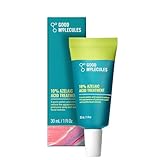
- Gentle Brightening Formula: Powered by 10% azelaic acid (acido azelaico), this lightweight treatment helps improve the look of uneven tone, dullness, and texture while supporting a clearer, more balanced complexion.
- Blurs the appearance of facial redness: Designed to help reduce redness and breakouts, Suitable for rosacea-prone skin, visibly calming and refining texture while offering lasting comfort for sensitive complexions.
- Smoother, Healthier-Looking Skin: The gentle exfoliating action of plant-based azelaic acid face wash refines pores and helps fade the look of post-acne marks and brown spots over time, revealing radiant, even skin.
- Lightweight Daily Treatment: Quick-absorbing texture designed for AM and PM use. Layers seamlessly under moisturizer or SPF and works well with other actives in your skincare routine.
- Clean, Vegan & Effective: Fragrance-free, cruelty-free, and pH-balanced (4.5) for daily use. Formulated without harsh ingredients or parabens, offering a gentle alternative to traditional brightening treatments.
Named examples in the coverage
The 2026 Daily Beast article lists several consumer products, while the 2022 Best Products article names one of them as its historical best-overall pick. The table records what those articles identify; it is not a current ranking, efficacy test or endorsement.
| Product named in coverage | Form or stated strength in the article | Concern or positioning mentioned | What a buyer still needs to check |
|---|---|---|---|
| The Ordinary Azelaic Acid 10% Suspension | Suspension; 10% stated in the product name | General azelaic-acid skincare; named as the 2022 Best Products best-overall pick | Current ingredient list, directions, seller and availability |
| The Inkey List Redness Relief Solution | Solution; concentration not stated in the cited coverage | Redness relief | Whether the current label specifies azelaic acid or a derivative and what other actives are included |
| Naturium Azelaic Topical Acid 10% | 10% stated in the product name | Topical azelaic-acid treatment; an Amazon listing is identified in the 2026 article | Current package, formula, seller, price and regional availability |
| Paula’s Choice Azelaic Acid Booster | Booster; concentration not stated in the cited coverage | Booster format for uneven tone or related concerns | Whether it is meant to be used alone or mixed, and the current directions |
| Peach Slices Redness Relief Azelaic Acid Serum | Serum; concentration not stated in the cited coverage | Redness relief | Current label, supporting ingredients and compatibility with the rest of your routine |
Product names and formulas can change after an article is published. Check the physical package or the manufacturer’s current product page before buying, especially if you have allergies or are avoiding a particular active ingredient.
A practical way to evaluate a product
- Define the concern. Decide whether your main goal is acne, visible redness, red bumps, post-inflammatory marks or general uneven tone. A product marketed for one concern may not be the best fit for another.
- Read the full label. Confirm whether it lists azelaic acid itself, a derivative, a stated percentage and additional actives. Do not infer a concentration that the current label does not provide.
- Check the texture. Choose a suspension, serum or cream format you can apply consistently. A theoretically ideal formula is of little use if you dislike its feel and stop using it.
- Plan for gradual evaluation. Because the cited dermatologist expects benefits over weeks or months, avoid judging the product after only a few applications unless irritation forces you to stop.
- Keep the rest of the routine stable. Changing multiple active products simultaneously makes it harder to identify the cause of irritation or improvement.
- Use moisturizer as needed. Mild dryness can occur, and the source specifically suggests moisturizer alongside use.
- Reassess persistent problems. If acne, redness or dark marks are worsening, painful or not improving over a reasonable period of consistent use, consult a dermatologist rather than continually adding products.
What the evidence does—and does not—show here
The available material is secondary editorial coverage with dermatologist-attributed comments. It supports identifying azelaic acid, describing the concerns discussed above, noting the possibility of mild dryness or irritation and setting a several-weeks-to-months expectation.
It does not supply a named efficacy statistic, a prevalence figure, a comparative clinical trial result or an individualized safety assessment. It also does not establish that one of the named retail products is superior to the others. Those limits are important: the ingredient may be promising for several common concerns, but a headline about dermatologists “swearing by” it should not be read as proof that it works identically for everyone.
When professional advice is the better next step
Seek clinical guidance for severe or scarring acne, sudden or painful facial redness, eye symptoms, widespread rash, suspected allergy, pregnancy-related treatment questions or any condition that is not improving. A dermatologist can determine whether the problem is acne, rosacea, post-inflammatory hyperpigmentation or another disorder and can discuss prescription and nonprescription options. Bring the product container or a photograph of its ingredient list so the clinician can evaluate the exact formulation.
The bottom line on azelaic acid
Azelaic acid is the best-supported answer to the title’s mystery ingredient. It is a grain-derived topical dicarboxylic acid discussed by dermatologist Joshua Zeichner for anti-inflammatory and skin-brightening benefits involving acne, rosacea-related redness and bumps, and dark marks. The sensible expectation is gradual change after consistent use, not an instant transformation. Select products by their current labels and formulation, use moisturizer if needed, and treat persistent or severe symptoms as a reason to seek professional care.






Say something about this film