The Tool Desk
Outbyte PC Repair FREERepair Windows errors before they cause bigger problemsFix Now →Outbyte Driver Updater FREEFix the driver behind crashes, sound loss and screen glitchesFind Drivers →Some links on this page are affiliate links: if you buy through them we may earn a commission, at no extra cost to you.
For most DJs switching from Serato, the right alternative depends first on the hardware they own. Choose rekordbox for Pioneer DJ/AlphaTheta gear and club USB preparation; VirtualDJ for broad controller support, video, karaoke, and flexible setups; Traktor Pro for creative mixing and Native Instruments hardware; djay for Apple and mobile workflows; and Mixxx for free, open-source software and Linux. Denon DJ standalone users should look at Engine DJ, while Hercules owners should consider DJUCED.
This is an updated guide, not a historical account of software available in 2024. Prices, plans, operating-system requirements, streaming services, and hardware support change; verify the current vendor terms for your country and exact setup before buying or migrating. The remaining entries—mobile, browser, karaoke, and entry-level apps—are specialized options, not equal substitutes for a full desktop DJ platform.
Quick picks: which Serato alternative fits your setup?
| Your priority or equipment | First option to investigate |
|---|---|
| Pioneer DJ/AlphaTheta controllers, CDJs or XDJs; club USB preparation | rekordbox |
| Broad controller flexibility, video, karaoke or live remixing | VirtualDJ |
| Native Instruments hardware, effects and creative mixing | Traktor Pro |
| Mac, iPhone, iPad, Android or cross-device mixing | djay |
| Free/open-source software or Linux | Mixxx |
| Denon DJ or compatible Numark standalone system | Engine DJ |
| Hercules controller and guided learning | DJUCED |
| Event video or karaoke | VirtualDJ or UltraMixer |
| Casual phone mixing | djay or edjing Mix |
| Browser-based experimentation | YouDJ or PartyCloud-style tools |
There is no universal winner. Serato alternatives differ in their hardware ecosystems, migration tools, licensing and intended jobs. A platform that is excellent for preparing a Pioneer USB drive may be a poor fit for an existing scratch controller; an app that makes a fun phone mixer is not a dependable replacement for a laptop-and-controller gig setup.
What’s actually slowing this PC down?
Pick the symptom - the matching free tool is one click away.
Before switching: check these four things
- Your exact hardware model. Check the application maker’s compatibility list, not just a general claim that it supports controllers. Confirm the model, application version, operating system, driver and firmware. A controller may work by generic MIDI while losing jog displays, pad modes, LEDs, screens, motor control, mixer effects or integrated audio routing. Native support usually provides deeper integration. Serato’s own system and compatibility information illustrates why compatibility is model- and version-specific.
- Your performance requirements. Decide whether you need DVS, video, karaoke, stems, streaming, cloud synchronization, recording, standalone export or only local-file mixing. A feature may require a paid tier, compatible hardware, a separate service subscription or an internet connection. DVS in particular depends on supported timecode hardware and software licensing.
- Your library and migration tolerance. Playlists, crates, hot cues, loops, beat grids, ratings, comments, cue colors and file paths are separate kinds of data. An import option does not promise that all metadata will map perfectly. Test a small sample before moving a complete collection.
- Your full cost and OS support. Compare hardware-unlock licenses, monthly or annual subscriptions, perpetual licenses, add-ons and commercial-use terms. Check the software version, operating-system version and computer architecture together; a software update can work while an audio-interface driver does not.
The seven strongest full or hardware-specific alternatives
1. rekordbox — best for Pioneer DJ/AlphaTheta and club USB preparation
Choose rekordbox when your next step is Pioneer DJ/AlphaTheta hardware or when you regularly prepare USB media for compatible CDJ/XDJ equipment. Its central advantage is the connected workflow: organize and analyze a collection, prepare performance information, and export media for the relevant hardware. It is more than a laptop mixing application for DJs whose gigs depend on that ecosystem. See rekordbox’s product information and its current plan comparison.
#1 Best Overall
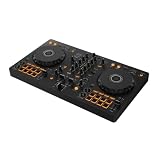
- The All-Rounder to Learn On: A simple, user-friendly layout inherited from pro Pioneer DJ gear makes it easy to start and grow
- No Beatmatching Skills Needed: Smart Fader auto-adjusts volume, bass, and BPM so you can blend genres by moving one fader
- Room to Grow: 2-channel, 2-deck control with 16 Performance Pads for Hot Cues, Pad FX, Beat Jump, and Sampler
- Built for Streaming and Streaming Out: Mix from Apple Music, Tidal, and Beatport, and live-stream or MC from a single device
- Plug In Anywhere: Connects to PC, Mac, iPhone, iPad, or Android by USB or Bluetooth with a built-in sound card for speakers
Why switch: close ecosystem integration, collection and playlist management, USB preparation, and paid-plan options for capabilities such as DVS, cloud features and performance functions.
Trade-offs: the strongest case is for AlphaTheta/Pioneer users, not every Serato owner. Plans and included features can be difficult to compare, and advanced capabilities may sit behind higher tiers or add-ons. If your existing controller, scratch routine or library is already well optimized for Serato, switching solely for a longer feature list may bring little benefit.
Check first: confirm your exact controller or player and which export or performance features it supports. For a standalone club workflow, distinguish preparing a USB library from performing with laptop software. The current plans page shows region-dependent options and prices; confirm your local checkout total rather than assuming a displayed currency or plan applies everywhere.
2. VirtualDJ — best for flexibility, video, karaoke and varied hardware
VirtualDJ is the broadest alternative for DJs who may mix audio, video and karaoke, use different controller brands, or want a software setup that can run with or without dedicated hardware. The vendor highlights wide controller support and real-time stem controls on its download and product page. That breadth makes it worth considering for mobile/event DJs and for users whose requirements do not fit a single hardware ecosystem.
Why switch: an expansive performance and media feature set, flexible hardware choices, and a licensing menu aimed at different uses. Its current purchase page distinguishes home, professional and business use.
Trade-offs: a large number of options can be daunting, and the interface may not feel as focused as Serato to someone accustomed to a straightforward deck workflow. Broad compatibility does not mean every controller feature is fully implemented. Check paid-gig permissions and the license that applies to your hardware and use; do not assume a home option covers professional work.
Check first: verify native support and feature depth for the exact controller, audio interface and operating system. If video or karaoke matters, confirm the formats, routing and external-display requirements you actually need. Treat stem availability as a feature claim, not evidence of clean separation on every track.
Recommended Free Tools
Rank #2

- Made for Your First Mix: Designed for anyone thinking of starting to DJ, so you can learn quickly and have fun from day one
- Smart Fader Does the Beatmatching: Automatically matches volume, BPM, and bass as you move the crossfader, even across genres
- Start With the Music You Have: Mix from Apple Music, Spotify, Tidal, and more through compatible apps like rekordbox and djay
- Grab It and Go: AlphaTheta's lightest, most compact controller runs on USB-C bus power from a phone, tablet, or PC/Mac
- Play Your Way: Play through your phone or laptop's own speaker, connect external speakers via the 3.5 mm output, or cue on headphones
3. Traktor Pro — best for creative mixing and Native Instruments gear
Traktor Pro is a strong candidate for DJs who value effects, looping, Remix Decks and a more experimental performance approach, especially when they use Native Instruments controllers or mixers. It can suit electronic, house and techno sets, as well as DJ/production workflows that use performance elements beyond conventional two- or four-deck mixing.
Why switch: creative performance tools and an especially natural fit with Native Instruments hardware.
Trade-offs: it is not the obvious choice for Pioneer club USB preparation. Existing Serato users should expect a workflow adjustment, and generic controller mapping can take more work than a native integration. Migration should be tested carefully rather than assumed to reproduce every crate, cue and beat grid.
Check first: confirm current hardware compatibility, operating-system requirements, licensing and the exact feature set on Native Instruments’ official product and support pages before purchasing. If your primary goal is to walk into a venue and use its Pioneer players, plan that export workflow separately.
Outdated Drivers Are Slowing You Down
One free scan finds every outdated or missing driver and matches the right update for your exact hardware.Free scan · exact hardware matchPC Slower Than It Used to Be?
A free scan shows the junk files, broken settings and background clutter dragging Windows down - then fixes them in one click.Free scan · Windows 10 & 114. djay — best for Apple, mobile and cross-device mixing
Algoriddim’s djay is a compelling choice for DJs who want to move between desktop and mobile, or who prioritize mixing on Mac, iPhone or iPad. The company lists apps for Mac, Windows, iPhone, iPad, Android, Vision Pro and Meta Quest, and advertises Apple Music and Spotify integrations on its apps page.
Why switch: a mobile-friendly workflow, multiple device options and streaming-oriented features can make djay useful for practice and performance across devices.
Trade-offs: a mobile-first workflow is not identical to a conventional club laptop setup. Controller support differs by platform, and streaming availability depends on service policy, territory, subscription and device. A track appearing in a streaming catalog does not guarantee offline use, recording, USB export, DVS or stem compatibility.
Rank #3

- Complete Serato DJ System - DJ Controller for Serato DJ Lite (Included) with 4 decks of control, built-in 24bit audio interface and plug and play USB connectivity for Mac and Windows
- Visualize Your DJ Mix - Large 6-inch capacitive-touch jog wheels with high-resolution color displays that show beats per minute (BPM), platter position, beats remaining and pitch adjustment or key
- Personalize your DJ Set - Six Fun, quick-launch FX with dual paddle triggers; dedicated instant loop controls; eight performance pads per deck to access cues, loops, fader cuts and samples
- Stream Millions of Tracks - Gain access to your existing subscription through Serato DJ Lite (Included) from leading providers including Apple Music, Tidal, Spotify, SoundCloud, Beatport Link and Beatsource Link
- Ready to Connect To all Your DJ Equipment - Microphone input, headphone output and RCA output to connect to DJ speakers, plus a mixer with 3-band EQ, filter knobs, channel faders and crossfader
Check first: confirm the app version for your device, the specific controller mapping, and the service’s restrictions in your country. Algoriddim itself notes that streaming services may be limited. Do not treat Apple Music or Spotify integration as identical across every operating system or as a substitute for a locally owned performance library.
5. Mixxx — best free option and the leading Linux choice
Mixxx is free, open-source DJ software for Windows, macOS and Linux. For a Serato user who wants to avoid a software license cost, experiment with a second platform, or run Linux, it is the clearest option to investigate. Its download page lists supported systems, while its features page describes supported audio formats, controller support, timecode capabilities and library compatibility.
Why switch: no paid Pro tier, open-source development, Linux support, local music playback, MIDI mapping and timecode capabilities.
Trade-offs: free does not mean zero setup. Some controllers may need manual mapping, the commercial support ecosystem is smaller, and the degree of polish or integration can differ from paid products. DJs who need a particular native controller experience, cloud library or tightly supported commercial workflow should verify those needs before relying on it for paid events.
Check first: test your controller mapping, audio device and timecode setup on the precise operating system you plan to use. Mixxx supports a range of audio formats and can work with libraries from other DJ programs, but that does not mean every proprietary cue, grid or tag transfers intact.
Do these 3 things before closing this tab:
1Clear out junk files and repair common Windows errors2Fix the driver behind crashes, sound loss and screen glitches3Repair Windows errors before they cause bigger problems6. Engine DJ — best for Denon DJ and compatible Numark standalone hardware
Engine DJ belongs on the shortlist when you are moving toward a compatible Denon DJ or Numark standalone system. Its appeal is the preparation-to-standalone workflow: organize and prepare music for hardware that can perform without a laptop. It is a hardware-specific alternative, not the default software choice for somebody who simply wants a new application for an existing Serato controller.
Why switch: it can align the music-preparation workflow with compatible standalone players and systems, reducing reliance on a laptop during performance.
Rank #4

- The All-Rounder to Learn On: A simple, user-friendly layout inherited from pro Pioneer DJ gear makes it easy to start and grow
- No Beatmatching Skills Needed: Smart Fader auto-adjusts volume, bass, and BPM so you can blend genres by moving one fader
- Room to Grow: 2-channel, 2-deck control with 16 Performance Pads for Hot Cues, Pad FX, Beat Jump, and Sampler
- Built for Streaming and Streaming Out: Mix from Apple Music, Tidal, and Beatport, and live-stream or MC from a single device
- Plug In Anywhere: Connects to PC, Mac, iPhone, iPad, or Android by USB or Bluetooth with a built-in sound card for speakers
Trade-offs: usefulness depends heavily on the exact device and its supported features. A switch of software may imply a switch of hardware, and library export behavior should be tested before committing.
Check first: verify the current Engine DJ software, supported hardware models, export requirements and migration tools with official Engine DJ/Denon DJ documentation. Test the resulting media on the actual player you will use.
Quick wins for a faster PC:
Fix the driver behind crashes, sound loss and screen glitchesFind Drivers →Repair Windows errors before they cause bigger problemsFix Now →Scan for outdated or missing drivers - takes under a minuteDriver Scan →7. DJUCED — best for Hercules controllers and guided learning
DJUCED is most attractive to Hercules controller owners and newer DJs who want structured help while learning. Its official site describes macOS and Windows support, guided features such as Beatmatch Guide and Intelligent Music Assistant, and capabilities including stems and streaming options. It also advertises import options for Serato crates and Rekordbox XML.
Why switch: a close relationship with Hercules hardware, beginner-focused instruction, and an advertised route to bring in selected library information from Serato or rekordbox.
Trade-offs: its hardware ecosystem is narrower than VirtualDJ’s, and guided learning may not be the deciding advantage for an experienced DJ. A crate import does not certify a complete transfer of every cue, beat grid, tag, color or performance setting.
Check first: confirm your controller model, paid-tier features and import behavior. The vendor’s current page has displayed €89.99 as a one-time option and €5.99 per month for a subscription; prices, taxes and availability can vary by country, so verify checkout terms.
Specialized and limited alternatives
These apps can be useful, but most are not full replacements for a professional desktop DJ setup.
Best Value

- The Party-Starter - 2-deck DJ controller designed to help first time and casual DJs create party moments with a built in light show, USB-C connectivity and pro DJ tools, no complex gear or prior experience needed; Bluetooth MIDI connectivity allows for wireless DJing from iOS and Android devices via the Algoriddim djay app
- Instant Party Atmosphere - Built-in, beat-synchronized LED light show projects colorful patterns that automatically move in time with your music to energize any room
- Includes Industry-Standard Software - Start mixing right out of the box with included free access to Serato DJ Lite for Mac and Windows, and Algoriddim djay for multiple platforms
- Beginner-Friendly Learning Tools - Visual Beat Align indicators on each deck guide your timing for manual beatmatching, while automatic Fade FX help you create professional-sounding transitions
- Portable Design - The compact, lightweight chassis is USB-powered, making it easy to pack up and perform anywhere using a laptop, tablet, smartphone or a standard power bank
- UltraMixer — event, video and karaoke work. Consider it if mixed media, karaoke or event operation is central. Confirm current OS support, controller compatibility, licensing and external-display needs before relying on it. It is likely more than a music-only home DJ needs.
- Cross DJ — a lighter cross-platform workflow. It may suit someone looking for a familiar deck-based experience across supported editions. Check current development, supported systems, controller models, DVS and streaming before choosing it; it is not the first recommendation for club export or advanced performance requirements.
- WeDJ — mobile or entry-level Pioneer-oriented use. It may suit practice and lightweight use connected to supported Pioneer/AlphaTheta hardware, but should not be presumed to replace Serato DJ Pro’s desktop, DVS or library workflows. Verify current availability and device support.
- edjing Mix — casual phone and tablet mixing. Its accessible mobile format is useful for basic transitions and experimentation. It is not a like-for-like substitute for pro controller, DVS, export or library work; check current subscriptions and in-app terms.
- YouDJ — browser-based learning. A low-friction way to explore decks and basic mixing without installing a full performance application. Browser dependence and limited hardware and library workflows make it unsuitable as a typical professional gig platform.
- Zulu DJ Software — simple home use. A possible basic Windows-oriented option for straightforward mixing, but verify controller, DVS, stems, streaming and export support before treating it as a full competitor.
- PartyCloud or similar browser tools — casual experimentation. These can offer an easy introduction to basic mixing concepts. Limited offline use, library management and hardware integration make them poor choices for most professional performance workflows; service and music-use policies matter.
How to move a Serato library without losing important work
A DJ library is more than a folder of music files. It may include crate or playlist structure, cue points, loops, beat grids, ratings, comments, tags, waveform analysis and links to files at particular paths. Streaming tracks and their offline caches add a separate layer: access in one application does not make those tracks transferable local files. Import tools may carry some information while omitting or translating other fields.
- Back up first. Copy your Serato library data and music folders to a separate drive or secure backup. Keep the original Serato database untouched until you have verified the new setup.
- Choose a representative test batch. Include ordinary tracks and difficult cases: live drummers, tempo changes, vinyl rips, edits, silence at the intro or outro, duplicate filenames and tracks with important cue colors or loops.
- Export only in a format the destination supports. Use the destination application’s documented import route for crates, playlists or XML. For example, DJUCED advertises Serato crate and Rekordbox XML import; that is not a guarantee of full-fidelity migration.
- Check file paths and duplicates. Confirm that tracks resolve to the intended files, especially if folders or drive letters changed. Look for missing tracks and accidental duplicates before analyzing the entire collection.
- Inspect cues, loops and beat grids. Compare important performance points track by track. Check grids especially on variable-tempo, live, vinyl-ripped or edited material; two applications can interpret tempo and downbeat differently.
- Set analysis preferences before re-analyzing. Confirm the new app’s BPM range, key and grid settings. Re-analysis may replace or shift information you intended to retain, so do it deliberately.
- Test on the actual hardware. Load the migrated music on your controller, mixer or standalone player. Check outputs, headphones, cueing, jog response, pads, displays, recording and any DVS or export workflow.
Do not retire the old setup after a successful import screen. A short rehearsal with the migrated library and actual performance hardware is the meaningful test.
Stems, streaming and pricing: avoid feature-checkbox comparisons
Stems are useful, but not magic
VirtualDJ, rekordbox plans and DJUCED currently advertise stem-related functions. Availability and controls depend on the product, plan, platform and hardware. Separation quality can vary with dense arrangements, distortion, live recordings, vinyl rips, phase-heavy stereo effects and low-bitrate files. Processing can also demand CPU resources and add latency. Treat stems as a creative tool to try on your own music, not a promise of studio-grade isolation. Confirm whether the function is real-time or pre-rendered, available offline, routable to separate outputs and included in the tier you intend to use.
Streaming access is not the same as owning a gig-ready library
Different applications support different services, platforms and territories. Even when a service is integrated, its subscription and policies may restrict offline use, recording, export, DVS or stems. An online playlist visible in an app does not necessarily mean its tracks can be prepared for a USB drive or used without internet access. Check the current application documentation and the streaming provider’s terms for the exact combination of service, device and country.
Compare total licensing cost, not a monthly headline
Software may be free, subscription-based, perpetual, bundled with hardware or split into paid feature expansions. Add-on costs can include DVS, cloud storage, video functions or streaming subscriptions; also check whether updates and commercial gigs are covered. As of the 2026 research for this guide, the vendor pages show varied and region-sensitive offerings: Serato DJ Pro pricing lists subscription and purchase options; VirtualDJ distinguishes home, Pro and business licensing; rekordbox lists multiple plans with regional pricing; Mixxx is offered free; and DJUCED displays subscription and one-time options. These are volatile offers, not a fixed 2024 price comparison. Check local checkout prices, tax, billing period, permitted use and hardware eligibility before paying.
Choose by destination, then test before switching
- I own Pioneer DJ/AlphaTheta equipment or need club USB preparation: start with rekordbox.
- I own Denon DJ standalone equipment: start with Engine DJ and confirm the exact device workflow.
- I need controller flexibility, video or karaoke: compare VirtualDJ and, for event-focused work, UltraMixer.
- I use Native Instruments equipment or want creative effects and remixing: compare Traktor Pro.
- I want free software or run Linux: test Mixxx with your controller and audio setup.
- I mix on Apple or mobile devices and care about streaming: examine djay’s platform- and service-specific limits.
- I own Hercules gear or want guided learning: try DJUCED.
- I only want to explore basic mixing: a mobile or browser tool such as edjing Mix or YouDJ may be enough.
Before buying or moving a full collection, confirm exact hardware support, test a sample library, and rehearse the complete workflow offline. That matters more than choosing the application with the longest feature list.
Quick Recap
Product prices and availability are accurate as of the date/time indicated and are subject to change. Any price and availability information displayed on Amazon at the time of purchase will apply.
Free tools Windows power users keep installed
One-click scans. No signup required.

