Few fictional characters have traveled as far, or survived as many reinventions, as Tarzan. Born in Edgar Rice Burroughs’ pulp imagination in 1912, the ape-raised English lord quickly leapt from the page to the screen, becoming one of Hollywood’s earliest true franchise heroes. Long before shared universes were a marketing strategy, Tarzan was already evolving with the medium itself.
What makes Tarzan endure is his primal simplicity paired with endless adaptability. He is at once a mythic jungle demigod, a colonial fantasy, a romantic lead, and a cinematic action figure, shaped by the anxieties and ideals of each era that claimed him. From the raw physicality of Johnny Weissmuller to the ecological consciousness of later interpretations, every major Tarzan actor reveals as much about their time as they do about the man raised by apes.

Hollywood has returned to Tarzan again and again because the character sits at the intersection of spectacle and identity. These films are not just adventure stories swinging through vines and danger, but cultural artifacts reflecting how audiences viewed nature, masculinity, empire, and heroism across decades. Ranking the greatest Tarzan movies means tracing that evolution, examining how each definitive version reshaped the legend while keeping its primal heartbeat alive.
How We Ranked Them: Criteria, Cultural Impact, and Cinematic Craft
Ranking the greatest Tarzan movies is not simply a matter of box office numbers or personal nostalgia. This list weighs how each film functions as both entertainment and cultural artifact, measuring its craftsmanship, historical influence, and the way it redefined Tarzan for its generation. Some entries endure because they perfected the formula, while others matter because they challenged it.
#1 Best Overall

- Factory sealed DVD
Fidelity to the Myth and Willingness to Evolve
At the core of every Tarzan film is the tension between Edgar Rice Burroughs’ original creation and Hollywood’s instinct to reinvent him. We prioritized films that understood Tarzan’s mythic foundations while finding meaningful ways to reinterpret them for new audiences. The strongest entries respect the jungle-born outsider narrative without freezing the character in time.
Performance and Star Power
Tarzan has always been inseparable from the actor who embodies him, perhaps more so than any other adventure hero. Physicality, screen presence, and the ability to convey intelligence beneath the primal exterior all played a crucial role in our rankings. Whether it was Weissmuller’s iconic yell or later actors bringing emotional complexity to the role, performance remains the backbone of Tarzan’s cinematic legacy.
Cultural Impact and Historical Context
Some Tarzan films mattered not because they were perfect, but because they defined an era. We considered how each movie reflected contemporary attitudes toward nature, colonialism, masculinity, and heroism, as well as how audiences responded at the time. A film’s ability to influence later adaptations or shape popular perception of Tarzan weighed heavily in its favor.
Cinematic Craft and Adventure Spectacle
From jungle set design and practical stunts to location shooting and evolving special effects, Tarzan movies have always pushed the limits of adventure filmmaking. We evaluated how well each film used the tools of its era to create immersion, tension, and visual excitement. Even the most dated entries earned points when their ambition and craftsmanship were evident.
Legacy and Longevity
Finally, we asked a simple but revealing question: does this Tarzan movie still matter today? Some films endure through iconic imagery, others through influence on future storytellers or franchise reboots. The highest-ranked entries are those that continue to define what Tarzan means on screen, long after the vines stopped swinging.
The Silent Roots and Early Sound Era: Tarzan’s First Swings on Screen
Before Tarzan became synonymous with a single iconic yell or a long-running MGM franchise, he was a product of cinema’s earliest growing pains. The silent era treated Edgar Rice Burroughs’ jungle lord as a raw adventure concept, still finding its visual language and screen identity. These films laid the groundwork for everything that followed, even when their storytelling struggled to match the ambition of the source material.
The Silent Jungle: Elmo Lincoln and the Birth of Screen Tarzan
The 1918 Tarzan of the Apes, starring Elmo Lincoln, was the first feature-length adaptation and a genuine box office sensation for its time. Lincoln’s Tarzan was less the agile jungle athlete audiences would later expect and more a rugged, imposing figure shaped by early 20th-century ideas of masculinity. While primitive by modern standards, the film’s success proved Tarzan’s cinematic viability and cemented the character as a natural fit for the medium.
Silent Tarzan films often leaned heavily on melodrama and spectacle, using exaggerated physical acting and ambitious jungle set pieces to compensate for the lack of sound. Location shooting was limited, forcing productions to recreate Africa through studio-bound jungles and animal stock footage. Yet these limitations also gave the films a mythic, almost dreamlike quality that aligned with Burroughs’ pulpy romanticism.
Free tools Windows power users keep installed
One-click scans. No signup required.
Finding a Voice: The Transition to Sound
The arrival of sound in the late 1920s posed an existential question for Tarzan. Could a character defined by physicality and primal instinct survive the talking picture revolution? Early sound-era attempts struggled to balance dialogue with the character’s outsider status, often softening Tarzan or overexplaining his intelligence.
Everything changed in 1932 with Tarzan the Ape Man and the arrival of Johnny Weissmuller. His casting marked a decisive shift away from literary fidelity toward cinematic iconography, and it worked. Weissmuller’s athletic grace, minimal dialogue, and instantly recognizable yell redefined Tarzan for generations, making him less a Victorian adventure hero and more a pure embodiment of the jungle itself.
Setting the Franchise Template
The early sound era established many of the conventions that would dominate Tarzan films for decades. The jungle became a recurring character, Jane evolved into a romantic anchor rather than a co-protagonist, and Tarzan himself was simplified into a universal action icon. These choices sacrificed some of Burroughs’ complexity but ensured Tarzan’s longevity in an industry increasingly driven by mass appeal.
While later entries would revisit and revise these foundations, the silent roots and early sound films remain essential viewing. They capture Tarzan in his most formative state, caught between literature and cinema, myth and movie stardom. Without these early swings, there would be no vine strong enough to support the franchise that followed.
The Tool Desk
Outbyte Driver Updater FREEFix the driver behind crashes, sound loss and screen glitchesFind Drivers →Outbyte PC Repair FREERepair Windows errors before they cause bigger problemsFix Now →Ranked #10–#6: Transitional Tarzans, Franchise Experiments, and Forgotten Gems
Not every great Tarzan film sits at the center of the cultural conversation. Some exist on the margins, shaped by shifting studio priorities, changing audience tastes, or attempts to modernize a character whose roots stretch back to the silent era. These mid-tier entries reveal how flexible the Tarzan myth could be, even when the results were uneven or quietly influential.
#10: Tarzan and the Leopard Woman (1946)
By the mid-1940s, the Weissmuller era was nearing its end, and the RKO Tarzan films were leaning into pulp mystery. Tarzan and the Leopard Woman stands out for its unusually dark tone, borrowing visual cues from film noir and horror cinema. The cult storyline and shadowy jungle sequences give the film an eerie flavor rarely seen in the franchise.
Weissmuller is clearly coasting at this point, but the film’s atmosphere compensates for its thinner characterization. It represents a moment when Tarzan briefly flirted with genre experimentation before settling back into formula.
Rank #2
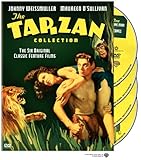
- TARZAN THE APE MAN TARZAN AND HIS MATE TARZAN ESCAPES TARZAN FINDS A SON! TARZAN'S SECRET TREASURE TARZAN'S NEW YORK ADVENTURE-Johnny Weissmuler. Maureen O'Sullivan. He Tarzan, she Jane - the most memorable pair ever to portray Edgar Rice Burroughs' jungle hero and heroine. All 6 of the stars' vine-swinging teamings are in this 3-disc set. The Lord of the Apes swoops Jane Parker into his life in t
#9: Tarzan the Fearless (1933)
Often overshadowed by Weissmuller’s MGM debut, Tarzan the Fearless stars Herman Brix (later Bruce Bennett) in a more articulate, intellectual take on the character. Produced independently, the film hews closer to Edgar Rice Burroughs’ conception of Tarzan as a civilized man raised in the wild rather than a near-mute force of nature.
Its modest budget shows, particularly in recycled footage and uneven pacing, but Brix’s performance offers a fascinating alternative path the franchise might have taken. In hindsight, it plays like a cinematic road not traveled.
#8: Tarzan’s New York (1942)
Few Tarzan films are as overtly playful as Tarzan’s New York, which uproots the jungle hero and drops him into Manhattan skyscrapers and courtrooms. The fish-out-of-water premise allows Weissmuller to showcase physical comedy and gentle satire, poking fun at modern civilization through Tarzan’s bewildered eyes.
While undeniably gimmicky, the film demonstrates the franchise’s confidence at its peak. Tarzan had become such a pop icon that audiences were willing to follow him anywhere, even far from the vines.
#7: Tarzan’s Greatest Adventure (1959)
Gordon Scott’s final turn as Tarzan marked a tonal shift toward a tougher, more grounded hero. Tarzan’s Greatest Adventure abandons fantastical elements in favor of a lean survival thriller, pitting Tarzan against human antagonists rather than wild animals.
Do these 3 things before closing this tab:
1Repair Windows errors before they cause bigger problems2Scan for outdated or missing drivers - takes under a minute3Clear out junk files and repair common Windows errorsScott’s Tarzan is intelligent, controlled, and physically imposing, reflecting postwar masculinity and changing action-movie sensibilities. The film feels like a bridge between classical Tarzan and the more modern adventure protagonists who would follow.
#6: Tarzan the Ape Man (1981)
Few Tarzan films are as controversial as John Derek’s Tarzan the Ape Man, a glossy, eroticized reimagining told largely from Jane’s perspective. Miles O’Keeffe’s Tarzan is nearly wordless, while Bo Derek’s Jane becomes the narrative focus, signaling a radical shift in franchise priorities.
Critically derided but commercially successful, the film reflects early 1980s excess and Hollywood’s fascination with spectacle over substance. It may not honor Burroughs, but it captures a moment when Tarzan was being reshaped for a new, decidedly adult audience.
Ranked #5–#3: Defining the Myth — Muscle, Majesty, and Mainstream Stardom
By this point in the ranking, Tarzan stops being a curiosity or a reinvention and becomes something more enduring. These films didn’t just succeed in their moment; they locked in imagery, performance styles, and thematic ideas that would define Tarzan for generations of audiences. Muscle, romance, and mythic scale finally converge.
PC Slower Than It Used to Be?
A free scan shows the junk files, broken settings and background clutter dragging Windows down - then fixes them in one click.Free scan · Windows 10 & 11Crashes, No Sound, or Screen Glitches?
Random freezes, missing sound and display glitches usually trace back to one bad driver. Find and replace yours safely.Free scan · under a minute#5: Tarzan the Ape Man (1932)
This is the film that permanently etched Tarzan into popular consciousness. Johnny Weissmuller’s screen debut transformed Edgar Rice Burroughs’ literary creation into a cinematic icon, combining Olympic-athlete physicality with an almost childlike purity.
The film’s famous jungle yell, athletic vine-swinging, and elemental storytelling established a visual and behavioral template that countless adaptations would follow. While its colonial worldview and simplified characterization feel dated, its influence is impossible to overstate.
#4: Tarzan and His Mate (1934)
Often regarded as the artistic high point of the Weissmuller era, Tarzan and His Mate deepens the jungle fantasy with surprising sophistication. Maureen O’Sullivan’s Jane becomes more than a damsel, embracing the wild alongside Tarzan rather than merely reacting to it.
Pre-Code Hollywood lends the film a sensuality and moral looseness that later entries would smooth over. The result is a lush, confident adventure that treats Tarzan not just as a spectacle, but as part of a romantic, self-contained world worth envying.
What’s actually slowing this PC down?
Pick the symptom - the matching free tool is one click away.
#3: Greystoke: The Legend of Tarzan, Lord of the Apes (1984)
Hugh Hudson’s Greystoke stands apart as the most literate and emotionally ambitious Tarzan film ever made. Christopher Lambert portrays Tarzan as a tragic figure, caught between the animal identity that shaped him and the rigid civilization that claims him by birthright.
Lavish production values and a somber tone push the character into prestige-cinema territory, reframing Tarzan as a commentary on nature, class, and alienation. It may lack the breezy fun of earlier entries, but it restored dignity and depth to a character too often reduced to a yell and a loincloth.
Rank #3
Ranked #2–#1: The Ultimate Tarzan Films and Why They Still Reign Supreme
As Tarzan evolved from pulp hero to cinematic myth, only a handful of films managed to transcend their eras and speak across generations. These final two entries represent the character at his most complete: thrilling, emotionally resonant, and endlessly rewatchable. They don’t just reflect Tarzan’s legacy; they actively sustain it.
#2: Tarzan Escapes (1936)
Often cited as the purest expression of the Weissmuller era, Tarzan Escapes perfects the MGM jungle formula with confidence and momentum. Johnny Weissmuller is fully at ease in the role by this point, moving through the jungle with an effortless authority that makes Tarzan feel less like a character and more like a force of nature.
The film balances humor, action, and romance with remarkable economy, while Maureen O’Sullivan’s Jane is firmly established as Tarzan’s equal partner. Its brisk pacing and iconic set pieces embody the serial-adventure spirit that made Tarzan a box-office juggernaut throughout the 1930s.
More than any other Weissmuller sequel, Tarzan Escapes captures the fantasy audiences wanted to live inside. Civilization is the threat, the jungle is the refuge, and Tarzan is the ultimate embodiment of freedom from modern constraint.
#1: Tarzan (1999)
Disney’s Tarzan earns the top spot by accomplishing something no previous adaptation fully managed: translating the primal power of the character into a modern, emotionally rich blockbuster without losing his mythic core. Chris Buck and Kevin Lima’s animated epic reintroduces Tarzan as both feral outsider and vulnerable son, shaped as much by love as by survival.
Phil Collins’ anthemic soundtrack and the film’s groundbreaking “Deep Canvas” animation give Tarzan a kinetic energy unmatched in any other version. The vine-surfing sequences feel like the purest cinematic expression of Burroughs’ original idea, marrying athleticism, exhilaration, and awe.
Quick wins for a faster PC:
Fix the driver behind crashes, sound loss and screen glitchesFind Drivers →Clear out junk files and repair common Windows errorsFree Scan →Scan for outdated or missing drivers - takes under a minuteDriver Scan →Most importantly, the film reframes Tarzan’s story as one about identity and belonging, themes that resonate far beyond the jungle setting. For new generations, this Tarzan wasn’t a relic of classic cinema or pulp literature; he was a hero of their own time, ensuring the legend would continue to evolve rather than fade.
The Men Behind the Loincloth: How Different Actors Redefined Tarzan
If Tarzan has endured for more than a century, it’s because the character has proven remarkably flexible in the hands of different performers. Each era didn’t just recast Tarzan; it reinterpreted what he represented, reflecting shifting ideas about masculinity, heroism, and humanity’s relationship with nature. The jungle stayed the same, but the man swinging through it never did.
Elmo Lincoln: The Silent Titan
The first screen Tarzan, Elmo Lincoln, brought sheer physical mass to the role in 1918’s Tarzan of the Apes. His Tarzan was less agile jungle acrobat and more mythic strongman, a figure of brute force shaped by early cinema’s fascination with spectacle. In an era before sound and refined stunt work, Lincoln established Tarzan as a visual marvel, larger than life and unmistakably powerful.
Johnny Weissmuller: The Definitive Jungle God
No actor is more synonymous with Tarzan than Johnny Weissmuller, whose Olympic physique and animalistic grace redefined the character for generations. Weissmuller stripped Tarzan down to elemental essentials, emphasizing instinct, movement, and presence over psychology. His iconic yodel and effortless command of the jungle transformed Tarzan into a living symbol of freedom, setting a standard no live-action successor could fully escape.
Recommended Free Tools
Lex Barker and Gordon Scott: Civilization Creeps In
Post-Weissmuller Tarzans like Lex Barker and Gordon Scott reflected a changing world. Barker introduced a more polished, conversational Tarzan, comfortable navigating both jungle and drawing room. Scott pushed this evolution further, portraying a Tarzan who could articulate moral authority, signaling a franchise slowly inching toward character depth over pure physical myth.
Jock Mahoney: Athleticism with a Smile
Jock Mahoney’s Tarzan leaned into athleticism and charm, favoring speed and wit over brute strength. His lighter touch matched the late-1950s appetite for adventure heroes who felt approachable rather than godlike. Mahoney’s Tarzan suggested that the jungle hero could be fun without losing credibility, a subtle but important tonal shift.
Ron Ely: The Thinking Man’s Tarzan
Ron Ely’s portrayal in the 1960s television series marked a turning point. Educated, articulate, and introspective, Ely’s Tarzan felt closer to Edgar Rice Burroughs’ literary creation than most film versions. This was Tarzan as philosopher-king of the jungle, a hero equally defined by intellect and empathy.
From 1980s Experimentation to Modern Reinvention
Later interpretations reflected uncertainty about how Tarzan fit into a modern world. Christopher Lambert’s emotionally wounded Tarzan in Greystoke emphasized alienation and tragedy, while Miles O’Keeffe’s sword-and-sandal bravado aimed for pulpy escapism. Decades later, Alexander Skarsgård’s restrained, reflective Tarzan reframed the character as a man burdened by legacy, wrestling with colonial history rather than standing apart from it.
Free tools Windows power users keep installed
One-click scans. No signup required.
Animation’s Advantage: A Timeless Tarzan
Disney’s animated Tarzan, voiced by Tony Goldwyn, sidestepped physical expectations entirely. Freed from the limits of live-action bodies, this Tarzan became the most fluid, expressive incarnation ever put on screen. His emotional transparency and kinetic movement synthesized a century of interpretations into a version that felt both primal and modern, proving Tarzan’s adaptability once and for all.
Rank #4

- Factory sealed DVD
Evolution of the Jungle: Changing Attitudes Toward Colonialism, Nature, and Masculinity
As Tarzan’s physical and emotional contours evolved, so too did what the jungle itself represented. Across the franchise’s greatest films, the African setting shifted from exotic playground to contested moral landscape, mirroring Hollywood’s changing relationship with colonial fantasy, environmental awareness, and male identity.
Colonial Fantasy to Moral Reckoning
Early Tarzan films, particularly those starring Johnny Weissmuller, treated Africa as an untamed backdrop for white heroism. Indigenous cultures were often reduced to stereotypes, while colonial power structures went unquestioned, reflecting the norms of 1930s adventure cinema. These films mattered not because they were progressive, but because they crystallized the myth Tarzan would later have to confront.
By the time Greystoke arrived in 1984, the fantasy had curdled into critique. Hugh Hudson’s film reframed Tarzan as a victim of empire, torn between a brutal aristocracy and a natural world that had offered him something closer to dignity. It was a pivotal moment, signaling that Tarzan stories could no longer ignore the moral cost of colonialism.
Nature as Dominion vs. Nature as Home
Weissmuller’s Tarzan ruled the jungle through physical supremacy, embodying an era that viewed nature as something to be conquered and mastered. His command over animals and landscapes reinforced the idea of man as apex force, a theme that made those films thrilling but ideologically dated.
Later entries reimagined Tarzan as a guardian rather than a conqueror. Disney’s animated Tarzan and The Legend of Tarzan both emphasize coexistence, portraying the jungle as a fragile ecosystem rather than a proving ground. These films resonated with audiences raised amid environmental consciousness, reframing Tarzan as protector instead of ruler.
Redefining Masculinity Across Eras
Classic Tarzan masculinity was built on silence, strength, and certainty. Weissmuller barely spoke, letting his body do the storytelling, while Gordon Scott and Jock Mahoney gradually reintroduced humor and verbal confidence. Each iteration softened the image without fully dismantling it.
Modern Tarzans, particularly Ron Ely and Alexander Skarsgård, questioned the myth outright. Intelligence, self-doubt, and emotional restraint became central traits, reflecting a cultural shift away from dominance-driven masculinity. These performances mattered because they allowed Tarzan to age alongside his audience, transforming him from power fantasy into reflective hero.
The Tool Desk
Outbyte Driver Updater FREEScan for outdated or missing drivers - takes under a minuteDriver Scan →Outbyte PC Repair FREEClear out junk files and repair common Windows errorsFree Scan →Why These Shifts Define the Greatest Tarzan Films
The best Tarzan movies endure not simply because of spectacle, but because they capture the anxieties and aspirations of their time. From colonial bravado to ecological responsibility, from primal strength to moral accountability, Tarzan’s evolution mirrors cinema’s own growing self-awareness. Each great entry on this list stands as a snapshot of how filmmakers reinterpreted a jungle legend for a changing world.
Tarzan’s Cinematic Legacy: Influence on Adventure Cinema and Modern Reboots
By the time Tarzan films began interrogating their own mythology, the character had already reshaped adventure cinema. Long before Indiana Jones cracked a whip or superheroes dominated multiplexes, Tarzan established the template for the cinematic adventurer: a mythic figure defined by environment, physicality, and moral code. His influence is woven into decades of jungle epics, survival stories, and hero narratives built around the tension between civilization and the wild.
Tarzan as the Blueprint for the Modern Action Hero
Early Tarzan films helped codify visual language that adventure cinema still relies on today. Sweeping location photography, athletic stunt work, and the idea that the landscape itself could function as both ally and antagonist all became genre standards. The jungle was not just a backdrop, but a character, shaping how audiences later experienced films set in deserts, oceans, and outer space.
Actors like Weissmuller and Gordon Scott also pioneered the notion that a hero’s body could be narrative shorthand. Strength, agility, and movement conveyed character as clearly as dialogue, influencing everything from sword-and-sandal epics to modern blockbuster physiques. In many ways, Tarzan was the prototype for the silent, capable action lead who lets action speak louder than exposition.
Franchise Evolution Before Franchises Had a Name
Tarzan’s longevity forced Hollywood to confront something it now navigates constantly: how to keep a character relevant across generations. Long before cinematic universes, Tarzan was rebooted, retooled, and reinterpreted to match changing cultural values. Each new actor and creative team faced the same challenge modern franchises do, balancing audience nostalgia with the need for reinvention.
The most successful Tarzan films understood that repetition alone was not enough. They adjusted tone, theme, and ideology, whether by softening colonial narratives, deepening emotional complexity, or re-centering the jungle as home rather than conquest. This adaptive flexibility is precisely why Tarzan survived shifts that rendered many contemporaries obsolete.
Modern Reboots and the Burden of Legacy
Contemporary attempts to revive Tarzan reveal how heavy the character’s cinematic legacy has become. Films like The Legend of Tarzan are as much responses to earlier interpretations as they are standalone stories, consciously revising problematic elements while honoring iconic imagery. The vines, the yell, and the visual grammar remain, but they are filtered through modern anxieties about power, exploitation, and identity.
These reboots also highlight a key truth: Tarzan is no longer just escapism. Modern audiences expect reflection alongside spectacle, and Tarzan’s story now carries the weight of historical critique. That expectation, shaped by decades of evolving films, is itself part of his legacy.
Do these 3 things before closing this tab:
1Repair Windows errors before they cause bigger problems2Fix the driver behind crashes, sound loss and screen glitches3Clear out junk files and repair common Windows errorsThe Enduring Power of a Jungle Myth
Ranking the greatest Tarzan movies ultimately means tracing cinema’s own maturation. The best entries endure because they do more than entertain; they capture how their era understood strength, heroism, and humanity’s relationship with nature. Tarzan’s journey from imperial fantasy to self-aware legend mirrors Hollywood’s growing consciousness of its cultural power.
What keeps Tarzan alive on screen is not nostalgia alone, but adaptability. As long as filmmakers continue to grapple honestly with what the character represents, Tarzan will remain more than a relic of pulp fiction. He will stand as one of cinema’s earliest, most influential experiments in how myths evolve, and why the greatest ones never truly disappear.
Quick Recap
Product prices and availability are accurate as of the date/time indicated and are subject to change. Any price and availability information displayed on Amazon at the time of purchase will apply.






Say something about this film