NaNoWriMo did not literally say that every person who opposes AI-generated books is ableist. In a late-August or early-September 2024 position statement, however, the organization said that categorically condemning AI could have “classist and ableist undertones.” Critics—including writers and disabled writers—said the wording blurred the difference between accessibility tools and machine-generated creative writing, minimized legitimate objections to generative AI, and appeared to stigmatize broad opposition to it.
The backlash produced board resignations, sponsor withdrawals and criticism, and a revised statement. NaNoWriMo later apologized for the “harm and confusion” caused by its wording. But the controversy should not be confused with a simple endorsement of AI-generated books, nor should NaNoWriMo’s 2025 closure be attributed to the AI dispute alone.
What NaNoWriMo actually said
NaNoWriMo’s original statement presented the organization as neutral on writing methods. It said it did not explicitly support or condemn a particular approach, including AI, but argued that blanket condemnation could overlook economic and disability-related realities.
The statement’s central argument was that not every writer can afford human assistance at every stage of writing, and that writers have different abilities to identify problems in their own work. From that perspective, a categorical rejection of AI could exclude people who use technology to help draft, revise, organize or communicate.
Quick wins for a faster PC:
Fix the driver behind crashes, sound loss and screen glitchesFind Drivers →Repair Windows errors before they cause bigger problemsFix Now →Scan for outdated or missing drivers - takes under a minuteDriver Scan →#1 Best Overall

- Sturdy Construction: Our Lined Spiral Journal Notebook is built to last with a sturdy metal twin-wire binding and a tough hardcover. The water-resistant cover shields your notes from damage, while the double-wire design allows for easy folding and flat laying.
- High-Quality Paper: Crafted from 100 GSM thick, ink-friendly paper, our notebook prevents ink bleed-through and ghosting. It accommodates various pens, including ballpoint, gel, and fountain pens. Each page features a day header for effortless date tracking.
- Organized and Functional Design: With 140 lined pages and a 6-page blank table of contents, our notebook offers ample space for note-taking and easy referencing. An inner pocket keeps miscellaneous items secure, and an elastic closure band ensures the notebook stays closed when not in use.
- Versatile Usage: Suitable for office, school, and home environments, our notebook is perfect for journaling, note-taking, drawing, goal setting, Bible, and planning. It's a thoughtful present for friends, family, classmates, and colleagues.
- Medium-Sized Portability: Measuring 5.7 inches x 7.9 inches, our medium notebook strikes the perfect balance between portability and functionality. Its sturdy construction and aesthetic design make it an ideal companion for all your writing endeavors.
That is narrower than saying “everyone who opposes AI is ableist.” The organization did not make that literal declaration. But critics read the language as applying a disability and class-based accusation to a broad range of anti-AI positions. That difference between the precise wording and the public interpretation is at the heart of the controversy.
Contemporary coverage described the backlash as a reaction to the statement’s framing, not merely to NaNoWriMo’s decision to discuss an emerging technology.
Why the word “AI” caused a problem
NaNoWriMo used “AI” as a broad category, although the ethical and practical questions vary substantially depending on how a tool is used.
- Assistive technology: screen readers, dictation, speech recognition, text-to-speech, keyboard alternatives and tools that help manage cognitive or executive-function demands.
- Writing assistance: spelling, grammar, style, translation, outlining, note organization or suggestions that leave the author responsible for the creative language.
- AI-assisted drafting: brainstorming or generating limited passages that a writer substantially revises or incorporates.
- AI-generated prose: a model producing sentences, scenes, chapters or a complete manuscript.
- AI-generated books: a wider commercial category that may include machine-generated text, cover art, metadata or marketing copy.
Those uses are not interchangeable. A writer may need dictation or text-to-speech without wanting a model to generate a novel. Another writer may use software to identify continuity problems while insisting that the manuscript’s language remain their own.
The Tool Desk
Outbyte PC Repair FREERepair Windows errors before they cause bigger problemsFix Now →Outbyte Driver Updater FREEFix the driver behind crashes, sound loss and screen glitchesFind Drivers →Critics argued that NaNoWriMo’s statement did not make these distinctions clearly enough. By discussing accessibility needs alongside AI in general, it appeared to use the legitimate case for assistive technology to defend the entire field of generative systems.
Why writers objected so strongly
Accessibility was seen as reductive
Disabled writers publicly rejected the implication that opposition to generative AI reflects hostility to disabled people or that disabled writers require generative AI in order to write. Accessibility needs are real, but they can be met through many technologies and forms of support, including human editors, dictation, screen readers, specialized software and tools configured for an individual writer.
Rank #2

- A classroom classic: this 6-pack of 1-subject spiral notebooks helps you identify your subjects at a glance with color-coding efficiency; color assortment may vary
- The right ruling: these 8" x 10-1/2", college-ruled notebooks fit more writing per page than wide-ruled sheets; each notebook provides 70 double-sided sheets with red margin lines
- Perect perforation: Dependable micro-perforated sheets retain your must-have notes but still detach cleanly when you’re ready to revise
- Glide from page to page: Your favorite gel or ballpoint pens will move effortlessly across these smooth pages for A+ notes with minimal ink bleeding or show-through
- 3-Hold punched: Every notebook comes 3-hole punched to fit a standard binder; take along one notebook or several to save extra trips to the locker
The strongest criticism was therefore not that accessibility should be ignored. It was that accessibility should not be treated as a blanket defense of systems that generate publishable prose from patterns learned from large collections of human-authored material.
Opposition to AI is not one position
Writers may oppose a particular use of AI because of concerns about:
What’s actually slowing this PC down?
Pick the symptom - the matching free tool is one click away.
- the use of copyrighted books or other work in training datasets without permission or compensation;
- the possibility of imitation, plagiarism or unattributed borrowing;
- the displacement of writers, editors, illustrators and other creative workers;
- the undisclosed sale of machine-generated books as human-authored work;
- marketplaces being flooded with low-quality or deceptive titles;
- the meaning of authorship and originality; or
- the use of AI in a writing challenge whose purpose is sustained human writing.
Describing all of those objections as “categorical condemnation” made them look more uniform than they are. Someone can support dictation and grammar assistance while opposing a company’s training practices or refusing to count machine-generated chapters toward a novel-writing challenge.
Terms such as “theft” and “plagiarism” were used by critics to describe some AI training and output practices, but those descriptions should not be treated as settled legal conclusions. The legal status of particular systems and uses varies by jurisdiction, case and factual context.
The statement seemed at odds with NaNoWriMo’s mission
NaNoWriMo is built around the idea that ordinary people can produce a substantial amount of original writing through sustained effort. Critics argued that encouraging or appearing to normalize machine-generated prose undermined the identity of the challenge, even though NaNoWriMo is not a conventional publisher or literary prize.
The dispute was therefore also about what “help” means. NaNoWriMo appeared to use the word broadly, including financial and disability-related assistance. Critics used it more narrowly, distinguishing tools that help a person write from systems that can supply the creative language itself.
Rank #3
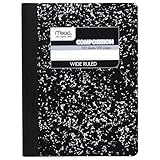
- Composition book contains 100 double-sided sheets; A classic favorite for journaling and lab notes
- Wide ruling gives you plenty of writing space for notetaking
- Sewn binding is smooth, helps keep pages securely in place and lays flat when open
- Inside covers feature a class schedule, multiplication tables, conversion tables and grammar rules
- Pages measure 7.5" x 9.75"; Black Marble Soft Cover
NaNoWriMo’s strongest defense
A fair reading of the organization’s position begins with a real concern: writers do not have equal access to money, time, physical stamina, cognitive capacity, editorial support or technology.
A blanket prohibition could create problems for people who use software in different stages of writing. It could also encourage an organization to police tools it cannot reliably classify or monitor. NaNoWriMo’s apparent aim was to avoid assuming that every participant writes under the same conditions.
That defense does not establish that AI-generated books are inherently accessible, or that generative AI is necessary for disabled writers. Its strongest form is more limited: some forms of AI assistance may be useful to some writers, and a policy should not exclude them without examining the specific use.
Critics considered that answer incomplete because it did not resolve separate questions about consent, training data, disclosure, authorship, labor or whether fully generated text belongs in a human writing challenge.
Backlash, resignations and sponsor reactions
The statement appeared in a NaNoWriMo Zendesk help-center context rather than as a lengthy policy paper. WIRED reported that the FAQ-style presentation intensified the reaction: participants encountered consequential language in a place generally associated with organizational information and troubleshooting, without the detailed definitions needed for such a contentious issue.
Four members of NaNoWriMo writers’ boards publicly stepped down or distanced themselves from the organization. Reported departures included author Maureen Johnson from the Young Writers Program board and author Daniel José Older from a NaNoWriMo writers board. The exact board roles and dates should be distinguished from public criticism by people who were not resigning from an official position.
Rank #4

- Perfectly sized for when you're on the go, this small 2 subject notebook has 80 double-sided college ruled sheets that fight ink bleed and are perforated for easy tear out
- Tough pockets help prevent tears and hold 6" x 9-1/2" loose sheets and notes. Durable plastic water-resistant front cover helps protect your notes and our Spiral Lock wire helps prevent snags on clothes and backpacks.
- All the benefits of our larger notebooks in a smaller, easy to carry size. Sheets measure 6" x 9-1/2" when torn out.
- Made with SFI certified paper. Notebook is recyclable – just remove the reinforcement tape on the pocket and recycle the rest! Available in Blue (Color May Vary)
- LASTS ALL YEAR. GUARANTEED!*
NaNoWriMo also faced pressure from sponsors. Ellipsus announced that it was ending its sponsorship after disagreeing with the organization’s statements about generative AI. ProWritingAid’s founder, Chris Banks, publicly rejected the idea that criticism of AI was inherently classist or ableist while emphasizing support for human creativity.
The sponsor relationship created a perception of possible commercial conflict because ProWritingAid is a writing-assistance company with AI-related features. But the available reporting does not prove that a sponsor dictated NaNoWriMo’s policy. The documented facts are that sponsors criticized or withdrew support; the stronger claim that sponsor money caused or wrote the statement remains unsubstantiated.
See the Ars Technica account of the backlash and revisions for additional reporting on the organizational consequences.
Independent reader supportYour contribution helps us test, update, and keep practical guides available for everyone.NaNoWriMo revised its position
After the backlash, NaNoWriMo revised the relevant language. The updated position acknowledged that some actors in the AI industry engage in harmful or unethical practices and that some uses of AI can harm writers. It retained the view that categorical rejection was too broad, but described the issue as complex and called for ethical use rather than offering an unqualified endorsement.
That was a retreat and clarification, not a full rejection of AI tools. The organization moved from language that foregrounded the classist and ableist implications of opposition to language that also acknowledged the harms critics had been emphasizing.
The change mattered because it recognized that an accessibility argument and an ethical argument can coexist. A writer might need an assistive tool while objecting to undisclosed machine-generated novels or unlicensed training data.
Free tools Windows power users keep installed
One-click scans. No signup required.
Best Value

- LASTS ALL YEAR. GUARANTEED! Guarantee is valid for one year from purchase or delivery date, whichever is longer. Does not cover misuse.
- Scan, study and organize your notes with the Five Star Study App. Create instant flashcards and sync your notes to Google Drive to access them anywhere from any device.
- This 5 subject notebook has 200 double-sided, college ruled sheets that fight ink bleed and are perforated for easy tear out. Sheets measure 8-1/2" x 11" when torn out.
- Tough pockets help prevent tears and hold 8-1/2" x 11" loose sheets. Durable plastic front cover is water resistant to help protect your notes and our Spiral Lock wire helps prevent snags on clothes and backpacks.
- Made with SFI certified paper. Notebook is recyclable – just remove the reinforcement tape on the pocket and recycle the rest! Available in Black.
Did NaNoWriMo apologize?
Yes. In later communications, NaNoWriMo acknowledged the harm and confusion caused by its comments. The organization attributed the problem to poor wording, insufficient context and a failure to acknowledge harms associated with bad actors in generative AI. It also clarified that the original statement was not intended to be a comprehensive AI policy.
That apology addressed the communication failure, but it did not satisfy every critic. An apology centered on wording and confusion can feel incomplete to people who believe the underlying framework was wrong. It leaves substantive questions—about authorship, training data, disclosure, eligibility and labor—open rather than resolving them.
Did the AI controversy cause NaNoWriMo to close?
There is no reliable basis for saying that the AI controversy alone caused NaNoWriMo’s closure.
The nonprofit closed in 2025 after years of organizational controversy and financial difficulty. Coverage also described a separate child-safety and content-moderation scandal. The AI dispute may have damaged trust, sponsorship and participation, but available reporting does not establish a single-cause chain from the September 2024 statement to the organization’s demise.
Recommended Free Tools
The Guardian, TechCrunch and Publishers Weekly placed the closure in a broader crisis. The most defensible conclusion is that the AI controversy was one major problem among several, not a proven explanation for everything that followed.
What the dispute revealed
The NaNoWriMo controversy exposed a policy problem that many writing organizations still face: “AI” is too broad a label for a useful rule.
A responsible policy needs to distinguish assistive technologies from machine-generated creative output, and both from the business practices behind commercial AI systems. It should state whether the issue is authorship, disclosure, eligibility, copyright, training consent, accessibility or all of them. It should also explain how the rule applies to drafting, revision, translation, brainstorming, editing and publication.
Accessibility arguments deserve serious consideration without being used to dismiss objections to generative AI. Conversely, opposition to generative AI should not be casually treated as opposition to disabled writers or assistive technology. The lasting lesson of the NaNoWriMo dispute is that those positions are not opposites: a writer can support accessible tools and still reject AI-generated prose, undisclosed machine-authored books or training practices they consider exploitative.
Do these 3 things before closing this tab:
1Clear out junk files and repair common Windows errors2Fix the driver behind crashes, sound loss and screen glitches3Repair Windows errors before they cause bigger problemsQuick Recap
Product prices and availability are accurate as of the date/time indicated and are subject to change. Any price and availability information displayed on Amazon at the time of purchase will apply.



