Some links on this page are affiliate links: if you buy through them we may earn a commission, at no extra cost to you.
Yes—YouTube Music has begun syncing its active queue across Android, iOS, and the web. The change, reported rolling out on January 25–27, 2026, means you can move between supported devices and find the current or last-played track and upcoming songs waiting in the same queue. It appears to work automatically, but there is no clearly documented setting to turn it off. That makes queue sync a welcome fix for people who want continuity—and a potential nuisance for anyone who prefers a different queue on each device.
What changed in YouTube Music?
For years, a queue assembled on one YouTube Music device could be separate from the queue on another. The reported change carries the active playback queue between sessions signed into the same Google account, rather than requiring you to rebuild it when you switch from your phone to a computer.
Specialist reports dated January 25 and 27, 2026, describe the feature appearing across Android, iOS, and YouTube Music on the web. The miniplayer may also show the last song played on another device. Availability can vary by account, app version, platform, and region; the dates mark initial reports, not proof that every user received it at once. 9to5Google’s report and Android Central’s coverage describe the rollout.
What’s actually slowing this PC down?
Pick the symptom - the matching free tool is one click away.
| Playback detail | What to expect |
|---|---|
| Current or last-played track | May appear in the miniplayer when you open YouTube Music on another supported, signed-in device. |
| Upcoming tracks | The active queue is reported to carry over between Android, iOS, and web sessions. |
| Library, playlists, and downloads | These are distinct from queue sync. Do not assume the feature saves a queue as a playlist or moves downloaded files between devices. |
| TVs, speakers, cars, and casting | Behavior is platform-dependent; the reported coverage does not establish identical queue syncing on every device or casting setup. |
| Different Google accounts | Do not expect queues to sync between separate accounts. |
Queue sync is not the same thing as playback-position sync, a remote-control feature, or a full device handoff. Seeing the same upcoming songs on a laptop does not by itself mean your phone can remotely control playback on that laptop or a speaker. Google’s general YouTube Music help page covers account and device benefits, but the available official documentation does not provide a dedicated explanation of queue sync or its controls.
#1 Best Overall
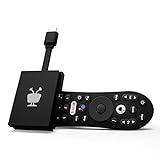
- No More App-Switching. Forget learning to navigate a new screen with every app. TiVo Stream 4K enables one centralized place for searching, browsing, and creating watch lists across all your apps..DC Input Range 5V/1.0A. Power Consumption : Maximum 5 W
- Recommendations Across All of Your Apps: Get rid of the walls between what you watch. TiVo recommends your next favorite shows and movies based on what you love, not where they live.
- Say it and watch it. The power of voice control makes it easy to find shows. Integrated Google Assistant allows you to launch apps, dim the lights and more.
- One place for all your favorite streaming apps. TiVo Stream 4K includes Netflix, Prime Video, Disney+, Peacock plus many more, so you can get to your shows fast.
- TiVo Stream 4K is one of Time Magazine’s “2020 Best Inventions, Special Mention” and PCMag hails it as “an excellent media streamer for TV lovers.” Operating Temperature 0˚C - 40˚C
How to check whether your queue syncs
This is a practical verification test, not an official Google setup procedure:
- Sign in to YouTube Music on two devices using the same Google account.
- On device A, play a song or album and add several recognizable tracks to the queue.
- Leave playback running or pause it.
- Open YouTube Music on device B.
- Check the miniplayer, then open the queue and look for the same current or last-played track and upcoming songs.
- Add or remove one track on device B, then return to device A and check whether the queue has changed.
- If nothing appears, confirm the account on both devices, update the app, and close and reopen the app or browser before trying again.
A missing queue does not necessarily mean the feature is unavailable to your account: the session may be stale, the apps may be using different profiles, or the queue may already have been replaced by later playback. If the test still fails, start playback again on the source device and try once more. Avoid treating this as a real-time guarantee: the reporting establishes cross-device availability, not a documented synchronization speed or rule for simultaneous edits.
The catch: one queue may displace another
Automatic sync is useful when one person wants to continue listening across devices. But it can also collapse separate listening contexts into one active queue. A queue for driving on your phone, a work mix in your browser, and ambient music on a tablet may not remain independent. Users have reported that opening YouTube Music on another device can replace the queue there with the one from the newly active session. That is user-reported behavior, not a published rule guaranteed for every account or device. See the reports on Google’s support community and another community discussion.
Rank #2

- The Google TV Streamer (4K) delivers your favorite entertainment quickly, easily, and personalized to you[1,2]
- HDMI 2.1 cable required (sold separately)
- See movies and TV shows from all your services right from your home screen[2]; and find new things to watch with tailored recommendations for everyone in your home based on their interests and viewing habits
- Watch live TV and access over 800 free channels from Pluto TV, Tubi, and more[3]; if you find an interesting show or movie on your TV, mobile app, or Google search, you can easily add it to your watchlist, so it’s ready when you are[2]
- Up to 4K HDR with Dolby Vision delivers captivating, true-to-life detail[4]; and you can connect speakers that support Dolby Atmos for more immersive 3D sound
The same issue matters in households where multiple people use one Google account: activity from one device may interfere with the queue another person expected to keep. Queue sync should therefore be understood as continuity for temporary playback state, not a collection of saved, named queues. A queue may change or disappear; it is not a reliable archive unless you deliberately preserve the tracks elsewhere.
Can you turn queue sync off?
There is no documented user-facing switch for disabling cross-device queue syncing in the available reporting and help pages. Users have specifically asked for an opt-out, but because Google has not published a dedicated queue-sync guide or control, it is more accurate to say that no documented setting is available than to claim that no control could exist for any user.
If separate queues matter to you, the practical options are limited:
Rank #3
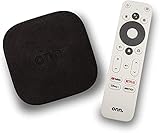
- 4K Ultra HD Resolution: Enjoy your TV in stunning resolution Ultra HD ers four times the resolution of Full HD for greater clarity and detail
- Android TV: With the Android TV operating system you will have access to the best content, download the infinity of applications available through the Google Play Store!
- Voice remote control: Just press the Google Assistant button and ask it to find, play and control content
- Chromecast Built-in: Easily cast movies, shows, and photos from your Android or iOS device to your Android TV
- Easy Setup: Access your Google account and configure the device, language and Wi-Fi network
- Preserve an important listening plan. Use a playlist instead of relying on a temporary queue. Saving a queue as a playlist may not be available for every queue type or app version, so check the controls in your app rather than assuming there is a universal save option.
- Be cautious about opening another session. If you have carefully built a queue, avoid launching YouTube Music on a second device until you are ready to continue with that listening session.
- Use separate accounts only if the broader trade-off is acceptable. Separate accounts can help separate listening contexts, but they also separate account-level history, recommendations, subscriptions, and libraries.
- Send feedback. If you want a sync toggle or separate queues, use YouTube Music’s feedback tools to request it.
Do not confuse a playlist with a queue: a playlist is a saved collection you can return to, while a queue is the temporary order of what the player is set to play next. If a queue is important, preserve it before switching devices rather than relying on sync to keep a permanent copy.
Quick wins for a faster PC:
Scan for outdated or missing drivers - takes under a minuteDriver Scan →Repair Windows errors before they cause bigger problemsFix Now →Who benefits—and who may not
Queue sync is most useful if you build long queues and move between a phone and a laptop, or between Android and iOS devices, while using the same account. It removes the friction of selecting the next songs again and makes YouTube Music behave more consistently across its reported app and web sessions.
It may be a poor fit if you rely on different queues for work, driving, sleep, or offline listening. A downloaded queue should not be assumed to behave like an online account-level queue, and simultaneous use across devices has no documented conflict-resolution rule. If you share an account, one person’s playback may also affect another’s expectations.
Rank #4

- Ask to control your TV with your voice, and quickly cast your photos, videos, music and more from your phone, tablet, or PC to your TV with Chromecast built in
- Built-in Virtual Assistant – just press the mic button on the remote to get what you want
- Built-in content and entertainment including YouTube, Play Movies & TV, and more
- Support for thousands of Apps on the Play Store
- 2K resolution TV streaming
The clearest evidence covers Android, iPhone and iPad apps, and the web. Do not assume the same behavior on every TV, smart speaker, car interface, watch, or cast target. Google says the dedicated YouTube Music app is not available on living-room devices; playback on supported TVs and similar devices is handled through the main YouTube app. See Google’s YouTube Music playback help for platform context. Casting and YouTube video playback may use different device behavior from a standard YouTube Music app session. Queues can also include music videos, uploads, podcasts, or other YouTube content depending on what is playing and already queued, so do not assume every queue item will behave identically across platforms.
Independent reader supportYour contribution helps us test, update, and keep practical guides available for everyone.Does this make YouTube Music like Spotify Connect?
Not by itself. Queue synchronization answers, “Can my upcoming songs follow me to another supported session?” Remote playback control answers, “Can I use one device to control playback on another?” Those are different capabilities. The available queue-sync reporting does not establish that YouTube Music offers a complete Spotify Connect-style experience, simultaneous playback, or a way to choose which device’s queue wins.
Spotify’s U.S. Premium page advertises seamless switching, playback controls, and support across more than 2,000 devices, but that comparison does not prove every Spotify and YouTube Music behavior is identical or directly interchangeable. Spotify’s page describes its own device features. Apple Music promotes listening across devices and music-focused features, but the available evidence here does not establish whether its queue behavior is equivalent. Apple’s product page outlines its service. TIDAL may be a fit for listeners prioritizing audio quality, but its family-plan information is not evidence of queue-sync parity; see TIDAL’s subscription details.
Best Value

- 【Latest Android 14 OS & Quad-Core Processor】 this android box adopts the updated Android 14 operating system for smoother running. Packed with quad-core chip and 4GB+64GB storage, this lightweight tv boxes handles massive applications and media files effortlessly without freezing or crashing.
- 【Dual USB Ports & Rich Interface Layout】 Equipped with USB 2.0, USB 3.0 and wired LAN port, this multifunctional tvbox supports high-speed data transmission and external device expansion. This versatile streaming box is widely compatible with televisions, monitors and other display devices for flexible daily use.
- 【Immersive 8K UHD 】 As an outstanding tv moving box, it delivers stunning 8K ultra-high-definition image quality and vivid HDR color grading. This exquisiteandroid tv boxes adopts advanced video decoding technology, presenting sharp pictures and smooth frames for a theater-like visual feast at home.
- 【Stable WiFi 6 & Bluetooth 5.0 Technology】 Built-in upgraded WiFi 6 module greatly improves network speed and anti-interference ability for this box for tv. Combined with Bluetooth 5.0 technology, this modern tv box android 2026 realizes fast wireless pairing with audio devices and game controllers.
- 【Complete Accessories & User-Friendly Operation】 This compact smart box for tv is fully equipped with essential accessories: TV box,remote control, high-definition HDMI cable, power adapter and detailed user manual. Simple plug-and-play design makes this Android TV box easy to install, and reliable customer support guarantees your satisfying using experience.
For U.S. readers comparing subscriptions, prices and promotions can change and vary by billing country, taxes, platform, and eligibility. The retrieved Spotify page listed Individual at $12.99/month after its displayed promotion, Student at $6.99, Duo at $18.99, and Family at $21.99; Apple listed Student at $6.99; TIDAL listed Family at $19.99 for up to six members. Verify current terms on each provider’s official page before subscribing. YouTube’s official help confirms plan types, including Individual, Student, Family, and two-person plans, but the cited page does not provide a complete reliable U.S. price table. Check YouTube’s current plan information for your region.
If you already value YouTube Premium’s ad-free YouTube benefits, music videos, and YouTube uploads, queue continuity removes one long-standing inconvenience—provided you want one queue across devices. If your priority is mature device control, a music-first experience, or independent queues, compare the services on those needs rather than treating queue sync alone as a reason to switch.
When the queue does not behave as expected
- The queue is missing on the second device: Check that both sessions use the same Google account and profile, update the app, refresh or reopen the browser, then restart playback on the source device. A feature rollout or stale session may also explain the difference.
- The wrong queue appears: This may be a queue replacement rather than a library or playlist change. There may be no restore-previous-queue command; rebuild it or use a saved playlist if you have one.
- The queue vanishes after a restart or refresh: Consider whether playback ended, another session replaced the queue, the account changed, or the app failed to refresh. Starting an album or playlist again can also create a new queue. Available evidence does not establish that queue loss after a restart is a universal bug.
- Two devices are active at once: Do not assume changes will merge in a particular way. The sources do not document a conflict rule for concurrent playback or queue edits.
Queue sync is a meaningful correction to a real continuity problem, but its value depends on whether you want one shared active queue. For people who do, it is overdue convenience. For people who do not, the missing documented opt-out is the part to watch.
Free tools Windows power users keep installed
One-click scans. No signup required.
Quick Recap
Product prices and availability are accurate as of the date/time indicated and are subject to change. Any price and availability information displayed on Amazon at the time of purchase will apply.

