What’s actually slowing this PC down?
Pick the symptom - the matching free tool is one click away.
No single organization is identified in the public sources as owning every right connected with J.R.R. Tolkien’s The Lord of the Rings and The Hobbit. The Tolkien Estate describes rights in Tolkien’s original writings, artwork, and certain marks; Middle-earth Enterprises states that it holds specified worldwide adaptation and commercial rights in those two works; and other rights, such as publishing permissions and a separately announced television deal, have their own contacts and scope.
Why there is no one-line answer
“Who owns Tolkien?” conflates different kinds of intellectual property. Copyright in an original text or drawing is not the same as a trademark in a name, a license to make a film, or permission to reproduce a published passage. Rights can also vary by work, medium, territory, asset, and license term. The organizations’ public descriptions outline broad categories and inquiry routes, but they do not disclose every operative agreement or settle every proposed use.

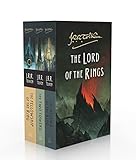

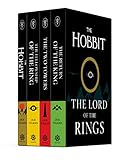
Accordingly, the Tolkien Estate’s statements about Tolkien’s writings and artwork should not be treated as proof that it controls every adaptation or product. Nor do Middle-earth Enterprises’ stated rights in The Hobbit and The Lord of the Rings establish that it controls every Tolkien work.
Rights by category
| Rights layer | What the public sources say | What that means for a reader or creator |
|---|---|---|
| Original writings and artwork | The Tolkien Estate says Tolkien’s writings and artwork are protected. It says original drawings, paintings, maps, designs, scripts, and other graphic works may not be copied, and describes taking action against commercial uses including maps and the One Ring inscription. | Do not assume that a book being in circulation makes its text, map, illustration, or inscription free to reproduce. A licensed adaptation or product does not automatically clear the underlying original material for a separate use. |
| Tolkien Estate trademarks | The Estate says it owns registered marks including TOLKIEN, JRR TOLKIEN, the JRRT monogram and signature, and titles of many Tolkien works. | This is the Estate’s published account of its marks. The precise registration, territory, and permitted use matter for a specific legal question. |
| Marks associated with The Hobbit and The Lord of the Rings | The Estate says many characters, places, events, and other elements from those works, including their titles, are trademarked by Middle-earth Enterprises. A U.S. Trademark Trial and Appeal Board opinion describes Middle-earth Enterprises as successor-in-interest to The Saul Zaentz Company and discusses exclusive merchandising rights for marks, products, and services derived from or related to the novels. | Trademark claims are distinct from copyright and adaptation licenses. The TTAB opinion concerns a U.S. trademark proceeding; it is not a worldwide ruling on every Tolkien-related right. |
| Film, stage, merchandise, and related commercial rights | Middle-earth Enterprises says it holds exclusive worldwide motion-picture, merchandising, stage, and other rights in certain Tolkien literary works, including The Hobbit and The Lord of the Rings. Embracer Group’s 2022 acquisition announcement described Middle-earth Enterprises’ catalogue and worldwide rights relating to those works across motion pictures, video games, board games, merchandising, theme parks, and stage productions. | These descriptions concern specified works and categories. They should not be expanded into a claim that Middle-earth Enterprises holds all rights in all of Tolkien’s writings. |
| Publishing and published material | Middle-earth Enterprises directs requests to reproduce or use published matter based on Tolkien’s works to HarperCollins. The Estate also directs publishing rights and permissions to quote from published works to HarperCollins. | HarperCollins is the stated contact for these permissions; the referral alone does not establish that the publisher owns every underlying literary right. |
| Television | On November 13, 2017, Amazon announced that it had acquired global television rights to The Lord of the Rings, with a multi-season commitment and Prime Video distribution, in cooperation with the Tolkien Estate and Trust, HarperCollins, and New Line Cinema. | This records the scope of Amazon’s announcement at that date. It does not establish that Amazon owns the books, the rights to The Hobbit, or every television right in Tolkien’s works. |
Who to contact about a particular use
The rights organizations publish different routes for different material. These are inquiry routes, not a guarantee that a license is available or will be granted.
Free tools Windows power users keep installed
One-click scans. No signup required.
#1 Best Overall
- Merchandise, stage productions, or services based on the literary works: Middle-earth Enterprises lists its licensing contact for these categories.
- Published material or quotations: The Estate and Middle-earth Enterprises direct publishing-permission enquiries to HarperCollins.
- Peter Jackson or Kenji Kamiyama film clips and stills: Middle-earth Enterprises directs licensing enquiries to Warner Bros. The Estate also directs enquiries about the Peter Jackson motion pictures to Warner Bros.
- The 1978 Ralph Bakshi animated film: Middle-earth Enterprises lists itself for screening, clip, and licensing enquiries.
- Use of the TOLKIEN name for an event or official club: The Estate says permission is required. It also describes limits on copying artwork, text, and invented languages.
- A proposed motion-picture project based on Tolkien works: The Estate says it is currently unable to entertain motion-picture-right enquiries in Tolkien works; its published routing for the Peter Jackson films is to Warner Bros.
For a business or creator, describe the exact work and asset, medium, territory, proposed commercial or promotional use, and any planned quotation or performance to the relevant contact. A rights-sensitive launch may require qualified legal advice; the published summaries do not determine whether a particular use is lawful.
What Embracer’s acquisition announcement does—and does not—show
Embracer Group announced in 2022 that it had agreed to acquire Middle-earth Enterprises. The announcement described the company’s catalogue and rights relating to The Hobbit and The Lord of the Rings. That is a corporate announcement about Middle-earth Enterprises and the rights it described, not evidence that Embracer owns Tolkien’s books or every intellectual-property layer associated with his work.
Embracer’s announcement also gave a historical account that The Saul Zaentz Company first acquired rights to The Lord of the Rings and The Hobbit in 1976 in an arrangement with United Artists connected with the Ralph Bakshi animated adaptation. That is Embracer’s account of the history, rather than a substitute for examining the underlying agreements.
How to assess a product, quotation, or adaptation
- Identify the material: Is it Tolkien’s original text or artwork, a later film asset, a product design, a name or mark, or a combination?
- Specify the work and medium: “Tolkien” is not a sufficient description. The route may differ for a book excerpt, a film still, a stage production, a game, merchandise, an event, or a service.
- State territory and use: Commercial sale, promotion, public performance, quotation, and private reference may raise different questions, and applicable rules vary by territory.
- Check the current license: A rights summary or a product listing does not establish the scope or current term of a particular license.
- Verify authorization: The Estate says it takes action against infringing merchandise and copying. A product appearing for sale online is not, by itself, proof that it is authorized.
What the public rights map cannot resolve
The published sources do not provide the complete operative contracts, a current country-by-country inventory of licenses, or a comprehensive copyright and trademark analysis for every territory. They are useful for understanding broad categories and locating the stated contacts, but they cannot decide whether a specific quotation, image, product, event, or adaptation is permitted. That determination depends on the actual material, proposed use, territory, and applicable current license.
Quick Recap
Best Value
Rank #4
Rank #3
Product prices and availability are accurate as of the date/time indicated and are subject to change. Any price and availability information displayed on Amazon at the time of purchase will apply.