Free tools Windows power users keep installed
One-click scans. No signup required.
Some links on this page are affiliate links: if you buy through them we may earn a commission, at no extra cost to you.
Lorne Michaels is a Toronto-born Canadian-American television producer and writer best known for creating and producing Saturday Night Live (SNL). He helped launch the program in 1975, left it in 1980, returned as executive producer in 1985, and built a wider producing career through Broadway Video, NBC late-night programs, films, sitcoms and other series.
His importance is not limited to a single show. Michaels helped establish a live sketch-comedy production system that continually introduces writers and performers, then extends their work into film, scripted television and late night. The Television Academy database listed 24 Emmy wins from 113 nominations for him when checked in 2026; that count can change as the database is updated.


Who is Lorne Michaels?
Lorne Michaels was born Lorne Michael Lipowitz and grew up in Toronto. After graduating from the University of Toronto, he began writing and performing in Canadian television. With fellow Canadian Hart Pomerantz, he developed The Hart and Lorne Terrific Hour for the Canadian Broadcasting Corporation.
In 1968, Michaels moved to Los Angeles. His early American writing credits included The Beautiful Phyllis Diller Show and Laugh-In, while he continued contributing to Canadian programs. Those jobs placed him in the writers’ rooms and production culture of television variety and sketch comedy before he became associated with SNL.
Popular on Amazon
His career is best understood through four phases: the Canadian and early American writing years; the creation and first run of SNL; the founding of Broadway Video and his return to SNL; and a long period of producing projects across late night, film and scripted television.
How Michaels helped launch Saturday Night Live
The 1975 assignment
In 1975, NBC hired Michaels and executive Dick Ebersol to develop a Saturday-night program that could replace the network’s practice of showing The Tonight Show reruns in that time slot. The result was initially called NBC’s Saturday Night, rather than Saturday Night Live.
The first broadcast aired on October 11, 1975, with George Carlin as host. The original cast included Chevy Chase, Gilda Radner and John Belushi. The show’s live broadcast, topical writing and repertory ensemble gave NBC a format unlike a conventional sitcom or a prerecorded variety special.
What “creating SNL” means
Michaels is commonly described as SNL’s creator because he was the central producer and creative organizer who developed the show’s initial structure with NBC. That role involved more than selecting sketches. It required building a weekly system in which writers produced material, a repertory cast rehearsed it, a host participated in the episode and the final program went out live.
The show’s identity has changed repeatedly with its casts, writers, hosts and political eras. Michaels’s contribution was to establish a framework capable of absorbing those changes. It is more accurate to describe him as the architect and long-term steward of that production system than as the sole author of every sketch or season.
The break between 1980 and 1985
Michaels left SNL in 1980. He returned as executive producer in 1985, so descriptions of him as having run the program continuously since 1975 are incorrect. The five-year gap matters when tracing the show’s history and Michaels’s career: his influence includes both the original launch and the later rebuilding of his relationship with the program.
After returning, he became associated with SNL’s ability to renew its cast and writing staff rather than preserving one fixed version of the show. The program’s long life depends on replacing performers and writers while retaining a recognizable live-sketch format, and the executive-producer role sits at the center of that process.
Broadway Video and the expansion beyond SNL
Founding Broadway Video
Biography.com reports that Michaels founded Broadway Video in 1979. The company became a vehicle for producing work beyond the weekly SNL broadcast, including projects involving SNL alumni and writers.
Representative Broadway Video credits reported in biographical coverage include the television series Kids in the Hall and the films Wayne’s World and Tommy Boy. These examples show how the SNL pipeline could move from live sketches into films and other comedy formats. They are representative credits, not a complete filmography.
Late-night producing
Michaels began executive-producing Late Night with Conan O’Brien in 1993. His producing involvement continued through the transition to Jimmy Fallon in 2009. When Fallon took over The Tonight Show in 2014, Michaels also became associated with that program as an executive producer.
Also popular on Amazon
He was also an executive producer of Late Night with Seth Meyers. Taken together, these roles connect several generations of NBC late night, but they should not be confused with ownership of every creative decision. A late-night executive producer helps shape the show’s overall direction, staffing and production operation while hosts, writers and performers create the nightly material.
Recommended Free Tools
Scripted and cable projects
Michaels’s credits extend beyond NBC’s late-night group. Biography.com lists him as an executive producer on the series 30 Rock, Portlandia and Up All Night. FX’s official crew page for Man Seeking Woman also credits him as an executive producer.
These projects illustrate the range of his producing work: network sitcoms, cable comedy and series built around distinct creative voices. The credit list should be read as a selection of notable examples rather than an exhaustive catalogue of every program or special in which he participated.
A career timeline
| Year or period | Career event | Why it matters |
|---|---|---|
| Before 1968 | Grew up in Toronto, graduated from the University of Toronto and developed The Hart and Lorne Terrific Hour with Hart Pomerantz for the CBC. | Established his Canadian writing and production background. |
| 1968 | Moved to Los Angeles and wrote for The Beautiful Phyllis Diller Show, Laugh-In and Canadian programs. | Placed him in the American television comedy system before SNL. |
| 1975 | Worked with Dick Ebersol to develop NBC’s Saturday-night program; NBC’s Saturday Night debuted on October 11 with George Carlin hosting. | Created the production foundation that became SNL. |
| 1979 | Founded Broadway Video, according to Biography.com. | Created a platform for projects beyond the weekly NBC show. |
| 1980 | Left SNL. | Marks a significant break in his relationship with the program. |
| 1985 | Returned as SNL executive producer. | Began the long second phase of his leadership and talent development at SNL. |
| 1993 | Began executive-producing Late Night with Conan O’Brien. | Extended his producing influence into NBC late night. |
| 2009 | His Late Night producing role continued through Jimmy Fallon’s transition. | Connected one host’s tenure to the next within the franchise. |
| 2014 | Associated with The Tonight Show after Fallon took over. | Expanded his late-night producing work to the flagship program. |
| 2026 | The Television Academy database listed 113 nominations and 24 Emmy wins when checked. | Provides a dated snapshot of his recorded Emmy recognition, not a permanent total. |
What are Lorne Michaels’s major producing credits?
The following programs and films are among the best-known examples connected to his producing career. They represent the scope of his work rather than a complete filmography.
| Area | Representative credits | Role or significance |
|---|---|---|
| SNL | Saturday Night Live | Creator and executive producer; the central project of his career. |
| SNL-related film work | Wayne’s World, Tommy Boy | Broadway Video productions associated with the movement of comedy talent from sketches into films. |
| Sketch and ensemble television | Kids in the Hall | A Broadway Video production outside the SNL broadcast itself. |
| NBC late night | Late Night with Conan O’Brien; the Jimmy Fallon transition in 2009; The Tonight Show after Fallon’s 2014 takeover; Late Night with Seth Meyers | Executive-producing work spanning multiple hosts and program transitions. |
| Scripted television | 30 Rock, Portlandia, Up All Night | Examples of sitcom and comedy-series producing outside the late-night schedule. |
| Cable comedy | Man Seeking Woman | FX’s official crew information credits Michaels as an executive producer. |
The Television Academy’s individual records show Michaels receiving both executive-producer and writing credits on SNL, along with work on other programs and specials. An Emmy nomination connected with a show should not automatically be treated as proof that he personally produced every element of that production; credit-specific questions require checking the Academy’s individual record for the relevant award year.
How did Michaels influence SNL?
He made live sketch comedy a repeatable system
SNL’s influence comes partly from its format: a host, repertory cast and writing staff prepare a new episode each week for live transmission. Michaels helped establish that structure and maintain it through multiple generations. The system creates pressure for rapid writing and rehearsal, but it also gives performers a regular national platform on which characters and recurring ideas can develop.
Because the show is live and topical, no single season can be treated as a permanent template. Writers respond to current events, hosts bring different strengths and casts redefine the tone. Michaels’s institutional contribution is the continuity that allows those changes without abandoning the basic live-show engine.
He developed a pipeline for performers and writers
The biographical account of Michaels names Dan Aykroyd, Bill Murray, Eddie Murphy, Mike Myers, Will Ferrell, Tina Fey and Amy Poehler among the performers whose careers SNL helped launch or significantly advance. Their later work in films, sitcoms and other late-night programs demonstrates how an ensemble television show can function as a training ground and a national showcase.
That pipeline is not simply a list of famous alumni. It depends on recurring professional opportunities: writers can test premises in front of a large audience, performers can build characters over several episodes, and successful material can be adapted for film or scripted television. Michaels’s later producing work with alumni and writers helped extend those relationships beyond Studio 8H.
The Tool Desk
Outbyte PC Repair FREEClear out junk files and repair common Windows errorsFree Scan →Outbyte Driver Updater FREEScan for outdated or missing drivers - takes under a minuteDriver Scan →He supported reinvention rather than one fixed style
Every major SNL era has its own cast, writers and cultural reference points. A viewer who watched the show in high school may regard that period as the funniest because those episodes are tied to personal memories. Associated Press reporting on SNL’s 50th anniversary uses biographer Susan Morrison’s observation to explain this generational effect. It is a useful account of nostalgia, not a measurable ranking of seasons.
Also popular on Amazon
This distinction helps explain why arguments about the “best” SNL years rarely produce an objective answer. Michaels’s influence is more demonstrable in the show’s capacity to keep replacing its creative personnel than in any claim that one era is universally superior.
He connected television comedy across formats
Through Broadway Video and executive-producer roles, Michaels connected live sketches with films, sitcoms, cable series and late-night programs. A performer who first became known in a short SNL segment could later appear in a feature film, a scripted series or a different NBC franchise. That movement made SNL part of a wider comedy ecosystem rather than an isolated weekly broadcast.
How many Emmys has Lorne Michaels won?
The Television Academy database listed 113 nominations and 24 Emmy wins for Michaels when checked in 2026. Because the Academy’s database is dynamic, the figures should be understood as a dated count rather than an immutable lifetime total.
Quick wins for a faster PC:
Repair Windows errors before they cause bigger problemsFix Now →Fix the driver behind crashes, sound loss and screen glitchesFind Drivers →Clear out junk files and repair common Windows errorsFree Scan →The database also distinguishes the categories and individual credits behind awards. Michaels appears in both executive-producer and writing records for SNL, and his other listed programs and specials may have different credit combinations. For a particular year, category or show, consult the individual Academy entry instead of relying on the headline total.
The documentary Lorne
NBCUniversal announced that Focus Features’ documentary Lorne, directed by Morgan Neville, was scheduled for a U.S. theatrical release on April 17, 2026. The announcement describes the film as a behind-the-scenes look at Michaels.
That announcement establishes the planned theatrical date only. It does not establish a current streaming service, digital-rental option or home-video release, so availability should be checked separately in the viewer’s country and at the time of viewing.
Where to learn more about Michaels’s career
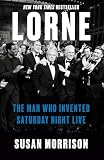
Readers who want a longer backstage account can look for Susan Morrison’s biography, Lorne: The Man Who Invented Saturday Night Live. It offers a book-length treatment of Michaels and the show’s development, while the Television Academy’s database is the more appropriate source for checking a specific Emmy category, year or individual credit.
For a concise overview, the most useful approach is to combine three kinds of information: a biographical timeline for Michaels’s moves between Canada, Los Angeles and NBC; individual production credits for distinguishing executive-producer and writing roles; and accounts of SNL’s casts and writers for understanding how the show’s influence spread.
Why Lorne Michaels remains important to television comedy
Michaels’s lasting importance comes from combining creative judgment with institutional endurance. He helped create a live program that could continually replace its personnel, returned after a five-year absence to guide a later phase, and used Broadway Video and executive-producer roles to carry comedy talent into other formats.
Calling him only “the man behind SNL” understates the range of that work, while calling him the sole author of SNL’s success overlooks the writers, performers, hosts and producers who made each episode. The strongest description is that Michaels built and sustained one of television’s most durable comedy systems, then helped its people and methods travel across film, scripted series and late night.






Say something about this film