Outdated Drivers Are Slowing You Down
One free scan finds every outdated or missing driver and matches the right update for your exact hardware.Free scan · exact hardware matchPC Slower Than It Used to Be?
A free scan shows the junk files, broken settings and background clutter dragging Windows down - then fixes them in one click.Free scan · Windows 10 & 11Some links on this page are affiliate links: if you buy through them we may earn a commission, at no extra cost to you.
Strawberry Shortcake was not the work of one person. She emerged from American Greetings’ character operation through a sequence of contributions: Barbi Sargent is credited with the first greeting-card drawing, Muriel Fahrion developed much of the early visual identity and designed Strawberry Shortcake and her cat Custard, and Lynn Edwards helped develop the characters and storyline. The property became popular when that recognizable design moved from cards into Kenner’s scented dolls and coordinated character line, then into animated television specials and later series.
The timeline has a small but important complication. The official brand history dates the first card appearance to 1973, the familiar classic look to 1978, and the scented dolls and animated debut to 1980. The Strong National Museum of Play dates Kenner’s first licensed doll to 1979. The most accurate description is therefore a 1979–1980 toy launch, with the exact year depending on whether “first doll” means the initial licensed release or the scented line’s documented debut.
A collaborative American Greetings creation
Barbi Sargent and the first card image
Strawberry Shortcake began as greeting-card character work at American Greetings rather than as a toy conceived by a manufacturer. A July 15, 2026 Cleveland Magazine account credits Barbi Sargent with drawing the first version for the card line. That role matters because it establishes the earliest recorded visual starting point, before the later doll, television and licensing program existed.
Muriel Fahrion and the signature look
Muriel Fahrion shaped the version that audiences came to recognize. The Strong National Museum of Play credits her with designing Strawberry Shortcake and her cat, Custard. Fahrion’s own recollection describes the assignment as a team process: her director wanted a rag doll using pink and red, daisies, hearts and strawberries. After other attempts had been considered, Fahrion’s drawing was approved. In the Cleveland Magazine interview she recalled, “I did my first drawing in 1977 of what was to become Strawberry Shortcake; that was the first one I did, it got the thumbs up.”
Popular on Amazon

- Classic Tribute Design: The Loyal Subjects brings you this tribute to the original Strawberry Shortcake doll loved by generations
- Soft and Huggable Construction: Snuggle up at playtime, bedtime or anytime with this Strawberry Shortcake 14-inch ragdoll style soft plush doll that is oh so soft and huggable
- Charming Details and Features: Strawberry Shortcake has an adorable embroidered face, looped yarn hair, shiny/glittery fabric outfit, silky bonnet and gold shoes with heart accents and bows
- Beautiful Gift Packaging: Strawberry Shortcake is beautifully packaged in the classic red window style-gift box and includes a cut-out Strawberry Shortcake recipe on the back
- Complete Collection Available: Collect all The Loyal Subjects Strawberry Shortcake 14-inch Ragdolls, 5.5-inch Fashion Dolls and the Berry Bake Shoppe, sold separately
That firsthand account explains why a 1977 design date can appear alongside the official history’s 1973 card date. The card line existed earlier, while Fahrion’s approved drawing represents a formative stage in the character’s familiar visual development. The official chronology places the classic look’s emergence by 1978.
Lynn Edwards and the character world
Lynn Edwards is credited with developing characters and storyline. Strawberry Shortcake therefore had more than a face: she acquired a cast, relationships and a setting that could support stories and products. Treating Sargent, Fahrion and Edwards as contributors to different stages is more accurate than naming a single uncontested creator.
The milestones, separated by what each date means
| Milestone | Date or period | What it records | Source perspective |
|---|---|---|---|
| First American Greetings card appearance | 1973 | The character entered the greeting-card line. | Official Strawberry Shortcake brand history |
| Fahrion’s first approved drawing | 1977 | A key design step toward the recognizable character. | Muriel Fahrion’s firsthand account in Cleveland Magazine, July 15, 2026 |
| Classic look established | 1978 | The familiar visual style had become the favored version. | Official brand history |
| First licensed Kenner doll | 1979 | The character moved into a documented licensed doll release. | The Strong National Museum of Play object record |
| Scented dolls and animated debut | 1980 | The distinctive scented line and an animated series appeared. | Official brand history |
These entries are not competing claims about one event. They describe different milestones: card publication, design approval, visual consolidation, first licensed doll documentation and the scented-toy and animation launch. Using the date that matches the milestone avoids turning a source difference into a false contradiction.
Why the design translated so well to toys
A character that could be recognized at a glance
The early figure combined the visual cues of a rag doll with freckles, yarn-like hair and a strong pink-and-red palette. Strawberries, hearts and daisies supplied repeatable motifs for cards, clothing and packaging. A design built from a small number of high-contrast elements remained legible when reproduced as a small illustration or a physical doll.
A complete naming system
The surrounding cast used fruit- and dessert-themed names. This gave each new character an immediate connection to Strawberry Shortcake without requiring a long explanation. The naming pattern also made the line expandable: a new figure could feel like part of the same world while having a distinct flavor or color identity.
Matching clothes, pets and scents
Kenner’s line coordinated the characters’ clothing and accessories and paired them with pets. The themed scents added a sensory signature that greeting cards could suggest but not deliver. The Strong museum record describes the scented-character concept as part of what made the toy line distinctive. A child could identify a figure by its appearance, its companion animal and its associated smell, creating several ways to remember the same character.
Also popular on Amazon
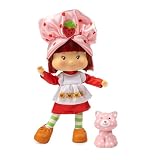
- Get ready for a sweet-smelling playtime adventure with the Strawberry Shortcake 5.5-inch Fashion Doll! The perfect addition to any toy, fashion doll and doll collection!
- With fun hair play, fashion play, poseability, imaginative doll play, and of course the scented hair this Strawberry Shortcake fashion doll is sure to bring joy, positivity, and love for all.
- This adorable Strawberry Shortcake fashion doll features fantastic threaded & sweet scented hair and a shiny/glittery fabric outfit that is easily changeable, allowing for endless outfit combinations and fun playtime opportunities.
- Outfits and accessories are interchangeable between all The Loyal Subjects 5.5-inch fashion dolls, encouraging mix-and-match fashion exploration.
- With 29 points of articulation, Strawberry Shortcake is fully poseable, elevating the play experience and allowing kids to unleash their creativity.
How licensing moved Strawberry Shortcake beyond cards
American Greetings’ character operation
American Greetings placed Strawberry Shortcake within its broader character-development and licensing operation, Those Characters from Cleveland. The company’s corporate history lists the property among the characters launched through that system. This structure allowed the same creative property to be adapted for products made by different partners while preserving a recognizable cast and visual language.
The Tool Desk
Outbyte PC Repair FREERepair Windows errors before they cause bigger problemsFix Now →Outbyte Driver Updater FREEScan for outdated or missing drivers - takes under a minuteDriver Scan →The Kenner opportunity
Muriel Fahrion recalled a licensing discussion involving General Mills and Kenner that envisioned toys, clothing, home décor and animation. The plan was not simply to print more cards; it was to build a world that could appear in multiple parts of a child’s life. Kenner’s licensed dolls supplied the physical centerpiece, while the character names, pets and coordinated outfits made additional figures and accessories feel like extensions rather than unrelated merchandise.
Why the first products mattered
A greeting card creates a brief encounter, but a doll can become a continuing play object. The toy line gave children a way to arrange characters, act out stories and collect members of the same community. That repeat interaction helped turn recognition into attachment. The product strategy also gave retailers and licensees a clear family of items instead of a single isolated character.
How animation reinforced the toy-centered world
The early animated television specials introduced Strawberry Shortcake and her companions as a story universe. The Strong museum record says a handful of these specials primarily promoted the toy line, while the official chronology places the first animated series in 1980. Those descriptions can both be true: the programs functioned as entertainment, but they also demonstrated the characters, relationships and settings that children could continue exploring through toys.
Animation solved a problem that a still card could not. It showed how the characters spoke, moved, helped one another and occupied Strawberryland. Viewers could recognize the same colors, clothing, pets and dessert-themed identities from the dolls, then attach a narrative to them. That continuity between screen and shelf made the licensed products easier to understand and gave the brand a recurring reason to return to children’s attention.
Free tools Windows power users keep installed
One-click scans. No signup required.
The popularity mechanism, step by step
- Recognition started with cards. American Greetings gave the character broad exposure in a familiar, low-cost format. The 1973 card milestone marks the beginning of that public presence.
- A consistent visual identity followed. The approved 1977 drawing and the classic look documented by 1978 supplied a stable face, color palette and set of motifs.
- The cast made the world expandable. Fruit and dessert names, matching clothes and pets allowed the line to grow without losing its central theme.
- Scent made the dolls memorable. The themed fragrances created a sensory distinction that separated the toys from ordinary fashion dolls.
- Licensing multiplied occasions to encounter the characters. Toys, clothing, décor and animation were part of the expansion envisioned by the licensing operation.
- Television supplied stories. Animated specials and the 1980 debut connected the products to a setting and repeatable plots, encouraging imaginative play.
This sequence explains the evidence-supported growth story without requiring an unsupported sales claim. The sources show a progression from cards to a coordinated toy line and animation; they do not provide an independently verified sales total, audience measurement or market-share figure.
Also popular on Amazon

- SUPER SOFT & GREAT SUPPORT - Pillow buddy measures 18 inches long. Made of 100% polyester microfiber, pillow buddy provides great support for any child. This plush stuffed pillow is comfortable to cuddle with whether in the car, school, or in your home.
- LONG LASTING & FUN SIZE - With every hug, your little one is sure to be smiling. This well made durable pillow buddy will last many washes. Easy care spot clean only.
- GREAT FOR ALL AGES - Your child will quickly fall in love with this Strawberry Shortcake pillow and be excited to jump into bed. Great for playtime, naptime, or bedtime this will make the perfect gift for your loved one. This Pillow buddy is Collectable Approved!
- SHOP THE STRAWBERRY SHORTCAKE COLLECTION - Collect this one of a kind plush stuffed toy and complete your ultimate Strawberry Shortcake collection. Enhance your child’s bed and bath experience with our other Disney Hocus Poucs products. Coordinating bedding and accessories available (sold separately).
- DREAM BIGGER- Innovation, Imagination, and Inspiration are the roots of our family company. Our company is still small and family run. We take great pride in our products and our unsurpassed customer service. We know that our wonderful customers are the reason we are in business! We offer excellent quality, non-toxic products. With our coordinating accessories, you can mix and match our high-quality and unique boys and girls bed, bath, and beach products.
What the original dolls looked and felt like
- Form: rag-doll-inspired figures rather than generic plastic fashion dolls.
- Face and hair: freckles and yarn-like hair were prominent recognition cues.
- Wardrobe: clothing coordinated with each character’s fruit or dessert identity.
- Companions: pets, including Custard for Strawberry Shortcake, extended each character’s identity.
- Sensory feature: themed scents were associated with the line’s fruit-and-dessert concept.
- World: Strawberryland provided a shared setting for the cast and animated stories.
These details are useful when distinguishing an early Kenner-era doll from a later licensed product. A current listing that uses the Strawberry Shortcake name is not automatically a vintage 1979 item; era, character, condition, completeness and provenance would need to be checked separately.
Later revivals and the character today
Strawberry Shortcake did not end with the first specials. The official brand timeline records later television revivals, and the current official lifestyle page promotes books and other licensed merchandise. Those listings demonstrate that the property remains active, but a category page does not establish that every item is available in every country, or that a particular product is still in stock.
The continuity across revivals is the underlying character system: a central strawberry theme, a recognizable companion cast and a world that can be adapted to new formats. Later versions may update the animation style, stories or product design, but they draw on the same foundation established through the greeting cards, early character development, dolls and television.
What can—and cannot—be claimed about her success
Claims supported by the documented history
- Strawberry Shortcake began in American Greetings’ greeting-card work.
- Multiple creatives contributed, with Sargent, Fahrion and Edwards associated with different stages.
- The property expanded into licensed Kenner dolls, including a scented line, and animated productions.
- Fruit-and-dessert names, coordinated clothing, pets and Strawberryland created a coherent franchise world.
- The character received later television revivals and remains represented in current licensed categories.
Claims that require separate evidence
- A precise sales total for the dolls or the franchise.
- A definitive ranking against other children’s properties.
- A “billion-dollar” valuation or a specific market-share percentage.
- Universal availability of any current book, fragrance, apparel or other licensed item.
No named, independently sourced sales, audience or market-share statistic is established by the cited historical accounts. The strongest explanation of popularity is therefore structural: a memorable design moved through several compatible media and products, each reinforcing the others.
The clearest answer to the creator question
If “creator” means the person associated with the earliest card drawing, Barbi Sargent is the relevant attribution in the recent Cleveland Magazine account. If it means the artist who developed the familiar early visual identity and designed Strawberry Shortcake and Custard, Muriel Fahrion is central. If it means the team that built the cast and narrative world, Lynn Edwards and the wider American Greetings creative group must be included. The evidence supports a collaborative origin, not a single-name answer.
Strawberry Shortcake became popular because that collaboration produced a character that was easy to recognize, easy to extend and easy to experience in more than one way. Greeting cards established familiarity; the 1979–1980 Kenner doll transition made the character playable and collectible; scents, pets and themed names gave the line distinctive hooks; and animated specials and series turned the product family into a continuing story world.






Say something about this film