PC Slower Than It Used to Be?
A free scan shows the junk files, broken settings and background clutter dragging Windows down - then fixes them in one click.Free scan · Windows 10 & 11Crashes, No Sound, or Screen Glitches?
Random freezes, missing sound and display glitches usually trace back to one bad driver. Find and replace yours safely.Free scan · under a minuteSome links on this page are affiliate links: if you buy through them we may earn a commission, at no extra cost to you.
The most respectful veteran interview is planned with the narrator, not performed on them. Before recording, agree on the purpose, likely audience, topics, privacy terms and stopping rules. During the conversation, ask brief open questions, listen without steering, allow silence and let the veteran decline, pause or end any subject. Combat may be part of the story, but it is not a requirement: a veteran’s service can also include training, logistics, medical work, administration, relationships, ordinary routines and the transition home.
Start with consent and narrator control
Oral history is a collaboration. The Oral History Association describes its “hallmark” as a “dynamic, collaborative relationship between the interviewer and the narrator” (OHA Core Principles). That principle changes the interview from a hunt for dramatic material into a conversation in which the veteran decides what their experience means and what can be shared.
Make the agreement before the recorder is turned on. Explain who you are, the project’s purpose, why you want this account, how it will be recorded, who may hear or see it, where it might be preserved, and whether it could be published, exhibited, taught or placed online. Discuss any review process, embargo, access restriction or withdrawal deadline that your project can actually offer. Do not promise anonymity, editorial control or a particular archival outcome unless you have the authority to provide it.
Free tools Windows power users keep installed
One-click scans. No signup required.
Ask what the veteran wants included, what they would rather leave out, which questions they hope you will ask and whether photographs, letters, service records or objects would help them remember. A short phone, video or in-person pre-interview lets you learn this without turning the planning meeting into an interrogation. Record the agreed terms in writing, obtain informed consent and give the veteran a way to ask questions before the session.
Popular on Amazon

- 【PCM Recording and Automatic Noise Reduction】:This digital voice recorder is equipped with advanced dual noise reduction microphones and supports 1536 kbps PCM HD audio recording, ensuring crystal-clear sound capture in any environment. Recorder device with automatic noise reduction and voice-activated recording, the recorder only picks up the sound when there’s speech, reducing background noise,Excellent sound quality can meet the needs of students, journalists, music lovers and more people
- 【136GB Memory and Long Battery Life】Voice Recorder with Playback with 8GB built-in storage and includes a complimentary 128GB TF card, this digital voice recorder can hold up to 9775 hours of recordings in MP3 format or WAV format;Recorder for lectures with a built-in 1100mAh rechargeable lithium battery, this voice recorder can continuously record for up to 68 hours on a single charge, making it perfect for back-to-back meetings, interviews, or extended classroom sessions
- 【One Click Record and Save】: Our voice recorder supports one click recording and saving functions. Even when the product is in a powered-off state, simply push up the side recording button to immediately enter recording mode, and push down the recording button to save the recording. This allows for capturing as much information as possible.Easily transfer your recordings to your computer using the USB-C connection, allowing for fast and secure file management
- 【Easy-to-Use】This portable voice recorder is designed with a simple, user-friendly interface featuring a large, easy-to-read LCD screen. The voice-activated recording (VOR) feature makes hands-free operation a breeze. With one-touch recording, users can start or stop recording instantly, even during busy moments. A-B repeat function and password protection ensure that important segments are easily accessible and secure
- 【Portable and Durable Design】Designed with portability in mind, this lightweight screen recorder fits comfortably in your pocket or bag, weighing only 97 grams. Its sleek and durable metal casing ensures longevity and protection from everyday wear and tear. Whether you’re traveling, in the office, or attending a lecture, this compact recorder is always ready to capture clear, high-quality audio
Prepare an outline without scripting the story
Use an outline as a map, not a questionnaire that must be completed in order. The Library of Congress Veterans History Project (VHP) suggests areas such as the decision to join, early service, duties and locations, particular experiences, the move back to civilian life and later reflections. These are invitations, not demands to describe combat.
| Area | Open prompts | What to avoid |
|---|---|---|
| Before service | “What was happening in your life when you decided to enlist or accept your assignment?” | Assuming the decision was patriotic, pressured or voluntary in a particular way. |
| Training and early service | “What do you remember about learning your role?” | Rushing past training because it is not combat. |
| Duties and places | “Walk me through a typical day there.” “What did that location mean to you?” | Demanding an exact date, map reference or military acronym the narrator does not recall. |
| Significant experiences | “What happened next?” “What stands out most clearly?” | Suggesting the answer or insisting on a graphic account of injury, loss or battle. |
| Relationships and routines | “Who helped you get through the day?” “What ordinary details do you still remember?” | Treating daily life, friendships or noncombat work as irrelevant. |
| Return and reflection | “How did coming home change your routines?” “What do you wish people understood?” | Assuming the transition was easy, difficult or the same for every veteran. |
Ask one question at a time. Short prompts leave room for a long answer and make it easier to notice what the narrator considers important. Prepare follow-ups such as “Can you describe that in your own words?” or “What happened after that?” but use them only when they arise naturally. If a term, rank or unit is unfamiliar, ask the veteran to explain it rather than pretending you understand.
Make recording technically and physically manageable
Choose the quietest comfortable indoor setting available. Turn off avoidable alarms, silence phones and check for heating, traffic or refrigerator noise. Test batteries, storage, microphones, audio levels, lighting and internet connections before the veteran arrives. The Library of Congress advises using the highest-quality equipment available and testing it; that does not mean buying new equipment. A digital audio recorder, phone or camera may be sufficient only if the repository you have chosen accepts its format.
- Bring a fully charged recorder or phone, spare power, and enough storage for the entire session.
- Place the microphone close enough for clear speech without making it intrusive; avoid handling the device while recording.
- Offer water, a comfortable chair and tissues. Ask about hearing, vision, mobility or language needs.
- Tell the veteran plainly when recording begins and ends. Never record a supposedly private conversation without consent.
- At the beginning, identify the interviewer, date, general location, narrator and others present, plus the project. Do not announce a full home address.
Technical quality serves the person, not the other way around. If a device fails, stop, explain the problem and ask whether the veteran wants to continue, repeat a section or reschedule. Do not keep someone talking because you are trying to reach a file length.
Also popular on Amazon
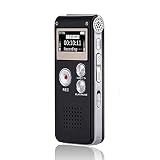
- 【Simple Operation】- switch on your voice recorder, one button for recording. press the "REC", start the recording, press "STOP", end the recording, press “PLAY”, listen what you just recorded, and then Press A-B, select your important section to repeat. Easy to playback with inner powerful speaker, support external sound speaker playback, let you enjoy superior recording quality.
- 【Clear Voice Record】- high quality recording with noise redution, you will get super clear recorded voice, the sensitive microphone help you to catch speaker's words in an interview, lectures, meetings.
- 【Voice Activated Recording】- automatic voice reduction function, it starts recording when sound is detected or turn to standby state, saving recording time and reduce power consumption.
- 【 Player Function】- this voice recorder can be used as an music player, you could enjoy the music after your tired study, meeting and so on. Also can function as a detachable data storage device.you can take along your favorite pictures and documents whenever you go.Simply cut-and-paste or drag-and -drop files to or from it via USB connection, the player will appear as a removeable drive in Windows.
- 【High quality and long time】 uses DSP noise reduction technology to filter out environmental noise, has high-quality recording, 【1536kbps】to restore the real scene. It can continuously record for more than 30 hours and play for 7 hours.
Interview with patience and active listening
Begin with an easy, factual invitation and let the pace settle. The VHP guidance says, “Be patient. Give the veteran time to reflect before he or she responds to each question.” In practice, leave a few seconds after an answer before speaking; the pause may be where a remembered detail or a considered interpretation emerges.
Listen for the narrator’s language and follow it. If they spend time on a unit ritual, a job in a warehouse or a friendship, do not pull them back to a preselected “important” event. Keep your own reactions quiet enough that the recording remains intelligible. Avoid interrupting, finishing sentences, arguing about politics, correcting a memory in the moment or using leading questions such as “That must have been terrifying, right?”
Memory is not a database. If the veteran is uncertain about a date or location, ask what they do remember and mark the uncertainty in your notes. Personal meaning and sequence may matter more than forcing exact specifics. You can verify names or chronology later through records, but do not turn the interview into a test.
Useful follow-ups
- “What did you notice first?”
- “How did you decide what to do?”
- “Who else was there, and how did people work together?”
- “What changed after that?”
- “Is there a detail about that day that people usually miss?”
- “Would you like to explain that term for someone who has not served?”
These prompts seek detail without supplying an expected conclusion. If an answer is complete, move on gently; silence does not need to be filled with another question.
Also popular on Amazon
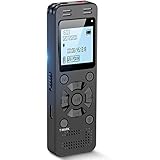
- Clear PCM Recording: Adopts upgraded noise cancelling microphone with professional recording chip. Capture 1536Kbps premium quality sound. Voice recorder with playback function, which is well designed for the users to easily access. Customer Service includes real life phone call from a specialist to give instructions on this high-quality recording device. We ensure your satisfaction on this product.
- 128GB Digital Recorder, Computers Compatible: stores 9296hours of recording, or 40,000songs, up to 54 hours of continuous recording with full battery. Recording can be pre-set into mp3 128kbps,192kbps, or wav 1536kbps format. A wonderful voice recording device for lectures, meetings, and conversations.
- Voice Activated Recorder: This recorder device can set voice decibels at 6 different levels. Regardless the level of the volume, with correct voice decibel level, this recorder will catch talking voice only, reduce blank and whispering snippet.
- Powerful Feature: Multi-usage as a voice recorder, an USB flash drive, and a Mp3 Player. Newly developed 4-folder storage(A/B/C/D) for file management make your recording and other files more organized. Many other helpful features like password protection, A-B repeat, auto record, bookmark, ideal recorder for lectures, meetings, speeches, and interviews.
- Fast File Download: V618 can easily transfer files onto computers. A rechargeable voice recorder that can be quickly recharged, suit for students, teachers, seniors, businesspeople, writers, and bloggers
Handle painful memories without becoming a therapist
Never presume that a veteran wants to recount combat, captivity, injury, death, moral conflict or trauma. At the start, state that they may pass, take a break, change the subject or stop. A simple reminder—“We can pause or skip this whenever you want”—keeps control visible without predicting distress.
If the veteran becomes upset, stop asking for detail. Pause the recording and ask what they would like: a break, a different topic, water, a support person or an end to the session. Do not diagnose, interpret symptoms or promise that telling the story will heal them. The oral-history guidance supports narrator choice and flexible pacing but does not provide a universal clinical crisis protocol. If your institution has a safeguarding or support procedure, explain it before recording and follow it.
Do not use a distressed moment as a dramatic climax. If the veteran later wishes to remove, restrict or clarify a passage, apply the agreement you made and explain what your project can and cannot change.
Recommended Free Tools
Close deliberately and document what happens next
Near the end, ask, “Is there anything you wanted to say that I did not ask about?” This gives the narrator a chance to correct the emphasis of the conversation. Ask whether names, dates, terms or objects need clarification, but do not reopen a painful subject simply to fill time. State clearly that recording has ended.
Also popular on Amazon

- Capture every conversation clearly: Four microphones capture voices from up to 5 meters (16.4 feet) away. Note Pro detects in-person conversations and phone calls, while Plaud Desktop covers online meetings.
- Award-winning design: Winner of the iF, Red Dot Design, and the 2026 Good Design Awards. Just 2.99 mm (0.12 inches) thin and 30 g (1.06 oz), with a 0.95-inch display for recording status, battery level and more.
- Everything Included: Includes Plaud Note Pro, magnetic case, magnetic ring, charging cable, and a free Starter Plan with 300 transcription minutes per month. Upgrade anytime in the Plaud app to Pro Plan (1,200 min/mo) or Unlimited Plan(Up to 24 hours of transcription per user per day)
- Notes tailored to you: Plaud combines transcripts, highlights, notes, images, and files into a tailored summary with key decisions, details, and next steps. Record for 30 hours in Enhance mode or 50 hours in Endurance mode, with 64 GB of storage for months of conversations.
- Turn conversations into finished work: Plaud Agent turns conversations into structured emails, reports, presentations, spreadsheets, and more, ready to review and share.
Agree on the next steps: file backup, transcription, fact-checking, review (if offered), publication or deposit, access restrictions and the date you will contact them. Store the recording and consent documents securely, with a separate backup, and keep a note linking each file to the correct narrator and date. Tell the veteran if the project’s plans change.
The VHP checklist calls for an interview of at least 30 minutes. The Oral History Association instead recommends agreeing on an approximate session length and remaining flexible if the conversation must end early. If a repository has a minimum, disclose it before recording and never treat the target as more important than consent.
Independent reader supportYour contribution helps us test, update, and keep practical guides available for everyone.Explain privacy, rights and preservation in plain language
A recording can be copied, preserved, heard by strangers or used years after the interview. “Public” should mean something specific: searchable online, available in a reading room, accessible on request, or limited to approved researchers. “Restricted” also needs a duration and a process. Identifying details and recognizable life events can reveal a person even when their name is removed, so oral-history confidentiality and anonymity are not automatic (OHA Statement on Ethics; OHA Principles and Best Practices Glossary).
For a Library of Congress submission, download the current VHP Field Kit before the interview. It includes a Veteran’s Release Form, an Interviewer’s/Volunteer’s Release Form and other collection documents. The field kit states that the veteran and next of kin retain official copyright to the story. Read the current forms with the veteran; do not substitute a casual email for the repository’s required release.
Also popular on Amazon

- 【One Click Record and Save】This voice recorder features instant one-click recording and saving. Even when powered off, simply push up the side button to start recording and push down to save. Designed with ergonomic controls, this digital voice recorder ensures fast operation so you never miss important moments—perfect as a voice recorder with playback, mini recorder device, or portable recorder for interviews, lectures, and field work
- 【64GB Memory & High-Capacity Battery】Equipped with a built-in 64GB TF card, this recorder device stores up to 4,600 hours of recordings. Its 600mAh battery supports up to 48 hours of continuous use (MP3 at 32kbps). Ideal for students, journalists, and professionals, this tape recorder portable mini excels in lectures, meetings, interviews, and even for paranormal sound research
- 【PCM Recording & Automatic Noise Reduction】Capture audio in MP3 and WAV format with up to 1536kbps PCM quality. Advanced noise reduction minimizes background sounds, delivering crystal-clear playback on headphones or professional gear. This makes it an excellent audio recorder, digital audio recorder, or sound recorder for music creation, interviews, and high-detail sound archiving
- 【Voice-Activated Recorder, Big Screen & Password Protection】The voice activated recorder automatically starts/stops when sound reaches your set level, helping save storage and battery. A large 1.44-inch screen offers easy navigation, while password protection safeguards your files—perfect for storing personal memos and important audio files when using it as a dictaphone voice recorder or recording device for professional use
- 【Multi-Function Recorder】This versatile digital recorder supports internal and external recording, file segmentation, scheduled recording, A-B loop playback, MP3 music, and bookmarking. Functions as a USB storage drive and MP3 player with quick transfer via USB cable. Great as a pocket recorder, lecture recorder, mini voice recorder, or recording devices for travel and daily use
If you are submitting to the Veterans History Project
General oral-history ethics apply to every project, while VHP adds collection-specific rules. The current How to Participate page says veterans of all branches and ranks who served since World War I may participate, including veterans who did not see combat. VHP describes five stages—Prepare, Participate, Send, Access and Inquire—and the What We Collect scope page lists accepted materials and exclusions.
| VHP point | What it means for your plan |
|---|---|
| Eligibility | Service since World War I, in any branch or rank, can qualify; noncombat service is not excluded. Service in another country’s military does not meet this program’s stated scope. |
| Interview format | VHP calls for an interview recording of at least 30 minutes. Group interviews and proxy interviews are excluded, so arrange a one-to-one session with the veteran. |
| Materials | The scope page describes accepted original documents and media. Check current specifications before collecting or promising that a particular file, copy or object will be accepted. |
| Forms and delivery | Use the current field kit, complete releases and follow the Send instructions. Repository rules can change, so verify them immediately before submission. |
| Processing | VHP guidance has told participants that a summary service record may take at least 12 months to appear in its database, and that summary may not include the interview. Treat that as a changeable estimate and check the live page. |
Do not promise that an interview will be accepted, cataloged quickly or made publicly searchable. Those decisions belong to the repository and depend on its current requirements.
Common problems and respectful fixes
| Problem | Better response |
|---|---|
| The veteran gives short answers. | Slow down, ask one open follow-up, tolerate silence and check whether the setting, hearing or topic is making the conversation difficult. |
| You realize a question was leading. | Acknowledge it, restate it neutrally and invite the veteran’s own account. |
| A date or acronym is disputed. | Record the uncertainty, ask what the veteran remembers confidently and verify later without confronting them during the narrative. |
| The recording is noisy. | Pause, explain the technical issue, move the microphone or room if the veteran agrees, and repeat only the part they choose to repeat. |
| The veteran wants to stop. | Stop immediately, confirm whether the existing recording may be kept under the consent terms, and document any requested restriction or deletion process. |
| A family member answers for the veteran. | Thank them, then address the veteran directly. If the veteran cannot participate as narrator, do not relabel a proxy conversation as a VHP interview. |
A practical opening script
You can adapt this language to your project: “Thank you for speaking with me. We are recording this for [project purpose]. The recording may be [specific access or use]. Before we begin, is there anything you want included or avoided? You may pause, skip a question or stop at any time. Do you understand the plan, and do you consent to recording under these terms?” Replace the bracketed wording with facts you can guarantee, and complete the required written release before asking the first service question.
Quick wins for a faster PC:
Scan for outdated or missing drivers - takes under a minuteDriver Scan →Repair Windows errors before they cause bigger problemsFix Now →The result should be more than a dramatic recollection. It should be a durable account in the veteran’s own terms, made with clear consent, usable recording, honest access expectations and enough patience for ordinary details and difficult reflections to coexist.
Quick Recap
Primary guidance
- Library of Congress Veterans History Project: Best Practices for Oral History Interviews
- Library of Congress Veterans History Project: How to Participate
- Library of Congress Veterans History Project: Field Kit
- Library of Congress Veterans History Project: What We Collect
- Oral History Association: Oral History Best Practices
- Oral History Association: Statement on Ethics
- Oral History Association: Core Principles
- Oral History Association: Principles and Best Practices Glossary






Say something about this film