Crashes, No Sound, or Screen Glitches?
Random freezes, missing sound and display glitches usually trace back to one bad driver. Find and replace yours safely.Free scan · under a minuteWindows Errors? Fix Them Before They Spread
Repair common Windows errors and clear accumulated junk for a smoother, more stable PC - no reinstall needed.Free scan · no reinstallSome links on this page are affiliate links: if you buy through them we may earn a commission, at no extra cost to you.
Contact the clinician who ordered the test and explain the mismatch: what you feel, when it started, how it is changing, and what the report says. Ask how the result fits your examination, medical history, medicines, preparation, and the reason the test was ordered. Do not dismiss persistent symptoms because a result is “normal,” and do not assume an abnormal number proves a diagnosis.
A laboratory result is one part of a clinical assessment. The next step might be observation, an examination, a repeat sample, a different test, or another kind of follow-up. Which option is appropriate depends on the specific test and your circumstances.
Start with the clinician who ordered the test
The ordering clinician has the context needed to interpret the report: your symptoms, examination findings, previous results, health history, family history, and the question the test was intended to answer. MedlinePlus explains that providers combine these sources because a combination of information can be more informative than one test alone. Even when you can see the result in an electronic health record, the U.S. National Library of Medicine advises discussing what it means for you: How to Understand Your Lab Results.
Call or message the practice rather than leaving an unexplained mismatch unresolved. If you do not hear back, MedlinePlus Magazine’s patient guidance recommends following up with the medical office: MedlinePlus Magazine, Fall 2019.
Popular on Amazon
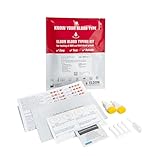
- Quick Results: Learn your blood type in just a couple of minutes with this easy-to-use testing kit
- Simple Interpretation: Easily understand your blood type group with clear and straightforward results
- Permanent Record: Keep as a permanent record of your blood type on the durable card for your records or safekeeping
- Reliable Accuracy: Offers a reliable and accurate way to learn your blood type using proven testing technology
- Convenient Home Use: Can be used conveniently at home without the need for laboratory visits
Give a concrete description of the mismatch
- Name each symptom, its severity, when it began, and whether it is improving, stable, or worsening.
- State what the test report says, including the date, result, units, and the laboratory’s reference range.
- Explain why the result seems inconsistent with your experience—for example, ongoing symptoms despite a result reported as normal, or a flagged value without symptoms.
- List relevant medicines, nonprescription drugs, vitamins, and supplements. Do not stop a prescribed medicine unless a clinician tells you to.
This information lets the clinician decide whether the finding is expected, whether something could have affected the sample, and whether another form of assessment is needed.
Why a result and symptoms can disagree
A test answers a limited question
Laboratory tests look for a particular substance, organism, marker, or body response. A normal result generally means the test did not find what it was designed to detect. It does not mean that every possible cause of your symptoms has been excluded. MedlinePlus notes that a negative or normal result can still be followed by additional testing when the clinical picture warrants it.
Conversely, an abnormal or positive result may identify a flagged value or the target the test was looking for without establishing why it is present. An out-of-range result can occur when nothing serious is wrong, and its significance depends on the person and the test. MyHealth Alberta explains this distinction in Learning About Abnormal Lab Results.
Do these 3 things before closing this tab:
1Repair Windows errors before they cause bigger problems2Scan for outdated or missing drivers - takes under a minute3Clear out junk files and repair common Windows errorsTests are not perfect
A false negative occurs when a test misses a condition that is actually present. A false positive occurs when a test suggests a condition that is not present. The chance of either outcome depends on the test, the timing, the sample, and the situation in which it is used. MedlinePlus states that inaccurate results are more likely with certain tests or when testing is not performed correctly; a provider who suspects an inaccurate result may order another test.
Timing and preparation can change the result
Food and drink, fasting, strenuous exercise, menstruation, medicines, supplements, and the timing of collection can affect some tests. A sample taken very early in an illness, after treatment has started, or outside a test’s intended window may not answer the clinical question reliably. Tell the clinician exactly how you prepared and when you collected the sample. Do not assume that a preparation instruction for one test applies to another.
Reference ranges are not universal cutoffs
Reports usually show a reference range, but ranges and measurement methods can differ between laboratories. A value just outside a range is not automatically dangerous, and a value inside a range is not automatically reassuring in every context. Use the range printed on your report when discussing the result. For trends, comparing results from the same laboratory can make changes easier to interpret.
Understand the wording on the report
| Report wording | What it generally means | What it does not establish |
|---|---|---|
| Negative or normal | The test did not find the target it was looking for or the measured value falls within that laboratory’s stated range. | It does not prove that every possible cause of symptoms is absent or that no follow-up is needed. |
| Positive or abnormal | The test found its target or flagged a measured value. | It does not by itself prove a diagnosis, severity, or need for a particular treatment. |
| Inconclusive, uncertain, or indeterminate | The result is not clearly positive or negative, or there is not enough information for a firm interpretation. | It does not provide a universal instruction to repeat the test on a set schedule. |
| False negative | The test result is negative even though the condition or target is present. | It cannot be confirmed from the report alone; clinical context and, sometimes, another test are needed. |
| False positive | The test result is positive even though the condition or target is absent. | It cannot be assumed from an abnormal number alone; confirmation may be appropriate for some tests. |
Ask the clinician whether your result is definitive, preliminary, or inconclusive for the particular test. The same label can have different implications in different testing systems.
The Tool Desk
Outbyte Driver Updater FREEFix the driver behind crashes, sound loss and screen glitchesFind Drivers →Outbyte PC Repair FREEClear out junk files and repair common Windows errorsFree Scan →Also popular on Amazon
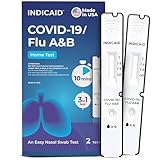
- Comprehensive 3-in-1 Test: The INDICAID COVID-flu test combo is a convenient way to detect COVID-19, Flu A, and Flu B. Everything you need is in this test home kit. It’s a must-have over-the-counter solution for anyone experiencing cold and flu symptoms.
- Fast, Reliable Results: This rapid influenza and COVID home test kit gives you 3 results in just 10 minutes, and it’s incredibly easy to use. All it requires is a shallow nasal swab, and the test can be completed in four simple steps. No more guessing!
- Trusted Technology: This flu and COVID test kit at home is FDA 510(k)-cleared, ensuring high-quality and accurate results. The combo test uses the same technology as COVID-19 rapid tests and can detect multiple COVID-19 and Flu A&B variants and strains.
- Versatile Use: The INDICAID COVID and flu test kit comes in a compact package, perfect for travel, school, work, and home. It’s also family-friendly. Individuals ages 14 and over can self-check, while children ages 2-14 require adult assistance.
- Extended Shelf Life: The shelf life of the INDICAID COVID-19/Flu A and Flu B Rapid Antigen Test has been extended to 16 months and is regularly extending. Simply scan the QR code on the box to find out the tests’ expiry date. Made in the USA.
Questions to ask at the appointment or by phone
Prepare a short list so the discussion addresses both the report and your symptoms:
- What question was this test intended to answer?
- How does this result fit my symptoms, examination, and medical history?
- Does the result lower the likelihood of the condition being considered, or can that condition still be present?
- Could food, fasting, exercise, menstruation, an illness, a medicine, a supplement, or the timing of collection have affected it?
- Was the specimen adequate, and was there any issue with collection, transport, or processing?
- Is the result final, preliminary, or inconclusive?
- Should the next step be observation, an examination, a repeat test, a different test, imaging, referral, or another follow-up visit?
- What changes in my symptoms should prompt me to contact you again?
Keep the report available during the conversation. If the clinician recommends a new test, ask what it measures and how its timing or preparation differs from the first one.
Should the test be repeated?
Repeat testing is a clinical decision, not a universal response to an unexpected number. The appropriate interval depends on the test, the suspected condition, the first result, your symptoms, and whether the result could change management. Repeating too soon can produce another result that is difficult to interpret; repeating without a clinical reason can create unnecessary appointments and follow-up. A Canadian evidence review discusses minimum retesting intervals for selected tests and the problems caused by unnecessary repetition: Advisory Panel Guidance on Minimum Retesting Intervals for Lab Tests.
An inconclusive result may lead to a repeat sample or a different test, but there is no single repeat schedule for all laboratory tests. Do not set your own interval or order duplicate testing without test-specific advice.
A narrow example: at-home COVID-19 antigen tests
U.S. Food and Drug Administration guidance says that after a negative at-home COVID-19 antigen test, people should repeat testing after 48 hours; the recommended number of tests differs according to whether symptoms are present. This advice applies to authorized at-home COVID-19 antigen products, not to all laboratory tests or all collection methods. Follow the current instructions for the specific product at FDA’s At-Home OTC COVID-19 Diagnostic Tests FAQ.
At-home kits are test-specific and should not replace provider-ordered evaluation when symptoms and results do not match. A clinician may decide that an examination or a different type of test is more useful than simply repeating the same kit.
Check factors that may have affected the sample
Before the follow-up conversation, write down:
- Whether you followed fasting, hydration, medication, or collection instructions exactly.
- What you ate or drank if fasting was required, and when.
- Recent strenuous exercise, acute illness, fever, menstruation, or other circumstances the laboratory’s instructions mention.
- All prescription and nonprescription medicines, vitamins, herbal products, and supplements, including recent changes.
- The date and time of collection, and whether the sample was collected at home, in a clinic, or at another facility.
Do not alter treatment or deliberately change preparation to obtain a different number. Ask the ordering clinician what to do before any new sample.
Also popular on Amazon

- AZO UTI TEST STRIPS 3 COUNT: AZO Test Strips offer you the most reliable, over-the-counter UTI home test available
- TRUST THE SAME TYPE OF UTI TESTS MANY DOCTORS USE: Two tests in one; our UTI test measures both Leukocytes and Nitrites, two common indicators of a UTI. It is also the same urinary tract infection test used in many doctor's offices
- HOW TO USE: Use the test at home - designed to make it easy and sanitary to use, just hold the test strip vertically to read UTI test results
- ACCURATE RESULTS: AZO UTI Test Strips offers you reliable, over-the-counter UTI results at home you can rely on. Test results are ready to read in just two minutes
- CONVENIENT, EASY TO USE TEST STRIPS: Our UTI Test Strips give you results quickly and our suite of urinary health products including our AZO Cranberry Softgels and Cranberry Gummies can help cleanse and protect the urinary tract
Use the report to track, not self-diagnose
Save a copy of the complete report, not just the highlighted value. Record the laboratory name, units, reference range, collection date, and any notes about the specimen. A single value can look different from a previous result because of a changed method, laboratory, or clinical circumstance. When monitoring a trend, ask whether using the same laboratory is helpful.
A flagged result deserves interpretation, not panic. Some healthy people have values outside a reference range, while a person with significant symptoms can have a value inside it. The clinician’s task is to weigh the number against the whole picture and decide whether it changes what happens next.
When to seek more urgent help
If symptoms are severe or worsening quickly, seek urgent medical care rather than waiting for a routine message about the report. The appropriate emergency warning signs depend on the condition, age, pregnancy status, and other factors; because this article concerns no single disease or test, it cannot provide a universal symptom checklist. If you are unsure how urgently to act, contact an urgent-care service, emergency service, or your clinician’s after-hours line in your location.
Special caution with test-specific advice
Guidance written for one test should not be generalized to every test. A CDC-hosted technical document about discordant pregnancy-test results tells clinical professionals to be suspicious when the clinical impression and laboratory result disagree and discusses repeating the test or referring the patient: CDC-hosted pregnancy-test discordance discussion. Its examples are specific to pregnancy testing and clinical practice; it is not a universal instruction for patients to repeat any laboratory test.
The same principle applies to blood counts, hormone measurements, infection tests, and other reports: ask what the particular result can and cannot show, then follow the plan made with a qualified clinician.
Free tools Windows power users keep installed
One-click scans. No signup required.
Common mistakes to avoid
- Ignoring symptoms because the result is normal: a normal finding may answer only one narrow question.
- Treating an abnormal value as a diagnosis: the value may reflect preparation, variation, medication, or a condition that requires confirmation.
- Stopping prescribed medicine before a retest: make changes only under clinical direction.
- Repeating a test immediately on your own: timing and method can determine whether a repeat is informative.
- Comparing numbers without their ranges and units: laboratories can use different methods and reference intervals.
- Relying on a commercial home kit to settle an unexplained mismatch: home tests are authorized for specific uses and do not replace an individualized evaluation.
The practical answer is to keep the symptom-result mismatch visible to the clinician who can interpret it. A careful review of the report, preparation, timing, examination, and history will determine whether reassurance, monitoring, repeat testing, a different test, or more urgent assessment is appropriate.






Say something about this film