Some links on this page are affiliate links: if you buy through them we may earn a commission, at no extra cost to you.
For a general North American backyard, start with three things: black-oil sunflower seed, an easy-to-clean feeder that suits your space, and a brush for scrubbing it. That small setup serves more birds than a shelf full of specialized foods, provided you keep the seed dry and maintain the feeder.
Add nyjer, suet, a platform tray, or native plants only when they solve a specific goal. Feeding birds is optional habitat support, not a maintenance-free activity; local rules and your ability to clean equipment should determine what you buy.
The short shopping list
Buy the following core items before anything else:
- Black-oil sunflower seed. Cornell Lab of Ornithology describes it as the most widely used birdseed and the option that attracts the broadest range of species.
- An easy-to-clean tube feeder. Choose a model that opens completely for washing, keeps seed reasonably dry, and has perch and port dimensions appropriate for the birds you hope to see.
- A feeder-cleaning brush or bottle brush. You will use it to scrub ports, tubes, trays, and other parts by hand.
Store seed in a dry, rodent-resistant container and buy an amount you can use before it becomes damp or stale. A smaller bag that stays fresh is more useful than a large bargain bag that sits for months.
Why black-oil sunflower is the best first food
Black-oil sunflower is a broad-use starting point because many common seed-eating birds can handle it and the thin shell is comparatively easy for birds to open. Cornell’s seed guide identifies it as the most widely used seed and the one that attracts the largest range of species. That makes it a better first purchase than a large, complicated mix when you do not yet know which birds visit your yard.
Popular on Amazon

- BUILD, PAINT & DISCOVER – Create a one-of-a-kind bird feeder with this hands-on kit! Kids & adults will have a blast working together to build and decorate their feeder, then set it up for real birds to enjoy. A great Easter basket stuffer or gift!
- A FUN DIY PROJECT WITH REAL-WORLD REWARDS – Follow easy-to-understand instructions to assemble the feeder, then customize it with six vibrant paint colors. The only tool needed is a Phillips screwdriver (not included).
- WATCH BIRDS UP CLOSE – Once complete, the feeder becomes a window into the world of birds! Kids can watch different species visit and enjoy their handmade feeder, sparking curiosity and excitement for nature.
- LEARN AS YOU OBSERVE – The included bird-watching journal lets kids track their sightings, while the full-color educational poster is packed with fascinating facts to help identify birds and understand their behaviors.
- EVERYTHING NEEDED FOR HOURS OF FUN – This complete kit includes pre-cut wooden panels, paint, a brush, a bird-watching journal, and an educational poster. It’s the perfect blend of creativity, science, and outdoor adventure!
Do not assume every bag labeled “wild bird mix” offers equal value. Cornell cautions that mixes heavy in filler seeds may leave birds picking around the contents. Uneaten seed can spoil and creates waste. Read the ingredient list and favor a mix only when you know the species you want to target and will use the less-preferred ingredients.
Specialized seeds are optional
Nyjer is a narrow, finch-oriented choice. It can attract American Goldfinches and Pine Siskins, but the tiny seed needs a feeder with very small ports. Putting nyjer in a standard sunflower tube usually increases spillage without giving you the intended finch setup.
Millet is favored by ground-feeding birds. It may also draw cowbirds, blackbirds, and House Sparrows, so it is not an automatic upgrade for every yard.
Free tools Windows power users keep installed
One-click scans. No signup required.
Corn and peanuts can attract many species, but Cornell notes aflatoxin concerns. Keep them dry, use them quickly, and never offer red-dyed planting corn. Avoid buttered or microwave popcorn. These foods are occasional, purpose-driven additions rather than beginner essentials.
Choose a feeder by bird, food, and maintenance
Feeder design changes which birds can use the food and how difficult the station is to keep sanitary. Compare the main types before you buy:
Also popular on Amazon

- Wooden Bird Feeder Kits: each set includes 10 birdhouse shaped bird feeders, with a sufficient quantity, suitable for classroom handicrafts, parties, gift distribution or retail restocking, meeting bulk demands, This bird feeder can attract birds come to your house, eating the bird seed out of the feeder and make these feathered friends become serious fans
- Reasonable Size: each wooden bird feeder measures approximately 18×15×14 cm, which is of moderate size; It can not only serve as a practical bird feeder but also be conveniently decorated and hung on the balcony, in the garden or displayed indoors
- Multi Functional DIY Craft Supplies: it can be applied as a bird feeder or decorated freely with paint or stickers, to serve as home or holiday hangings; Ideal for parent-child interaction, craft classes and creative activities
- Easy-to-color Material: the DIY bird feeder craft is made of wood, with a smooth surface without burrs and easy to color; It has a fine touch, is safe and reliable, and is suitable for both children and adults to participate in making together
- Widely Applicable: these make your own bird feeder crafts are suitable for gardens, balconies, yards in spring and summer, school craft classes, party decorations and holiday gifts; It's both practical and decorative, enhancing the space atmosphere
| Feeder type | Best use | Food and weather behavior | Cleaning and visitor trade-offs |
|---|---|---|---|
| Tube feeder | General seed feeding; short-perch versions can favor smaller birds | Keeps seed fairly dry; port size controls which seeds and birds fit | Choose a design that comes apart fully; long tubes can be awkward if access is poor |
| Platform or tray | Ground-feeding species and a broad range of seed eaters | Food is exposed to rain, snow, and bird droppings; drainage is important | Easy to observe and access, but can attract unwanted visitors and requires frequent debris removal |
| Hopper | Birds that prefer a covered, house-shaped feeder | Protects seed from weather better than an open tray | Can be harder to clean and may be accessible to squirrels |
| Small-port finch feeder | Nyjer for goldfinches, siskins, and similar finches | Small openings limit spillage of tiny seed | Useful only when you specifically want finches; still needs regular washing |
| Suet cage | Woodpeckers, nuthatches, chickadees, and other high-energy feeders, especially in cool weather | Holds suet rather than loose seed | Buy a cage that can be safely taken apart and cleaned; treat suet as optional |
Features worth checking in the store
- Full disassembly: You should be able to remove the base, perches, ports, and any tray that collects wet seed.
- Dry-seed design: A roof, drainage holes, or another way to shed water reduces the chance of moldy food.
- Sturdy construction: Parts should not flex or separate when the feeder is filled or washed.
- Appropriate ports and perches: Short perches and smaller openings can favor smaller birds; larger openings accommodate larger seed and birds.
- Practical access: If you cannot reach every surface with a brush, the feeder will be difficult to keep safe.
Optional additions that solve a specific need
Nyjer and a compatible feeder
Choose nyjer only if finches are a priority. Pair it with a small-port feeder designed for the seed. Buying the seed without the correct feeder is a common mismatch and leads to waste.
Platform or tray feeder
A tray broadens the range of species that can feed and gives you an unobstructed view. Select one with drainage and washable surfaces. Because food is exposed to weather and droppings, expect to inspect it more often than a covered feeder and remove wet or soiled seed promptly.
Suet and a cage
Suet provides a concentrated energy source for birds such as woodpeckers, nuthatches, and chickadees, particularly during cooler conditions. Use a cage that can be cleaned rather than a permanently sealed holder. Suet is an addition to a seed setup, not a substitute for deciding how you will wash equipment.
Native trees, shrubs, and container plants
Audubon’s guidance calls native trees and shrubs “the healthiest, most natural food you can offer to attract birds to your yard.” Select species native to your region. They provide natural food and habitat and can be the better choice if you do not want a feeder-care routine. Planting is also a meaningful complement to feeding; a yard does not need a feeder to support birds.
Match the food to the feeder
Use this decision sequence to avoid buying incompatible supplies:
Also popular on Amazon
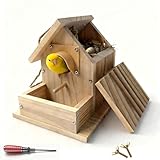
- Premium Weather-Resistant Material: Crafted from ultimate high-grade natural cedar wood, this bird house offers superior resistance to sunlight, wind, and rain. Meticulously made, the wooden structure is exceptionally sturdy, ensuring long-lasting durability in outdoor environments
- Complete DIY Kit - 1 bird house (10 components + Awning + screws) and 1 screwdriver. You can easily assemble it by yourself with great fun to create an amazing bird shelter—no extra tools needed
- Wooden House Dimensions: 4.7" x 6.7" x 6.7"—compact for your yard, yet roomy enough for birds to nest comfortably
- Bird-Safe Ingenious Design - Circular windows: Deter predators (squirrels, large birds) to protect baby birds;Boost air flow for a cool, well-ventilated nest
- Hanging Position: Use the included sturdy hemp rope to hang it on backyard branches/vines, or mount it under eaves/walls—the bird house has two pre-drilled hanging holes on the back panel for easy installation. Its robust build withstands harsh weather, keeping the bird house intact season after season
- Define the target. For the widest variety of seed eaters, choose black-oil sunflower. For finches, consider nyjer and a small-port feeder. For ground-feeding birds, millet and a tray may fit better. For woodpeckers and nuthatches in cool weather, consider suet.
- Check the port size. Tiny nyjer needs tiny openings; a general tube feeder is not an efficient substitute.
- Check weather exposure. If the location is wet, favor a covered feeder or a design with reliable drainage. Open platforms require faster removal of damp food.
- Check cleanability. Do not buy a feeder that cannot be opened, scrubbed, rinsed, and dried completely.
- Plan storage. Keep every food dry and use moisture-sensitive foods, including corn and peanuts, quickly.
How to set up a maintainable station
Choose a location you can inspect and reach without difficulty. The most attractive feeder is a poor choice if refilling requires unsafe access or cleaning is easy to postpone. Keep seed contained, remove spilled food and hulls from the ground, and follow the product’s care instructions.
What’s actually slowing this PC down?
Pick the symptom - the matching free tool is one click away.
Start with one feeder rather than several. Observe which birds use it, how fast the seed disappears, and whether the ground stays clean. You can then add a specialized feeder for a demonstrated need instead of accumulating equipment that receives little use.
Cleaning routine: the brush is only one part of the job
Cornell’s feeder-cleaning guidance, published August 20, 2024, recommends cleaning seed feeders about every two weeks. Clean more often during heavy use or wet weather. Project FeederWatch gives a general weekly-to-every-couple-of-weeks interval for seed or suet feeders, with the exact timing determined by conditions. Follow the shorter interval when food is visibly damp, caked, or contaminated.
- Empty the feeder. Discard damp, moldy, or visibly contaminated food rather than mixing it with fresh seed.
- Take it apart. Remove the base, perches, ports, tray, and any removable screen or roof component according to the manufacturer’s instructions.
- Remove debris. Use the bottle brush to dislodge hulls, compacted seed, and residue from seams and narrow openings.
- Wash with soap and water. Scrub every food-contact surface by hand. A brush helps reach ports, but it does not replace washing.
- Rinse thoroughly. Remove all soap residue.
- Dry completely. Air-dry all pieces before reassembly and refilling. Moisture trapped inside a tube can spoil new seed.
- Clean the surrounding ground. Sweep up accumulated hulls and spilled food so they do not become a source of spoilage.
Inspect the feeder while it is empty. Replace cracked, warped, or corroded parts that cannot be cleaned reliably. Keep a spare brush or a second feeder only if it helps you rotate equipment while one unit dries; do not let extra equipment become an excuse to skip washing.
Hummingbird feeders require a separate schedule
Hummingbird sugar water spoils faster than dry seed. Cornell advises changing the solution every three to five days, and more often in hot weather. Clean hummingbird feeders at least weekly, using the product’s instructions for disassembly and rinsing. Do not add red food coloring or place sticky substances around feeding ports.
The Tool Desk
Outbyte Driver Updater FREEScan for outdated or missing drivers - takes under a minuteDriver Scan →Outbyte PC Repair FREERepair Windows errors before they cause bigger problemsFix Now →Because hummingbird care is more frequent than seed-feeder care, buy this equipment only if you can commit to the schedule. It is not necessary for a basic seed-feeding setup.
Also popular on Amazon
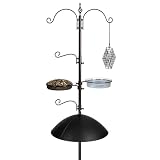
- MORE OF THE SEED GOES TO THE BIRDS – A wide dome baffle rides on the pole below the feeders and turns back squirrels trying to climb up from the ground, so more of the seed stays for the birds. Set the station at least 8 feet from buildings and trees and keep the baffle more than 5 feet off the ground, and it has the best chance to do its job.
- TALL ENOUGH TO BE THE CENTERPIECE – At 90 inches, this heavy duty bird feeder pole lifts the feeders well above the garden beds and gives the baffle room to sit high on the pole, with four hooks spreading out around the top. The black finish with a subtle gold fleck looks at home in a flower garden or beside the patio.
- SEED, SUET AND WATER IN ONE STOP – The kit comes ready to feed a crowd, with a suet feeder, a wire mesh feeding tray for mealworms, fruit or nuts, and a water dish. Hang your own seed and hummingbird feeders from the four hooks and the whole station works from one spot in the yard.
- SETS IN LIKE A GARDEN STAKE – The five-prong base spreads out beneath the pole and presses into lawn or garden soil underfoot, so there's no hole to dig and no concrete to mix. Push the prongs all the way down in firm ground and the station holds steady with every feeder hung.
- EASY TO BUILD, EASY TO MOVE – The pole sections bolt together with the hex wrench that comes in the box, the six baffle panels snap into a dome that locks onto its holder, and the base presses in by foot. When you want a new view from the window, the base lifts out of the ground and the whole station moves with it.
Health, safety, and local rules
Bird-feeding practices vary by location. Check municipal, condominium, landlord, or community rules before installing a feeder, and choose a setup you can maintain under those rules.
If birds appear sick, Project FeederWatch recommends increasing cleaning and considering temporary feeder removal. The appropriate response depends on the suspected disease and local circumstances, so do not continue normal feeding simply because seed remains available. Remove spoiled food, clean equipment, and seek local wildlife guidance when illness persists or spreads.
Ground hygiene matters even when birds look healthy. Wet seed, hulls, and droppings accumulate beneath busy stations. Remove them routinely and reconsider the feeder location or quantity if you cannot keep the area clean.
Do these 3 things before closing this tab:
1Repair Windows errors before they cause bigger problems2Fix the driver behind crashes, sound loss and screen glitches3Clear out junk files and repair common Windows errorsWhen native planting is the better choice
A feeder is not the only way to help birds. Native trees and shrubs supply natural food, cover, and habitat without requiring seed purchases or a washing schedule. Choose plants native to your specific region rather than relying on a generic national list. Container plants can provide a smaller-scale option where a yard or garden bed is unavailable.
Native planting is especially practical when local restrictions prohibit feeders, wildlife is attracting unwanted visitors, or you know you cannot maintain equipment every one to two weeks. You can also combine plants with a single, well-maintained feeder.
Also popular on Amazon

- Non-GMO, Corn & Soy-Free: Made with high-quality ingredients to support healthy chick growth. This starter chick feed is free from genetically modified organisms and soy, ensuring a cleaner and more natural diet. A great choice for poultry owners looking for chick feed that prioritizes wholesome nutrition.
- High 22% Protein: Packed with protein to support muscle growth, strong bones, and healthy feather development. Ensures each chick receives the necessary nutrients for optimal energy and vitality. A great option for raising healthy, thriving birds, making it an ideal chick starter feed.
- Balanced Nutrition for Healthy Growth: Specially formulated to provide balanced nutrition for young chickens. This feed contains essential vitamins and minerals needed for early-stage development, making it the ideal baby chick food starter to help them grow strong and healthy.
- Boosts Immunity & Digestion: Fortified with essential vitamins and minerals for easy digestion and nutrient absorption, making it the perfect baby chick starter kit for long-term health.
- Available in 10 lb & 40 lb Bags: Convenient sizes to fit both small and large poultry operations. Perfect for backyard chicken keepers, homesteaders, and small farms. A dependable choice for chick starter food and baby chick supplies to support healthy growth and development.
Troubleshooting common shopping mistakes
“The seed is left behind.”
Check the ingredient list for filler-heavy mix and consider switching to black-oil sunflower. Remove old seed rather than topping it off. If you are using a specialty food, confirm that the feeder ports fit it.
“Seed keeps getting wet.”
Move to a covered design, improve drainage, or reduce the amount offered at one time. Never leave clumped or moldy seed in the feeder.
Recommended Free Tools
“The feeder is difficult to wash.”
Disassemble it fully and test whether your brush reaches every chamber. If not, replace it with a simpler model. Ease of cleaning is a selection criterion, not an optional convenience.
“Squirrels or dominant birds take over.”
Reconsider the feeder type and placement, and avoid adding more food until you can keep the station clean and accessible to the birds you intend to serve. A hopper may be more accessible to squirrels, while an open platform can attract a broad range of dominant visitors.
“I want more species immediately.”
Do not buy every specialty food at once. Begin with sunflower seed, observe visitors, and add nyjer, millet, suet, or a tray only when the observed birds and your maintenance capacity justify them.
A final purchase checklist
- Black-oil sunflower seed stored dry
- Tube feeder that opens completely and has suitable ports and perches
- Bottle brush or dedicated feeder-cleaning brush
- A location you can reach, inspect, and keep free of spilled food
- Optional nyjer and small-port feeder for finches
- Optional tray with drainage for ground-feeding species
- Optional suet and washable cage for cool-weather, high-energy feeding
- Regionally native plants if you prefer natural food or cannot maintain feeders
That list keeps the first purchase focused: broad-use food, a cleanable feeder, and the tool needed to care for it. Add complexity only when a particular bird, season, or habitat goal makes it worthwhile.






Say something about this film