Recommended Free Tools
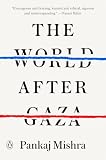
In The World After Gaza: A History, Pankaj Mishra argues that the war in Gaza cannot be understood apart from colonialism, Holocaust memory and the postwar international order. He says Western political, military and cultural power—and the responses of governments, institutions and media—helped shape how the destruction was enabled, seen and answered. These are Mishra’s interpretations, not settled findings; the book has also drawn criticism for what its framework leaves out.
What is The World After Gaza?
Pankaj Mishra’s The World After Gaza: A History was published by Penguin Press in 2025. His bibliography describes it as a historical and political account of the war in Gaza and its global reverberations, focused on how Holocaust memory, colonialism and the postwar international order shape the present conflict. Mishra’s bibliography presents that scope as the book’s frame, not as a neutral consensus about the conflict.
| # | Preview | Product | Price | |
|---|---|---|---|---|
| 1 |
|
The World After Gaza: A History | $1.99 | Buy on Amazon |
| 2 |

|
Being Jewish After the Destruction of Gaza: A Reckoning | $16.80 | Buy on Amazon |
| 3 |

|
The World After Gaza: A History (Chinese Edition) | $56.00 | Buy on Amazon |
| 4 |

|
Reclaiming Judaism from Zionism: A Moral Imperative after the Gaza Genocide | $25.00 | Buy on Amazon |
| 5 |

|
The Scariest Book Ever | $8.40 | Buy on Amazon |
The book is therefore not simply a chronology of events in Gaza. Mishra uses the conflict to examine how histories of power and memory inform contemporary political choices and public responses.
How does Mishra say the West participates?
Mishra’s argument, as set out in a January 2025 excerpt and a February interview, extends beyond direct military involvement. He looks at political decisions, cultural authority and media responses, arguing that Western power can influence both the conditions in which violence unfolds and whether it is acknowledged or challenged. The excerpt published by Scroll presents his contention that Western military and cultural power helped obscure or deny the destruction in Gaza, and that responses reflected racial inequities and a failure of shared moral obligation.
Free tools Windows power users keep installed
One-click scans. No signup required.
#1 Best Overall
That is Mishra’s interpretation of particular leaders, institutions and public responses; it should not be generalized into a claim that every Western government, institution or person acted alike. In a February 13, 2025 Democracy Now! interview, Mishra said he “felt almost compelled to write this book, to alleviate my demoralizing perplexity before an extensive moral breakdown.” The interview transcript identifies itself as a rush transcript.
Visibility and moral response
The Scroll excerpt focuses on the gap between images of suffering and political action. Mishra quotes Irish lawyer Blinne Ní Ghrálaigh describing victims as “broadcasting their own destruction in real-time in the desperate, so far vain, hope that the world might do something.” This is Ní Ghrálaigh’s attributed statement reproduced in the excerpt, not an independently verified finding about the conduct or response of all governments.
Mishra also places Gaza within what he calls a “vast panorama of violence, disorder and suffering that we’re seeing today.” His broader frame asks readers to consider how histories of colonial power and unequal attention shape contemporary judgments. The excerpt and interview offer his argument; they do not, on their own, settle disputes over responsibility or establish current casualty figures.
What are the main criticisms of Mishra’s framing?
In a February 8, 2025 review, Charlie English called the book an “erudite yet flawed analysis.” English agrees that colonialism and Israel’s place in the world are central to Mishra’s account, but argues that the book’s emphasis on settler colonialism does not fully represent other relevant histories and actors. The Guardian review identifies several specific concerns:
- English says Mishra gives insufficient weight to Jewish religious-national connections to the land.
- He argues that the book does not adequately account for Mizrahi Jews, whose families have deep historical roots in the Middle East.
- He criticizes its limited treatment of Iran and its proxies.
- He says Hamas receives little attention in the main text.
These objections do not erase Mishra’s central argument, but they identify questions readers can use to assess its reach: how much explanatory weight colonialism and racial hierarchy should carry; how the book discusses Holocaust memory and Zionism; and whether it sufficiently addresses Jewish histories, Hamas and regional actors. The review is a critic’s assessment, not a substitute for reading the book or an independent adjudication of each disputed point.
Independent reader supportYour contribution helps us test, update, and keep practical guides available for everyone.How to read the book’s argument
A useful approach is to keep three levels distinct: what Mishra argues, what his sources and examples establish, and what reviewers say his framing omits. The book’s stated focus is the relationship between Gaza and larger histories of memory, colonialism and international order. The Scroll excerpt illustrates how Mishra connects that history to media and political responses; English’s review tests the breadth and balance of that connection.
No current casualty or displacement statistic is included here: the cited materials do not establish a sufficiently verified, up-to-date figure. The article’s focus is Mishra’s argument and its published criticism, rather than a numerical account of the war.
Quick Recap
Best Value
Product prices and availability are accurate as of the date/time indicated and are subject to change. Any price and availability information displayed on Amazon at the time of purchase will apply.