Recommended Free Tools
Some links on this page are affiliate links: if you buy through them we may earn a commission, at no extra cost to you.
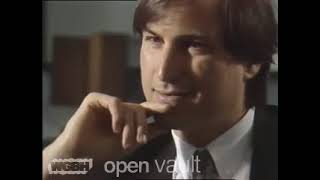
Yes—the footage is a genuine 1990 interview with Steve Jobs, recorded for the PBS/NOVA documentary series The Machine That Changed the World. The approximately 50-minute version circulated online is an extended presentation of archival interview footage, reportedly including outtakes; it is not a newly conducted interview or necessarily the same edit broadcast in the series.
Start with PBS/NOVA’s account and its reference to the WGBH Open Vault archive and transcript. A YouTube copy described as including outtakes is another way to find the footage, but it is a user-uploaded copy, not proof of an official PBS release.
| # | Preview | Product | Price | |
|---|---|---|---|---|
| 1 |

|
Steve Jobs | $10.48 | Buy on Amazon |
| 2 |
|
Steve Jobs: The Man Who Thought Different: A Biography | $8.79 | Buy on Amazon |
| 3 |

|
Steve Jobs | $19.63 | Buy on Amazon |
| 4 |

|
Steve Jobs Biography: The life of a visionary | $14.98 | Buy on Amazon |
| 5 |

|
Becoming Steve Jobs: The Evolution of a Reckless Upstart into a Visionary Leader | $16.41 | Buy on Amazon |
What the 50-minute Steve Jobs video is
PBS/NOVA identifies the interview as a 1990 recording made for The Machine That Changed the World, a documentary miniseries about computing. The series aired in 1991. The recording date, broadcast date, and later online circulation are different moments: technology sites linked to the extended footage in November 2011, but the interview itself predates that coverage by more than two decades.
Contemporary accounts and the currently indexed YouTube description call the online version about 50 minutes long and describe it as including outtakes. “Full interview” is best understood as an extended version made available online, not a guarantee that every minute of the original shoot survives in it. The documentary used selected footage; the online presentation gives viewers a longer look at the conversation.
Popular on Amazon
How PBS got Jobs to participate
PBS says Jobs initially declined the interview, and Robert Noyce—Intel co-founder and an influential figure in Silicon Valley—helped persuade him to take part. Noyce’s own interview for the project was recorded about a month before his death in spring 1990. Jobs was 35 when he sat for the camera.
The timing matters. Jobs had left Apple and was working in the NeXT era. The interview captures his thinking outside the company he co-founded, before his return to Apple and the product launches that later defined its public image. PBS places the conversation among interviews with figures including Steve Wozniak, Bill Gates, and Alan Kay.
Also popular on Amazon
What Jobs discusses in the interview
Descriptions of the footage identify a conversation about personal computers, their purpose, and the people who use them. Rather than treating every theme as a prediction, it helps to read the interview as Jobs explaining what he thought made computing useful and compelling in 1990.
Why people buy personal computers
Jobs considers what draws people to computers and how affordability and consumer products can make computing widely available. The underlying question is not only what a machine can calculate, but why an ordinary person would want one.
Also popular on Amazon
Computers as tools for thought and creativity
The footage is associated with Jobs’s “bicycle for the mind” analogy: a computer as an instrument that extends human capability. Contemporary coverage connects the phrase to this interview, but that reporting alone is not a transcript. For exact wording, consult the archive transcript rather than treating a repost’s captions or a quotation in secondary coverage as definitive.
The Macintosh, graphical computing, and Xerox PARC
Coverage of the interview identifies discussion of the Macintosh and Xerox PARC, including the origins of graphical-computing ideas. The historical interest is in how Jobs talks about turning technical concepts into products people can understand and use—not in reducing the history of graphical interfaces to one person or one company.
Also popular on Amazon
Networking and connected computers
Jobs also discusses networking and the future of computing. These remarks can sound prescient to viewers accustomed to always-connected devices, but they belong to a 1990 conversation about computers and networks. They should not be recast as specific forecasts of later products or services unless the footage itself supports that reading.
NeXT and life after Apple
Because the interview took place during the NeXT period, it offers a view of Jobs’s post-Apple work and priorities. Its context is valuable: this is not a retrospective account shaped by his later return or by the success of products that had yet to appear.
Also popular on Amazon
Design, typography, art, and science
The themes described in accounts of the footage also include design, typography, art, and science. They show why Jobs’s case for computers was broader than raw technical capability: the machine’s interface and the experience of using it were part of the product.
Independent reader supportYour contribution helps us test, update, and keep practical guides available for everyone.How to watch the footage and check its provenance
- Use the PBS/NOVA page as the starting point. PBS’s production-history page confirms the interview’s documentary context and points readers toward the WGBH Open Vault archive and transcript. Availability of an archive player or transcript can vary by location and over time.
- If necessary, try the indexed YouTube copy. The available YouTube listing describes an approximately 50-minute version with outtakes. Treat it as a rehosted copy; its presence does not establish that PBS or WGBH published or authorized that upload.
- For the television edit, look for the documentary through licensed sources. PBS, WGBH, libraries, or archival services may offer access, but availability is not guaranteed in every region.
- Check the description and credits. A credible copy should identify The Machine That Changed the World, PBS/NOVA or WGBH, and the 1990 recording context. Be wary of edits presented as complete interviews, modern narration without source information, or titles claiming Jobs explained a later Apple product.
How to judge the interview without hindsight
The footage is historically revealing because Jobs talks about accessible computing, interfaces, networks, and the cultural role of technology before the public expansion of the Web and before the iPod, iPhone, and iPad. That chronology makes comparison tempting, but not every broad idea is a precise prediction. Some topics were already part of the technology conversation; some remarks may look more exact after later events; and a clip alone cannot settle how accurate a prediction was.
A sound reading separates what Jobs actually says from what viewers infer. Use the transcript or video to verify quotations, and distinguish an idea about networked information or consumer-friendly design from a claim that he foresaw a particular later device. The interview’s value is not that it foretells every chapter of Apple’s history; it preserves Jobs articulating priorities during a specific period of his career.
Crashes, No Sound, or Screen Glitches?
Random freezes, missing sound and display glitches usually trace back to one bad driver. Find and replace yours safely.Free scan · under a minuteWindows Errors? Fix Them Before They Spread
Repair common Windows errors and clear accumulated junk for a smoother, more stable PC - no reinstall needed.Free scan · no reinstallWhy the interview remains worth watching
This is a rare chance to see an extended archival conversation with Jobs at 35, between his first Apple era and his return to the company. PBS describes it as one of a limited number of interviews he gave during his lifetime. Read or watch it as a primary historical document: the 1990 interview was made for a 1991 computing documentary, while the widely shared online version surfaced in a much later media moment.






Say something about this film