What’s actually slowing this PC down?
Pick the symptom - the matching free tool is one click away.
Some links on this page are affiliate links: if you buy through them we may earn a commission, at no extra cost to you.
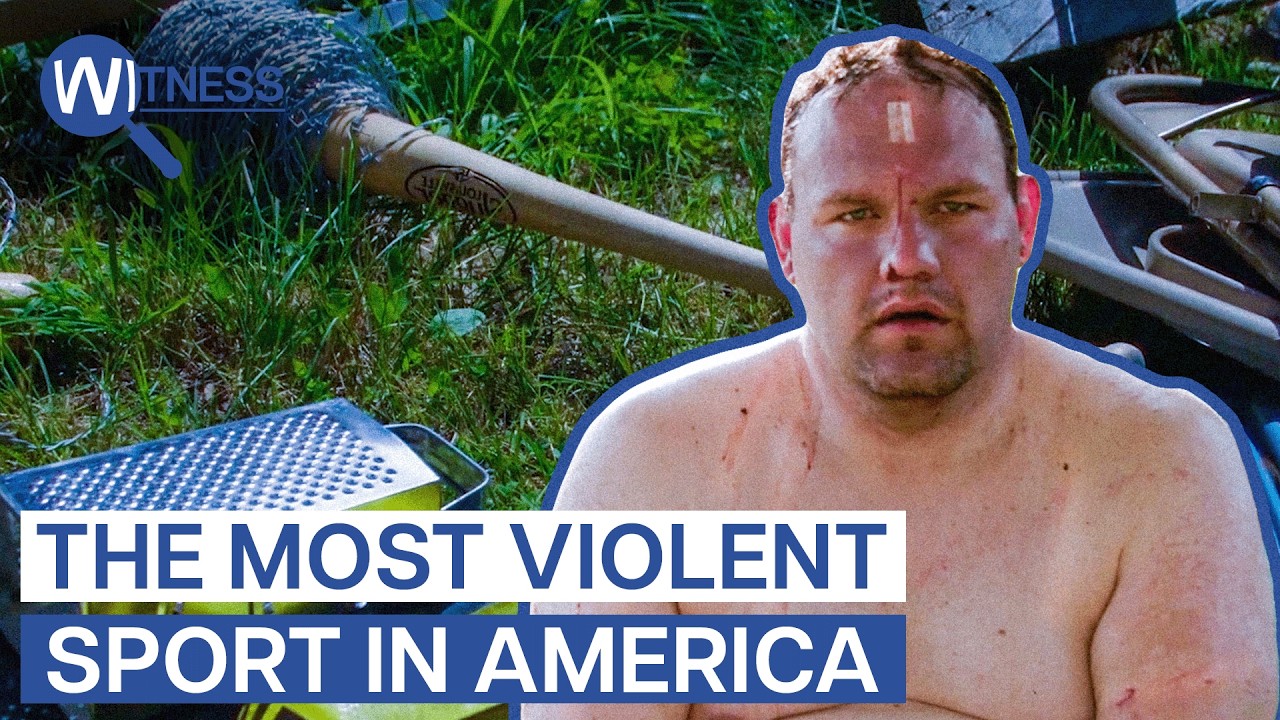
Ultraviolent wrestling injuries are usually real lacerations and puncture wounds from fluorescent tubes, glass, barbed wire, thumbtacks and staples; the most dangerous cases involve an opened artery, severe burns or a serious head injury. Immediate care may be pressure and tape, but embedded debris is removed by someone with medical training and wounds are commonly closed with sutures, staples or glue. When bleeding is arterial or a wrestler is unconscious, the match stops and the performer goes to hospital. There is no reliable injury percentage for deathmatch wrestling, so the evidence comes from documented incidents, interviews and historical reporting rather than a medical registry.
What does “ultraviolent wrestling” mean?
Ultraviolent wrestling is the deathmatch branch of hardcore professional wrestling, not ordinary scholastic wrestling and not simply a no-disqualification match with a chair. In this format, foreign objects are built into the match: broken glass, fluorescent light tubes, barbed wire, thumbtacks, staples, fire and sometimes explosives. Combat Zone Wrestling (CZW) used the name “Ultraviolent Rules” for matches involving ladders, tables, chairs, nails, barbed wire, light tubes, glass, fire and staple guns, while independent histories place the style’s first CZW deathmatch tournament on 20 May 2000. The terminology and weapon lists are summarized in the overview of hardcore wrestling, with additional history from Pro Wrestling Post and Ring History.
The roots go back further. Japan’s Frontier Martial-Arts Wrestling (FMW), founded in 1989, developed barbed-wire ropes, timed C4 devices, exploding ropes and so-called “land mines.” Big Japan Pro Wrestling continued the deathmatch tradition. In the United States, CZW, IWA Mid-South and Game Changer Wrestling (GCW) became prominent settings for tube, glass and barbed-wire matches. A 2024 history describes “ultraviolence” as the point at which glass, light tubes and staple guns joined the more familiar tables, ladders and chairs.
PC Slower Than It Used to Be?
A free scan shows the junk files, broken settings and background clutter dragging Windows down - then fixes them in one click.Free scan · Windows 10 & 11Crashes, No Sound, or Screen Glitches?
Random freezes, missing sound and display glitches usually trace back to one bad driver. Find and replace yours safely.Free scan · under a minuteWhat injuries are common in ultraviolent wrestling, and how are they treated?
The recurring injury is a real cut or puncture, often with glass, wire, a tack or a staple still in the tissue. Ringside personnel may apply pressure or tape long enough to assess the wound, but definitive care usually means removing debris and closing the skin with sutures, staples or glue. The exceptional injuries are an arterial bleed, a serious burn or head trauma requiring hospital treatment.
Popular on Amazon

- 【90 Degree Full Function USB C Adapter】Supports the latest USB4 standard for up to 40Gbps of bandwidth, 8K video support, and up to 240W Fast charging; Support USB PD 3.1 Extended Power Range (EPR) including 140W, 180W and 240W. Your productivity is easily doubled. *Warm Tip: For the best fit, please make sure the USB-C port is fully exposed; thick or bulky cases may affect compatibility.
- 【Reliable Quality】Made from high-quality, scratch-resistant aluminum alloy, delicate metal frame. get excellent wear resistance and heat dissipation. Non-Slip Design for easier insertion and removal.
- 【Small and portable】Ultra thin size, ultra compact design, a petite physique that matches the minimalist design of your modern laptops. Coming with a slim figure that won't block the port next to the one it's plugged into.
- 【Compatibility】Widely work with most usb c, thunderbolt 4/3 devices. Compatibilit for ROG Ally, Steam Deck, Switch, MacBook Pro, Quest 3 VR headset, Surface Book 2, iPhone 18/17/16/15, Samsung Galaxy S23/S22/S21, Note 20/10, Google Pixel, ChromeBook, etc.
- 【Excellence Customer Support】If you experience any issues or cable failure, simply reach out to our dedicated customer service team. We provide a prompt response within 18 hours, providing you with the necessary technical support to resolve any concerns.
| Injury pattern | Typical mechanism reported | Documented treatment or outcome |
|---|---|---|
| Lacerations | Shattered fluorescent tubes, panes of glass, barbed wire, chairs or deliberate forehead blading | Pressure and tape initially; foreign-body removal; stitches, staples or glue |
| Puncture wounds | Thumbtacks, staples, wire and tube fragments | Debris removed by a nurse or medic, then wound closure and sometimes hospital care |
| Arterial bleeding | A tube shard entering the armpit or a blade cutting too deeply into the forehead | Match stoppage, emergency transport and hospital-level treatment rather than a simple dressing |
| Burns | Flaming wire, fire spots or an exploding “land-mine” board | Hospital assessment; one famous case involved second-degree burns and more than 20 stitches |
| Head injury | Blunt impact from a chair, concrete block or other object | Loss of consciousness can require emergency imaging and surgery; the available report is a single tabloid case |
How do light tubes, glass and barbed wire cause the damage?
Fluorescent tubes break into long, sharp glass shards. Wrestlers may break tubes over a body, stand in bundles of them or be thrown into tubes arranged on the ropes. A shard in the forearm can produce a deep, pumping gash; one in the armpit can reach a major vessel. Photographs from deathmatch events show nurses removing tube fragments and thumbtacks from backs and sides, rather than treating the wounds as theatrical makeup.
Glass panes and barbed-wire boards combine slicing and puncturing. Wire wrapped around a bat, chain or rope tears the skin and leaves the repeated scars that performers describe as a “roadmap.” Flaming or electrified wire adds thermal injury, and an explosive board can turn a laceration into a burn. A November 2018 account of matches in Mexico listed additional objects—road signs, meat hooks, lead pipes, knives, chainsaws, sledgehammers and crowbars—but that was one tabloid inventory, not a universal deathmatch equipment list. The recurring weapons across US and Japanese reporting are tubes, glass, wire, tacks and fire.
Thumbtacks and staples usually produce multiple small punctures. Staple-gun matches are designed to attach objects to skin, so the wound is both a puncture and a foreign-body problem. Blunt objects work differently: a chair or concrete block transfers force without slicing, creating risks of concussion, fracture or bleeding inside the skull.
Do deathmatch wrestlers really get cut, or is the blood blading?
Both occur. Blading—also called juicing or gigging—is a deliberate cut, usually on the forehead, where the scalp bleeds freely. “Juicing the hard way” means bleeding from the weapon or impact itself. A wrestler can blade to ensure visible blood while also sustaining a genuine tube or glass wound; photographs alone cannot identify the source.
The forehead is chosen because it produces dramatic bleeding and generally heals more readily than many other locations, but a blade can still go too deep and sever an artery. The clearest documented example is Erich Kulas (“Mass Transit”) at an ECW house show in 1996. He was 17, falsely claimed to be 21 and asked New Jack to blade him; the cut severed two forehead arteries, he lost consciousness and was hospitalized. A jury later declined to convict after finding that Kulas had requested the cut and misrepresented his age. This was a hardcore-show blading injury, not a fluorescent-tube incident.
Also popular on Amazon

- 5-in-1 Connectivity: Equipped with a 4K HDMI port, a 5 Gbps USB-C data port, two 5 Gbps USB-A ports, and a USB C 100W PD-IN port. Note: The USB C 100W PD-IN port supports only charging and does not support data transfer devices such as headphones or speakers.
- Powerful Pass-Through Charging: Supports up to 85W pass-through charging so you can power up your laptop while you use the hub. Note: Pass-through charging requires a charger (not included). Note: To achieve full power for iPad, we recommend using a 45W wall charger.
- Transfer Files in Seconds: Move files to and from your laptop at speeds of up to 5 Gbps via the USB-C and USB-A data ports. Note: The USB C 5Gbps Data port does not support video output.
- HD Display: Connect to the HDMI port to stream or mirror content to an external monitor in resolutions of up to 4K@30Hz. Note: The USB-C ports do not support video output.
- What You Get: Anker 332 USB-C Hub (5-in-1), welcome guide, our worry-free 18-month warranty, and friendly customer service.
Matt Tremont, a deathmatch wrestler interviewed by The Sun, drew the distinction plainly: “When we’re getting busted open, we’re getting busted open the hard way.” He also said the glass and barbed wire were real and that he had required staples in his head and stitches in his arm and back. The same interview says he had never broken a bone; that is one performer’s history, not evidence that fractures do not occur.
How do they stop the bleeding during a match?
Initial control is usually direct pressure, gauze or tape while a referee and medical person decide whether the wrestler can continue. Tape is not proof that an injury is minor; it may be a temporary measure or part of the performance. At GCW’s Dead On Arrival on 30 June 2022, Slade and Hoodfoot stabbed each other’s arms with halves of a broken light tube. Hoodfoot bled heavily, the referee attempted to tape the arm, and the match was stopped when the wound could not safely be managed. GCW founder Brett Lauderdale later said Hoodfoot was sent to hospital for stitches; Hoodfoot said afterward that the idea had been foolish.
The Tool Desk
Outbyte Driver Updater FREEScan for outdated or missing drivers - takes under a minuteDriver Scan →Outbyte PC Repair FREEClear out junk files and repair common Windows errorsFree Scan →Foreign objects must be removed rather than taped in place. A photo essay documented an off-duty nurse taking glass and thumbtacks from Danny Havoc’s back, and another image showed a broken tube being removed from a wrestler’s side at the 2014 IWA Mid-South King and Queen of the Death Match. These accounts support a simple principle: removal belongs to a medically trained person, not a wrestler digging blindly into a wound.
Once the performer reaches clinical care, newspapers and interviews describe sutures, staples or glue. Tremont reported many hospital trips for stitches or wound closure. “Glue” in these reports is a generic description; the sources do not identify a particular product, antibiotic, tetanus schedule or suture size. Those details should not be inferred.
What happens if a tube hits an artery?
An arterial wound changes the event from a cut that might be taped to a life-threatening emergency. The best-known example is Nick Gage at a Tournament of Death match. Reports from Pro Wrestling Post and Wrestling Inc say a broken tube entered his armpit and lacerated an artery. Blood sprayed, Gage reportedly asked for tape so he could continue, and Jon Moxley replaced him when he could not. He was airlifted.
Also popular on Amazon

- Sleek 7-in-1 USB-C Hub: Features an HDMI port, two USB-A 3.0 ports, and a USB-C data port, each providing 5Gbps transfer speeds. It also includes a USB-C PD input port for charging up to 100W and dual SD and TF card slots, all in a compact design.
- Flawless 4K@60Hz Video with HDMI: Delivers exceptional clarity and smoothness with its 4K@60Hz HDMI port, making it ideal for high-definition presentations and entertainment. (Note: Only the HDMI port supports video projection; the USB-C port is for data transfer only.)
- Double Up on Efficiency: The two USB-A 3.0 ports and a USB-C port support a fast 5Gbps data rate, significantly boosting your transfer speeds and improving productivity.
- Fast and Reliable 85W Charging: Offers high-capacity, speedy charging for laptops up to 85W, so you spend less time tethered to an outlet and more time being productive.
- What You Get: Anker USB-C Hub (7-in-1), welcome guide, 18-month warranty, and our friendly customer service.
Both outlets repeat Gage’s account that he was “legally dead” for seven minutes from blood loss. That figure is a wrestler’s recollection relayed by wrestling media, not a published hospital chart or measured resuscitation record. The same reports say he returned to a ring about a week later, but they do not provide a surgical report or a medically verified return-to-play assessment. The reliable lesson is the mechanism: an armpit tube wound can open a major artery and requires emergency transport, not ringside staples.
Which famous ultraviolent-wrestling injuries involved burns or head trauma?
In the King of the Deathmatch final between Cactus Jack (Mick Foley) and Terry Funk, an exploding barbed-wire or “land-mine” board caused second-degree burns to Foley’s arm. A summary of Foley’s memoir Have a Nice Day: A Tale of Blood and Sweatsocks says he needed just over 20 stitches. The “military-grade” description of the explosives comes from that memoir as retold by Cultured Vultures, not from an ordnance report, so it should not be treated as a technical specification.
David Arquette’s GCW appearance in Los Angeles in November 2018 illustrates a less catastrophic but still genuine wound. Nick Gage broke a fluorescent tube over Arquette’s head; Arquette left holding his neck, returned, was pinned and later posted that he was stitched up. Nine.com.au’s report describes a sutured neck laceration, not an arterial injury.
A separate Sun report from 21 November 2018 says an unnamed fighter in Mexico was knocked unconscious by a concrete block and underwent surgery to remove a brain clot. The indexed report gives no name, scan result or hospital record, so it is evidence of a reported single case—not proof that intracranial bleeding is routine in deathmatches.
Is there a doctor or paramedic at every deathmatch?
No universal staffing rule appears in the available sources. Some events have a nurse or paramedic present; others rely on local emergency services and hospital transfer. A documentary account of the Tournament of Death shows paramedics preparing before the show, and ABC’s report on Australia’s Deathmatch Downunder describes an on-site paramedic and strength-and-conditioning staff.
Also popular on Amazon

- Portable and powerful USB-C HUB: BENFEI USB Type-C HUB, with super-soft and knot-free silicone woven design cable, meets most mobile office needs. Compact, lightweight, stylish, and powerful portable USB C Hub equipped with 1 x HDMI port, 1 x 100W charging, and 3 x USB ports. 18-month warranty, 24-hour response, to ensure you feel at ease when using our product.
- Design centered on comfort and reliability: Thanks to BENFEI's end-to-end in-house cable production capability, in-house PCBA and assembly capability, using the industry's most advanced silicone woven design and process, 20cm cable in length, no knots, super-soft, the HUB is easy to use in all scenarios: laptop, tablet, stand etc. Super-soft, 25000+ life cycles, to meet your daily carrying and office needs.
- 100W Charging: Support up to 90W USB C pass-through charging via Type-C port to keep your laptop powered. 10W is reserved for other interface operations. No data and video function on the Type-C port.
- 4K HDMI Display: The HDMI port supports media display at resolutions up to 4K 30Hz, keeping every incredible moment detailed and ultra vivid. Please note that the C port of the Host device needs to support video output.
- Transfer Files in Seconds: Transfer files and from your laptop at speeds up to 10 Gbps with USB A 3.2 port. Extra 2 USB A 2.0 ports are perfectly for your keyboards and mouse.
That Australian promotion also required blood testing every six months, according to Joel Bateman. He presented it as an unusual safety measure, not an industry mandate. The same report says performers accepted that the style was dangerous and aimed to leave with superficial injuries. A waiver, a waiting paramedic and scheduled blood tests are different safety layers; one does not guarantee the others are present.
How serious is the blood-borne infection risk?
Repeated bleeding creates an infection-control problem because blood can contact another performer, a weapon or the ring environment. Awareness of HIV and hepatitis was one reason deliberate blading declined in mainstream wrestling in the mid-2000s. The documented legal example is Canadian wrestler Devon Nicholson’s allegation that he contracted hepatitis C after Abdullah the Butcher bladed him without consent. An Ontario court awarded Nicholson 2.3 million Canadian dollars in 2014, as reported by CBC and summarized in the blading history. That case concerned non-consensual blading, not a fluorescent-tube wound, but it demonstrates why blood exposure is not merely cosmetic.
The sources do not establish a deathmatch-wide hepatitis rate, vaccination policy, antibiotic practice or universal testing schedule. Those details vary by promotion and jurisdiction and should not be invented.
Independent reader supportYour contribution helps us test, update, and keep practical guides available for everyone.Are cuts more common than broken bones or concussions?
Accounts of this style consistently emphasize cuts, punctures, embedded debris and scars. They do not provide a case series that would support a percentage for fractures, concussions or brain bleeds. Tremont’s statement that he had never broken a bone is useful context for his own career, but it cannot be generalized to every performer.
Free tools Windows power users keep installed
One-click scans. No signup required.
Published wrestling-injury statistics measure different populations. A 2026 analysis of US emergency-department data estimated 370,089 wrestling-related visits from 2015–2024; about 84.9% involved people aged 18 or younger, with shoulders and heads the leading body regions and sprains and strains the most common diagnosis. A 2018 systematic review reported 16.3 injuries per 1,000 athletic exposures in amateur competition studies. Neither study examined adult ultraviolent professional matches. Borrowing those percentages for deathmatch wrestling would be a category error.
Also popular on Amazon

- 【Read before You Buy】 Note: This adapter is USB 2.0 version and cannot transmit HDM, VGA, or other video signals. Nevertheless, they are fully capable of charging devices,duplicating files, and can be seamlessly integrated with USB-C earphones, wireless network adapters, and SD card adapters.
- 【Easy to Use and Safe】Thanks to modern manufacturing techniques, we've made these adapters sufficiently compact so that they can remain inserted in your device without noticeable protrusion or inconvenience. This means you don't have to constantly plug and unplug them, reducing the likelihood of wear and misalignment, and making them more convenient to carry around.
- 【Reliable Quality】Engineered for enhanced durability, durable aluminum alloy shell material,get excellent wear resistance and heat dissipation,the male USB C and female USB connectors & the male USB and female USB C connectors are designed to be plugged and unplugged up to 20000 times. Provides data transfer, device charging, memory space expansion, and additional computer peripherals.
- 【Think more for you】Do you need to connect a USB-C-enabled device to an odd device that only has USB-A ports? Then these USB-A male to USB-C female adapters are made for you.Simply insert the adapter into the USB-A port on the device, and you can instantly connect your USB-C device to the device that originally didn't have the correct connection port.
- 【Trusted xiwxi Quality and Service】As a responsible brand seller, you will receive xiwxi's 12-month Quality assurance and lifetime friendly customer service, you're not just buying a product,you're investing in peace of mind with all-round quality and exceptional customer service.
For ultraviolent wrestling, “common” therefore means repeatedly described in interviews and incident reports, not a measured incidence rate. The defensible qualitative contrast is cuts and foreign bodies in deathmatches versus sprains, strains, shoulder problems and head injuries in youth or amateur datasets.
What should a viewer look for when comparing two incidents?
Four questions reveal the medical difference between apparently similar spots:
- Where did the blood come from? A chosen forehead cut is different from a tube shard or glass fragment that remains in the tissue.
- Who stopped the match? Tape may permit a continuation; a referee stoppage, hospital transfer or airlift signals escalating risk.
- What tissue was damaged? A skin laceration can be closed; a burn needs different care; a head impact may require imaging and surgery.
- What safety layer was actually present? A waiver, an off-duty nurse, a waiting paramedic and a promotion’s blood-testing program are not interchangeable safeguards.
These distinctions explain why Hoodfoot’s taped arm and Gage’s airlift can both begin with a broken light tube yet end in entirely different ways.
What can the evidence—and cannot the evidence—tell us?
The sources support a clear treatment ladder: pressure or tape during the action, trained removal of glass or tacks, closure with sutures, staples or glue, and hospital or helicopter transfer when bleeding is arterial or consciousness is lost. They do not support a return-to-wrestling timetable, a concussion protocol, an antibiotic recommendation, a lifetime risk of arthritis, CTE or hepatitis, or a universal rule for medical staffing. The most accurate account is therefore specific about what happened in each documented case and cautious about generalizing from it.
Frequently Asked Questions
Can a deathmatch wrestler return to competition after stitches?
The sources describe performers returning quickly in some individual stories, including the reported Nick Gage account, but they provide no medically verified timetable or universal clearance rule. Whether someone can safely return depends on the wound, bleeding control, infection risk, neurological findings and a clinician’s assessment—none of which can be inferred from a match video.
Are fluorescent light tubes specially made for wrestling?
The available data describes ordinary tubes being broken into shards or arranged in bundles, but it does not identify a standardized wrestling tube or manufacturing specification. Because the sources do not establish the tube type, claims about special construction or reduced danger would be speculation.
Why do some wrestlers keep going after a deep-looking cut?
Continuing is part of the performance culture, and wrestlers may ask for tape or a brief dressing even when the wound is serious. Hoodfoot wanted to continue before officials stopped his match, while Gage reportedly asked for tape despite an arterial injury; those choices show intent, not medical safety.
What is the difference between a waiver and medical protection?
A waiver is a legal document about consent and liability; it does not remove glass, stop arterial bleeding or provide emergency transport. The reported safety measures range from a waiver alone to an on-site nurse or paramedic and, in one Australian promotion, periodic blood testing.




Say something about this film