Recommended Free Tools
Some links on this page are affiliate links: if you buy through them we may earn a commission, at no extra cost to you.
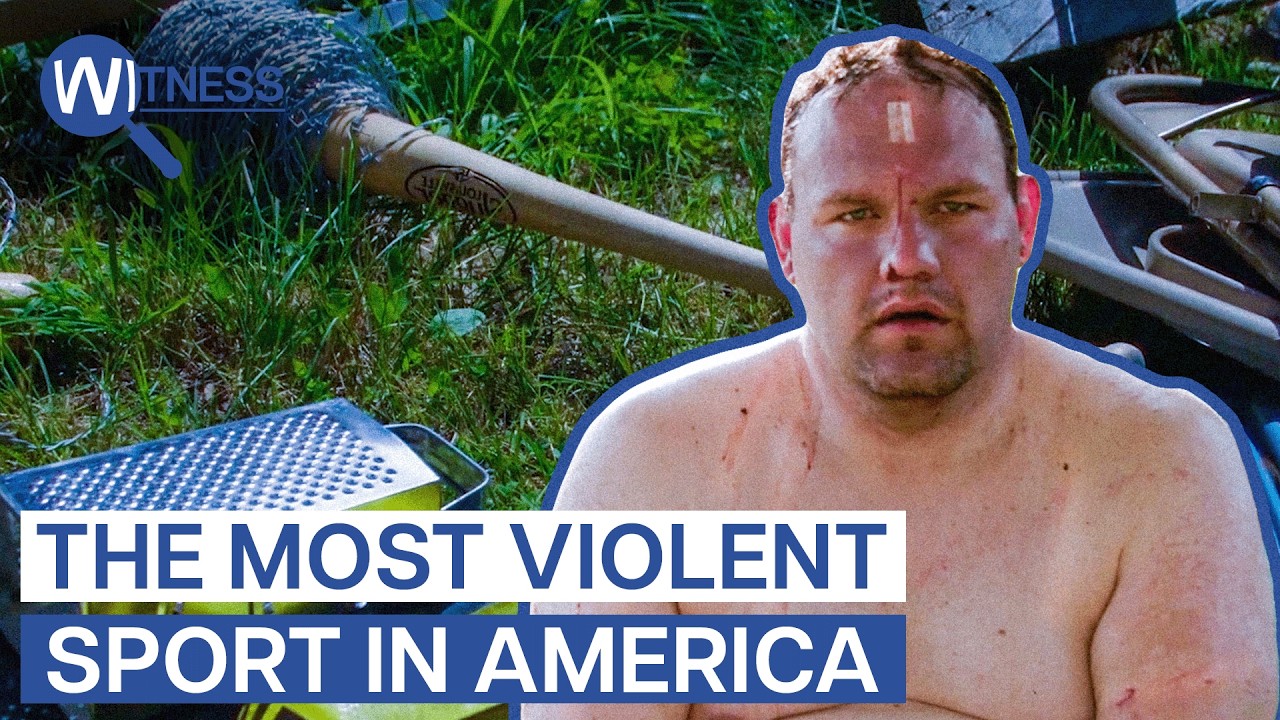
Deathmatch wrestling is scripted in its outcome but real in its physical consequences. Wrestlers agree on the finish and the major “spots” (planned stunts), while the cuts, broken glass, barbed wire, burns and impacts can cause genuine injury. Blood is often produced by a concealed blade cut to the forehead, although weapons and strikes sometimes open the skin by accident. The result is a performance, not a legitimate contest, but “scripted” does not mean harmless or fake.
The clearest distinction is between a work (planned action performed in character), a shoot (an unscripted departure from the plan), and kayfabe (presenting the fictional conflict as real). Understanding those terms explains why a match can have a predetermined winner and still leave a wrestler needing stitches.
What is deathmatch wrestling?
A deathmatch is a professional-wrestling stipulation in which unusually dangerous objects and effects are permitted. The winner is still normally decided by a pinfall or submission; the word “deathmatch” is not a promise that anyone will die. Fluorescent tubes, panes of glass, barbed wire, thumbtacks, fire and other hardware are used to create a spectacle of extreme violence.
As SBS News explains, professional wrestling is predetermined, but that is not the same as fake: the props used in deathmatch wrestling are real. A wrestler may know exactly when a tube will be broken and where a fall will land, yet still suffer a real cut, burn or concussion.
Popular on Amazon

- 【90 Degree Full Function USB C Adapter】Supports the latest USB4 standard for up to 40Gbps of bandwidth, 8K video support, and up to 240W Fast charging; Support USB PD 3.1 Extended Power Range (EPR) including 140W, 180W and 240W. Your productivity is easily doubled. *Warm Tip: For the best fit, please make sure the USB-C port is fully exposed; thick or bulky cases may affect compatibility.
- 【Reliable Quality】Made from high-quality, scratch-resistant aluminum alloy, delicate metal frame. get excellent wear resistance and heat dissipation. Non-Slip Design for easier insertion and removal.
- 【Small and portable】Ultra thin size, ultra compact design, a petite physique that matches the minimalist design of your modern laptops. Coming with a slim figure that won't block the port next to the one it's plugged into.
- 【Compatibility】Widely work with most usb c, thunderbolt 4/3 devices. Compatibilit for ROG Ally, Steam Deck, Switch, MacBook Pro, Quest 3 VR headset, Surface Book 2, iPhone 18/17/16/15, Samsung Galaxy S23/S22/S21, Note 20/10, Google Pixel, ChromeBook, etc.
- 【Excellence Customer Support】If you experience any issues or cable failure, simply reach out to our dedicated customer service team. We provide a prompt response within 18 hours, providing you with the necessary technical support to resolve any concerns.
A spot is one planned beat: a tube smashed across the torso, a trip into wire, a landing on thumbtacks, a fireball or the finish. Opponents map these beats before the match and improvise around them if something goes wrong. The broad story and winner are agreed; timing, balance and pain remain very real variables.
Is deathmatch wrestling real or fake?
It is scripted rather than a legitimate sporting contest, but the physical hazards are real. The most accurate answer is “predetermined and performed with genuine objects and genuine risk.” Calling it simply fake erases the injuries; calling it an unscripted fight ignores the planning and consent that make the match possible.
Deathmatch wrestler and promoter Joel Bateman described the style to SBS as “the Police Academy stunt show … crossed with a live-action horror movie with the performance art of pro wrestling.” His point is useful: stunt coordination and theatrical storytelling coexist with objects capable of cutting skin.
A shoot is what happens when someone abandons the agreed plan, whether through anger, a mistake or an attempt to cause unauthorized harm. Accounts of the New Jack–Vic Grimes feud include New Jack describing a later rematch as payback after a dangerous earlier fall; exactly what was intended remains disputed. The distinction matters because performing a planned weapon spot is not the same act as turning a performance into a real assault.
How does a planned blood spot work?
Most planned wrestling blood comes from blading (also called juicing, gigging or getting color), in which a wrestler makes a small cut during a moment hidden from the audience’s direct view. The individual cut is a blade job. The forehead is traditional because scalp wounds can bleed heavily and the flow down the face creates the “crimson mask” associated with the style.
Wrestling Inc.’s description of the practice says the blade is usually concealed on the wrestler or placed nearby, then used during the match. The industry rationale is that the forehead avoids major veins in the neck and limbs. That is a risk-reduction idea, not a guarantee: forehead arteries can be opened if a cut is too deep or badly placed.
Also popular on Amazon

- 5-in-1 Connectivity: Equipped with a 4K HDMI port, a 5 Gbps USB-C data port, two 5 Gbps USB-A ports, and a USB C 100W PD-IN port. Note: The USB C 100W PD-IN port supports only charging and does not support data transfer devices such as headphones or speakers.
- Powerful Pass-Through Charging: Supports up to 85W pass-through charging so you can power up your laptop while you use the hub. Note: Pass-through charging requires a charger (not included). Note: To achieve full power for iPad, we recommend using a 45W wall charger.
- Transfer Files in Seconds: Move files to and from your laptop at speeds of up to 5 Gbps via the USB-C and USB-A data ports. Note: The USB C 5Gbps Data port does not support video output.
- HD Display: Connect to the HDMI port to stream or mirror content to an external monitor in resolutions of up to 4K@30Hz. Note: The USB-C ports do not support video output.
- What You Get: Anker 332 USB-C Hub (5-in-1), welcome guide, our worry-free 18-month warranty, and friendly customer service.
Blood is often introduced after the match has built sweat and exertion. Sweat dilutes and spreads a small amount of blood across the face, making a shallow cut look dramatic on camera. Wrestlers have historically used razor fragments, but the health risks of shared or contaminated blades—including HIV and hepatitis transmission—made the practice less common in many promotions.
The Tool Desk
Outbyte Driver Updater FREEFix the driver behind crashes, sound loss and screen glitchesFind Drivers →Outbyte PC Repair FREEClear out junk files and repair common Windows errorsFree Scan →Not every wrestler who bleeds has bladed. A hard, accurate punch can split the skin above an eyebrow, and a weapon can produce the cut directly. Mick Foley wrote in The Hardcore Diaries that Terry Funk was among the few performers able to create convincing eyebrow blood that way. Women also blade in promotions that permit it; Britt Baker’s heavy bleeding against Thunder Rosa in 2021 is one documented example.
What does “juicing the hard way” mean?
“Hardway” blood is genuine bleeding caused by the strike or object rather than a hidden razor. A tube, chair, punch, barbed wire or a sharp edge can break skin. Jordan Whyte told SBS that after a fluorescent tube hit his face, he wiped away sweat and realized he was “gushing blood.”
Hardway and blading can occur in the same match. A real object may fail to open the precise wound a camera angle suggests, so a wrestler may blade to complete the visual. Combat Zone Wrestling owner DJ Hyde explained the logic in the VICE documentary Inside the Tournament of Death: a barbed-wire bat is real, but it may not reliably split the scalp, so a razor often supplies the color.
The result is not an either-or test of authenticity. Sometimes the tube or wire causes the blood; sometimes the blade does; sometimes both contribute. Without a medical examination or the participants’ account, a viewer cannot reliably identify the source from television pictures alone.
Do these 3 things before closing this tab:
1Fix the driver behind crashes, sound loss and screen glitches2Repair Windows errors before they cause bigger problems3Scan for outdated or missing drivers - takes under a minuteAre the light tubes, barbed wire and glass real?
Usually, yes. The important question is whether an ordinary object is being used as-is or whether a real object has been modified to create a particular effect.
Also popular on Amazon

- Sleek 7-in-1 USB-C Hub: Features an HDMI port, two USB-A 3.0 ports, and a USB-C data port, each providing 5Gbps transfer speeds. It also includes a USB-C PD input port for charging up to 100W and dual SD and TF card slots, all in a compact design.
- Flawless 4K@60Hz Video with HDMI: Delivers exceptional clarity and smoothness with its 4K@60Hz HDMI port, making it ideal for high-definition presentations and entertainment. (Note: Only the HDMI port supports video projection; the USB-C port is for data transfer only.)
- Double Up on Efficiency: The two USB-A 3.0 ports and a USB-C port support a fast 5Gbps data rate, significantly boosting your transfer speeds and improving productivity.
- Fast and Reliable 85W Charging: Offers high-capacity, speedy charging for laptops up to 85W, so you spend less time tethered to an outlet and more time being productive.
- What You Get: Anker USB-C Hub (7-in-1), welcome guide, 18-month warranty, and our friendly customer service.
- Fluorescent tubes: They are ordinary glass tubes, described by Bateman as “the same thing you’d find in your garage.” Supply and efficiency changes have made genuine tubes harder and more expensive to obtain in some regions, encouraging substitutions and improvisation.
- Barbed wire: The wire is real and catches skin, hair and clothing. It can be wrapped around a bat, the ring or another object. The barbed-wire baseball bat was popularized in Japan by Atsushi Onita and later became a signature American hardcore image through performers such as Mick Foley.
- Glass: Promoters generally prefer tempered glass. When tempered glass breaks, it granulates into many small pieces; annealed (untempered) glass produces long, dangerous shards and is rarely chosen deliberately. Tempered does not mean safe: fragments can cut, enter the skin or remain in a wound.
- Hardware: Thumbtacks, gusset plates, staple guns, concrete blocks, cactus and powered garden trimmers are ordinary items. Whyte compared gusset plates to the metal pieces that hold houses together, while Bateman likened a trimmer across the back to being struck repeatedly in a fraction of a second.
- Chairs and ladders: Deathmatch chairs are commonly steel. In some large mainstream productions, wooden ladders have been painted to resemble metal and weakened for reuse; that separate television gimmick should not be assumed for every independent deathmatch.
Which weapons are rigged for an effect?
Some spectacular props contain a controlled theatrical device rather than a hidden conventional weapon. An exploding barbed-wire bat is fitted with a pyrotechnic charge that produces a bang, sparks and smoke. An electrified bat used in Onita-style Current Blast matches can remain inactive until an operator triggers it. The charge is a special effect, while the surrounding wire and bat can still be physically dangerous.
“Thumbtack bats” and “light-bulb bats” are often built on plastic toy bats with real tacks or bulbs attached. Fireballs may use flash paper for a brief theatrical burst, although wrestlers have also set body parts or objects alight. Whyte said Bateman once ignited his own knee before driving it into an opponent’s face; fire, even when planned, can spread or burn beyond the intended area.
In “Fans Bring the Weapons” matches, the audience supplies objects. Hyde said a Tournament of Death pile had included items as extreme as a gun and a sharpened sword, but promoters use screening and staging methods rather than automatically putting every offered object into the ring. A fan’s contribution is therefore not proof that every object is used exactly as delivered.
What’s actually slowing this PC down?
Pick the symptom - the matching free tool is one click away.
How did deathmatch wrestling develop?
Blood and weapons predate the modern label. Historical accounts of British all-in wrestling, American territorial wrestling, Detroit, Puerto Rico and Memphis include brawling and intentional bleeding. The dedicated deathmatch format took shape in Japan with Frontier Martial-Arts Wrestling (FMW), founded in 1989. SBS dates FMW’s first Exploding Ring Death Match to 1990, when barbed-wire ropes and timed explosive effects became part of the promotion’s identity.
IWA Japan and Big Japan Pro Wrestling expanded the vocabulary with tubes, thumbtacks, flaming ropes and increasingly elaborate boards. Some historical matches involved live animals; those incidents belong to the record of the style, not to any safe modern practice.
In the United States, Extreme Championship Wrestling made hardcore violence central to its 1990s identity, though its typical matches were generally less extreme than Japan’s dedicated deathmatches. Sabu helped popularize table spots, and ECW alumni carried a milder weapons style into larger televised promotions. The former WWF’s Hardcore Championship used a 24/7 brawl concept in the late 1990s before being unified with the Intercontinental Championship in 2002.
Also popular on Amazon

- Portable and powerful USB-C HUB: BENFEI USB Type-C HUB, with super-soft and knot-free silicone woven design cable, meets most mobile office needs. Compact, lightweight, stylish, and powerful portable USB C Hub equipped with 1 x HDMI port, 1 x 100W charging, and 3 x USB ports. 18-month warranty, 24-hour response, to ensure you feel at ease when using our product.
- Design centered on comfort and reliability: Thanks to BENFEI's end-to-end in-house cable production capability, in-house PCBA and assembly capability, using the industry's most advanced silicone woven design and process, 20cm cable in length, no knots, super-soft, the HUB is easy to use in all scenarios: laptop, tablet, stand etc. Super-soft, 25000+ life cycles, to meet your daily carrying and office needs.
- 100W Charging: Support up to 90W USB C pass-through charging via Type-C port to keep your laptop powered. 10W is reserved for other interface operations. No data and video function on the Type-C port.
- 4K HDMI Display: The HDMI port supports media display at resolutions up to 4K 30Hz, keeping every incredible moment detailed and ultra vivid. Please note that the C port of the Host device needs to support video output.
- Transfer Files in Seconds: Transfer files and from your laptop at speeds up to 10 Gbps with USB A 3.2 port. Extra 2 USB A 2.0 ports are perfectly for your keyboards and mouse.
Combat Zone Wrestling (CZW) became closely associated with ultraviolent independent wrestling. A Ring History timeline dates its first deathmatch tournament to 20 May 2000. Game Changer Wrestling, Big Japan and Australia’s Deathmatch Downunder are other promotions identified with the form. In 2025, filmmakers Michael and Danny Philippou recorded an exploding-barbed-wire match at a GCW and Lucha Libre Vanguardia event in Pachuca, Mexico; the documentary’s title and release date had not been announced by the report’s September 2025 publication.
What happened in the famous Cactus Jack–Terry Funk explosion?
The match usually cited as the archetypal deathmatch is Cactus Jack (Mick Foley) versus Terry Funk in the final of IWA Japan’s King of the Deathmatch tournament in the mid-1990s. A board described as a C4 or “landmine” board exploded under Foley, causing second-degree burns to his arm. Foley’s memoir, as summarized by Cultured Vultures, says he received just over 20 stitches.
The injury is well documented in wrestling accounts; the exact explosive composition is not independently established here. “Military-grade C4” is Foley’s characterization, repeated by secondary coverage, rather than a verified explosives report. The defensible conclusion is that the charge was powerful enough to burn him, not that its military specification has been proven.
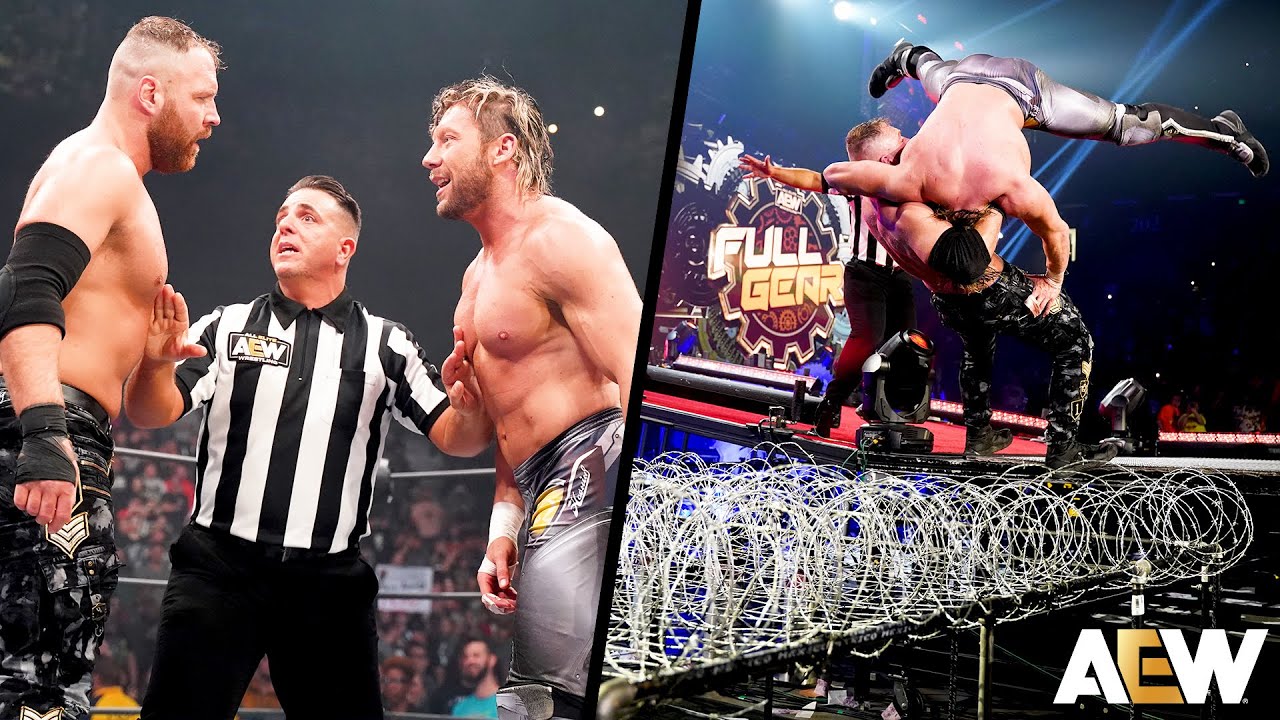
That distinction also explains criticism of AEW’s 2021 Exploding Barbed Wire Deathmatch between Kenny Omega and Jon Moxley. The finishing cue produced a small spray of sparks while Eddie Kingston shielded Moxley. In comments quoted by Wrestling Inc., Foley argued that a deathmatch should commit to one side of its audience contract: a convincing stunt or a conventional match, not an effect that feels halfway between the two.
Which promotions allow blading?
Policies vary by company, era and television rating, so a promotion’s reputation is not a permanent rule.
Crashes, No Sound, or Screen Glitches?
Random freezes, missing sound and display glitches usually trace back to one bad driver. Find and replace yours safely.Free scan · under a minutePC Slower Than It Used to Be?
A free scan shows the junk files, broken settings and background clutter dragging Windows down - then fixes them in one click.Free scan · Windows 10 & 11- WWE: The company restricted blading from July 2008 in connection with its TV-PG presentation. Accidental blood may be addressed by stopping a match, filming around it or showing replays in black and white. Blood has reportedly become somewhat more visible since Vince McMahon’s departure, but intentional blading remains rare.
- TNA/Impact: Wikipedia records a no-blood policy adopted in 2014. Wrestling Inc. reported another blading ban in May 2025 alongside the company’s relationship with WWE, with possible exceptions. The available sources do not establish when any earlier rule was relaxed.
- WCW: Dustin Rhodes and the Blacktop Bully bladed during the 1995 King of the Road match despite company policy; both were fired.
- AEW: Blading has appeared in matches involving wrestlers such as Jon Moxley and Adam Page, and the company has used wire, tacks, glass and deathmatch stipulations.
- Independent and Japanese promotions: CZW, GCW, Big Japan and Deathmatch Downunder are where the broadest weapon vocabulary is still found. Hyde said CZW required blood tests and multiple permits for its Delaware events. A 2016 documentary narrator described Delaware as one of only a few states where such shows were legal at the time; that is not a current state-by-state legal survey.
How dangerous is a deathmatch?
No reliable, genre-wide injury or fatality rate has been published. Individual cases prove that the hazards are serious, but they cannot be converted into a percentage for every promotion or match.
Also popular on Amazon

- 【Read before You Buy】 Note: This adapter is USB 2.0 version and cannot transmit HDM, VGA, or other video signals. Nevertheless, they are fully capable of charging devices,duplicating files, and can be seamlessly integrated with USB-C earphones, wireless network adapters, and SD card adapters.
- 【Easy to Use and Safe】Thanks to modern manufacturing techniques, we've made these adapters sufficiently compact so that they can remain inserted in your device without noticeable protrusion or inconvenience. This means you don't have to constantly plug and unplug them, reducing the likelihood of wear and misalignment, and making them more convenient to carry around.
- 【Reliable Quality】Engineered for enhanced durability, durable aluminum alloy shell material,get excellent wear resistance and heat dissipation,the male USB C and female USB connectors & the male USB and female USB C connectors are designed to be plugged and unplugged up to 20000 times. Provides data transfer, device charging, memory space expansion, and additional computer peripherals.
- 【Think more for you】Do you need to connect a USB-C-enabled device to an odd device that only has USB-A ports? Then these USB-A male to USB-C female adapters are made for you.Simply insert the adapter into the USB-A port on the device, and you can instantly connect your USB-C device to the device that originally didn't have the correct connection port.
- 【Trusted xiwxi Quality and Service】As a responsible brand seller, you will receive xiwxi's 12-month Quality assurance and lifetime friendly customer service, you're not just buying a product,you're investing in peace of mind with all-round quality and exceptional customer service.
- Arterial bleeding: Eddie Guerrero cut an artery while blading against JBL in 2004 and felt the blood loss for weeks.
- Mass Transit: At an ECW house show in November 1996, 17-year-old Erich Kulas lied about his age and asked New Jack to blade him. A surgical scalpel cut too deeply, severing two forehead arteries; Kulas passed out and was hospitalized. Charges were later dropped after a jury considered his request and false age claim. Kulas died in 2002, and the cited sources report no connection between that death and the cut.
- Brain and eye injuries: A missed New Jack–Vic Grimes spot sent the wrestlers roughly 15 feet onto concrete. SBS reports that New Jack suffered brain damage and lost sight in one eye.
- Hepatitis C: Devon Nicholson alleged that Abdullah the Butcher bladed him without consent and transmitted hepatitis C. An Ontario court ordered Abdullah to pay $2.3 million, according to a CBC report summarized by Wikipedia.
- Burns and embedded debris: Foley’s explosive-board burns and the routine removal of glass after CZW matches show that the aftermath is medical care, not makeup removal. The VICE film shows wrestlers picking fragments from wounds and expecting stitches.
Bateman told SBS that Deathmatch Downunder had run more than 60 events in five years without an insurance complaint or fan injury. That is a promoter’s account of one scene, not an audited safety record or evidence that deathmatches elsewhere carry the same risk.
How can you compare two deathmatches?
Do not judge authenticity by the amount of visible blood alone. Compare the matches on several separate axes:
- Work or shoot: Were the finish and weapon order agreed, or did someone leave the plan?
- Blade or hardway: Did a razor, the object, a strike or a combination produce the wound?
- Object or rig: Was it an ordinary tube, wire or tempered pane, or a pyrotechnic bat, sparking wire or flash-paper effect?
- Rules and broadcast context: A mainstream “extreme rules” match does not promise the same weapons as a CZW, Big Japan or Australian deathmatch.
- Medical and permit controls: Blood testing, trained officials, venue permits and post-match treatment are part of the risk picture even when highlights omit them.
The practical takeaway is that “real” describes the material danger and consequences, while “scripted” describes the agreed story and structure. Both descriptions can be true at the same time.
Free tools Windows power users keep installed
One-click scans. No signup required.
Frequently Asked Questions
Do deathmatch wrestlers actually die in the ring?
The name is a stipulation, not a prediction, and no verified death rate has been published for the genre. Documented matches have caused severe bleeding, burns, brain injury, eye loss and infectious-disease litigation, so the absence of a routine fatality does not make the format safe.
Why do wrestlers bleed from the forehead instead of somewhere else?
The scalp can produce a dramatic flow from a relatively small cut, and blood running down the face reads clearly on camera. Wrestlers traditionally regard the forehead as easier to conceal and less likely to involve major vessels than the neck or limbs, but deep forehead cuts can still strike arteries.
Can a viewer tell whether blood is blading or hardway?
Usually not with certainty from broadcast footage. Camera angle, sweat and the timing of a weapon hit can make a blade job look like an object wound, while a genuine cut can occur at the same moment as a planned spot.
Are exploding-ring matches using real explosives?
They use controlled pyrotechnic charges or similar theatrical effects, not an uncontrolled bomb attached to a wrestler. Some charges have caused genuine burns, but claims about specific military explosives should be treated as a participant’s description unless independently documented.
Quick wins for a faster PC:
Clear out junk files and repair common Windows errorsFree Scan →Scan for outdated or missing drivers - takes under a minuteDriver Scan →Repair Windows errors before they cause bigger problemsFix Now →What should first-time viewers know before attending a deathmatch show?
Check the venue’s age guidance, stand behind any designated barriers and expect flying fragments, loud effects and visible blood. Local permits and medical arrangements differ, so a documentary description of one event or state should not be treated as a guarantee for every show.


Say something about this film