Quick wins for a faster PC:
Repair Windows errors before they cause bigger problemsFix Now →Scan for outdated or missing drivers - takes under a minuteDriver Scan →Donald Trump ranked as the most frequently prompted public figure in Kapwing’s 2024 AI-video analysis, with 12,384 prompts. Elon Musk followed with 9,544 and Taylor Swift with 8,202—but this is a platform-specific snapshot, not a count of every deepfake circulating online.
The 2024 ranking, at a glance
Donald Trump was the most deepfaked public figure in 2024, according to a Kapwing analysis of 12,384 text-to-video prompts. Elon Musk ranked second with 9,544 prompts, while Taylor Swift ranked third with 8,202.
That result needs an important qualification: this was not a count of every deepfake on the internet. Kapwing measured prompts found on one AI-video platform, so the ranking is best understood as a snapshot of activity on that service—not a universal census of videos created, published, or viewed worldwide.
| Rank | Public figure | Reported prompts | Broad category | What the number means |
|---|---|---|---|---|
| 1 | Donald Trump | 12,384 | Politician | Highest number of text-to-video prompts in Kapwing’s dataset |
| 2 | Elon Musk | 9,544 | Business leader | Second-highest reported prompt count |
| 3 | Taylor Swift | 8,202 | Musician | Highest-ranked entertainer in the list |
| 4 | Joe Biden | 7,956 | Politician | Second politician in the top four |
| 5 | Tom Cruise | 2,308 | Actor | Highest-ranked actor |
| 6 | Dwayne Johnson | 1,970 | Actor and wrestler | Sixth overall |
| 7 | Cristiano Ronaldo | 1,948 | Athlete | Highest-ranked athlete |
| 8 | Mark Zuckerberg | 1,738 | Business leader | Eighth overall |
| 9 | Will Smith | 1,609 | Actor and musician | Ninth overall |
| 10 | Beyoncé | 1,328 | Musician | Completes the top 10 |
1. Donald Trump — 12,384 prompts
Trump ranked first by a substantial margin. His 12,384 reported prompts were 2,840 higher than Elon Musk’s total and more than five times the number recorded for Tom Cruise, the highest-ranked actor.
#1 Best Overall

- Privacy Protection and Lens Care: Avoid private information from hacking while preventing dust-fall and scratching of the camera lens
- Multiple Compatibility: Suitable for Logitech webcam C920x, C920, C922, C930e, C922x Pro Stream HD Camera
- Artful Design: Modeled and designed exclusively to fit the above devices from Logitech and make it more stylish
- Easy Flip Mechanism: Can be turned 180 angle and easily take the cover off when flipping more than 180
- Simple Installation: Attaches securely to your Logitech webcam without leaving residue, allowing for quick and hassle-free setup
The timing provides useful context. The 2024 U.S. election generated extraordinary political attention, and Trump was one of its central figures. That makes the political environment a plausible explanation for his prominence in the dataset, but it remains an interpretation rather than a measured conclusion. The ranking does not identify the purpose behind every prompt.
2. Elon Musk — 9,544 prompts
Musk placed second, with a total close to 10,000 prompts. His position reflects the unusual overlap of technology, business, celebrity, and political visibility surrounding him.
As with every person on the list, the figure represents reported prompts—not necessarily completed videos. The available methodology does not establish whether each prompt produced a usable result, whether the result was shared publicly, or whether it was intended to deceive anyone.
3. Taylor Swift — 8,202 prompts
Swift was the third-most frequently prompted public figure in Kapwing’s analysis and the highest-ranked musician. Her result also came during a year when synthetic media involving her received intense public attention.
What’s actually slowing this PC down?
Pick the symptom - the matching free tool is one click away.
In January 2024, widely reported nonconsensual explicit AI-generated images depicting Swift circulated online. Those images are relevant to the broader discussion of synthetic-media abuse, but they should not be folded into the Kapwing figure: Kapwing’s ranking concerns text-to-video prompts, while the reported images were a different form of generative media. The number of prompts is not the number of explicit images, posts, or views.
4. Joe Biden — 7,956 prompts
Joe Biden ranked fourth, making politicians the top two categories in the ranking and placing two U.S. presidential candidates in the top four.
Rank #2

- Privacy Protection: CloudValley webcam cover is designed for those who prioritize privacy, security, and peace of mind when using laptops, tablets, and computers
- Fashion Design: The space aluminum alloy webcam cover features a subtle design which compliments the beautiful aesthetic of top devices
- Ultra-Thin Design: Measures only 0.023 (0.6 mm) inch thin, ensuring it does not interfere with closing your laptop or device while providing reliable camera coverage
- Broad Compatibility: Works flawlessly with most laptops (MacBook, HP, Dell, Asus, Acer, Lenovo), All-in-One PCs and leading tablets including iPad, Surface Pro, Galaxy Tab, Fire HD, and Google Pixel Tablet
- Simple to Use: Only need to align to the webcam, attach and press it firmly for 15 seconds. Does not interfere with web use or indicator light
The result is consistent with the heightened political attention of 2024, but it does not tell us whether a given prompt was satire, political persuasion, experimentation, parody, a scam, or something else. A prompt count alone cannot classify intent.
5. Tom Cruise — 2,308 prompts
Tom Cruise was the fifth-most prompted public figure and the highest-ranked actor. His likeness also appeared in a separate example of synthetic-media influence activity: Microsoft’s Threat Analysis Center reported that a Russia-affiliated operation used Cruise’s likeness in a fake documentary connected to the 2024 Paris Olympics.
That case illustrates why celebrity impersonation can matter beyond entertainment. A familiar face can make a fabricated documentary, endorsement, or news-style claim appear more credible. However, the Cruise example does not show that the 2,308 prompts in Kapwing’s ranking were state-sponsored, malicious, or even published. It is a separate public-interest example, not an explanation of every entry in the count.
6. Dwayne Johnson — 1,970 prompts
Dwayne “The Rock” Johnson ranked sixth with 1,970 reported prompts. His presence reflects how people who are prominent across film, sport, television, and social media can occupy a particularly broad impersonation target.
7. Cristiano Ronaldo — 1,948 prompts
Cristiano Ronaldo ranked seventh, just 22 prompts behind Johnson. He was the highest-ranked athlete in the top 10, although the list includes public figures whose careers span more than one category.
8. Mark Zuckerberg — 1,738 prompts
Mark Zuckerberg ranked eighth. Like Musk, Zuckerberg combines business visibility with an association with the technology industry, making him recognizable both as an individual and as a symbol of the companies and platforms shaping artificial intelligence.
9. Will Smith — 1,609 prompts
Will Smith ranked ninth with 1,609 prompts. He is classified broadly as an actor and musician, illustrating why “celebrities” is a convenient but imperfect description of this list.
Rank #3

- Note: Not suitable for MacBooks released after 2023 or devices with a protruding front camera; Not applicable to full-screen or notch-style tempered glass screen protectors; Do not use on the rear camera of the phone.
- 💻 Why Do You Need a Webcam Cover Slide? — Safeguard your privacy by covering your webcam with our reliable webcam cover when not in use. Don't let anyone secretly watch you. Stay protected!
- ✅ Thin & Stylish — Enhance your laptop's functionality and aesthetics with our 0.027" ultra-thin webcam covers. Seamlessly close your laptop while adding a touch of sophistication.
- ✅ Fits Most Devices — Compatible with laptops, phones, tablets, desktops! Keep your privacy intact on Ap/ple, Mac/Book, iPh/one, iP/ad, H/P, L/novo, De/ll, Ac/er, As/us, Sa/msung devices.
- ✅ 365 Days Protection — Our upgraded 3.0 adhesive ensures a strong hold that won't damage your equipment. Experience reliable, long-term privacy protection day in and day out.
10. Beyoncé — 1,328 prompts
Beyoncé completed the top 10 with 1,328 reported prompts and was the second musician in the ranking after Taylor Swift.
How Kapwing produced the ranking
Kapwing first assembled a list of 500 influential figures in American culture using data associated with YouGov, Billboard, ESPN, and SocialBlade. It then manually counted text-to-video prompts in Pika AI’s most active free Discord channel.
That methodology explains both the usefulness and the limits of the results:
Free tools Windows power users keep installed
One-click scans. No signup required.
- It measures prompts. A prompt is an instruction submitted to an AI system. It is not automatically proof that a video was generated successfully.
- It focuses on one service. Activity on Pika AI’s channel cannot represent activity on other video generators, social networks, private groups, websites, or offline production workflows.
- It is U.S.-oriented. The pool of 500 figures was designed around American cultural influence, so internationally prominent figures may be underrepresented.
- It covers video prompts, not all deepfakes. The totals do not include a comprehensive count of synthetic images, cloned audio, manipulated photographs, pornography, advertisements, scams, or videos made elsewhere.
- It does not establish intent. The figures do not show whether prompts were made for parody, research, entertainment, political messaging, harassment, fraud, or other purposes.
For those reasons, the most accurate wording is: “According to Kapwing’s 2024 study, Donald Trump was the most frequently prompted public figure for AI-generated video among the people and platform activity it examined.” Saying he was “the most deepfaked person on the internet” would go beyond the evidence.
Why the ranking matters
Deepfakes are not simply a problem of imperfect-looking faces. Modern workflows can combine a person’s appearance with voice cloning, lip-syncing, facial animation, and conventional video editing. The result can be a persuasive clip that appears to show a public figure saying or doing something that never happened.
The risks are especially serious when a synthetic likeness is attached to a political claim, an urgent request for money, an investment opportunity, a product endorsement, or a supposed news report. A well-known face can function as borrowed credibility.
Rank #4

- 【Premium Webcam Cover】This webcam privacy cover is an accessory of computer webcam. No worry about interfering with web camera lens use or indicator light; No damage to your device in any way as well. A helpful privacy protector and dust separator
- 【Privacy Protector】Slide the web camera cover over your webcam lens when not in use, and prevents web hackers from Spying on you. It is perfect to provide privacy security and peace of mind to individuals, groups, organizations, companies and governments. It also protects your camera lens from dust, and keeps it in high-definition resolution all the ways
- 【Durable Material】The web cam cover is made of high-strength plastic, which ensures that your privacy is protected for a long and lasting period of time. The back of the web camera privacy cover slide also has a strong 3M adhesive layer. It helps the privacy protector stick firmly to your device. The most convenient, super thin design, and extra mini size, make it perfectly combine with your devices
- 【Wide Compatibility】This webcam cover is compatible with most popular webcams with flat area surrounding lens or with protruding lens, such as Logitech HD Pro Webcam C920 C920x C930e and C922, Logitech C615 and C270 (NOT fit Logitech C910, B910, C310). It can be also used as a cover for the peep hole on door
- 【For Logitech Webcam Cover】 The streamcam cover kit comes with 2 pack. Please clean the lens surface before applying. Make sure the mounting surface is cleaned completely so that it sticks properly and firmly
Federal agencies have warned that generative-AI tools can intensify impersonation fraud. Financial institutions have also been alerted to fraud schemes involving deepfake media. The Federal Trade Commission’s rules on consumer reviews and testimonials are relevant when fabricated celebrity endorsements are used to sell products or services.
Windows Errors? Fix Them Before They Spread
Repair common Windows errors and clear accumulated junk for a smoother, more stable PC - no reinstall needed.Free scan · no reinstallOutdated Drivers Are Slowing You Down
One free scan finds every outdated or missing driver and matches the right update for your exact hardware.Free scan · exact hardware matchOptional background reading
Readers who want a broader explanation of synthetic media, misinformation, and the social consequences of deepfakes may wish to read Deepfakes: The Coming Infocalypse by Nina Schick. It is background reading, not a source for the Kapwing ranking.
How to tell whether a celebrity video may be fake
No visual checklist can authenticate every video. Compression, dubbing, editing, unusual lighting, and a real person’s natural mannerisms can all create artifacts that look suspicious. Conversely, a sophisticated synthetic video may avoid obvious errors.
Still, the following warning signs are useful reasons to pause and investigate:
- The mouth, teeth, jaw, or speech timing does not quite match the audio.
- Facial movement appears disconnected from the person’s expression or head position.
- Hands, jewelry, hair, glasses, or other details change shape between frames.
- Blinking, breathing, gestures, or eye movement look repetitive or mechanically timed.
- The voice sounds unusually monotone, heavily processed, or inconsistent with authentic recordings.
- The clip makes an extraordinary claim but provides no original source, date, location, or full-length context.
- The supposed celebrity suddenly asks viewers to send cryptocurrency, gift cards, passwords, account details, or money.
- The video promotes an investment, supplement, gadget, charity, or financial service without confirmation from an official account or website.
These signs are clues, not proof. Treat detection tools as aids rather than universal truth engines. Verification should combine technical analysis with source checking and independent corroboration.
Recommended Free Tools
A practical verification checklist
- Find the earliest available upload. Check who posted the clip, whether that account is authentic, and whether the post gives a date and context.
- Look for an official confirmation. Check the public figure’s verified channels, the organization allegedly represented, or the relevant campaign, studio, team, or company.
- Search for independent reporting. A major announcement or scandal should not be accepted solely because one dramatic video is circulating.
- Separate the face from the claim. Even a real recording may be old, edited, dubbed, or presented out of context.
- Stop before acting. Do not transfer money, buy an investment, disclose login details, or share the clip simply because the voice and face appear familiar.
- Report suspected fraud. If you lost money or provided personal information, use official scam-reporting and recovery guidance promptly. Preserve the URL, messages, payment records, and screenshots.
Advice from the Cybersecurity and Infrastructure Security Agency emphasizes critical evaluation of sources and verification through trusted official channels. That remains more reliable than relying on a single visible artifact—or a detector score—without context.
What this top 10 does—and does not—tell us
The list shows that political leaders and technology executives occupied the top four places, while actors, musicians, and an athlete filled the remaining positions. It also shows a steep drop after Biden: Trump, Musk, Swift, and Biden each exceeded 7,900 prompts, while the fifth-place total was 2,308.
Best Value
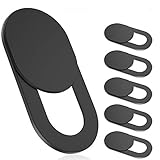
- 【Protect Privacy Security】Focusing on network security, now we can easily and effectively protect personal and family privacy security , Just gently slide the slide and close the camera, you can stop the intrusion of hackers.
- 【 Ultra Thin Design】The new ultra-thin design, with a thickness of only 0.022 inches, is made of flexible ABS material and is not fragile. Will not affect the closing of the laptops and scratch the laptops.
- 【Easy to install】 Strong adhesive makes the cover not fall, keep the screen clean and free of stains during installation, tear off the adhesive tape on the back, align it with our camera, and press hard for 10 seconds to work.
- 【Compatible with 】Compatible with camera for Laptop, tablet, computers, Echo Show and Apple Devices,as: MacBook Pro,Macbook Air,iMac ,Mac mini,iPad,MacBook Air, iPhone 6/7/8 Plus etc front camera .
- [What you get] 6 pack black webcam covers.
But the ranking cannot answer several questions readers may naturally ask. It does not tell us which person had the most completed videos, which likeness was used most maliciously, which fake reached the largest audience, or which celebrity suffered the greatest harm. It does not distinguish a private experiment from a public scam, and it does not measure synthetic audio or still images.
In short, the ranking is a measurement of prompting behavior in a defined research setting. It is valuable as a snapshot of who attracted AI-video prompts during a politically and culturally intense year, but it should not be mistaken for a complete inventory of deepfakes worldwide.
Frequently Asked Questions
Who was the most deepfaked celebrity in 2024?
According to Kapwing’s 2024 analysis, Donald Trump ranked first with 12,384 text-to-video prompts. The result measures activity on a specific AI-video platform, not every deepfake on the internet.
Does 12,384 mean that 12,384 malicious videos of Trump were published?
No. Kapwing counted prompts on Pika AI’s most active free Discord channel. The count does not establish that every prompt became a completed or published video, or that every prompt was malicious.
How can I tell whether a celebrity video is a deepfake?
No. A visual clue can suggest that a video deserves investigation, but it cannot definitively authenticate or disprove a recording. Check the original uploader, official sources, and independent reporting before acting on the claim.
What should I do if a deepfake celebrity endorsement causes me to lose money?
Do not send money, cryptocurrency, gift cards, passwords, or sensitive information. Save messages and payment records, contact the relevant financial provider quickly, and use official scam-reporting guidance if you shared information or lost money.
The Bottom Line
Bottom line: Donald Trump ranked first in Kapwing’s 2024 analysis with 12,384 text-to-video prompts, ahead of Elon Musk and Taylor Swift. The finding applies to the platform-specific dataset Kapwing examined—not to every deepfake created or circulated online—and a celebrity’s appearance in a video never proves endorsement, participation, or authenticity.
Quick Recap
Product prices and availability are accurate as of the date/time indicated and are subject to change. Any price and availability information displayed on Amazon at the time of purchase will apply.