Do these 3 things before closing this tab:
1Fix the driver behind crashes, sound loss and screen glitches2Repair Windows errors before they cause bigger problems3Scan for outdated or missing drivers - takes under a minuteSome links on this page are affiliate links: if you buy through them we may earn a commission, at no extra cost to you.
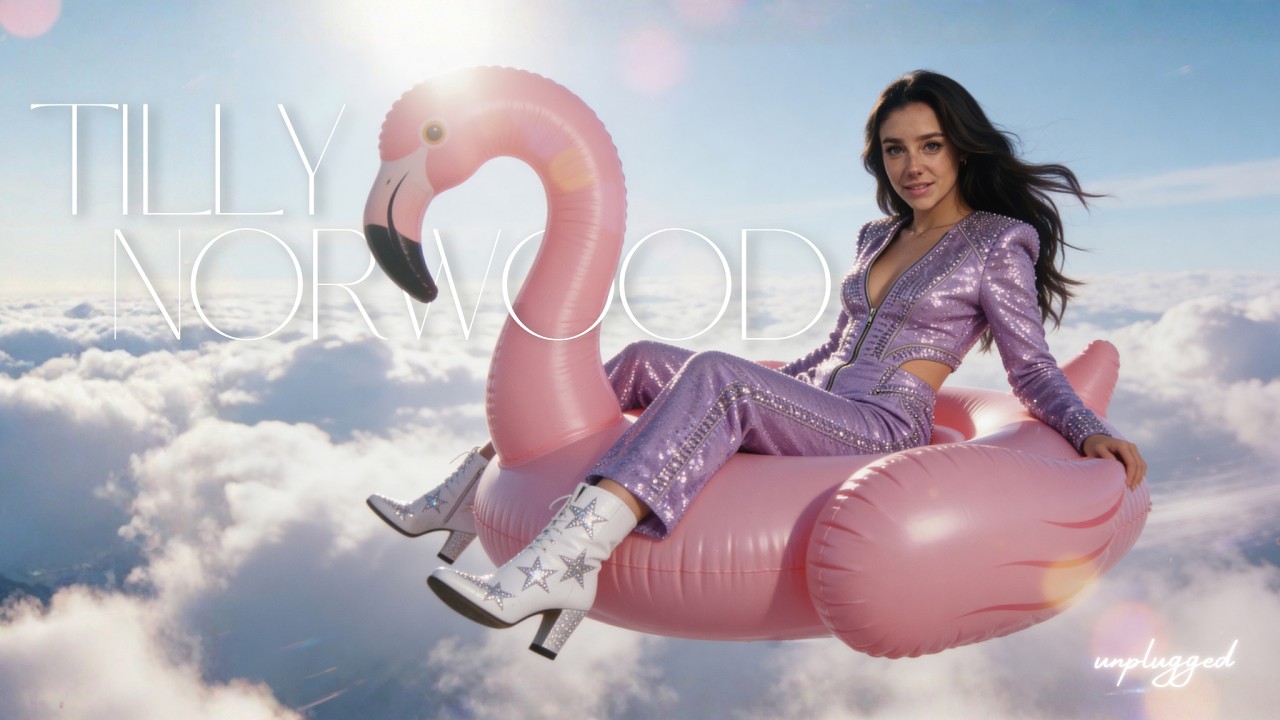
A synthetic actress sings that “AI’s not the enemy, it’s the key,” asks actors to embrace the technology, and then finds herself at the center of a backlash. Tilly Norwood’s debut, “Take the Lead,” is a roughly four-minute single and music video released on March 10, 2026, ahead of the Academy Awards. Calling it “the worst music video ever” is a critic’s judgment, not a measurable fact—but the release is a revealing test of how AI entertainment is being sold.
What Tilly Norwood actually is
Tilly Norwood is not a human actress or an autonomous digital person. She is a synthetic entertainment character created by actor and entrepreneur Eline van der Velden, founder and CEO of Particle6 and its AI talent studio, Xicoia. The creators describe her as an AI “actor” and plan a wider cloud-based fictional world called the Tillyverse, populated by AI characters who can interact, work and develop entertainment careers.
| # | Preview | Product | Price | |
|---|---|---|---|---|
| 1 |

|
The Greatest Hits Video Collection | $11.99 | Buy on Amazon |
| 2 |
|
The Dance | $16.24 | Buy on Amazon |
| 3 |
|
Journey: Greatest Hits 1978-1997 | $11.99 | Buy on Amazon |
| 4 |

|
Country Legends Greatest Hits[4 DVD] | $11.14 | Buy on Amazon |
| 5 |

|
Hip Hop Uncensored, Vol. 7: Hustle On | $12.95 | Buy on Amazon |
That terminology matters. Norwood’s apparent personality, performance and career are products of a human-led production process; the available material does not establish independent intentions, feelings or consciousness.
Quick wins for a faster PC:
Fix the driver behind crashes, sound loss and screen glitchesFind Drivers →Repair Windows errors before they cause bigger problemsFix Now →What was released on March 10, 2026?
Particle6 released the single and accompanying video “Take the Lead” on March 10, 2026, presenting it as both a musical-comedy piece and a response to criticism of Norwood. The release was timed just before the 2026 Oscars, when arguments about AI, creative labor and performer representation were already highly visible.
Popular on Amazon
You can watch the official video on YouTube. Particle6’s press release describes the project as a demonstration of its current AI-production methods and a preview of Norwood’s planned acting future.
What viewers see
The video places Norwood in exaggerated pop-star and musical-theater settings: rooftops, a bath, clouds, a disco-ball sequence and concert-style stages. Pink flamingos recur throughout, including an inflatable flamingo, while fantasy imagery depicts Norwood moving from outsider to accepted star. An opening notice emphasizes that 18 real humans worked on the production and adds that no flamingos were harmed.
The result deliberately leans into spectacle. Whether that reads as campy musical comedy or as disconnected stock imagery depends on the viewer, but the creators have described the tone as playful and theatrical rather than as an intentionally bad performance.
The Tool Desk
Outbyte PC Repair FREEClear out junk files and repair common Windows errorsFree Scan →Outbyte Driver Updater FREEFix the driver behind crashes, sound loss and screen glitchesFind Drivers →What the lyrics are arguing
“Take the Lead” is unusually defensive and self-referential. It answers claims that Norwood is fake, distinguishes a tool from a living person, invokes a “human spark,” and addresses actors and other creatives who fear displacement. Its repeated proposition is that AI should be adopted rather than rejected.
Also popular on Amazon
- “I’m just a tool, but I’ve got life.”
- “I’m not a puppet, I’m the star.”
- “AI’s not the enemy, it’s the key.”
Those lines are scripted creative material written and produced by human collaborators. They are not evidence that Norwood has an inner life. The central rhetorical oddity is that a synthetic character is asking skeptical human workers to trust the technology associated with their concerns.
Why critics reacted so negatively
Generic spectacle and processed vocals
Futurism’s review objected to the video’s familiar rise-to-fame clichés, processed vocal presentation, flamingo imagery and overtly pro-AI message. Other coverage characterized the piece as generic, uncanny, overproduced but visually uninspired, or tonally awkward. These are aesthetic assessments, not audience-wide measurements.
A message aimed at the people least likely to accept it
The song addresses actors and creatives worried about losing work, yet it presents AI’s defense through the synthetic performer at the center of that anxiety. That can make the video feel less like an argument developed through drama and more like promotional advocacy delivered by the technology being promoted.
An unearned emotional arc
The narrative assumes that Norwood’s rejection will give way to acceptance, but it offers little reason to regard her supposed struggle as emotionally credible. The backlash is reduced to an obstacle on the path to stardom, rather than a dispute involving consent, livelihoods and artistic legitimacy.
Also popular on Amazon
- Factory sealed DVD
Timing that amplified the provocation
Launching the video immediately before the Oscars guaranteed attention. It also placed the project inside an industry conversation already focused on AI’s effect on performers and other creative workers. The timing helped turn a small music release into a cultural argument.
How the video was made
“AI-generated” is too broad a description for this production. Particle6 reports a hybrid workflow:
| Element | Reported method |
|---|---|
| Song | Generated using Suno |
| Video | Particle6’s proprietary process combined with a suite of AI tools |
| Underlying performance | Eline van der Velden physically performed Norwood’s movements and expressions for performance capture |
| Human contribution | 18 people were credited in the opening notice, including direction, production and costume design, prompting, editing, comedy writing, creative technology, production assistance and acting |
The credits are the strongest defense against the idea that a bot made the entire video. They also expose the more important question: which human skills remain essential when AI handles parts of music, imagery or rendering, and which opportunities might eventually be reduced?
The project description on Creativepool likewise presents the video as a collaboration between human direction and AI-assisted production. Suno supplied one component, not the complete workflow. Anyone considering the service for commercial music should review Suno’s current plan-specific ownership and commercial-use terms before publishing or monetizing a track.
Also popular on Amazon
What Particle6 says the project is for
Particle6 describes Norwood as a creative test of AI’s capabilities and boundaries, not as a project designed to take jobs. Its argument is that meaningful AI entertainment still requires taste, direction, acting, writing, design, editing and judgment. The planned Tillyverse is intended to extend that experiment into a larger entertainment property.
That is the creators’ stated position, not proof that synthetic performers will have no effect on employment. A production can involve 18 humans today while still serving as a public test of whether similar characters could normalize fewer human roles tomorrow.
Independent reader supportYour contribution helps us test, update, and keep practical guides available for everyone.What the video does—and does not—prove about AI acting
- It demonstrates that a synthetic character can be placed inside a recognizable music-video format with human performance capture and AI-assisted visuals.
- It shows that current tools can produce a polished-looking mixture of generated music, rendered imagery and conventional pop symbolism.
- It does not prove that AI has replaced an actor, that audiences universally rejected the work, or that AI-generated entertainment is inherently worthless.
- It does not resolve questions about performer consent, likeness, voice, training data, contracts or union rules; those issues require separate primary-source evidence.
The fairer description is an AI-centered music video featuring a synthetic character, AI-generated music and AI-assisted visual production built around a human performance.
The critical verdict
The video’s biggest weakness is not simply that it looks synthetic. It is that it asks viewers to care about an AI character’s claim to humanity without giving that character a convincing dramatic reason to matter. The lyrics repeat industry talking points, the visual language relies on familiar fame clichés, and the intended audience is asked to celebrate a technology while its practical risks are treated as a misunderstanding.
Also popular on Amazon
- Factory sealed DVD
That helps explain the gap between intent and reception. Particle6 calls the project collaborative, energetic and comic; critics largely saw defensiveness, awkwardness or a demonstration of current limits. Both readings can coexist. A deliberately camp performance can still fail as comedy, and a technically ambitious workflow can still produce an unpersuasive song.
Why “Take the Lead” matters beyond one bad—or divisive—video
The release is a publicity event, a response to backlash, a proof of concept for the Tillyverse and a positioning exercise aimed at entertainment companies and performers. Its strategic question is whether audiences will accept synthetic stars when they are presented in familiar human forms: singer, actor, celebrity and underdog.
The harder possibility is that AI entertainment may need formats that do not ask a generated figure to imitate a human inner life. “Take the Lead” is therefore useful less as a verdict on every AI tool than as a case study in the limits of persuading people with a synthetic character who sings that the technology is misunderstood.






Say something about this film