Free tools Windows power users keep installed
One-click scans. No signup required.
Some links on this page are affiliate links: if you buy through them we may earn a commission, at no extra cost to you.
A cinema does not use one single “theater sound system.” It uses a coordinated chain of digital playback equipment, processors, amplifiers, loudspeakers, subwoofers, acoustic treatment and calibration. Most auditoriums are built on a 5.1 or 7.1 foundation, while immersive systems such as Dolby Atmos, DTS:X and AuroMax add height reproduction and more flexible rendering.
The format logo matters, but it is only part of the result. Speaker placement, room acoustics, calibration, maintenance and the soundtrack itself often determine whether a theater sounds precise and immersive—or merely loud.
The cinema sound chain
The audience does not hear a soundtrack directly from a file. In a typical digital cinema, the signal follows a path like this:
What’s actually slowing this PC down?
Pick the symptom - the matching free tool is one click away.
Digital Cinema Package (DCP)
  ↓
Cinema server and playback system
  ↓
Format decoding and object rendering
  ↓
Cinema processor and DSP
  ↓
Digital-to-analog conversion
  ↓
Power amplifiers
  ↓
Screen speakers, surrounds and subwoofers
  ↓
Acoustically treated and calibrated auditorium
The exact server, media block, processor and transport architecture varies by projection platform and cinema integrator. The general principle remains the same: the soundtrack is decoded, routed, equalized and amplified before it reaches the room.
#1 Best Overall

- Simplified 5.1ch Dolby Atmos Setup: Enjoy immersive 4D sound with real Dolby Atmos and 5.1-channel audio. Five built-in speakers, including two side-firing drivers, create wide surround without rear speakers. Precision DSP ensures <0.5 ms latency for smooth, theater-like sound. Setup takes less than 1 minute.
- Voice Clarity Enhancement: VoiceMX technology uses advanced DSP algorithms to isolate and enhance vocal frequencies in real time. Dialogue remains crisp and easy to follow by separating speech from background effects and music, even at low volumes or during intense scenes.
- 300W Output with 6-Driver System: Featuring five precision-tuned full-range drivers and a dedicated wired wooden subwoofer, the system delivers up to 300W of peak power for bold, room-filling sound. With a frequency response of 45 Hz–18 kHz and a maximum SPL of 99 dB, it reproduces everything from subtle nuances to explosive cinematic effects.
- 18 mm High-Excursion Driver: Powered by BassMX technology, the wired wooden subwoofer features a 18 mm high-excursion driver, a 5.3L tuned cabinet, and a high-density magnetic circuit. This design delivers deeper, tighter bass with greater air displacement and enhanced low-frequency performance—bringing more realism to every scene.
- HDMI eARC for True Dolby Atmos: HDMI eARC supports up to 37 Mbps of bandwidth, unlocking the full potential of lossless Dolby Atmos 5.1-channel audio. Compared to standard ARC, eARC delivers richer surround effects and greater detail. CEC integration allows the TV and soundbar to work together with unified control.
What equipment is behind the sound?
Digital cinema source
A film’s sound is delivered as part of its Digital Cinema Package, or DCP. The cinema server manages playback and sends the audio into the auditorium’s professional processing chain. Trailers, advertising, alternative-language tracks and special-event content may use different playback and routing arrangements.
Cinema audio processor
The processor is the system’s central control point. It can decode channel-based sound, render object-based sound, route signals to amplifier channels, apply equalization and manage compatibility with conventional 5.1 and 7.1 presentations. Professional processors also provide monitoring and fault-detection functions.
Dolby’s professional cinema range includes processors such as the CP950A, multichannel amplifiers, converters, screen speakers, surround speakers and subwoofers. See Dolby’s cinema audio products for the manufacturer’s current range.
DTS:X cinema uses a speaker-configuration file so its renderer can adapt output to the actual arrangement in a particular auditorium. That is one reason an immersive format should not be understood as a fixed speaker-count recipe.
Digital-to-analog conversion and signal distribution
Professional cinemas may use dedicated digital-to-analog converters and AES3 or networked audio connections. They are not normally built around a single consumer AV receiver. Commercial systems need to distribute many channels reliably, operate for long hours and integrate with monitoring and automation equipment.
Power amplifiers
Amplifiers provide the current required by screen speakers, surround arrays and subwoofers. Cinema amplifiers may drive many channels, include DSP and crossover functions, protect loudspeakers, support remote monitoring and occupy dedicated equipment racks.
QSC’s cinema resources describe integrated professional processors, amplifiers, loudspeakers and control systems. Its case-study material also illustrates installations using multichannel processing amplifiers, screen speakers, surround speakers and dual-18-inch subwoofers. These examples demonstrate the type of equipment used in professional installations, not a universal specification for every theater.
Do these 3 things before closing this tab:
1Fix the driver behind crashes, sound loss and screen glitches2Clear out junk files and repair common Windows errors3Scan for outdated or missing drivers - takes under a minuteScreen-channel speakers
Left, center and right speakers are normally installed behind the acoustically transparent projection screen. This keeps dialogue and front-stage effects aligned with the image rather than making voices appear to come from below or beside it.
The center channel is especially important because most dialogue is anchored to the middle of the screen. A properly designed center speaker, correctly aimed and calibrated, helps preserve intelligibility across a wide seating area. Dolby’s cinema specifications call for screen speakers capable of full-dynamic-range digital cinema playback and recommend using the same make and model for the screen channels.
Rank #2
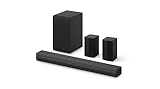
- New Dimensional Sound - Come home to the cinematic sound you’ve always wanted, and experience every heart-thumping, thrill-inducing, moment. With 4 channels backed by a booming wireless subwoofer and wireless rear speakers, this LG Soundbar delivers a big audio punch without taking up too much of your space—or budget. Dolby Digital and DTS Digital compatibility means you still get enhanced sound quality for all your shows, movies, music and more.
- Dolby Audio - Experience an unparalleled immersive journey with Dolby Audio. This LG Soundbar delivers an unforgettable listening experience with your favorite entertainment. Never miss a single detail, no matter where you're watching.
- Rear Speakers - Now there’s a surround sound system for rooms of all shapes and sizes. Our new rear surround speakers have wireless connectivity—that means no special receiver needed to deliver an immersive audio experience.
- WOW Orchestra - Create the perfect harmony using the audio from your LG TV and LG Soundbar to produce the ultimate listening experience. Feel every detail of sound. Use the LG TV and LG Soundbar speakers at the same time while using one remote to adjust the settings interchangeably.
- WOW Interface - Now, convenience is in your hand. Control your soundbar and your LG TV with one remote. Adjust the volume and audio settings, check the connection status and even select a sound mode on the screen, all from the TV remote.
Surround speakers
Surround speakers are distributed along the side and rear walls. In a conventional system, many physical cabinets may be grouped into a smaller number of logical channels or zones. A 7.1 system can therefore contain more than seven physical speakers.
For example, several side-wall surround speakers may operate together from one channel. A room can contain dozens of surround cabinets without having dozens of individually rendered sound objects. Immersive installations can provide more independent feeds, but the result depends on the processor and the specific design.
Recommended Free Tools
Subwoofers and the LFE channel
The “.1” in 5.1 or 7.1 refers to the low-frequency effects, or LFE, channel—not necessarily to one physical subwoofer. A theater may use several subwoofer cabinets to produce sufficient output and distribute bass more evenly.
- LFE: A dedicated low-frequency effects channel.
- Bass management: The redirection of low frequencies from other channels to subwoofers.
- Subwoofer count: The number of physical cabinets, which can be greater than one.
Dolby’s explanation of speaker-layout terminology makes this distinction clear: the LFE channel appears in the notation, while additional bass-management subwoofers are not separately represented.
What 5.1 and 7.1 mean
| Layout | Logical channels | Typical purpose |
|---|---|---|
| 5.1 | Left, center, right, left surround, right surround and LFE | Conventional front stage, side/rear ambience and low-frequency effects |
| 7.1 | 5.1 plus separate side-surround and rear-surround channels | More precise front-to-back movement and rear localization |
These numbers describe logical channels, not necessarily the number of loudspeaker cabinets. A large auditorium may use arrays of surround speakers to cover the seating area.
Adding two channels does not automatically make 7.1 better than 5.1. A well-designed, correctly calibrated 5.1 room can outperform a poorly aimed or badly equalized 7.1 installation.
The Tool Desk
Outbyte PC Repair FREEClear out junk files and repair common Windows errorsFree Scan →Outbyte Driver Updater FREEFix the driver behind crashes, sound loss and screen glitchesFind Drivers →Channel-based versus object-based cinema sound
Channel-based audio assigns sound to fixed channels. A conventional 5.1 mix sends dialogue, music and effects to predetermined speaker groups.
Object-based audio stores some sounds as objects with positional metadata. Instead of assigning an effect permanently to one speaker, the mix can describe where that effect should appear. The theater’s renderer then calculates how to distribute it across the installed speakers.
This distinction explains why a format name does not tell you the complete physical layout. The same object-based soundtrack can be rendered for different room sizes and speaker arrangements, provided the installation meets the relevant requirements.
Rank #3

- Your purchase includes: 1 AV receiver, 5 speakers, 1 Sub-Woofer and Speaker wire.Waterproof : No
- Dimensions: AV Receiver – 17” W x 6” H x 12” D | Four Speakers (each) – 4” W x 6” H x 4” D | Center speaker – 10” W x 4” H x 4” D | Subwoofer – 11” W x 11” H x 13” D
- Technical specs: HDMI – 4 | Standby Power Consumption – ≤ 0.2 W | Frequency Response – 28Hz/25kHz
- Bluetooth for streaming all your favorite music and podcasts. No wireless functionality
- Easy setup with Yamaha YPAO room optimization and flexible speaker placement options, including virtual cinema front
How Dolby Atmos works in a cinema
Dolby Atmos cinema combines a conventional bed layer with independently positioned audio objects and height reproduction. A mixer can place or move sounds such as aircraft, rain, debris, voices or ambience around and above the audience.
A Dolby Atmos cinema system can support up to 128 simultaneous lossless audio streams and up to 64 discrete speaker feeds, according to Dolby. Those are platform capabilities, not a claim that every Atmos auditorium contains 64 independently powered physical loudspeakers.
The Atmos renderer maps the soundtrack to the actual speaker arrangement. Depending on the room, an installation may use side and rear surround arrays, overhead or ceiling speakers, screen channels and multiple subwoofers. Dolby’s specifications also cite a 105 dB screen-speaker sound-pressure-level figure as an engineering requirement or target. It is not a recommended everyday listening level and does not guarantee identical performance in every auditorium.
Dolby Atmos was introduced for cinema in 2012. Its current implementation still depends on the room, equipment, installation quality and calibration. Two theaters carrying the Atmos name may therefore differ considerably in coverage, tonal balance and impact.
Read Dolby’s cinema Atmos overview and its Atmos specifications for technical details.
How DTS:X for cinema differs
DTS:X for cinema is another immersive, object-based platform. DTS describes a design with a conventional base layer derived from familiar 5.1 or 7.1 systems and a separate height layer. Its renderer can generate speaker-level or array-level feeds for different physical configurations.
The emphasis is scalability: the system can be designed for different room sizes and constraints rather than requiring every theater to use one identical layout. DTS describes its cinema platform as based on object-oriented MDA technology. The available technical material establishes its architecture and capabilities, but does not by itself establish market share or prove that it is universally superior to competing systems.
More information is available from DTS’s professional cinema materials.
What are Auro-3D and AuroMax?
Auro-3D uses a layered approach: a surround layer, a height layer and a top layer. AuroMax adds object- and channel-based immersive reproduction to that layered design.
Rank #4
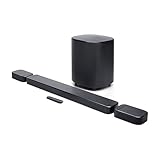
- DETACHABLE WIRELESS SURROUND SOUND: No wires, no hassle—just lift the speakers off each end of this sound bar and place them behind you. True 7.1-channel wireless surround sound in seconds. Easy setup, immersive audio, done.
- 780W POWER & WIRELESS SUBWOOFER: Feel every explosion, drop, and bass line in your chest. This sound system pumps out 780W max with deep, thundering low end from a 10" wireless subwoofer—your couch will never feel the same.
- DOLBY ATMOS & DTS VIRTUAL:X: Hear a plane soar overhead. Feel a crowd rush past. This Bluetooth soundbar delivers 3D immersive audio with Dolby Atmos and DTS Virtual:X—sound that moves all around you, not just in front of you.
- MULTIBEAM 3.0 SOUNDSTAGE: Wherever you sit, you're in the sweet spot. MultiBeam 3.0 projects high fidelity sound across the whole room for a wide, cinematic soundstage that makes every scene—and every song—feel bigger.
- PUREVOICE 2.0 DIALOGUE CLARITY: Never rewind to catch a whispered line again. PureVoice 2.0 automatically optimizes dialogue based on scene and volume—so every word cuts through clearly, even during the loudest action sequences.
Terminology matters. “AuroMax” should not be treated as interchangeable with every “Auro 11.1” reference; Auro technologies include multiple layouts and products. Barco’s APX processor page describes support ranging from classic 5.1 and 7.1 systems to configurations as large as 26.1. That is a stated processor capability, not evidence that every AuroMax auditorium uses 26.1.
See Auro-3D’s professional information, the AuroMax system requirements and Barco’s APX documentation.
Where IMAX and THX fit
IMAX
IMAX is a premium presentation platform, not simply a speaker brand or universal channel count. An IMAX auditorium integrates sound with the screen, room geometry and broader presentation specifications.
IMAX sound hardware can vary by generation, auditorium type and installation. Public information does not establish one universal loudspeaker, amplifier or channel configuration for every IMAX room. The safe conclusion is that IMAX theaters use proprietary or controlled presentation systems with installation-specific audio hardware.
Quick wins for a faster PC:
Scan for outdated or missing drivers - takes under a minuteDriver Scan →Clear out junk files and repair common Windows errorsFree Scan →Fix the driver behind crashes, sound loss and screen glitchesFind Drivers →THX
THX is primarily a certification and quality-control program, not a competing soundtrack format. THX describes cinema certification as involving equipment selection, loudspeaker placement and aiming, installation inspection and calibration against THX and industry standards.
In simple terms:
- Dolby Atmos: An immersive sound format and playback ecosystem.
- DTS:X: An immersive sound format and rendering ecosystem.
- AuroMax: An immersive audio platform combining layered and object-based approaches.
- THX: Certification and presentation-quality criteria.
- IMAX: A broader premium presentation platform covering room, picture and sound.
Certification does not replace good room design, and a logo is not a guarantee that every seat will sound identical.
Independent reader supportYour contribution helps us test, update, and keep practical guides available for everyone.Why one theater sounds better than another
Room geometry and seating coverage
Large rooms require greater output, more speaker coverage and often more amplifier channels. Speaker spacing, aiming angles, output level and delay affect how consistently sound reaches different seats.
Screen acoustics
The front speakers must work through the acoustically transparent screen. The screen, screen wall and baffle affect high-frequency response, reflections and dialogue clarity. A screen designed for picture alone is not enough; it must also support accurate sound reproduction.
Outdated Drivers Are Slowing You Down
One free scan finds every outdated or missing driver and matches the right update for your exact hardware.Free scan · exact hardware matchPC Slower Than It Used to Be?
A free scan shows the junk files, broken settings and background clutter dragging Windows down - then fixes them in one click.Free scan · Windows 10 & 11Acoustic treatment and isolation
Excessive reverberation can blur dialogue and make effects indistinct. HVAC noise, projector noise, vibrating fixtures and sound leakage from neighboring auditoriums can reduce the perceived quality even when the electronics are sophisticated.
Best Value

- 【Enjoy Deep Bass from Dedicated Subwoofer】The deep rich bass from our new generation sound bar and subwoofer will activate every cell in your body.The large cavity space of the subwoofer makes the bass punchy and full of magnetic. The surround sound of soundbar and subwoofer collide with each other in every corner of your room like waves, which allowing you immersed in music, movie and gaming.
- 【Multifunctional LED Indicator&Soft Light】Unlike other sound bars, The three-color LED lights help you better identify which the connection mode the sound bar is on(Optical-Purple, Bluetooth-Blue, Auxiliary-Green). Not only that, the volume progress bar below soundbar reminds you the volume level of total or bass.The soundbar's hidden LED indicator and soft lighting make it possible for you to watch TV without distractions.
- 【3 Equalizer Modes】You can adjust soundbar to three different equalizer modes according to different TV shows like news, movie and music. It is an excellent sound bar for your TV. In addition, we provide replace remote control for free. (Remote control is not compatible with universal or TV remotes)
- 【Wireless&Wired Connection】The Bluetooth chip can help you connect devices such as computers and cell phones to the sound bar. Auxiliary input model and optical input model are also available as an option for you to connect your computer, TV and speakers.(We also provide Auxiliary cable and Optical cable for free)
- 【What's You Get! 】The package contains the following products:Soundbar*1, subwoofer*1, remote control*1, user manual*1, 3.5mm to 3.5mm auxiliary cable*1, optical cable*1, brackets*2 expanded plastic pipe*2 and screws*2. In addition, you will receive our product quality guarantee for more than one year and professional after-sales service.
Calibration
Calibration matches levels, frequency response, delay and coverage to the auditorium. It should be measured at multiple seats rather than optimized for one central position.
Cinema equalization is not always the same as home-audio equalization. QSC’s cinema training material identifies the industry-standard “X curve” as a reference associated with large-room theatrical reproduction. It should not be described as a universal flat-response target for every listening situation.
Maintenance
Commercial systems run for many hours and are exposed to heat, dust, vibration and driver wear. A damaged surround speaker, failing amplifier channel, incorrect processor preset or weak subwoofer can make an immersive room sound disappointing. Remote monitoring, fault alerts, accessible racks, spare-amplifier planning and documented calibration profiles all have practical value.
Common misconceptions
- “An Atmos theater has 64 speakers.” Dolby’s figure refers to up to 64 discrete speaker feeds; physical speaker counts and array arrangements vary.
- “The .1 means one subwoofer.” It identifies the LFE channel. Multiple cabinets may reproduce it.
- “More speakers always mean better sound.” Placement, aiming, delay, equalization and room treatment matter just as much.
- “THX is a surround format.” THX is primarily certification and quality assurance.
- “All Atmos theaters are identical.” Their layouts, room sizes, equipment and calibration can differ.
- “Atmos in a cinema is the same as Atmos at home.” The concepts and branding overlap, but commercial rooms operate at a very different scale and use different coverage and calibration requirements.
- “A louder theater is a better theater.” Output capability is useful, but clean dialogue, controlled bass and consistent coverage are more meaningful measures.
What moviegoers can listen for
- Dialogue should remain clear without being harsh or excessively loud.
- Voices should appear anchored to the screen.
- Sound should move smoothly across the front, sides, rear and overhead positions.
- Bass should feel powerful but controlled rather than boomy or one-note.
- Surrounds should be balanced instead of drawing attention to one wall.
- Effects and ambience should remain reasonably consistent across the seating area.
- The room should be quiet between sounds, without intrusive HVAC, projector or fixture noise.
A film’s mix also matters. An immersive soundtrack may use overhead speakers subtly for ambience, while another may make height movement a prominent creative feature. A quiet or restrained presentation is not automatically a technical failure.
Choosing a system for a cinema or screening room
Operators should begin with the room, not a logo or headline channel count. Key questions include:
- How large is the room? Seating count, ceiling height and listening distance determine output and coverage requirements.
- Where can the screen speakers go? Screen size and transparency determine the front-channel design.
- How uniform must coverage be? A system should be assessed across the seating area, not from one ideal seat.
- Which formats and content are required? Support may include legacy 5.1 and 7.1, Dolby Atmos, DTS:X, AuroMax, trailers, alternate-language tracks and live events.
- Is there enough amplifier headroom? Insufficient capacity can cause compression, distortion or protection shutdown. More capacity costs more and increases rack and electrical demands, but can provide useful clean headroom.
- How will the system be serviced? Consider monitoring, replacement drivers, spare amplifiers, software support, accessible racks and integrator availability.
- What acoustic work is included? Budget for isolation, reverberation control, HVAC noise and screen-wall construction—not only electronics.
- What is the total cost of ownership? Include cabling, racks, power distribution, installation, calibration, licensing where applicable and ongoing service.
Dolby, QSC, Barco and other professional suppliers generally provide product information and design resources rather than a single installed price. A responsible quotation should specify the country and currency, auditorium size, seating count, speaker and format configuration, acoustic scope, installation, calibration and exclusions.
For a commercial theater, the appropriate next step is a room-specific design and quotation from a qualified integrator. For a high-end private cinema, professional loudspeaker systems such as those offered through Meyer Sound’s residential and cinema-oriented programs may be considered, but they still require suitable acoustic and installation expertise. Typical home-theater buyers should use residential equipment and guidance rather than commercial cinema hardware.
Free tools Windows power users keep installed
One-click scans. No signup required.
The real source of cinematic immersion
The best cinema sound is not created by a codec alone. It comes from the integration of the film mix, processor, renderer, amplifier, loudspeaker system, subwoofer layout, screen, room acoustics, calibration and maintenance.
5.1 and 7.1 remain important foundations. Dolby Atmos, DTS:X and AuroMax add more sophisticated ways to position sound, especially above and around the audience. IMAX and THX describe different aspects of presentation and quality control rather than interchangeable sound formats.
Ultimately, a well-calibrated conventional room can be more satisfying than a neglected premium-format auditorium. The logo identifies the intended system; the room and its upkeep determine what the audience actually hears.
Quick Recap
Product prices and availability are accurate as of the date/time indicated and are subject to change. Any price and availability information displayed on Amazon at the time of purchase will apply.

