Recommended Free Tools
For most U.S. readers, the Kindle Paperwhite 12th Generation is the best e-reader to buy in 2026. Its 7-inch, 300-ppi monochrome screen, waterproof construction, 16 GB of storage, strong battery claim, and access to Amazon’s large Kindle ecosystem make it the easiest all-around recommendation. Choose the Kobo Clara BW instead if EPUB files, library borrowing, Pocket articles, or avoiding Amazon matter more than having the largest bookstore. For color, physical page-turn buttons, and occasional handwriting, the Kobo Libra Colour is the better specialist choice; for PDFs and serious note-taking, choose a Kindle Scribe or Kobo Elipsa 2E.
This article may contain affiliate links. If you buy through one, we may earn a commission at no additional cost to you.
Quick verdict: which e-reader should you buy?
| Rank | Model | Best for | Important specifications | Main compromise |
|---|---|---|---|---|
| 1 | Kindle Paperwhite 12th Generation | Most readers | 7-inch, 300-ppi monochrome screen; 16 GB; waterproof; up to three months of claimed battery life | No physical page-turn buttons; Amazon-centered ecosystem |
| 2 | Kobo Clara BW | EPUB and library readers | 6-inch Carta 1300 HD screen; 16 GB; ComfortLight PRO; waterproof; OverDrive and Pocket | Smaller screen and different bookstore ecosystem |
| 3 | Kobo Libra Colour | Color, buttons, and annotation | 7-inch Kaleido 3 color screen; 32 GB; physical page-turn buttons; Stylus compatibility; waterproof | Black text is less crisp than on monochrome E Ink; stylus costs extra |
| 4 | Kindle Colorsoft | Color inside the Kindle ecosystem | 7-inch color display; waterproof; auto-adjusting front light; up to eight weeks of claimed battery life | Shorter claimed endurance and less text-focused contrast than monochrome models |
| 5 | Entry-level Kindle | Budget buyers and travelers | 6-inch, 300-ppi screen; 158 grams; glare-free display; brighter front light than its predecessor | No waterproofing or warm-light system |
| 6 | Kindle Scribe 3rd Generation | PDFs, handwriting, and large documents | 11-inch display; approximately 400 grams; bundled pen; notebook and document-review features | Too large and expensive for ordinary pocketable reading |
| 7 | Kobo Elipsa 2E | Large-screen Kobo reading and writing | 10.3-inch Carta 1200 display; 32 GB; Kobo Stylus 2 included; PDF markup and notebooks | Less portable and less text-dense than a small 300-ppi reader |
| 8 | BOOX Go 7 | Android and multi-store power users | 7-inch, 300-ppi Carta 1300 screen; Android; 64 GB; buttons; microSD; third-party apps | More setup, app inconsistency, and potential battery drain |
These rankings are for different kinds of readers, not a claim that one device wins every category. A monochrome reader remains the better tool for long novels, while color and large-format models earn their higher prices through illustrations, buttons, handwriting, or document handling.
1. Kindle Paperwhite 12th Generation: best overall
The Kindle Paperwhite 12th Generation is the safest recommendation for a typical reader buying in the United States. It balances a comfortable 7-inch screen with the crispness of 300 pixels per inch, waterproof construction, 16 GB of storage, and Amazon’s integrated purchasing and reading software. Amazon lists up to three months of battery life for the current Paperwhite family and described this generation as its fastest Kindle at launch.
That combination suits novels, nonfiction, commuting, bedtime reading, and travel. The 7-inch panel gives text more room than a compact 6-inch reader without making the device as cumbersome as a writing-focused tablet. Its monochrome E Ink screen is also a better fit than color E Ink if nearly everything you read is ordinary black text.
#1 Best Overall
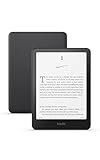
- Our fastest Kindle Paperwhite ever – The next-generation 7“ Paperwhite display has a higher contrast ratio and 25% faster page turns.
- Ready for travel – The ultra-thin design has a larger glare-free screen so pages stay sharp no matter where you are.
- Escape into your books – Your Kindle doesn’t have social media, notifications, or other distracting apps.
- Battery life for your longest novel – A single charge via USB-C lasts up to 12 weeks.
- Read in any light – Adjust the display from white to amber to read in bright sunlight or in the dark.
Which Paperwhite version?
- Standard Paperwhite: 16 GB of storage, waterproof construction, a 7-inch screen, and the core Paperwhite reading experience.
- Paperwhite Signature Edition: 32 GB, wireless charging, and an auto-adjusting front light. It is the more convenient choice if you store many large books or audiobooks, want extra storage, or prefer wireless charging.
Amazon’s 2025 Kindle-family announcement listed the standard Paperwhite from $159.99 and the Signature Edition from $199.99 in the U.S. Those are useful reference prices, not permanent guarantees; sales, bundles, and availability can change.
The major drawbacks are straightforward. The Paperwhite does not have physical page-turn buttons, so every page advance uses the touchscreen. It also places you more firmly inside Amazon’s ecosystem than Kobo or Android-based alternatives. That is a benefit if you already own Kindle books, use Kindle Unlimited, or listen through Audible, but it is a real ownership consideration if you want a storefront-neutral EPUB and library workflow.
2. Kobo Clara BW: best non-Kindle value and library reader
The Kobo Clara BW is the principal alternative to the Paperwhite. It is a compact 6-inch reader with a sharp Carta 1300 HD monochrome display, 16 GB of storage, adjustable ComfortLight PRO illumination, waterproofing, dark mode, and support for Kobo audiobooks. It also connects to Kobo’s OverDrive library-borrowing workflow and Pocket article saving.
Choose it when the device’s reading system matters as much as the hardware. Kobo is the stronger fit for readers who regularly borrow e-books from supported libraries, work with EPUB files, save long web articles to Pocket, or simply do not want their primary reading device centered on Amazon. That does not make Kobo universally better: the two companies’ stores, account systems, book availability, and device interfaces are different.
The Clara BW’s 6-inch screen is easier to carry than the Paperwhite’s 7-inch panel, but the trade-off is less text on each page. It also lacks physical page-turn buttons. Kobo’s U.S. store lists the Clara BW at $159.99 at the time of this research, although its launch price was lower. Check the live price before publishing or buying.
For a reader whose priority is a small, sharp, waterproof monochrome device with library and EPUB-friendly workflows, the Kobo Clara BW is arguably the most compelling reason not to default to Kindle.
3. Kobo Libra Colour: best color reader with buttons
The Kobo Libra Colour is the best choice here for readers who want color without giving up the convenience of physical page-turn buttons. It has a 7-inch Kaleido 3 color E Ink display, 32 GB of storage, landscape mode, waterproofing, ComfortLight PRO, Bluetooth audiobook support, and OverDrive access. It also works with Kobo’s Stylus for color handwriting and annotations, although the stylus is sold separately.
Do these 3 things before closing this tab:
1Clear out junk files and repair common Windows errors2Fix the driver behind crashes, sound loss and screen glitches3Repair Windows errors before they cause bigger problemsIts physical buttons are useful for one-handed reading, reading while wearing gloves, or anyone who dislikes tapping the screen to turn pages. Color makes a meaningful difference for comics, manga with color elements, cookbooks, illustrated nonfiction, diagrams, covers, and color-coded highlights. The device is also a more natural fit than a standard monochrome reader for someone who wants occasional annotations but does not need a full 10- or 11-inch writing tablet.
Color E Ink is not a free upgrade in text quality. The color layer can make the background appear darker, and black text is generally less crisp and contrasty than on a 300-ppi monochrome screen. If you read almost exclusively novels, the Paperwhite or Clara BW is the better display choice. If you need color, buttons, and a reading-first form factor, the Kobo Libra Colour earns its place.
Kobo’s current U.S. store lists the Libra Colour at $259.99, while its launch announcement listed $229.99. That difference is a reminder to use the live product page rather than treating an older launch price as current.
Rank #2

- Our fastest Kindle Paperwhite ever – The next-generation 7“ Paperwhite display has a higher contrast ratio and 25% faster page turns.
- Ready for travel – The ultra-thin design has a larger glare-free screen so pages stay sharp no matter where you are.
- Escape into your books – Your Kindle doesn’t have social media, notifications, or other distracting apps.
- Battery life for your longest novel – A single charge via USB-C lasts up to 12 weeks.
- Read in any light – Adjust the display from white to amber to read in bright sunlight or in the dark.
4. Kindle Colorsoft: best color Kindle
The Kindle Colorsoft is the logical upgrade for an existing Kindle customer who wants color without changing bookstores, accounts, or reading habits. Its 7-inch color display is designed for color covers, illustrations, images, comics, and searchable color highlights. Amazon also lists waterproofing, an auto-adjusting front light, and up to eight weeks of battery life.
What’s actually slowing this PC down?
Pick the symptom - the matching free tool is one click away.
The later 16 GB model makes the color Kindle less expensive than the original 32 GB Signature Edition. Amazon listed the 16 GB Colorsoft at $249.99 in its announcement. The Signature Edition provides 32 GB and wireless charging, according to Amazon’s product description. As always, actual retail pricing and availability can move after launch.
Colorsoft makes sense when your reading library includes graphic novels, illustrated nonfiction, children’s books, cookbooks, or books where highlighting in multiple colors is genuinely useful. It is also the least disruptive option for someone who already buys Kindle books and wants to keep using Amazon’s reading ecosystem.
It is not the best Kindle for everyone. Amazon’s claimed eight-week battery life is shorter than the Paperwhite’s claimed three months, and monochrome E Ink remains preferable for maximum black-text clarity and long-form reading. Color E Ink should be purchased because you need color, not because color automatically means a better screen.
5. Entry-level Kindle: best compact budget Kindle
The current entry-level Kindle is the right choice when low weight, low price, and small size matter more than premium lighting or waterproofing. Amazon lists a 6-inch, 300-ppi glare-free display, a weight of 158 grams, faster page turns, and higher contrast. Its front light is 25 percent brighter at maximum setting than the prior model. Amazon’s 2025 announcement listed a U.S. starting price of $109.99.
That makes it a sensible first e-reader, travel device, or reader for a child or teenager outside the Kids Edition range. Its 300-ppi screen keeps body text sharp despite the lower price, and its compact footprint is convenient in a small bag.
The compromises explain the price. It lacks the Paperwhite’s larger screen, warm-light system, and waterproofing. It is best for someone who wants straightforward reading at the lowest Kindle-family entry point, not for someone seeking the most comfortable bedtime, bath, beach, or premium travel device.
6. Kindle Scribe 3rd Generation: best Kindle for writing and large documents
The Kindle Scribe is not simply a larger Paperwhite. It is a writing and document-review device that also reads Kindle books. The redesigned third-generation Scribe has an 11-inch glare-free display, a 5.4-millimeter body, an approximate weight of 400 grams, a bundled pen, and a redesigned writing system. Amazon says it is 40 percent faster for writing and page turns than the prior design.
The large display is valuable when a normal e-reader forces you to zoom or constantly reflow a page. The Scribe is suited to PDF annotation, academic reading, full-page document review, journaling, meeting notes, notebook creation, and writing inside supported books. Amazon also describes AI-powered notebook features. The Scribe Colorsoft extends the large-format writing concept to color, with Amazon listing the current Scribe from $499.99 and the Scribe Colorsoft from $629.99.
The Tool Desk
Outbyte PC Repair FREERepair Windows errors before they cause bigger problemsFix Now →Outbyte Driver Updater FREEFix the driver behind crashes, sound loss and screen glitchesFind Drivers →Size is both the reason to buy and the reason not to buy it. An 11-inch reader displays more of a PDF or document at once, but it is much less comfortable for one-handed novel reading and less convenient on public transport. It is also substantially more expensive than a dedicated reading device. Buy the Kindle Scribe 3rd Generation when writing, reviewing, and annotating are central tasks; do not buy it merely because a bigger screen sounds premium.
Rank #3

- Our fastest Kindle Paperwhite ever – The next-generation 7“ Paperwhite display has a higher contrast ratio and 25% faster page turns.
- Ready for travel – The ultra-thin design has a larger glare-free screen so pages stay sharp no matter where you are.
- Escape into your books – Your Kindle doesn’t have social media, notifications, or other distracting apps.
- Battery life for your longest novel – A single charge via USB-C lasts up to 12 weeks.
- Read in any light – Adjust the display from white to amber to read in bright sunlight or in the dark.
7. Kobo Elipsa 2E: best Kobo large-screen reading-and-writing device
The Kobo Elipsa 2E is Kobo’s specialist answer for readers who want a large screen, markup, and notebooks. It has a 10.3-inch Carta 1200 display, 32 GB of storage, Kobo Stylus 2 support with the stylus included, PDF and e-book markup, notebook creation, cloud-storage features, ComfortLight PRO, and dark mode.
Its size is particularly useful for PDFs, academic papers, technical documents, sheet music, and books where seeing more of a page at once matters. Kobo users who already prefer OverDrive, EPUB-oriented workflows, or Kobo’s storefront may find it a better ecosystem fit than the Scribe.
The Elipsa 2E is not the best value for a person who reads only novels. Its Carta 1200 panel is not as text-dense as a 300-ppi 6- or 7-inch reader, and the larger chassis is less portable. Kobo’s U.S. store lists it at $399.99 at the time of research. The Kobo Elipsa 2E is a task-based purchase: choose it for document space and writing, not for the lightest possible reading experience.
Windows Errors? Fix Them Before They Spread
Repair common Windows errors and clear accumulated junk for a smoother, more stable PC - no reinstall needed.Free scan · no reinstallOutdated Drivers Are Slowing You Down
One free scan finds every outdated or missing driver and matches the right update for your exact hardware.Free scan · exact hardware match8. BOOX Go 7: best open Android e-reader
The BOOX Go 7 is the strongest option for readers who want to put several reading ecosystems on one E Ink device. It uses a 7-inch, 300-ppi Carta 1300 monochrome display and runs Android. BOOX lists 64 GB of storage, physical page-turn buttons, warm and cool front lighting, a microSD slot, and support for third-party reading apps.
That openness can allow a power user to combine Kindle, Kobo, Libby, Google Play, web, and other Android applications on one reader. It is also attractive to readers who sideload heavily or want more control over apps and files than a closed Kindle or Kobo provides.
The price of that flexibility is complexity. Android apps can have inconsistent layouts or behavior on an E Ink screen, third-party applications can use more battery than a dedicated reading interface, and setup requires more attention. The BOOX Go 7 is therefore a niche recommendation rather than the default choice. Choose the BOOX Go 7 when app freedom is a requirement; choose Kindle or Kobo when simplicity and predictable battery life matter more.
Choose by what you read
For ordinary novels and nonfiction
Start with the Kindle Paperwhite. Its 7-inch, 300-ppi monochrome screen is the best balance of reading area, crisp body text, durability, and portability in this group. Choose the Clara BW instead if library borrowing, EPUB workflows, Pocket, or a non-Amazon storefront is more important than the extra inch of screen.
For the sharpest text
Favor a 300-ppi monochrome display. The Paperwhite, entry-level Kindle, Clara BW, and BOOX Go 7 all fit that description in their published specifications or positioning. The color models are more versatile visually, but their color layer can reduce apparent contrast and make black text less crisp. A color screen is a feature for particular content, not a universal clarity upgrade.
For library books and EPUB files
Choose the Kobo Clara BW for a compact reader or the Kobo Libra Colour if you also want buttons and color. Kobo specifically supports OverDrive integration, EPUB-oriented reading, Pocket article saving, and Kobo Audiobooks. Library availability still depends on your library system, region, and the title’s licensing, so confirm that your local library works with Kobo’s borrowing workflow.
For Kindle books, Kindle Unlimited, or Audible
Choose a Kindle. Amazon gives current Kindle devices access to its e-book store and supports Kindle Unlimited across books, audiobooks, comics, and magazines. Existing Kindle purchases and an established Amazon account can make switching to Kobo less convenient even when Kobo hardware is attractive.
Rank #4
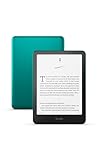
- Our fastest Kindle Paperwhite ever – The next-generation 7“ Paperwhite display has a higher contrast ratio and 25% faster page turns.
- Upgrade your reading experience – The Signature Edition features an auto-adjusting front light, wireless charging, and 32 GB storage.
- Ready for travel – The ultra-thin design has a larger glare-free screen so pages stay sharp no matter where you are.
- Escape into your books – Your Kindle doesn’t have social media, notifications, or other distracting apps.
- Adapts to your surroundings – The auto-adjusting front light lets you read in the brightest sunlight or late into the night.
For color comics, illustrations, or cookbooks
Choose the Kobo Libra Colour if physical buttons and a lower-friction reading form factor matter. Choose the Kindle Colorsoft if you want to remain inside Kindle’s store and software ecosystem. For either choice, accept that color E Ink is a compromise: colors are more muted than on a conventional tablet, and black text is usually less clear than on monochrome E Ink.
Free tools Windows power users keep installed
One-click scans. No signup required.
For PDFs, sheet music, and academic papers
Choose a large-format device. The 11-inch Kindle Scribe is the better Kindle-centered option, while the 10.3-inch Kobo Elipsa 2E is the better Kobo-centered option. Large screens show more of a page at once and reduce zooming, but they cost more and are less comfortable for one-handed reading.
For handwritten notes
Choose the Kindle Scribe if Kindle books and Amazon’s notebook features are your priority. Choose the Elipsa 2E if you prefer Kobo’s ecosystem and want the included Kobo Stylus 2. Choose the Libra Colour only if occasional color annotation is enough and you strongly prefer a smaller reader with page-turn buttons.
For the smallest travel reader
The entry-level Kindle is the lightest listed Kindle at 158 grams and has a sharp 6-inch screen. The Clara BW is the better compact alternative when waterproofing, ComfortLight PRO, library access, and EPUB workflows matter more than the lowest Kindle-family price.
Battery life: what the claims really mean
Battery claims are useful for comparing device types, but they are not promises about how long every reader will go between charges. Manufacturers measure under controlled conditions that typically include limited daily reading, low front-light brightness, and wireless radios turned off.
Amazon lists up to three months for the current Paperwhite and up to eight weeks for Colorsoft. Kobo’s published test for the Clara BW and color Clara models reaches up to 53 days based on 30 minutes of reading per day, front light at 10 percent, and Wi-Fi and Bluetooth turned off. Those numbers should be read as best-case comparison points rather than guaranteed real-world intervals.
For the longest practical endurance, monochrome dedicated readers generally have the advantage over color readers and Android E Ink devices. Wireless syncing, audiobook playback, Bluetooth, high front-light brightness, frequent page refreshes, active stylus use, and third-party Android applications can all reduce runtime. A reader who spends most of each session with the front light high or apps syncing will not reproduce the headline figure.
| Battery priority | Better direction | Why |
|---|---|---|
| Longest reading-focused endurance | Monochrome Kindle or Kobo | Fewer power-intensive display and app demands |
| Color content | Libra Colour or Colorsoft | Accept shorter claimed endurance in exchange for color |
| Apps and multiple stores | BOOX Go 7 | More flexibility, but Android use can add battery drain |
| Writing and documents | Scribe or Elipsa 2E | Large screens and pen input are the priority, not maximum pocket-reader endurance |
Screen clarity, lighting, and size
Why 300 ppi still matters
For body text, 300 ppi remains the sensible target. It produces clean letter edges at normal reading distances and is available on the Paperwhite, entry-level Kindle, Clara BW, and BOOX Go 7. A lower-resolution or color-oriented display may still be perfectly readable, but readers who are sensitive to fuzziness should prioritize a 300-ppi monochrome panel.
When color E Ink is worth the compromise
Color is useful for covers, diagrams, illustrations, comics, recipes, maps, and color-coded highlights. It is less valuable for a library made almost entirely of black-and-white novels. Color E Ink’s background can look darker, and its color reproduction is not comparable to a phone or tablet. The correct question is not whether color is better, but whether the content you read benefits from it often enough to justify lower text contrast, shorter claimed battery life, and a higher price.
Quick wins for a faster PC:
Clear out junk files and repair common Windows errorsFree Scan →Scan for outdated or missing drivers - takes under a minuteDriver Scan →When a large screen is worth carrying
A 10.3- or 11-inch display is useful when a page contains dense layouts, diagrams, tables, sheet music, or handwriting. It shows more of a PDF at once and gives a pen more room to work. The same size is inefficient for commuting, one-handed novel reading, and travel. Large-format readers are productivity tools with reading capability; 6- and 7-inch models are reading tools first.
Best Value

- Our fastest Kindle Paperwhite ever – The next-generation 7“ Paperwhite display has a higher contrast ratio and 25% faster page turns.
- Upgrade your reading experience – The Signature Edition features an auto-adjusting front light, wireless charging, and 32 GB storage.
- Ready for travel – The ultra-thin design has a larger glare-free screen so pages stay sharp no matter where you are.
- Escape into your books – Your Kindle doesn’t have social media, notifications, or other distracting apps.
- Adapts to your surroundings – The auto-adjusting front light lets you read in the brightest sunlight or late into the night.
Kindle vs. Kobo vs. BOOX: the ownership decision
Kindle
Kindle is the easiest choice for people already invested in Amazon’s bookstore, Kindle Unlimited, or Audible. The integrated store and familiar account system reduce friction, and the Paperwhite offers the strongest hardware balance for mainstream reading. The trade-off is a closer relationship with Amazon’s ecosystem and less emphasis on the open library and EPUB workflows that attract Kobo buyers.
Kobo
Kobo is the better fit for readers who want EPUB support, library borrowing through OverDrive, Pocket articles, Kobo Audiobooks, or a less Amazon-centered storefront. Its range also gives shoppers choices Kindle does not match directly, including the button-equipped Libra Colour and the large Elipsa 2E. Library support varies by country and library, so geography matters.
BOOX
BOOX is the most flexible platform in this comparison because the Go 7 runs Android and supports third-party apps. That is valuable if you need Kindle, Kobo, Libby, and other services together. It also means more decisions, more potential interface inconsistency, and more responsibility for managing applications and battery use. Openness is a reason to buy BOOX, not a free improvement for every reader.
U.S. pricing and model availability
The prices below are U.S. manufacturer-listed or launch-announced reference prices from the research for this guide. They are not guaranteed permanent MSRPs, and promotions can make the practical value ranking change from week to week.
| Model | U.S. reference price | Price context |
|---|---|---|
| Entry-level Kindle | From $109.99 | Amazon 2025 announcement |
| Kindle Paperwhite | From $159.99 | Amazon 2025 announcement |
| Kobo Clara BW | $159.99 | Current Kobo U.S. store listing at research time |
| Kobo Clara Colour | $179.99 | Current Kobo U.S. store listing at research time |
| Kindle Paperwhite Signature Edition | From $199.99 | Amazon 2025 announcement |
| Kindle Colorsoft 16 GB | $249.99 | Amazon announcement for the later 16 GB model |
| Kobo Libra Colour | $259.99 | Current Kobo U.S. store listing; launch price was lower |
| Kobo Sage | $269.99 | Current Kobo U.S. store listing at research time |
| Kobo Elipsa 2E | $399.99 | Current Kobo U.S. store listing at research time |
| Kindle Scribe 3rd Generation | From $499.99 | Amazon current listing |
| Kindle Scribe Colorsoft | From $629.99 | Amazon current listing |
The Kobo Clara Colour and Kobo Sage are also part of Kobo’s current U.S. lineup, but they do not replace the more clearly defined use cases of the Clara BW, Libra Colour, or Elipsa 2E in this ranking. Availability, generation names, and prices should be checked again before publication or purchase.
Accessories worth considering
A case is the most sensible first accessory for a reader that travels in a bag. For the Paperwhite, search specifically for a Kindle Paperwhite 12th Generation case rather than assuming an older Paperwhite cover will fit. A screen protector may be useful for readers who share a device or carry it with other objects, while a Kindle USB-C charger is useful if your existing charging setup does not include a compatible cable or power adapter. Check the exact generation and model before buying a case, protector, or page-turn accessory.
How this ranking should be interpreted
The recommendations above are based on published specifications, manufacturer battery claims, and cited third-party testing and reviews in the research for this guide. No hands-on testing or original cross-brand battery test was performed. Claims such as battery duration are therefore presented as manufacturer estimates, while the rankings reflect how the listed screen sizes, features, ecosystems, and trade-offs map to common reading tasks.
Free tools Windows power users keep installed
One-click scans. No signup required.
Frequently Asked Questions
Is Kindle or Kobo better in 2026?
Neither is universally better. Kindle is the better choice for readers who already own Kindle books, use Kindle Unlimited, or want Amazon and Audible integration. Kobo is the better choice for EPUB workflows, supported library borrowing through OverDrive, Pocket articles, and readers who prefer not to center their e-reading around Amazon.
Is a color e-reader better than a black-and-white Kindle?
Only if your reading benefits from color. Color E Ink helps with comics, illustrations, recipes, diagrams, covers, and color highlights, but monochrome E Ink generally provides crisper black text and longer claimed battery life. For mostly novels, the Kindle Paperwhite or Kobo Clara BW is usually the better buy.
Which e-reader is best for PDFs and handwritten notes?
Choose the Kindle Scribe 3rd Generation for Kindle books, an 11-inch display, a bundled pen, and Amazon’s notebook and document-review features. Choose the Kobo Elipsa 2E for Kobo’s ecosystem, a 10.3-inch display, PDF and e-book markup, and the included Kobo Stylus 2.
How long does an e-reader battery really last?
The advertised figures are controlled-condition maximums. Amazon lists up to three months for the current Paperwhite and up to eight weeks for Colorsoft. Kobo lists up to 53 days for the Clara BW and color Clara models under a test using 30 minutes of reading daily, 10 percent front light, and Wi-Fi and Bluetooth off. High brightness, wireless syncing, audiobooks, stylus use, and Android apps can shorten runtime.
The Bottom Line
Buy the Kindle Paperwhite 12th Generation for the best all-around reading experience. Buy the Kobo Clara BW if library and EPUB freedom matter more than Amazon’s ecosystem, the Kobo Libra Colour for color and physical buttons, the Kindle Colorsoft for color without leaving Kindle, and the Scribe or Elipsa 2E only when large documents and handwriting justify the size and price.
Quick Recap
Product prices and availability are accurate as of the date/time indicated and are subject to change. Any price and availability information displayed on Amazon at the time of purchase will apply.