Star Trek’s movie timeline has a reputation for being more intimidating than warp core maintenance, and that confusion isn’t accidental. Across more than four decades, the franchise has jumped between centuries, crews, and even alternate realities, often using time travel as a storytelling engine rather than a complication to avoid. For new viewers, it can feel like every film assumes you already know which Enterprise you’re on and which century you’re in.
The biggest source of confusion comes from the franchise’s split timelines and overlapping eras. Most films belong to the Prime Timeline, which spans from the original crew through The Next Generation cast and beyond, while the J.J. Abrams-directed reboot films exist in the Kelvin Timeline, an alternate reality created by a single time-travel event. Add in release dates that don’t match in-universe chronology, plus movies that jump backward and forward in time, and even longtime fans sometimes disagree on where to start.
![Star Trek 10-Movie Collection [Blu-Ray + Digitial Copy]](https://m.media-amazon.com/images/I/41pvG+cOTpL._SL160_.jpg)

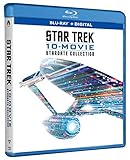

This guide cuts through that noise by separating what matters from what doesn’t for first-time and returning viewers. It clearly lays out the Star Trek movies in both release order and chronological order, explains where the timeline splits without drowning you in canon minutiae, and offers straightforward viewing paths depending on how deep you want to go. Whether you want to experience Star Trek as audiences originally did or follow the internal timeline step by step, the goal here is simple: no homework required, just engage, enjoy, and boldly go.
The Two Star Trek Movie Timelines Explained: Prime Timeline vs. Kelvin Timeline
Before diving into watch orders, it helps to understand that Star Trek’s movies are split between two distinct timelines. They share characters, ideas, and even some overlapping events, but they are not interchangeable. Knowing which timeline a movie belongs to instantly removes most of the franchise’s confusion.
What’s actually slowing this PC down?
Pick the symptom - the matching free tool is one click away.
#1 Best Overall
The Prime Timeline: The Original Star Trek Continuity
The Prime Timeline is the backbone of Star Trek and includes nearly every movie released from 1979 through 2002. It follows a single, continuous history that begins with Captain Kirk and the original Enterprise crew, then moves forward to Captain Picard and the era of The Next Generation. This timeline assumes everything happened as originally depicted on television, with movies acting as direct extensions of those shows.
All six Original Series films, from Star Trek: The Motion Picture through Star Trek VI: The Undiscovered Country, live here. The four Next Generation films, from Generations to Nemesis, also belong entirely to the Prime Timeline. Even when these movies use time travel, such as The Voyage Home or First Contact, the timeline ultimately “snaps back” to its original course.
For viewers interested in seeing Star Trek evolve the way audiences originally experienced it, this is the timeline that matters most. Characters age, political alliances shift, and major events echo across decades of storytelling. It rewards long-term viewing but remains easy to follow if watched in release order.
The Kelvin Timeline: The J.J. Abrams Reboot Films
The Kelvin Timeline begins with Star Trek (2009) and exists because of a single time-travel incident. When the Romulan Nero travels back in time from the Prime Timeline and destroys the USS Kelvin, history fractures into an alternate reality. From that moment on, familiar characters like Kirk, Spock, and Uhura grow up in a different universe with altered destinies.
Do these 3 things before closing this tab:
1Fix the driver behind crashes, sound loss and screen glitches2Repair Windows errors before they cause bigger problems3Scan for outdated or missing drivers - takes under a minuteThis timeline includes Star Trek (2009), Star Trek Into Darkness, and Star Trek Beyond. While the characters and iconography come from the original series, the films are designed as modern, fast-paced reintroductions rather than direct continuations. No prior Star Trek knowledge is required to understand them.
Importantly, the Kelvin Timeline does not overwrite the Prime Timeline. Both coexist, which allows the reboot films to tell new stories without disrupting decades of established canon. Think of it as a parallel universe rather than a replacement.
Why the Timeline Split Matters for Viewing Order
If you watch the movies in release order, you’ll naturally move from the Prime Timeline into the Kelvin Timeline without needing to track exact dates. This is the simplest path for newcomers and mirrors how audiences originally encountered the films. It also makes the tonal shift between classic and modern Star Trek feel intentional rather than jarring.
Chronological viewing, on the other hand, keeps the timelines mostly separate. The Prime Timeline movies follow a clear internal progression, while the Kelvin films function as a self-contained trilogy that can be watched at any point after understanding the split. Once you know which universe you’re in, the rest of the journey becomes far less intimidating.
Free tools Windows power users keep installed
One-click scans. No signup required.
Star Trek Movies in Chronological Order (In-Universe Timeline)
Watching the Star Trek movies in chronological order means following events as they unfold inside the universe itself, rather than when the films were released. This approach emphasizes character arcs, political shifts, and long-term consequences, especially within the Prime Timeline. It is the most story-driven way to experience the films, even if it occasionally jumps across decades of real-world filmmaking styles.
The Prime Timeline: From Kirk to Picard
Star Trek: The Motion Picture (set in the early 2270s) begins the cinematic timeline, reuniting Admiral James T. Kirk with the USS Enterprise for a mission that reestablishes Starfleet’s exploratory identity. The film functions as a bridge between The Original Series and the more mature, philosophical tone of the movies.
Star Trek II: The Wrath of Khan, Star Trek III: The Search for Spock, and Star Trek IV: The Voyage Home form a tightly connected trilogy spanning the mid-2280s. These films track Kirk’s confrontation with Khan, the consequences of Spock’s death, and a time-travel mission to 20th-century Earth that ultimately restores balance. Watched together, they represent the emotional core of the Original Series era.
Star Trek V: The Final Frontier and Star Trek VI: The Undiscovered Country close out Kirk’s story. The former is a smaller, character-focused detour, while the latter serves as a thematic farewell, paralleling the end of the Cold War with the beginning of peace between the Federation and the Klingon Empire.
The Next Generation Era Films
Star Trek Generations takes place in 2293 and 2371, linking the Original Series and The Next Generation through a time-spanning narrative that passes the torch from Kirk to Jean-Luc Picard. It is the only film to feature captains from both eras in a shared story.
Star Trek: First Contact follows shortly after and is set in 2373. It sends Picard and the Enterprise-E back to the 21st century to protect Earth’s first contact with the Vulcans, while deepening the threat posed by the Borg. This is the most action-driven and widely accessible film of the Next Generation era.
Star Trek: Insurrection and Star Trek: Nemesis complete the Prime Timeline film run. Insurrection is a self-contained moral dilemma set in 2375, while Nemesis, set in 2379, delivers a more definitive conclusion for Picard and his crew, with lasting consequences that echo into later television series.
The Kelvin Timeline: A Parallel Chronological Track
Star Trek (2009) begins in the late 23rd century but diverges sharply from the Prime Timeline due to Nero’s time-travel incursion. Although many events mirror familiar Star Trek history, this universe operates under its own internal chronology from this point forward.
Quick wins for a faster PC:
Repair Windows errors before they cause bigger problemsFix Now →Scan for outdated or missing drivers - takes under a minuteDriver Scan →Star Trek Into Darkness and Star Trek Beyond follow sequentially within the Kelvin Timeline, charting the early careers of this alternate Kirk, Spock, and Enterprise crew. While these films are inspired by Prime Timeline concepts, their placement is entirely self-contained and does not intersect with later Prime Timeline events.
For chronological purists, the Kelvin films are best watched as a standalone trilogy after completing the Prime Timeline movies. Once the timeline split is understood, their placement becomes clear, and the broader Star Trek universe feels expansive rather than confusing.
Star Trek Movies in Release Order (How Audiences Originally Experienced Them)
Watching the Star Trek films in release order recreates the way audiences originally encountered the franchise on the big screen, complete with evolving effects, shifting tones, and changing cultural context. This approach is ideal for viewers who want to experience Star Trek as a living series, watching its ambitions and priorities transform over four decades.
It also naturally introduces the franchise’s major eras in the order they were conceived, rather than how they later fit together chronologically. For many fans, this remains the most intuitive and emotionally satisfying way to watch.
The Original Series Film Era (1979–1991)
Star Trek: The Motion Picture (1979) was the franchise’s cinematic debut, arriving during the post–Star Wars science fiction boom. It leans heavily into philosophical exploration and visual spectacle, reflecting Star Trek’s roots as thoughtful, idea-driven science fiction.
Star Trek II: The Wrath of Khan (1982) redefined what Star Trek films could be, delivering a tightly focused, character-driven story with higher emotional stakes. Its success reshaped the tone of the series and remains a defining entry for both longtime fans and newcomers.
Star Trek III: The Search for Spock (1984) continues directly from Khan, emphasizing loyalty and sacrifice as Kirk defies Starfleet to save his friend. It functions as the middle chapter of a loose trilogy centered on loss and rebirth.
Star Trek IV: The Voyage Home (1986) took a lighter, more accessible approach, sending the crew to 1980s Earth on an eco-conscious time-travel mission. Its mainstream appeal made it one of the franchise’s biggest box office successes.
Recommended Free Tools
Star Trek V: The Final Frontier (1989) scaled back the scope to explore faith, belief, and doubt within the crew itself. While divisive, it reflects the franchise’s willingness to tackle abstract ideas even when execution faltered.
Star Trek VI: The Undiscovered Country (1991) closed the Original Series era with a politically charged thriller inspired by the end of the Cold War. It serves as a farewell to the original cast and a bridge to the future of the franchise.
The Next Generation Takes Over (1994–2002)
Star Trek Generations (1994) marked the transition from television to film for The Next Generation cast. By uniting Kirk and Picard, it symbolically passed the torch while setting the stage for a new cinematic era.
Star Trek: First Contact (1996) embraced a more action-forward style, pitting Picard against the Borg in a time-travel story with high stakes and emotional depth. It remains the most broadly popular Next Generation film.
The Tool Desk
Outbyte Driver Updater FREEScan for outdated or missing drivers - takes under a minuteDriver Scan →Outbyte PC Repair FREEClear out junk files and repair common Windows errorsFree Scan →Star Trek: Insurrection (1998) returned to a more episodic, morality-driven structure, resembling an extended television episode. Its smaller scale highlights Star Trek’s ethical core rather than galactic spectacle.
Star Trek: Nemesis (2002) brought the Next Generation films to a close with a darker, more personal conflict for Picard. Though divisive at release, it gained greater significance as later series built upon its consequences.
Rank #3

- star trek movies collection
- star trek collection dvd
- star trek movies 1-10
- star trek the motion picture
- star trek the next generation complete series
The Kelvin Timeline Reboot Era (2009–2016)
Star Trek (2009) rebooted the franchise for a new generation while preserving legacy continuity through a timeline split. Its fast-paced energy and modernized aesthetics reintroduced Kirk, Spock, and the Enterprise to mainstream audiences.
Star Trek Into Darkness (2013) expanded the Kelvin Timeline with heavier themes and familiar story echoes from earlier films. It reflects Hollywood’s early-2010s blockbuster sensibilities, for better and worse.
Star Trek Beyond (2016) shifted focus toward character camaraderie and exploration, celebrating Star Trek’s adventurous spirit during the franchise’s 50th anniversary. It stands as the most thematically traditional entry of the reboot trilogy.
Seen in release order, the Star Trek films chart the franchise’s evolution from thoughtful, experimental science fiction to blockbuster spectacle and back toward its exploratory roots. For viewers who want to understand how Star Trek grew, changed, and reinvented itself over time, this is the path that mirrors history itself.
Breaking Down Each Movie Era: The Original Crew, The Next Generation, and the Reboot Films
Understanding Star Trek’s movie eras is the key to watching the films without confusion. Each era reflects a distinct moment in the franchise’s history, with its own cast, tone, and relationship to the broader timeline. Whether you choose chronological order or release order, these eras act as natural guideposts for new and returning viewers alike.
The Original Crew Era (1979–1991)
The Original Crew films follow Captain James T. Kirk, Spock, and the USS Enterprise as direct continuations of The Original Series. Beginning with Star Trek: The Motion Picture and ending with Star Trek VI: The Undiscovered Country, these movies are set firmly in the Prime Timeline and unfold in mostly linear order.
Tonally, this era evolves dramatically. The early films lean into cerebral science fiction and character introspection, while the later entries adopt sharper pacing and political allegory inspired by real-world Cold War tensions. For newcomers, watching these films in release order is also their chronological order, making this the simplest era to approach.
The Next Generation Era (1994–2002)
The Next Generation films pick up decades later in the Prime Timeline, following Captain Jean-Luc Picard and his crew after the conclusion of the television series. Star Trek Generations bridges the gap between eras, while First Contact, Insurrection, and Nemesis function as standalone adventures with varying scales and tones.
Chronologically, these films come after all Original Crew stories, but they are best watched after familiarity with The Next Generation series. In release order, they reflect Hollywood’s shifting expectations for science fiction, gradually emphasizing action and spectacle while still grounding themselves in Star Trek’s moral framework.
The Kelvin Timeline Reboot Films (2009–2016)
The reboot trilogy introduces the Kelvin Timeline, an alternate reality created by time travel from the Prime Timeline. While these films reimagine Kirk, Spock, and the Enterprise with new actors, they do not erase earlier continuity, instead existing alongside it.
Windows Errors? Fix Them Before They Spread
Repair common Windows errors and clear accumulated junk for a smoother, more stable PC - no reinstall needed.Free scan · no reinstallOutdated Drivers Are Slowing You Down
One free scan finds every outdated or missing driver and matches the right update for your exact hardware.Free scan · exact hardware matchFor chronological purists, the Kelvin films technically branch off from events connected to the Prime Timeline, but they are best treated as a separate viewing track. New viewers can start here without prior knowledge, while longtime fans gain added context by recognizing how these films remix familiar characters and themes for a modern blockbuster era.
By separating the Star Trek movies into these three eras, the franchise becomes far easier to navigate. Each era offers a distinct entry point depending on whether viewers want classic science fiction, character-driven drama, or fast-paced reinvention, all without losing sight of Star Trek’s shared identity.
Best Viewing Order for Newcomers: Where to Start Depending on Your Experience Level
With nearly five decades of films, multiple casts, and a major timeline split, Star Trek can feel intimidating at first glance. The good news is that there is no single “correct” way to begin. The best viewing order depends on what kind of experience you want and how much context you are comfortable picking up along the way.
If You’re Brand New to Star Trek
For complete newcomers, the Kelvin Timeline reboot films are the easiest entry point. Start with Star Trek (2009), followed by Star Trek Into Darkness and Star Trek Beyond. These movies are fast-paced, visually modern, and designed to introduce the core ideas of Star Trek without assuming any prior knowledge.
Because they take place in an alternate timeline, you do not need to worry about earlier continuity. Think of this trilogy as a cinematic on-ramp that teaches you who Kirk, Spock, and the Enterprise are before you decide whether to explore deeper.
If You Want the Classic Star Trek Experience
If you are curious about what made Star Trek endure in the first place, begin with the Original Series films in release order, starting with Star Trek: The Motion Picture and ending with Star Trek VI: The Undiscovered Country. This sequence doubles as chronological order and tells a complete, thematically rich story about exploration, aging, and political change.
This path works especially well for viewers who enjoy slower, idea-driven science fiction and character arcs that unfold over multiple films. By the time you reach Star Trek VI, you will have seen a full narrative arc that feels intentional and emotionally complete.
If You’re Familiar with Modern Sci‑Fi but Want Depth
Viewers who are comfortable with contemporary pacing but want something more thoughtful can start with Star Trek II: The Wrath of Khan and continue through Star Trek IV: The Voyage Home and Star Trek VI. These films represent the strongest stretch of the Original Crew era and are often cited as the franchise at its cinematic peak.
From there, you can either continue forward into the Next Generation films or circle back to earlier entries for completeness. This approach balances accessibility with a strong sense of Star Trek’s philosophical core.
If You’ve Watched The Next Generation
If your Star Trek familiarity comes from television, particularly The Next Generation, the best place to start is Star Trek Generations. Continue in release order through First Contact, Insurrection, and Nemesis. These films assume knowledge of Picard and his crew and play best when viewed as extensions of the series rather than standalone introductions.
Watching these films without the show is possible, but much of their emotional weight comes from long-established relationships and history. For returning fans, this is the most natural cinematic progression.
If You Want to Watch Everything Without Confusion
For viewers committed to seeing every Star Trek movie, the cleanest approach is release order within each era. Start with the Original Series films, move into the Next Generation films, and finish with the Kelvin Timeline trilogy as a separate track.
Recommended Free Tools
This method mirrors how audiences originally experienced the franchise and avoids unnecessary timeline gymnastics. It also highlights how Star Trek evolves with changing cultural tastes while maintaining a consistent philosophical identity across timelines.
Independent reader supportYour contribution helps us test, update, and keep practical guides available for everyone.Common Timeline Questions Answered (Time Travel, Reboots, and Canon Debates)
Star Trek’s movies are famously shaped by time travel, alternate histories, and evolving canon. For new viewers, that can sound intimidating, but the reality is much simpler than online debates make it seem. This section breaks down the most common questions so you can focus on enjoying the films, not diagramming timelines.
Is There One Star Trek Timeline or Multiple?
There are two primary movie timelines: the Prime Timeline and the Kelvin Timeline. The Prime Timeline includes all Original Series films, all Next Generation films, and the television shows that connect to them. This is the core, uninterrupted Star Trek history that began in 1966.
The Kelvin Timeline begins with Star Trek (2009) and exists as a branching alternate reality caused by a time travel event. It does not overwrite or erase the Prime Timeline; it runs parallel to it.
Quick wins for a faster PC:
Clear out junk files and repair common Windows errorsFree Scan →Scan for outdated or missing drivers - takes under a minuteDriver Scan →What Exactly Is the Kelvin Timeline?
The Kelvin Timeline is created when a Romulan ship travels back in time, altering key events before the birth of James T. Kirk. This change leads to a familiar but different version of the Star Trek universe, with redesigned ships, younger characters, and altered outcomes.
Because it is an alternate timeline, the Kelvin films can reference Prime Timeline events without contradicting them. This is why both versions of Spock can exist without breaking canon.
Where Do the Kelvin Movies Fit Chronologically?
Chronologically, the Kelvin Timeline branches off decades before the Original Series, but it should not be intercut with the Prime Timeline films. For viewing purposes, it works best as a self-contained trilogy watched after completing the earlier movie eras.
Watching them last also reinforces their role as a modern reimagining rather than a replacement. Think of them as a remix built on everything that came before.
Do these 3 things before closing this tab:
1Scan for outdated or missing drivers - takes under a minute2Repair Windows errors before they cause bigger problems3Fix the driver behind crashes, sound loss and screen glitchesDoes Time Travel Change Canon in the Prime Timeline?
Time travel is a recurring plot device in the Prime Timeline, but it rarely alters long-term continuity. Films like Star Trek IV and First Contact involve major temporal events, yet the timeline largely self-corrects by the end of each story.
These stories are designed to explore consequences and character growth, not to reset history. As a result, you can watch the Prime Timeline films in release or chronological order without worrying about permanent timeline fractures.
Is Star Trek Generations Part of Both Eras?
Star Trek Generations serves as a bridge rather than a split. It connects the Original Crew era to The Next Generation era within the Prime Timeline, passing the torch from Kirk to Picard.
Despite involving time displacement, it does not create an alternate timeline. Its purpose is thematic and generational, not structural.
Free tools Windows power users keep installed
One-click scans. No signup required.
Are All Star Trek Movies Canon?
Yes, all Star Trek movies are canon within their respective timelines. The Prime Timeline films and the Kelvin Timeline films are both officially recognized parts of the franchise’s continuity.
The key is understanding context. Once you know which timeline you are in, the canon becomes straightforward rather than contradictory.
Do You Need the TV Shows to Understand the Movies?
The Original Series films are designed to stand on their own, even if they reward familiarity with the show. The Next Generation films, however, assume some knowledge of the series and its characters.
The Kelvin films require no television background at all. They function as entry points specifically built for modern audiences, which is why many newcomers start there before exploring deeper.
What’s actually slowing this PC down?
Pick the symptom - the matching free tool is one click away.
Final Verdict: The Ideal Star Trek Movie Watch Order for 2026 Audiences
After decades of films, reboots, and timeline splits, Star Trek’s movie catalog can look intimidating. The good news is that there is no wrong way to watch, only smarter paths depending on what kind of viewer you are.
For most audiences in 2026, clarity matters more than strict chronology. Understanding where each era fits allows you to enjoy the films as cinematic chapters rather than continuity puzzles.
The Best Overall Recommendation: Release Order, With One Caveat
If you want the fullest appreciation of how Star Trek evolved, watching the movies in release order remains the gold standard. This approach mirrors how generations of fans experienced the franchise, letting themes, technology, and storytelling ambitions grow naturally over time.
The only caveat is the Kelvin Timeline. Those films are best saved for last, once you understand the Prime Timeline they intentionally remix. This preserves their impact as an alternate take rather than a confusing detour.
The Tool Desk
Outbyte PC Repair FREERepair Windows errors before they cause bigger problemsFix Now →Outbyte Driver Updater FREEScan for outdated or missing drivers - takes under a minuteDriver Scan →The Simplest Path for Newcomers
For viewers brand new to Star Trek who want the cleanest, least intimidating entry point, start with the Kelvin Timeline trilogy. Star Trek (2009), Into Darkness, and Beyond work as a self-contained arc with modern pacing, familiar blockbuster rhythms, and minimal continuity baggage.
From there, you can move backward into the Prime Timeline with a stronger sense of the franchise’s DNA. This reverse-entry approach often makes the older films feel richer rather than dated.
The Chronological Option for Timeline-Curious Fans
If you enjoy watching stories unfold in-universe, a chronological Prime Timeline run can be rewarding. Begin with the Original Series films, transition through Generations, then continue with the Next Generation movies, ending with Nemesis.
This method emphasizes character legacy and generational handoffs, but it assumes patience and a willingness to adapt to changing filmmaking styles. It is best suited for viewers already comfortable with classic science fiction cinema.
The Key Takeaway for 2026 Viewers
Star Trek’s movies are not a single maze to solve but a collection of clearly labeled paths. Once you recognize the Prime Timeline as the backbone and the Kelvin Timeline as an alternate reflection, the confusion largely disappears.
In the end, Star Trek rewards curiosity more than completionism. Whether you follow release order, chronology, or a newcomer-friendly hybrid, the films invite you into a universe built on exploration, optimism, and the enduring idea that the future is worth imagining.
Quick Recap
Product prices and availability are accurate as of the date/time indicated and are subject to change. Any price and availability information displayed on Amazon at the time of purchase will apply.

