A Knight of the Seven Kingdoms arrives at a quietly pivotal moment in Westerosi history, long after the spectacle of dragons but well before the brutal dynastic collapse seen in Game of Thrones. This is an era defined less by fire and prophecy than by fragile politics, uneasy peace, and a ruling family struggling to redefine its power. For viewers coming from House of the Dragon’s civil war or the apocalyptic stakes of the later series, the Dunk and Egg story sits in the middle ground where history is still being shaped.
Set roughly a century before the events of Game of Thrones, the story unfolds during a transitional age for the Targaryens. The dragons that once made the dynasty unassailable are gone, leaving behind a monarchy forced to rule through alliances, bloodlines, and personal authority rather than fear. Understanding where this period falls in the timeline is essential to grasping why the Seven Kingdoms feel smaller, more human, and more politically volatile than ever.

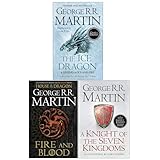


This section explores how the Targaryen family functions after the end of the dragon era, why their grip on power is weakening, and how A Knight of the Seven Kingdoms reveals the early cracks that will eventually doom the dynasty.
The Long Shadow of the Dance of the Dragons
The events of A Knight of the Seven Kingdoms take place decades after the Dance of the Dragons, the devastating Targaryen civil war dramatized in House of the Dragon. That conflict did more than wipe out much of the royal family; it effectively ended the age of dragons in Westeros. By the time Ser Duncan the Tall and Prince Aegon Targaryen begin their journey, dragons are extinct, and with them the supernatural foundation of Targaryen rule.
Quick wins for a faster PC:
Clear out junk files and repair common Windows errorsFree Scan →Scan for outdated or missing drivers - takes under a minuteDriver Scan →Repair Windows errors before they cause bigger problemsFix Now →#1 Best Overall
Without dragons, the Iron Throne is no longer an unquestioned symbol of divine dominance. The great houses remember that the Targaryens can bleed, lose wars, and fracture from within. This loss reshapes the political landscape, forcing the dynasty to rely on marriage pacts, feudal loyalty, and the personal competence of its kings rather than overwhelming force.
A Dynasty Holding Power by Precedent, Not Fear
During the Dunk and Egg era, the Targaryens still rule all Seven Kingdoms, but their authority is increasingly ceremonial. Rebellions, like the Blackfyre uprisings, loom in the background, driven by rival branches of the same bloodline. The royal family’s power is now rooted in tradition and legitimacy, not inevitability.
This is a period when Targaryen kings must act as politicians rather than conquerors. Court intrigue, succession anxiety, and regional unrest dominate the realm. The monarchy survives, but it does so on increasingly unstable ground, setting the stage for the slow decline that will culminate in Robert’s Rebellion generations later.
Prince Aegon and the Future of the Throne
At the heart of A Knight of the Seven Kingdoms is a young Prince Aegon Targaryen, long before he becomes King Aegon V. Unlike the larger-than-life rulers who came before him, Aegon grows up among common people, traveling the realm in disguise. This grounding experience shapes a king who will later try, and largely fail, to reform a feudal system stacked against the smallfolk.
His presence highlights the central irony of the era: the Targaryens are closest to their subjects when their power is weakest. Through Aegon and Dunk’s travels, the story exposes how the consequences of Targaryen decisions ripple outward across Westeros, from hedge knights to high lords, revealing a kingdom still healing from dragonfire even as it marches toward new wars.
The Targaryen Power Structure During Dunk and Egg: Kings, Princes, and Succession Tensions
By the time A Knight of the Seven Kingdoms begins, the Targaryen dynasty is ruled by King Aerys I, a monarch more interested in books and prophecy than governance. His reign is defined less by royal command and more by delegation, particularly to his formidable Hand, Brynden Rivers. This absence of direct royal authority creates a vacuum at court, where princes and counselors wield outsized influence.
The result is a monarchy that still wears the crown, but no longer fully controls the realm. Power flows sideways through bloodlines, offices, and personal ambition rather than cleanly down from the Iron Throne. For viewers, this era explains how the Targaryens could remain kings while quietly losing their grip on unity.
King Aerys I and the Shadow Government of Bloodraven
King Aerys I is the son of Daeron II, a conciliatory ruler who tried to heal the wounds left by earlier civil wars. Aerys lacks his father’s political instincts and largely retreats from public rule. In practice, the realm is governed by Bloodraven, Aerys’ half-brother, whose reputation as a sorcerer, spymaster, and ruthless enforcer inspires fear across Westeros.
Bloodraven’s dominance keeps the peace but deepens resentment among the nobility. His obsession with rooting out Blackfyre supporters ensures short-term stability while planting long-term distrust. The crown survives, but it does so through surveillance and suppression rather than loyalty.
The Princes Beneath the Crown: Maekar, Aemon, and Aerion
Below Aerys I sits his younger brother, Prince Maekar Targaryen, a hardened warrior and veteran of earlier conflicts. Maekar commands respect through force of arms, but his rigid temperament and strained relationships with his sons complicate the succession. He represents an older, harsher vision of Targaryen rule, one built on discipline rather than diplomacy.
Maekar’s sons embody the fractures within the dynasty. Aemon has already removed himself from the line of succession by becoming a maester, while Aerion Brightflame is volatile, cruel, and dangerously unstable. The existence of such an heir highlights how thin the margin for error has become within the royal family.
The Ghost of Baelor Breakspear and a Broken Line of Succession
Haunting this entire period is the memory of Prince Baelor Breakspear, Maekar’s eldest son and once the most promising future king of his generation. His death at the Tourney of Ashford removes a stabilizing figure who might have unified the realm. Without Baelor, the line of succession grows increasingly fragile.
Free tools Windows power users keep installed
One-click scans. No signup required.
Each remaining heir carries flaws that make the future uncertain. This uncertainty feeds noble anxiety and keeps the threat of rebellion alive, particularly from the lingering Blackfyre claimants. The Iron Throne still stands, but everyone knows it rests on an increasingly narrow foundation.
Where Egg Fits Into the Dynastic Puzzle
Prince Aegon, known to Dunk simply as Egg, sits far down the line of succession during these early stories. His anonymity is not just a disguise, but a reflection of how unlikely his rise seems at the time. Few at court imagine that this scrappy, sharp-tongued boy will one day inherit the crown.
That improbability is precisely what makes this era so compelling. The Targaryen power structure is crowded with princes, yet starved of truly capable heirs. Egg’s journey through this unstable hierarchy offers a ground-level view of a royal family quietly approaching one of its most consequential turning points.
King Aerys I and the Weakening of the Iron Throne
By the time A Knight of the Seven Kingdoms begins, the Iron Throne is occupied by King Aerys I Targaryen, a monarch whose reign quietly exposes how hollow royal authority has become. Learned, reclusive, and deeply uninterested in ruling, Aerys prefers ancient prophecies and dusty tomes to court politics or governance. His disinterest does not spark open rebellion, but it allows the structural weaknesses of the realm to deepen unchecked.
Do these 3 things before closing this tab:
1Clear out junk files and repair common Windows errors2Scan for outdated or missing drivers - takes under a minute3Repair Windows errors before they cause bigger problemsAerys is not cruel, mad, or incompetent in the obvious ways that doom other kings. His failure is subtler and more dangerous. Power continues to flow, but it flows away from the crown itself.
A King Who Rules by Absence
Aerys delegates nearly all matters of state, leaving the day-to-day rule of the Seven Kingdoms in the hands of his Hand, Brynden Rivers, better known as Bloodraven. While Bloodraven is brilliant and ruthless, his authority derives from fear and surveillance rather than loyalty. The realm is held together by informants, spies, and swift executions, not trust in the king.
This creates an illusion of stability during Dunk and Egg’s travels. The roads are mostly safe, the lords largely obedient, and rebellion is swiftly crushed. Yet beneath that calm lies resentment, especially among houses already inclined to challenge Targaryen rule.
The Shadow of Bloodraven and the Blackfyre Threat
Bloodraven’s obsession with stamping out the Blackfyre pretenders defines Aerys I’s reign. Several Blackfyre plots are foiled before they can fully ignite, reinforcing the sense that the crown is always under siege. Rather than healing old wounds from the civil wars, the monarchy doubles down on suspicion and punishment.
Recommended Free Tools
This strategy keeps the throne standing but alienates much of the nobility. Lords whisper that the realm is ruled by sorcery and spies, not a king. The longer Aerys withdraws from public life, the more the crown feels distant and fragile.
No Heirs, No Vision, No Momentum
Perhaps the most dangerous flaw of Aerys I’s reign is its stagnation. He produces no heirs, offers no reforms, and provides no sense of direction for the future. Succession remains unresolved, leaving powerful princes like Maekar looming uncomfortably close to the throne.
For viewers of A Knight of the Seven Kingdoms, this context is crucial. The world Dunk and Egg move through is not collapsing, but it is drifting. Authority still exists, yet it is no longer anchored by a king who leads, only by the fear of what might happen if the fragile balance finally breaks.
Maekar I Targaryen: The Warrior Prince and Fractured Royal Family
If Aerys I represents a crown hollowed out by neglect, his younger brother Maekar embodies the opposite problem. Maekar is forceful, proud, and perpetually ready for war, yet emotionally rigid and ill-suited to hold a divided family together. During Dunk and Egg’s era, he looms as both a stabilizing presence and a looming threat, a prince whose strength cannot mend what the dynasty has already cracked.
What’s actually slowing this PC down?
Pick the symptom - the matching free tool is one click away.
Maekar is not expected to inherit the throne. That uncertainty shapes everything about him, turning him into a hard-edged soldier-prince rather than a consensus builder. He prepares for conflict, not continuity.
The Prince Who Broke His Own House
Maekar’s defining tragedy comes years before his coronation, at the Trial of Seven at Ashford Meadow. In the chaos of the melee, he strikes his older brother Baelor Breakspear with a mace, dealing a wound that proves fatal. The blow is accidental, but its consequences are irreversible.
Baelor had been the dynasty’s hope, a beloved heir who combined Targaryen authority with Dornish diplomacy. His death leaves a vacuum no one truly fills, and Maekar never escapes the shadow of that moment. The royal family survives, but its emotional center is gone.
A Father at War With His Sons
Maekar’s household mirrors the broader instability of the realm. His sons are brilliant, volatile, or withdrawn, and often all three at once. Daeron, nicknamed the Drunken, is plagued by prophetic dreams he dulls with wine, while Aerion Brightflame channels his sense of superiority into cruelty and obsession with dragonlord mythmaking.
Rank #3
To contain the damage, Maekar pushes his gentler sons away from power. Aemon is sent to the Citadel to become a maester, sworn to celibacy and political neutrality. Aegon, the youngest, is fostered and largely ignored, growing up far from courtly privilege under the nickname Egg.
Power Without Warmth
As a prince, Maekar commands respect but little affection. He believes order comes from discipline and fear, not persuasion, a philosophy shaped by decades of watching rebellion simmer under Aerys I. When he finally ascends the throne, he brings clarity and decisiveness, but not unity.
This matters deeply to A Knight of the Seven Kingdoms. The show’s emotional core rests on found family and chosen loyalty, qualities absent in Maekar’s bloodline. His fractured household produces the unlikely king who follows him, proving that the future of House Targaryen will come not from its strongest warrior, but from the son he never expected to matter.
Prince Aegon ‘Egg’ Targaryen: The Hidden Heir and Future King
Aegon Targaryen enters A Knight of the Seven Kingdoms not as a prince, but as a boy scrubbing armor and sleeping under hedges. Known simply as Egg, he is the youngest son of Prince Maekar, stripped of titles, silks, and expectations. That distance from power is not an accident; it is the result of a family desperate to keep its most volatile branches from doing further damage.
Crashes, No Sound, or Screen Glitches?
Random freezes, missing sound and display glitches usually trace back to one bad driver. Find and replace yours safely.Free scan · under a minutePC Slower Than It Used to Be?
A free scan shows the junk files, broken settings and background clutter dragging Windows down - then fixes them in one click.Free scan · Windows 10 & 11Egg’s anonymity is what makes him dangerous to the established order. He grows up watching the realm rather than ruling it, learning how nobles treat common folk when they think no one important is looking. By the time destiny catches up with him, he understands Westeros in a way few Targaryens ever have.
A Prince Raised Outside the Palace
Egg is sent away from court at a young age, fostered with little ceremony and even less affection. He shaves his silver hair to hide his Valyrian features, erasing the visual markers of royalty that define his family. What remains is a sharp, stubborn child with an unshakable sense of right and wrong.
This upbringing places Egg closer to the smallfolk than any Targaryen since the Conquest. He eats what they eat, sleeps where they sleep, and listens when they complain. The experience quietly reshapes his worldview, preparing him to become a king who sees governance as responsibility rather than inheritance.
The Bond With Dunk and the Education of a King
Egg’s true education begins when he attaches himself to Ser Duncan the Tall. Dunk is everything the court is not: honorable, uncertain, and painfully human. Through their travels, Egg witnesses both chivalry and cruelty, learning that knighthood is an ideal rarely matched by reality.
This relationship forms the emotional backbone of A Knight of the Seven Kingdoms. Dunk teaches Egg empathy and restraint, while Egg challenges Dunk’s assumptions about birth and worth. Together, they explore a Westeros caught between fading legends and hard truths, mirroring the transition the Targaryen dynasty itself is undergoing.
An Unlikely Claim to the Iron Throne
At the time of the series, Egg’s claim to the throne is theoretical at best. Ahead of him stand brothers, nephews, and political obstacles that make his future as king seem improbable. Yet the Targaryen line is already brittle, weakened by infighting, prophecy, and misplaced pride.
When tragedy removes those ahead of him, Egg becomes King Aegon V, a ruler no one planned for and few fully understand. His ascent marks a turning point in Targaryen history, shifting the dynasty away from dragon dreams and toward social reform. The seeds of that transformation are planted during these early adventures, when a hidden heir learns what the crown is truly for.
Why Egg Matters to the Franchise
Egg’s story bridges the mythic past of House of the Dragon and the decaying monarchy of Game of Thrones. He represents the last serious attempt by the Targaryens to rule justly rather than absolutely. His reign will ultimately fail, but not for lack of compassion.
The Tool Desk
Outbyte Driver Updater FREEFix the driver behind crashes, sound loss and screen glitchesFind Drivers →Outbyte PC Repair FREEClear out junk files and repair common Windows errorsFree Scan →In A Knight of the Seven Kingdoms, viewers are watching the making of a king shaped by absence, humility, and hard lessons on the road. Egg is proof that the most important figures in Westerosi history often begin as footnotes, overlooked until the moment the realm needs them most.
The Blackfyre Shadow: How Civil War Still Shapes Targaryen Politics
Egg’s childhood unfolds in a kingdom still haunted by a war most smallfolk barely understand, but no noble family has forgotten. The Blackfyre Rebellions, a series of bitter civil wars within House Targaryen, have left deep scars on the monarchy’s sense of legitimacy and fear of internal dissent. By the time A Knight of the Seven Kingdoms begins, the dragons are gone, but the paranoia they once kept at bay remains.
Rank #4
This lingering shadow explains much of the quiet tension surrounding the Targaryen family during Egg’s youth. Power is no longer secured by fire and blood, but by bloodlines, alliances, and relentless vigilance. Every decision at court is colored by the memory of how easily the dynasty once turned on itself.
The Origin of the Blackfyre Claim
The Blackfyre conflict begins with King Aegon IV, whose reign is defined by indulgence and irresponsibility. On his deathbed, he legitimizes all his bastards, including Daemon Waters, whom he had previously gifted with the ancestral sword Blackfyre. That single act creates ambiguity over succession, allowing Daemon to later claim he was the king’s true intended heir.
PC Slower Than It Used to Be?
A free scan shows the junk files, broken settings and background clutter dragging Windows down - then fixes them in one click.Free scan · Windows 10 & 11Crashes, No Sound, or Screen Glitches?
Random freezes, missing sound and display glitches usually trace back to one bad driver. Find and replace yours safely.Free scan · under a minuteDaemon Blackfyre’s rebellion fractures the realm, forcing Targaryens to fight Targaryens in open war. Though Daemon is ultimately killed, his bloodline survives in exile, and the idea that the throne was stolen rather than won never fully dies. This unresolved question of legitimacy becomes a quiet poison running through the royal family for generations.
A Dynasty Afraid of Itself
By Egg’s era, the Targaryens rule defensively rather than confidently. Kings fear strong relatives, ambitious sons, and even popular princes, haunted by the knowledge that rebellion can come from within the family as easily as from rival houses. Loyalty is tested constantly, and mercy is often seen as weakness.
This anxiety helps explain why Targaryen politics feel unusually cautious during A Knight of the Seven Kingdoms. The crown watches its own blood more closely than its enemies, aware that another civil war could end the dynasty altogether. The Iron Throne still stands, but it stands on memory and fear rather than unquestioned authority.
How the Blackfyres Shape Egg’s World
Although Egg himself is far removed from the Blackfyre claim, he grows up in a court structured by its consequences. His family’s insistence on order, hierarchy, and obedience reflects lessons learned through bloodshed. Even the tourneys and pageantry Dunk and Egg encounter are influenced by a desire to project unity after decades of internal fracture.
The Tool Desk
Outbyte Driver Updater FREEFix the driver behind crashes, sound loss and screen glitchesFind Drivers →Outbyte PC Repair FREEClear out junk files and repair common Windows errorsFree Scan →This context gives Egg’s later reforms added significance. When he becomes Aegon V and attempts to strengthen the realm by improving the lives of common people, he is pushing against a system built to prevent another Blackfyre-style uprising. His compassion challenges a political culture shaped by civil war, suspicion, and inherited trauma.
Why This History Matters to the Franchise
The Blackfyre legacy connects A Knight of the Seven Kingdoms to both House of the Dragon and Game of Thrones, reinforcing a central theme of the franchise: the most dangerous conflicts in Westeros are family disputes. Dragons may dominate earlier eras, and armies later ones, but the root cause remains the same. Power fractures families long before it fractures kingdoms.
Understanding the Blackfyre shadow allows viewers to see Egg’s story not as a gentle roadside adventure, but as a chapter written in the aftermath of catastrophe. The realm he wanders is quieter than in other series, yet far more fragile. And every choice the Targaryens make, including the ones that shape Egg’s future, is driven by the fear that their greatest enemy has always been themselves.
Independent reader supportYour contribution helps us test, update, and keep practical guides available for everyone.Key Targaryen Relationships That Define the Dunk and Egg Era
The Dunk and Egg stories hinge on a smaller, more intimate Targaryen family tree than viewers may be used to. Dragons are gone, the dynasty is aging, and power rests less on spectacle than on brittle alliances between siblings, uncles, and cousins. These relationships shape not only Egg’s upbringing, but the political tone of the entire realm.
Quick wins for a faster PC:
Clear out junk files and repair common Windows errorsFree Scan →Scan for outdated or missing drivers - takes under a minuteDriver Scan →Repair Windows errors before they cause bigger problemsFix Now →Aerys I and Bloodraven: A Kingdom Ruled from the Shadows
King Aerys I sits the Iron Throne during most of Dunk and Egg’s travels, but he is not the true center of power. Scholarly, detached, and more interested in prophecy than governance, Aerys relies almost entirely on his Hand, Brynden Rivers, better known as Bloodraven. This creates a monarchy where authority feels distant and surveillance feels constant.
Bloodraven’s influence defines the era’s paranoia. As a legitimized Targaryen bastard and veteran of the Blackfyre wars, he governs through spies, informants, and preemptive strikes against rebellion. For Egg, this means growing up in a family where loyalty is enforced, not assumed, and where dissent is quietly erased before it can spread.
Maekar Targaryen: The Harsh Father Shaping a Future King
Prince Maekar, Egg’s father, represents the hard edge of post-Blackfyre Targaryen rule. He is stern, militaristic, and deeply suspicious of weakness, both in his children and in the realm. His rigid worldview is a direct response to the civil wars that nearly destroyed his house.
Maekar’s relationship with Egg is distant and punitive, pushing the boy into anonymity as a squire rather than grooming him for power. Ironically, this neglect becomes formative. By removing Egg from courtly privilege, Maekar inadvertently allows his son to see Westeros as it truly is, planting the seeds for Aegon V’s later reforms.
Best Value
Egg and His Brothers: Three Paths of Targaryen Decline
Egg’s older brothers embody the fractured future of House Targaryen. Daeron, known as the Drunken, is gentle and prophetic but self-destructive, haunted by dreams he cannot escape. Aerion Brightflame is his opposite, cruel, unstable, and obsessed with the lost grandeur of dragons and conquest.
These brothers serve as warnings as much as family. Daeron shows the cost of sensitivity in a brutal political world, while Aerion demonstrates how unchecked Targaryen exceptionalism curdles into madness. Egg grows up watching both paths fail, shaping his determination to rule differently when his unlikely moment comes.
Maester Aemon: The Conscience of the Dynasty
Though not physically present for much of Dunk and Egg, Maester Aemon’s relationship to Egg is one of the era’s most meaningful. Aemon, Maekar’s son and Egg’s uncle, voluntarily renounces power to serve the realm through knowledge. His choice stands in quiet contrast to the violence and ambition surrounding the throne.
Aemon represents what the Targaryens could be without crowns and claims. His influence lingers over Egg’s story, reinforcing the idea that duty does not always require dominion. Long before audiences meet him at the Wall in Game of Thrones, Aemon is already shaping the moral framework of the dynasty’s last hopeful king.
What’s actually slowing this PC down?
Pick the symptom - the matching free tool is one click away.
Dunk and Egg: Found Family Against Dynastic Fate
While not a Targaryen by blood, Ser Duncan the Tall becomes the most stabilizing relationship in Egg’s life. Dunk offers something no royal relative does: honesty without calculation. Their bond cuts through hierarchy, allowing Egg to exist as a boy rather than a political asset.
This relationship is crucial to understanding the era. In a family defined by suspicion and inherited trauma, Dunk provides Egg with a model of honor untethered from lineage. That influence will echo forward, quietly reshaping the Iron Throne long after both men leave the road behind.
Why This Generation of Targaryens Matters to Game of Thrones and House of the Dragon
The Targaryens of A Knight of the Seven Kingdoms sit at a crucial crossroads in Westerosi history. They are neither the dragon-lords of House of the Dragon nor the fading monarchs remembered in Game of Thrones. Instead, they represent the long, uneasy transition between mythic power and political reality.
This is the moment when House Targaryen is forced to reckon with life without dragons, absolute fear, or unquestioned dominance. What survives is not fire and blood, but governance, compromise, and hard-earned legitimacy.
The Beginning of the End of Targaryen Exceptionalism
By Egg’s lifetime, the Targaryens can no longer rely on spectacle to maintain control. Dragons are gone, rebellions are fresh in living memory, and noble houses feel increasingly emboldened. The crown must negotiate rather than command.
This erosion of power directly foreshadows the fragile monarchy seen in Game of Thrones. Robert’s Rebellion does not erupt from nowhere; it grows from centuries of weakened authority and unmet promises that begin here.
Egg as the Blueprint for a Different Kind of King
Aegon V’s reign becomes a quiet counterpoint to nearly every ruler who follows him. His concern for smallfolk, resistance to noble excess, and belief in reform mark a philosophical break from traditional Targaryen rule. These ideals echo forward, even when they fail.
The tragedy is that Egg’s compassion ultimately puts him at odds with the very system he inherits. His struggles help explain why later kings, from Aerys II to Robert Baratheon, rule through fear or force rather than reform.
How This Era Reframes House of the Dragon
House of the Dragon shows the Targaryens at their most powerful and self-destructive. A Knight of the Seven Kingdoms shows the aftermath. The Dance of the Dragons is no longer ancient history here; it is a lingering wound that defines how the family governs and mistrusts itself.
Seeing this generation contextualizes the earlier civil war as more than spectacle. It becomes the original sin that condemns future Targaryens to rule without the tools that once justified their dominance.
Bridging Myth and Memory in Game of Thrones
For Game of Thrones viewers, this era explains why the Targaryen name still inspires loyalty long after its fall. Characters like Maester Aemon, Barristan Selmy, and even Daenerys inherit not just blood, but unresolved ideals born in Egg’s time.
This generation turns the Targaryens from legendary conquerors into tragic stewards of a declining legacy. Their choices, compromises, and failures quietly shape the political world that eventually rejects them.
In many ways, A Knight of the Seven Kingdoms is the emotional and historical spine of the franchise. It reveals the moment when House Targaryen stops being inevitable and starts being human. Understanding this generation doesn’t just enrich the story; it explains why the Iron Throne was always destined to burn those who sat upon it.
Quick Recap
Product prices and availability are accurate as of the date/time indicated and are subject to change. Any price and availability information displayed on Amazon at the time of purchase will apply.

