The Tool Desk
Outbyte PC Repair FREERepair Windows errors before they cause bigger problemsFix Now →Outbyte Driver Updater FREEFix the driver behind crashes, sound loss and screen glitchesFind Drivers →Some links on this page are affiliate links: if you buy through them we may earn a commission, at no extra cost to you.
Spotify loses on maximum lossless audio specifications, not as an all-around music service. Spotify Premium tops out at 24-bit/44.1 kHz FLAC, while Apple Music and TIDAL offer formats up to 24-bit/192 kHz. That higher ceiling matters most to listeners with a wired, compatible hi-fi setup; it does not guarantee a better-sounding master or an audible difference. If you mainly listen over Bluetooth, Spotify’s discovery, social features and device support may matter more than the format gap.
What lossless means—and what it does not
Lossless audio preserves the encoded audio data rather than discarding information to reduce file size, as lossy compression does. CD-quality audio is 16-bit/44.1 kHz; hi-res lossless describes formats above that baseline. Bit depth and sample rate describe a file’s technical format, not whether its mix or mastering is good.
- Lossless is not a new master. It cannot make a recording’s mix, mastering or dynamics better.
- Hi-res is not proof of audible superiority. A 24-bit/192 kHz file is not automatically preferable to a well-mastered 16-bit/44.1 kHz version.
- Spatial audio is a separate format. Dolby Atmos mixes change the presentation and should not be treated as a higher-resolution stereo file.
The services’ format ceilings are real technical differences; they do not, by themselves, establish which service will sound best to you.
What’s actually slowing this PC down?
Pick the symptom - the matching free tool is one click away.
How the three services compare technically
| Service | Maximum stated lossless format | Immersive audio | What can limit playback |
|---|---|---|---|
| Spotify Premium | Up to 24-bit/44.1 kHz FLAC | No Dolby Atmos offering is verified in the cited sources | Market, track, device, connection and playback settings |
| Apple Music | 16-bit/44.1 kHz through 24-bit/192 kHz | Dolby Atmos Spatial Audio | Bluetooth does not preserve lossless; hi-res may require compatible external hardware |
| TIDAL | Up to 24-bit/192 kHz HiRes FLAC | Dolby Atmos on supported content and devices | Format availability and device support; playback can fall back to FLAC or AAC |
Spotify announced Lossless on September 10, 2025, and reported that its rollout had reached Premium users in more than 50 markets by October 6, 2025. The service says the maximum is 24-bit/44.1 kHz FLAC; its support guidance notes that the delivered quality depends on the track, device, connection and settings. Spotify’s announcement and lossless playback guidance provide the rollout and device details.
#1 Best Overall
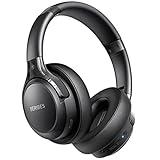
- 65 Hours Playtime: Low power consumption technology applied, BERIBES bluetooth headphones with built-in 500mAh battery can continually play more than 65 hours, standby more than 950 hours after one fully charge. By included 3.5mm audio cable, the wireless headphones over ear can be easily switched to wired mode when powers off. No power shortage problem anymore.
- Optional 6 Music Modes: Adopted most advanced dual 40mm dynamic sound unit and 6 EQ modes, BERIBES updated headphones wireless bluetooth black were born for audiophiles. Simply switch the headphone between balanced sound, extra powerful bass and mid treble enhancement modes. No matter you prefer rock, Jazz, Rhythm & Blues or classic music, BERIBES has always been committed to providing our customers with good sound quality as the focal point of our engineering.
- All Day Comfort: Made by premium materials, 0.38lb BERIBES over the ear headphones wireless bluetooth for work are the most lightweight headphones in the market. Adjustable headband makes it easy to fit all sizes heads without pains. Softer and more comfortable memory protein earmuffs protect your ears in long term using.
- Latest Bluetooth 6.0 and Microphone: Carrying latest Bluetooth 6.0 chip, after booting, 1-3 seconds to quickly pair bluetooth. Beribes bluetooth headphones with microphone has faster and more stable transmitter range up to 33ft. Two smart devices can be connected to Beribes over-ear headphones at the same time, makes you able to pick up a call from your phones when watching movie on your pad without switching.(There are updates for both the old and new Bluetooth versions, but this will not affect the quality of the product or its normal use.)
- Packaging Component: Package include a Foldable Deep Bass Headphone, 3.5MM Audio Cable, Type-c Charging Cable and User Manual.
Apple documents lossless from 16-bit/44.1 kHz through 24-bit/192 kHz. TIDAL’s Max quality can deliver HiRes FLAC up to 24-bit/192 kHz, but its format order is HiRes FLAC, then FLAC, then AAC when those versions are available. Neither service promises that every track is available in its maximum format. See Apple’s lossless audio guide and TIDAL’s HiRes FLAC guidance.
What reaches your headphones depends on the whole playback chain
An app’s quality setting is only one part of the signal path. Bluetooth generally recompresses audio, so Bluetooth headphones—including AirPods—do not provide an end-to-end lossless connection. Apple explicitly notes that Bluetooth does not support lossless playback. A wired output may preserve CD-quality playback; hi-res may call for a compatible USB DAC and a device, app and connection that support the target format.
Rank #2
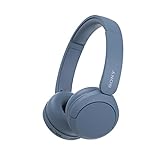
- LONG BATTERY LIFE: With up to 50-hour battery life and quick charging, you’ll have enough power for multi-day road trips and long festival weekends.(USB Type-C Cable included)
- HIGH QUALITY SOUND: Great sound quality customizable to your music preference with EQ Custom on the Sony | Headphones Connect App.
- LIGHT & COMFORTABLE: The lightweight build and swivel earcups gently slip on and off, while the adjustable headband, cushion and soft ear pads give you all-day comfort.
- CRYSTAL CLEAR CALLS: A built-in microphone provides you with hands-free calling. No need to even take your phone from your pocket.
- MULTIPOINT CONNECTION: Quickly switch between two devices at once.
| Playback route | Practical expectation | What to check |
|---|---|---|
| Bluetooth headphones or car audio | Generally not lossless end to end | The wireless codec and receiving device become part of the signal path. |
| Wired headphones from a phone or computer | Can support lossless, especially at CD quality | Check the device’s DAC and operating-system output limits. |
| USB DAC | Can enable hi-res output | Confirm supported sample rates and compatibility with the app and device. |
| Smart speaker or network streamer | Depends on service, endpoint and transport | Verify that the device supports the service’s format and playback method. |
| Spotify Connect | Depends on the compatible endpoint and settings | Spotify says lossless may need to be enabled in device settings while connected. |
| Offline downloads | Can use the selected quality, but existing downloads may retain an older setting | After changing quality, Apple Music and TIDAL may require deleting and redownloading tracks. |
For Apple Music’s highest formats, a compatible wired route or external hardware may be necessary. TIDAL says unsupported devices may fall back from HiRes FLAC, and Chromecast playback may default to High if the receiving device cannot handle HiRes FLAC. Its Dolby Atmos support also varies: the cited support page excludes desktop clients and Pixel devices. Check TIDAL’s Dolby Atmos compatibility details before choosing it for a particular setup.
Crashes, No Sound, or Screen Glitches?
Random freezes, missing sound and display glitches usually trace back to one bad driver. Find and replace yours safely.Free scan · under a minuteWindows Errors? Fix Them Before They Spread
Repair common Windows errors and clear accumulated junk for a smoother, more stable PC - no reinstall needed.Free scan · no reinstallCan you hear a difference?
Sometimes, but the specification alone cannot answer that. Lossy versus lossless can be audible in controlled comparisons depending on the codec, bitrate, music, listener and equipment. The difference between CD-quality lossless and higher sample-rate lossless is much harder to establish reliably. A change in master or a Dolby Atmos mix may be more noticeable than a change in sample-rate tier.
Rank #3

- LONG BATTERY LIFE: With up to 50-hour battery life and quick charging, you’ll have enough power for multi-day road trips and long festival weekends. (USB Type-C Cable included)
- HIGH QUALITY SOUND: Great sound quality customizable to your music preference with EQ Custom on the Sony | Headphones Connect App.
- LIGHT & COMFORTABLE: The lightweight build and swivel earcups gently slip on and off, while the adjustable headband, cushion and soft ear pads give you all-day comfort.
- CRYSTAL CLEAR CALLS: A built-in microphone provides you with hands-free calling. No need to even take your phone from your pocket.
- MULTIPOINT CONNECTION: Quickly switch between two devices at once.
A comparison is meaningful only when it controls for common sources of bias:
- Use the same track version and master on every service, where possible. Check release, duration, stereo versus Atmos, and whether one edition is a remaster or deluxe release.
- Use a wired listening chain if testing lossless formats; confirm the actual delivered format instead of relying only on the selected setting.
- Match playback volume closely and disable EQ, normalization, crossfade, spatial processing and enhancement effects.
- Compare short passages repeatedly, ideally without knowing which service is playing. A louder stream can seem clearer or fuller even when loudness—not detail—is the difference.
- Keep observations separate from measurements. Without a controlled, level-matched test, a personal impression cannot establish that one service always sounds better.
If the same album sounds different, first rule out a master mismatch: compare the edition, release year, track duration and stereo or Atmos version. Catalogs and format availability vary, so the same song title does not ensure the same recording or master. TIDAL advertises more than 180 million tracks across lossless, HiRes FLAC and Dolby Atmos, but that is a vendor-stated catalog figure, not a promise that every title is available in each format. Its pricing and plan page describes the service’s catalog and offline listening.
Rank #4

- WORLD’S BEST IN-EAR ACTIVE NOISE CANCELLATION — Removes up to 2x more unwanted noise than AirPods Pro 2* so you can stay fully immersed in the moment.*
- BREAKTHROUGH AUDIO PERFORMANCE — Experience breathtaking, three-dimensional audio with AirPods Pro 3. A new acoustic architecture delivers transformed bass, detailed clarity so you can hear every instrument, and stunningly vivid vocals.
- HEART RATE SENSING — Built-in heart rate sensing lets you track your heart rate and calories burned for up to 50 different workout types.* With iPhone, you will have access to the Move ring, step count, and the new Workout Buddy,* powered by Apple Intelligence.*
- LIVE TRANSLATION — Communicate across language barriers using Live Translation,* enabled by Apple Intelligence.*
- EXTENDED BATTERY LIFE — Get up to 8 hours of listening time with Active Noise Cancellation on a single charge. Or up to 10 hours in Transparency using the Hearing Aid feature.*
What each service is better suited to
Spotify: discovery, social listening and device flexibility
Spotify is a strong fit if personalized recommendations, playlists, Jam, Blend, daylist, DJ, Spotify Connect or familiar cross-platform use are central to how you listen. Spotify says Premium works with more than 2,000 devices and highlights offline listening, CarPlay and Android Auto on its US Premium page. Those are service and compatibility claims, not independent measurements of sound quality. Lossless arrives within Premium, but its format ceiling remains below the maximum offered by Apple Music and TIDAL.
Apple Music: hi-res formats and Apple integration
Apple Music suits listeners who want a 24-bit/192 kHz ceiling, Dolby Atmos options and close integration with Apple devices. Lossless must be enabled in the app settings. Apple says existing downloads may need to be deleted and downloaded again after a quality-setting change. If you use Bluetooth headphones, do not assume that a lossless badge means the wireless output itself remains lossless.
Best Value
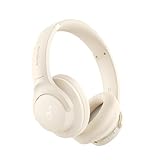
- Block the World, Keep the Music: Four built-in mics work together to filter out background noise — whether you're in a packed office, on a crowded commute, or moving through a busy street — so every beat comes through clean and clear. (Not available in AUX-in mode.)
- Two Ways to Hear More: BassUp technology delivers deep, punchy bass and crisp highs in wireless mode — then step it up further by plugging in the included AUX cable to unlock Hi‑Res certified audio for studio-level clarity.
- 40 Hours. 5-Minute Top-Up: With ANC on, a single charge keeps you listening through days of commutes and long-haul flights. Running low? Just 5 minutes plugged in gives you 4 more hours — so you're never stuck waiting.
- Two Devices, Zero Hassle: Stay connected to your laptop and phone at the same time. Audio switches automatically to whichever device needs you — so a call never interrupts your flow, and getting back to your playlist is just as easy. Designed for commuters and remote workers who move smoothly between work and personal listening throughout the day.
- Your Sound, Your Rules: The soundcore app puts everything at your fingertips — dials your ideal EQ with presets or build your own, flip between ANC, Normal, and Transparency modes on the fly, or wind down with built-in white noise. One app, total control.
TIDAL: format visibility and hi-fi integrations
TIDAL is worth considering if you use compatible hi-fi hardware, want to see whether a track is playing HiRes FLAC, FLAC or AAC, or rely on supported TIDAL Connect, Chromecast or DJ software integrations. Its supported devices page lists device and integration options. Check the specific endpoint and track: the 24-bit/192 kHz ceiling is useful only when the recording and the complete playback chain support it.
Which one should you choose?
- Mostly Bluetooth listening: Choose for discovery, interface, catalog and ecosystem, rather than paying extra or switching solely for hi-res specifications.
- Wired listening with a capable DAC: Apple Music and TIDAL offer a higher technical ceiling than Spotify. Decide based on the catalog, interface and compatible equipment you actually use.
- Apple-device owner who wants Atmos: Apple Music offers lossless and Dolby Atmos in the same service; check that your chosen output path supports the experience you want.
- Spotify playlist and social-feature regular: Staying may make sense if those features are more valuable to you than access to formats above 44.1 kHz.
- Hi-fi or DJ setup: Check whether the service integrates with your exact streamer, receiver or software before subscribing for a format or workflow.
- Comparing family plans or prices: Prices and offers change by country and eligibility. Spotify’s US page currently lists Individual at $12.99 per month after its introductory offer, Student at $6.99, Duo at $18.99 and Family at $21.99; confirm current terms on the provider’s signup page. The cited Apple and TIDAL sources do not establish current US subscription prices.
Verdict: Spotify loses the specification contest, not every contest
On maximum lossless capability, Spotify is the clear technical loser: its Premium stream tops out at 24-bit/44.1 kHz, while Apple Music and TIDAL reach 24-bit/192 kHz. That advantage is most relevant to people who can play those formats through a compatible wired or hi-fi chain. For Bluetooth listeners, and for anyone who values Spotify’s discovery, social listening and device flexibility more, the specification gap alone is not a reason to switch.
Quick Recap
Product prices and availability are accurate as of the date/time indicated and are subject to change. Any price and availability information displayed on Amazon at the time of purchase will apply.

