Do these 3 things before closing this tab:
1Fix the driver behind crashes, sound loss and screen glitches2Clear out junk files and repair common Windows errors3Scan for outdated or missing drivers - takes under a minuteSpotify Lossless is a real technical improvement, not a cure for Spotify’s deeper problems. Premium users in eligible markets can now stream up to 24-bit/44.1 kHz FLAC, but the feature cannot repair a poor master, make Bluetooth transmission lossless, restore missing albums, improve every recommendation, change royalty distribution, or undo the trust damage caused by a long-delayed promise. Lossless makes Spotify more complete; it does not fundamentally remake the service.
What Spotify Lossless actually changes
Spotify began rolling out Lossless on September 10, 2025, and later said it had reached eligible Premium users in more than 50 markets. The maximum advertised format is 24-bit/44.1 kHz FLAC. Spotify describes it as a new quality choice alongside Low, Normal, High, and Very High. Availability still depends on your Premium account, country, app version, device and playback route. Spotify says Lossless covers nearly every song in its catalog, which is not the same as guaranteeing every track or every release in that format.
See Spotify’s rollout announcement, Lossless support documentation and Spotify Connect guidance.
To enable it, open Spotify, choose your profile icon or account menu, select Settings & Privacy, open Media Quality, and set Lossless separately for Wi-Fi, cellular data and downloads. Start playback and look for the Lossless indicator where the device supports it. Menu names can move as apps change, so treat that path as a current guide rather than a permanent interface promise.
#1 Best Overall

- Hybrid Active Noise Cancelling: 2 internal and 2 external mics work in tandem to detect external noise and effectively reduce up to 90% of it, no matter in trains or offices.
- Immerse Yourself in Detailed Audio: The noise cancelling headphones have oversized 40mm dynamic drivers that produce detailed sound and thumping beats with BassUp technology for your every travel, commuting and gaming. Compatible with Hi-Res certified audio via the AUX cable for more detail.
- 40-Hour Long Battery Life and Fast Charging: With 40 hours of battery life with ANC on and 60 hours in normal mode, you can commute in peace with your Bluetooth headphones without thinking about recharging. Fast charge for 5 mins to get an extra 4 hours of music listening for daily users.
- Dual-Connections: Connect to two devices simultaneously with Bluetooth 5.0 and instantly switch between them. Whether you're working on your laptop, or need to take a phone call, audio from your Bluetooth headphones will automatically play from the device you need to hear from.
- App for EQ Customization: Download the soundcore app to tailor your sound using the customizable EQ, with 22 presets, or adjust it yourself. You can also switch between 3 modes: ANC, Normal, and Transparency, and relax with white noise.
The technical fix is legitimate. Lossless encoding preserves the information in the supplied digital master instead of discarding some of it during lossy compression. That closes a long-standing gap with services that already offered lossless playback and gives wired hi-fi users a better source than Spotify’s older compressed tiers.
Why the Lossless label does not describe the whole listening chain
Bluetooth usually remains the bottleneck
Most everyday Bluetooth headphones and car systems receive audio through a lossy Bluetooth codec. Spotify may begin with a lossless FLAC file, but the wireless link can re-encode it before it reaches the headphones or speakers. “High-resolution Bluetooth” branding does not mean uncompressed Lossless delivery; codec support, device negotiation and operating-system audio handling determine what arrives.
Lossless can still be useful upstream, but a wireless listener should not expect the full benefit implied by the source specification.
Hardware and connection quality matter
A wired headphone output, DAC, amplifier, supported network streamer or compatible Spotify Connect endpoint gives Lossless a more plausible route to the listener. Spotify’s support pages also say a stable connection and sufficient bandwidth are required; one page recommends approximately 1.5–2 Mbps for the best Lossless experience. Higher-quality offline files consume more storage, and cellular use consumes substantially more data.
Spotify’s playback-quality documentation explains the route and device limitations, while its bandwidth guidance gives the 1.5–2 Mbps recommendation.
Rank #2
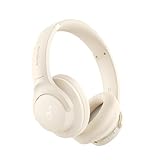
- Block the World, Keep the Music: Four built-in mics work together to filter out background noise — whether you're in a packed office, on a crowded commute, or moving through a busy street — so every beat comes through clean and clear. (Not available in AUX-in mode.)
- Two Ways to Hear More: BassUp technology delivers deep, punchy bass and crisp highs in wireless mode — then step it up further by plugging in the included AUX cable to unlock Hi‑Res certified audio for studio-level clarity.
- 40 Hours. 5-Minute Top-Up: With ANC on, a single charge keeps you listening through days of commutes and long-haul flights. Running low? Just 5 minutes plugged in gives you 4 more hours — so you're never stuck waiting.
- Two Devices, Zero Hassle: Stay connected to your laptop and phone at the same time. Audio switches automatically to whichever device needs you — so a call never interrupts your flow, and getting back to your playlist is just as easy. Designed for commuters and remote workers who move smoothly between work and personal listening throughout the day.
- Your Sound, Your Rules: The soundcore app puts everything at your fingertips — dials your ideal EQ with presets or build your own, flip between ANC, Normal, and Transparency modes on the fly, or wind down with built-in white noise. One app, total control.
Loudness normalization still applies
Spotify says loudness normalization continues regardless of format. That means selecting Lossless does not automatically create an untouched, bit-perfect path. Normalization is useful for comfortable listening, but it complicates casual comparisons between Spotify settings or competing services.
A better file cannot repair a bad master
Three separate questions are often collapsed into one:
- Encoding: Was information discarded when the file was compressed?
- Mastering: What tonal balance, dynamic range, clipping and distortion choices were made in the source?
- Playback: What happens between the app, operating system, DAC, amplifier and speakers or headphones?
FLAC improves the first item. It does not alter the second. A heavily clipped or aggressively limited master remains that way in a 24-bit FLAC file. Nor does 24-bit/44.1 kHz automatically beat every 16-bit/44.1 kHz version; the master and the playback chain matter more than a larger number on the specification sheet.
The Tool Desk
Outbyte Driver Updater FREEScan for outdated or missing drivers - takes under a minuteDriver Scan →Outbyte PC Repair FREEClear out junk files and repair common Windows errorsFree Scan →Spotify does not have universally inferior mastering, and a comparison with Apple Music, Tidal or Qobuz is meaningful only when the same release, master, volume and playback route are being compared. A listener who hears little difference may be encountering the same master, a Bluetooth bottleneck, a level mismatch, or equipment and room conditions that mask subtle changes. Someone who hears a difference may be hearing a different release rather than the codec alone.
How to test whether Lossless helps your system
- Use a wired connection or a known-compatible network player rather than ordinary Bluetooth.
- Confirm that the track is displaying the Lossless indicator.
- Standardize loudness normalization for both versions being compared.
- Use the same album release and master where possible.
- Match volume closely; a louder version often sounds “better” even when it is not.
- Try several well-recorded tracks instead of relying on one familiar song.
- Check the Spotify Connect endpoint and operating-system output path.
- Review data use and offline storage before enabling Lossless on every connection.
If Lossless sounds worse, investigate a different master, volume mismatch, device DSP, normalization or codec processing before concluding that Spotify’s implementation is defective.
Rank #3
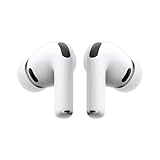
- WORLD’S BEST IN-EAR ACTIVE NOISE CANCELLATION — Removes up to 2x more unwanted noise than AirPods Pro 2* so you can stay fully immersed in the moment.*
- BREAKTHROUGH AUDIO PERFORMANCE — Experience breathtaking, three-dimensional audio with AirPods Pro 3. A new acoustic architecture delivers transformed bass, detailed clarity so you can hear every instrument, and stunningly vivid vocals.
- HEART RATE SENSING — Built-in heart rate sensing lets you track your heart rate and calories burned for up to 50 different workout types.* With iPhone, you will have access to the Move ring, step count, and the new Workout Buddy,* powered by Apple Intelligence.*
- LIVE TRANSLATION — Communicate across language barriers using Live Translation,* enabled by Apple Intelligence.*
- EXTENDED BATTERY LIFE — Get up to 8 hours of listening time with Active Noise Cancellation on a single charge. Or up to 10 hours in Transparency using the Hearing Aid feature.*
Spotify’s biggest advantage is discovery, not resolution
Spotify’s value has long come from helping people find and share music. Discover Weekly, daylist, DJ, Blend, Jam, AI Playlist, editorial playlists and listening-history tools form a discovery ecosystem that Lossless does not change. Spotify’s own 2025 feature overview presents sound quality alongside those recommendation and social products, effectively treating Lossless as one part of a larger service.
That advantage is also where the harder product questions begin. More personalization does not automatically mean better discovery. A recommendation can expose genuinely unfamiliar music, or simply reinforce established listening habits. Users may also find the app increasingly occupied by podcasts, audiobooks, video, social functions and AI experiments when they want a deliberate album-library experience.
Whether Spotify’s recommendations are “broken” is an editorial judgment, not a universal measurement. The practical test is personal: does the service surface music you would not have found, explain why it is recommending something, and still make it easy to browse an artist’s albums without being pushed back into an endless feed?
Lossless cannot solve catalog and library problems
A lossless file is irrelevant when the desired music is unavailable. Spotify’s catalog and annual filing qualifications still leave room for regional licensing differences and service conditions. A reader should distinguish four different situations:
| Situation | What it means | What Lossless can do |
|---|---|---|
| Album exists, but not in Lossless | The service has a compressed or different-quality version. | Nothing until Spotify supplies a lossless version. |
| Album exists, but only a particular master | Another service may carry a different transfer or edition. | Preserves the available master; it does not create another one. |
| Album is absent | Licensing, artist choice or a takedown prevents access. | Nothing. |
| Album is unavailable in your country | Rights vary by territory. | Nothing; a higher-quality setting cannot bypass regional licensing. |
Incorrect metadata, duplicate releases, missing deluxe editions, absent alternate mixes and weak liner-note or credit presentation are library problems, not codec problems. Spotify’s annual filing describes a broad catalog while qualifying availability by market and service conditions.
Rank #4
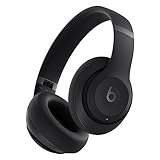
- INCREDIBLE SOUND: Custom acoustic platform delivers rich, balanced audio for music, calls and everyday listening.
- LOSSLESS AUDIO SUPPORT: USB-C lossless audio and sound profiles optimize music quality across devices and environments. Additional option to use the 3.5 mm cable for a standard analog experience.
- ACTIVE NOISE CANCELLING (ANC): block distractions at work, on flights or during your daily commute. Or use Transparency mode to let the sounds of your environment mix in with your music.
- SEAMLESS WIRELESS CONNECTIVITY: One-touch pairing with Apple & Android for easy switching across devices.
- SPATIAL AUDIO IMMERSION: Personalized dynamic head tracking, 360-degree sound for movies, music and immersive everyday listening.
Lossless is not royalty reform
Enabling Lossless improves the listener’s source quality. It does not automatically send a larger payment to an artist, songwriter, producer or label. Financial outcomes depend on Spotify’s contracts, rights ownership, allocation rules, territory and any separate royalty initiatives. There is no single universal per-stream rate that applies to every creator.
Free tools Windows power users keep installed
One-click scans. No signup required.
Spotify reported 713 million monthly active users and 281 million Premium subscribers in its third-quarter 2025 shareholder materials. That scale explains why the payment debate matters, but scale alone does not settle how revenue is distributed. Lossless should not be presented as a direct artist-support mechanism.
See Spotify’s Q3 2025 shareholder deck for the reported user and subscriber figures.
Independent reader supportYour contribution helps us test, update, and keep practical guides available for everyone.The four-year delay changed how users read the announcement
Spotify announced Spotify HiFi on February 22, 2021, promising CD-quality lossless audio. The rollout of Lossless began on September 10, 2025. The dates matter even without assigning a precise number of years: a feature announced in 2021 arrived after a long period in which users saw new commercial, social and content initiatives while a foundational audio request remained unresolved.
That history affects trust. Some subscribers will regard Lossless as welcome innovation; others will see overdue maintenance and become more skeptical of future announcements. The original promise is documented in Spotify’s 2021 HiFi announcement.
Best Value

- All-Day Comfort & Premium Design: Crafted with high-quality materials, these over-ear wireless headphones combine luxury with long-wearing comfort. The adjustable headband ensures a secure fit for all head sizes, while ultra-soft memory foam ear cups minimize pressure. Lightweight and ergonomic, they're ideal for work, travel, or leisure—keeping you comfortable even during extended use
- Unbeatable 120-Hour Battery Life: Enjoy up to 120 hours of playtime in standard mode at moderate volume. A quick 5-minute charge provides 4 extra hours—perfect for emergencies. Whether binge-watching, commuting, or working, these headphones/earbuds deliver uninterrupted performance without frequent recharging
- Bluetooth 6.0 & Seamless Connectivity: Advanced Bluetooth 6.0 ensures stable, high-speed pairing with smartphones, tablets, or laptops. Experience crisp audio streaming, low latency, and reliable connectivity for calls, music, or movies. The auto-connect feature allows hassle-free use anytime, anywhere
- Advanced Active Noise Cancellation: Immerse yourself in pure sound with next-generation ANC, eliminating up to 95% of ambient noise. Dual-microphone hybrid ANC detects and neutralizes external sounds across a wide frequency range 20Hz-20kHz, creating a distraction-free environment whether you're traveling or working
- Powerful Bass & Crystal-Clear Calls: Precision-tuned drivers deliver deep, punchy bass for an immersive listening experience. The built-in high-sensitivity microphone, enhanced by wind resistance and AI clarity, ensures professional-grade call quality—perfect for music lovers and busy professionals alike
Who should care most about Spotify Lossless?
| Listener | Practical verdict |
|---|---|
| Wired headphone, DAC or network-streamer user | Strongest case. The source-quality improvement can reach more of the system. |
| Bluetooth-earbud listener | Modest or uncertain benefit because the wireless codec remains a bottleneck. |
| Car listener | Usually prioritize connection stability, vehicle processing and catalog convenience over the FLAC label. |
| Background listener with limited data or storage | Lossless may not justify higher data use and larger downloads. |
| Discovery-first subscriber | Spotify remains compelling for recommendations and social listening; Lossless is an added benefit. |
| Listener focused on creator-support policy | Do not assume Lossless changes royalty mechanics. |
Should you switch services?
Choose by priority rather than by a single resolution number.
| Service | Best fit | Trade-off |
|---|---|---|
| Spotify Premium | Discovery, social listening, broad device reach and Lossless in one app. | Catalog, interface, trust and creator-economics questions remain; the US Individual price shown was $12.99/month after the displayed introductory offer, but prices and promotions are date-sensitive. |
| Apple Music | Apple integration, lossless as a standard feature, spatial audio and a music-centered catalog experience. | May be less attractive if Spotify’s recommendation and collaborative culture are essential. Current pricing requires checking Apple’s live signup page. |
| TIDAL | An explicitly music- and audio-focused service with hi-res ambitions. | Discovery and social features may not match Spotify; quality still depends on the playback route. Plan details can change. |
| Qobuz | Hi-res audio, credits, classical and jazz metadata, editorial depth and purchase options where available. | Narrower device and social ecosystem for some users; country availability and pricing vary. |
| Local files or purchased downloads | Ownership, exact master selection, archival control and playback without platform licensing changes. | Manual metadata, backups, storage and discovery work. |
For US readers, Spotify’s listed Individual, Student, Duo and Family prices were $12.99, $6.99, $18.99 and $21.99 per month respectively after or alongside the displayed offers, with plan benefits varying. Treat those figures as date-sensitive signals, not permanent prices.
The bottom line
Spotify Lossless fixes the codec problem Spotify should have solved years earlier. It is worthwhile for Premium users with wired or supported network playback, careful listening habits and enough data and storage. It is less consequential over ordinary Bluetooth, in a car or when the real complaint is missing music, poor organization, recommendation fatigue, creator compensation or broken trust.
Spotify is now a more complete service, not a repaired one. Stay if its discovery and convenience outweigh the compromises. Switch to Apple Music, TIDAL or Qobuz when Apple integration, audio-first presentation, metadata or hi-res priorities matter more. Choose local files when control and ownership are the point. No codec can make those larger decisions for you.
Recommended Free Tools
Quick Recap
Product prices and availability are accurate as of the date/time indicated and are subject to change. Any price and availability information displayed on Amazon at the time of purchase will apply.