Some links on this page are affiliate links: if you buy through them we may earn a commission, at no extra cost to you.
Slasher movies are built around a recognizable but flexible situation: a threatening killer stalks a group of potential victims, attacks are delayed or revealed through suspenseful looking, and at least one survivor eventually confronts the threat. The pattern became commercially recognizable in the late 1970s and early 1980s, although earlier films such as Psycho (1960) and Peeping Tom (1960) helped establish its interest in looking, surveillance and violated bodies. The most useful way to understand the genre is not as a rulebook, but as a set of recurring choices that filmmakers can repeat, rearrange or challenge.
What is a slasher movie?
A slasher is a horror subgenre organized around stalking, threatened victims, physical attacks and a killer who appears difficult to stop. Much of the suspense comes from anticipation: the audience knows that an attack may be approaching, waits for the victim to notice danger, and watches spaces that may conceal the killer.
| # | Preview | Product | Price | |
|---|---|---|---|---|
| 1 |
|
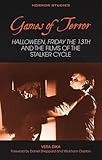
Games of Terror: "Halloween," "Friday the 13th" and the Films of the "Stalker Cycle" (Horror... | $75.00 | Buy on Amazon |
The cycle most viewers recognize took shape around films such as Halloween (1978) and Friday the 13th (1980). That history does not mean either title single-handedly invented every slasher convention. Dartmouth’s film guide places them in a late-1970s and early-1980s cycle while also identifying Psycho and Peeping Tom as important earlier influences. This distinction matters: a genre develops through accumulation, borrowing and revision rather than arriving fully formed in one movie.
Looking is part of the horror
Slashers repeatedly turn vision into a source of danger. A character peers through a doorway, a camera watches from a distance, or the viewer shares a fragment of the killer’s access to a vulnerable person. The threat is not only the eventual wound; it is the uncertainty over who can see whom, and whether the audience is being placed alongside the victim, the stalker or both.
Popular on Amazon
Films vary in how much information they provide. Some hide the killer and make every ordinary space suspicious. Others show a figure in the background or offer a brief point-of-view shot, allowing viewers to anticipate an attack before the character does. These are techniques, not mandatory requirements. A film can suppress the killer’s viewpoint, switch between several viewpoints or use misleading visual information without leaving the slasher tradition.
Slasher movie tropes explained through a historical timeline
| Film or period | What it contributes to the genre’s development | How to use it analytically |
|---|---|---|
| Psycho (1960) | An earlier influence associated with the genre’s preoccupation with looking and vulnerability. | Ask how suspense is created before the later cycle had settled into familiar franchise patterns. |
| Peeping Tom (1960) | An earlier influence that links watching, recording and threatened bodies. | Examine how the act of seeing can make the audience feel implicated or uneasy. |
| Late-1970s cycle | The period in which the commercially recognizable stalker-and-killing pattern became established. | Compare how films organize pursuit, attack, survival and the withholding of information. |
| Halloween (1978) and Friday the 13th (1980) | Representative titles of that later cycle, rather than sole inventions of every convention. | Track which recognizable beats are repeated and which are altered from film to film. |
| Later reflexive entries such as Scream | Increasingly self-aware, intertextual and ironic treatment of slasher expectations. | Study how knowledge of genre rules becomes a source of suspense, surprise or humor. |
What is the final girl?
The final girl is the recurring survivor who confronts the killer near the end of a slasher. The term is useful because it focuses attention on survival, gender and point of view: whose experience the film follows, whose fear receives the most screen time, and who is given the opportunity to act against the threat.
It is a critical concept, not a universal checklist. A final girl may be resourceful, frightened, morally conflicted, physically injured, helped by others or changed by what she has endured. Some films center one survivor; others distribute survival among several characters or complicate the expected gender pattern. Treating the trope as a flexible pattern produces better analysis than treating it as a law.
Why the “virgin survives” formula is inadequate
A popular summary claims that sexually active characters die while a sexually inexperienced woman survives. That description is too narrow for the genre and for scholarship about it. It turns a complicated narrative pattern into a moral scorecard and overlooks films in which sexuality, social behavior, class, friendship or sheer circumstance do not fit the formula.
When analyzing a supposed final girl, ask more precise questions:
- When does the film shift its point of view toward her?
- What information does she receive that other characters lack?
- Does she hide, investigate, fight, escape or organize help?
- How does the film frame her body and vulnerability compared with the killer’s?
- Does survival restore ordinary life, or leave her with unresolved consequences?
These questions preserve the insight of the trope while leaving room for films that challenge it.
How slashers present killers
The killer is often defined less by a fully explained biography than by the pattern of pursuit. A masked, obscured or silent figure can remain frightening because the film limits access to motive and identity. Other stories reveal a name, history or rationale and then use that knowledge to create a different kind of suspense. The apparent difficulty of stopping the killer is central: even when victims or authorities respond, the threat seems capable of returning.
Stalking before the attack
Slasher tension commonly develops in stages. The film establishes a routine, isolates a potential victim, introduces a suspicious sound or image, delays confirmation and then makes the attack possible. The delay lets viewers scan the frame and imagine alternatives. A door may open onto an empty room; a figure may be visible only briefly; a familiar location may become unsafe because the audience now associates it with surveillance.
Not every movie gives the audience the same visual access. One film may show the killer watching from a distance, while another keeps the killer off-screen and restricts knowledge to the victim’s perspective. Comparing those choices reveals whether suspense depends on dramatic irony, surprise, uncertainty or the uncomfortable feeling of sharing the stalker’s gaze.
Questions for reading a killer’s viewpoint
- Does the camera adopt the killer’s position, and if so, for how long?
- Is the killer’s face hidden, delayed or repeatedly shown?
- Are attacks preceded by recognizable sounds, objects or locations?
- Does the film explain motive, or make the killer’s persistence the main mystery?
- Does the story invite identification with the killer’s knowledge, or condemn that position by returning attention to the victim?
Why sequels repeat familiar beats
A sequel has to sustain recognition. Returning to a known threat, survivor or situation tells the audience what kind of experience it is buying, while a new setting, character group, motive or information level supplies a reason to continue. This creates a productive tension: too little repetition can make a sequel feel unrelated, but too much can make it appear mechanically interchangeable.
Scholarship on slasher sequels has often criticized their repetition, yet it also treats their narrative construction as worthy of close analysis. Repetition is not automatically a failure. A sequel can repeat the shape of a chase while changing who understands the danger, alter the social environment around the attacks, or revise what the audience thought it knew about the killer.
Quick wins for a faster PC:
Fix the driver behind crashes, sound loss and screen glitchesFind Drivers →Clear out junk files and repair common Windows errorsFree Scan →A practical sequel comparison
| Comparison axis | What to examine | What a meaningful variation might look like |
|---|---|---|
| Survivor and confrontation | Who survives, who receives the point of view, and how the final confrontation is organized. | A returning survivor may become an investigator, while a new character takes the immediate physical risk. |
| Killer and stalking | How the killer is shown, how often the film uses killer point of view, and whether identity or motive is withheld. | The sequel can reveal more information while making the killer’s access to victims less predictable. |
| Genre awareness | Whether characters or narration acknowledge familiar slasher conventions. | A film may turn audience expectations into a misdirection rather than simply repeating a scare. |
| Story pattern | Which locations, victim sequences, discoveries or confrontations return. | The same broad sequence can be moved to a different social setting or given a different emotional consequence. |
Use these axes to compare installments instead of asking only whether one sequel is “more original.” The useful question is what the repetition does: does it create ritual, nostalgia, irony, escalating dread or a deliberate critique of franchise formulas?
Independent reader supportYour contribution helps us test, update, and keep practical guides available for everyone.How Scream makes the tropes visible
Scream is a clear example of self-aware slasher storytelling. Later franchise films increasingly became reflexive, intertextual and ironic, and Scream makes that tendency easy to see. The story can invoke familiar rules while allowing characters and viewers to recognize them as rules.
That awareness does not cancel suspense. Instead, it creates an additional layer of uncertainty. If characters know what a conventional slasher might do, they may try to avoid the expected mistake; the film can then follow the expectation, reverse it or use the attempt to avoid it as a new trap. Genre knowledge can also produce humor, because a frightening situation is being discussed in the language of movie conventions at the same time that it remains dangerous.
What to look for in a self-aware slasher
- Characters who name, debate or parody familiar horror patterns.
- Scenes that encourage viewers to predict the next beat and then complicate that prediction.
- References to earlier slashers that function as clues, jokes or misdirection.
- A contrast between knowing the rules intellectually and surviving their physical consequences.
Self-awareness therefore changes the role of the audience. Viewers are not merely waiting for an attack; they are evaluating competing possibilities based on what they know about the genre.
What’s actually slowing this PC down?
Pick the symptom - the matching free tool is one click away.
A step-by-step method for analyzing any slasher
- Map the threat. Identify when stalking begins, what information the audience receives and how the film delays the first confirmed attack.
- Track viewpoint. Mark scenes that align with a victim, the killer, an investigator or an apparently neutral observer. Note when the film changes that alignment.
- Identify the survivor pattern. Describe who remains, how the film grants that character attention and what actions make the final confrontation possible. Avoid reducing the explanation to sexual morality.
- Examine the killer’s presentation. Record whether identity, face, motive and physical capability are hidden, revealed or revised.
- Compare repetition and change. If the film is a sequel, list the returning situations and then specify what changes in character, setting, motive, knowledge or consequence.
- Test genre awareness. Look for dialogue, images or structure that acknowledge other horror films. Decide whether the reference creates suspense, surprise, humor or critique.
- Describe the ending precisely. Explain who confronts the threat, what the film confirms, and what uncertainty remains instead of assuming that survival means complete restoration.
Common misconceptions about slasher tropes
“One movie invented the slasher.”
Genre history is cumulative. Psycho and Peeping Tom are discussed as earlier influences, while Halloween and Friday the 13th represent a later cycle. Calling one title the sole inventor erases the transitions through which conventions become recognizable.
“Every slasher has one final girl.”
The final girl is a recurring pattern and interpretive lens, not a promise that every film ends with one specific kind of woman. Films can divide survival, challenge the expected survivor or make the category unstable.
“Sequels are identical by definition.”
Sequels repeat enough to remain legible as franchise entries, but their differences are where much of the analysis lies. A changed setting, altered motive or new distribution of knowledge can transform the meaning of a familiar chase.
“Showing the killer always reduces suspense.”
Revelation can replace mystery with anticipation. Once viewers know who the killer is, suspense may depend on when victims will discover that fact, how the killer reaches them or whether an apparent defeat is reliable.
Further reading
For a book-length study of the stalker cycle, Vera Dika’s Games of Terror: “Halloween,” “Friday the 13th” and the Films of the “Stalker Cycle” examines the two named franchises and the broader construction of the stalker film. University research on spectatorship, violated bodies, sequel narrative construction and the self-aware conventions associated with Scream can deepen the questions outlined above.






Say something about this film