The 1980s turned headphones from mostly home-audio equipment into a mass-market personal lifestyle product. Sony’s 1979 Walkman supplied the catalyst; during the next decade, headphones became lighter, smaller, easier to wear, specialized for exercise and travel, and socially ordinary in public. The decade did not invent every headphone category, wireless listening, or consumer noise cancellation. Its lasting achievement was making a private soundtrack portable and visible.
Before the Walkman, headphones belonged mainly in the living room
Before portable cassette players, headphones were generally connected to a stereo receiver, amplifier, or recording system. Full-size earcups, long cables, and relatively heavy construction mattered less when the listener was seated at home. Design priorities centered on extended comfort, sound reproduction, and compatibility with domestic hi-fi equipment rather than storage in a pocket or stability during a run.
That distinction matters: the 1980s were not the birth of headphones. They were the decade when headphones became practical companions for commuting, walking, travel, exercise, and everyday public life.
1979–1981: the Walkman makes listening mobile
Sony introduced the TPS-L2 Walkman in 1979 with lightweight MDR-3 headphones. Sony’s corporate history says the company’s founders wanted stereo listening during travel, but the portable recorder available to them was too heavy. The resulting product popularized portable personal stereo listening and created a major new headphone market, rather than merely adding another accessory to an existing one. See Sony’s Walkman history.
Quick wins for a faster PC:
Fix the driver behind crashes, sound loss and screen glitchesFind Drivers →Clear out junk files and repair common Windows errorsFree Scan →#1 Best Overall

- Hybrid Active Noise Cancelling: 2 internal and 2 external mics work in tandem to detect external noise and effectively reduce up to 90% of it, no matter in trains or offices.
- Immerse Yourself in Detailed Audio: The noise cancelling headphones have oversized 40mm dynamic drivers that produce detailed sound and thumping beats with BassUp technology for your every travel, commuting and gaming. Compatible with Hi-Res certified audio via the AUX cable for more detail.
- 40-Hour Long Battery Life and Fast Charging: With 40 hours of battery life with ANC on and 60 hours in normal mode, you can commute in peace with your Bluetooth headphones without thinking about recharging. Fast charge for 5 mins to get an extra 4 hours of music listening for daily users.
- Dual-Connections: Connect to two devices simultaneously with Bluetooth 5.0 and instantly switch between them. Whether you're working on your laptop, or need to take a phone call, audio from your Bluetooth headphones will automatically play from the device you need to hear from.
- App for EQ Customization: Download the soundcore app to tailor your sound using the customizable EQ, with 22 presets, or adjust it yourself. You can also switch between 3 modes: ANC, Normal, and Transparency, and relax with white noise.
The change was behavioral before it was purely technical. A listener could leave the living room without giving up stereo music. By April 1980, Sony had standardized the Walkman name at a U.S. sales convention; Sony says the word entered the Oxford English Dictionary in 1986. Sony also reports more than 400 million Walkman units sold across cassette, CD, MiniDisc, and flash-memory generations through 2019. That is a Sony corporate figure covering multiple formats, not an independent estimate of headphone sales.
Why the Walkman demanded different headphones
- Low weight: Small drivers, thin diaphragms, compact housings, and lighter headbands reduced the burden of wearing headphones outside the home.
- Portable efficiency: Headphones had to produce useful volume from a battery-powered player with limited output.
- Storage: A design that folded, clipped, or fitted in a small case suited cassette players and their accessories.
- Wearability: Clamping force, cable routing, and stability mattered when the listener was moving.
Sony’s professional-audio history describes compact drivers using strong rare-earth magnets and thin polyester film. A Sony historical account contrasts earlier headphones weighing approximately 300–400 grams with a small Walkman headphone of about 50 grams. That is a manufacturer’s particular comparison, not a universal industry average, but it illustrates the engineering direction. Smaller was not automatically better: portable designs could sacrifice isolation, maximum output, bass extension, durability, or fit.
1982: the earbud arrives
Sony identifies the MDR-E252, launched in 1982, as the world’s first in-ear headphone. Its importance was physical as much as acoustic: it removed the traditional headband and conventional ear pads, making a headphone lighter, easier to store, and less conspicuous. Sony’s milestone is documented in its headphone innovation timeline.
The MDR-E252 should not be treated as a modern sealed in-ear monitor. Early earbud-style designs typically rested at the entrance of the ear rather than forming a deep canal seal. Fit varied from person to person, isolation was limited, sound could leak, and movement could dislodge the earpieces. Modern in-ear monitors commonly use interchangeable tips and a deliberate canal seal, which are different design goals.
The Tool Desk
Outbyte PC Repair FREEClear out junk files and repair common Windows errorsFree Scan →Outbyte Driver Updater FREEScan for outdated or missing drivers - takes under a minuteDriver Scan →Sony’s MDR-E484, introduced in 1987 and described by Sony as an ergonomic in-ear model, shows the decade moving beyond simple miniaturization toward shaped ear interfaces and comfort. “In-ear” in an 1980s product description therefore needs context rather than a direct equivalence with today’s IEM category.
1983–1985: portable audio becomes an active lifestyle
Sony WM-F5: music for movement
Sony introduced the WM-F5 in 1983 as its first Walkman designed specifically for outdoor activity. Its impact-resistant ABS plastic, rubber-sealed splash-resistant controls, and bright yellow finish addressed jogging and fitness culture directly. Sony’s design pages describe the product as splash proof; it should not be described as waterproof by modern standards.
Rank #2

- JBL Pure Bass Sound: The JBL Tune 720BT features the renowned JBL Pure Bass sound, the same technology that powers the most famous venues all around the world.
- Wireless Bluetooth 5.3 technology: Wirelessly stream high-quality sound from your smartphone without messy cords with the help of the latest Bluetooth technology.
- Customize your listening experience: Download the free JBL Headphones App to tailor the sound to your taste with the EQ. Voice prompts in your desired language guide you through the Tune 720BT features.
- Customize your listening experience: Download the free JBL Headphones App to tailor the sound to your taste by choosing one of the pre-set EQ modes or adjusting the EQ curve according to your content, your style, your taste.
- Hands-free calls with Voice Aware: Easily control your sound and manage your calls from your headphones with the convenient buttons on the ear-cup. Hear your voice while talking, with the help of Voice Aware.
The WM-F5 represents a new design brief: equipment had to tolerate impact and perspiration, remain visible, and put controls within reach while the listener was moving. Portable music became an accompaniment to exercise rather than an activity reserved for a chair or sofa.
Koss Porta Pro: compact sound as a design statement
Koss introduced the Porta Pro in 1984. Its “Comfort Zone” pressure-adjustment system was intended to manage the feel of the headphones on the listener’s head, while its open-air design pursued a spacious presentation and substantial bass from a lightweight portable format. Koss describes the model’s history in its Porta Pro design account.
The Porta Pro offered a different answer from Sony’s minimalist earbuds. It retained a headband and larger open ear sections to make comfort and a broad soundstage part of the product identity. That openness is also its central limitation: music leaks outward and outside sound comes in, making it a poor choice for noisy transit, offices, libraries, or recording.
Koss continues to sell Porta Pro descendants and variants. The company lists wired, wireless, microphone-equipped, and detachable-cable versions, so continued availability demonstrates the endurance of the design concept, not proof that every current component is identical to the 1984 original. See Koss’s historical timeline.
CD changes the question headphones must answer
Sony’s first Japanese-market Compact Disc system arrived in October 1982, with European and U.S. launches planned thereafter. Its 1982 annual report highlighted improvements in dynamic range, frequency response, distortion, signal-to-noise ratio, and wow/flutter compared with conventional analog formats. The report is available as a Sony 1982 annual report.
CD did not instantly replace cassette Walkmans. Instead, it created a parallel pressure on headphone performance. Cleaner source material raised practical questions: could a lightweight headphone reveal the benefits of CD, or would hiss, distortion, and tonal weaknesses in an inexpensive design become more obvious? Home listeners could choose larger hi-fi headphones for critical listening, while later portable CD players had to balance disc transport, battery life, and sound quality.
Outdated Drivers Are Slowing You Down
One free scan finds every outdated or missing driver and matches the right update for your exact hardware.Free scan · exact hardware matchPC Slower Than It Used to Be?
A free scan shows the junk files, broken settings and background clutter dragging Windows down - then fixes them in one click.Free scan · Windows 10 & 11Rank #3
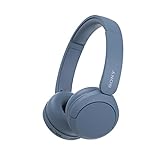
- LONG BATTERY LIFE: With up to 50-hour battery life and quick charging, you’ll have enough power for multi-day road trips and long festival weekends.(USB Type-C Cable included)
- HIGH QUALITY SOUND: Great sound quality customizable to your music preference with EQ Custom on the Sony | Headphones Connect App.
- LIGHT & COMFORTABLE: The lightweight build and swivel earcups gently slip on and off, while the adjustable headband, cushion and soft ear pads give you all-day comfort.
- CRYSTAL CLEAR CALLS: A built-in microphone provides you with hands-free calling. No need to even take your phone from your pocket.
- MULTIPOINT CONNECTION: Quickly switch between two devices at once.
A digital source did not make the headphones digital. A CD player converted encoded information into an analog electrical signal before driving an analog headphone transducer. The 1980s headphone itself remained a wired analog device.
One decade, several headphone worlds
| Segment | Primary design goal | Typical compromise |
|---|---|---|
| Portable on-ear and earbuds | Low weight, compact storage, efficient operation from portable players | Less isolation, variable fit, and sometimes less low-frequency authority |
| Full-size hi-fi | Home comfort, larger earcups, bass extension, and extended listening | Greater weight and poor suitability for commuting or exercise |
| Professional and studio | Durability, repeatable monitoring, and useful isolation | Monitoring priorities did not necessarily match consumer “exciting” sound |
| Sports designs | Stability, ruggedness, visibility, and splash protection | Fidelity or isolation could be secondary to secure outdoor use |
Sony’s 1983 MDR-CD7 illustrates a lightweight, sound-insulating headphone aimed at home listening, while the WM-F5 was designed around outdoor activity. Their coexistence is more revealing than any single “best” 1980s headphone: manufacturers were dividing the market by situation and behavior. Product details are documented on the MDR-CD7 history page and WM-F5 history page.
Design becomes visible culture
Headphones changed from equipment that could disappear into a home stereo system to a visible form of wearable technology. Bright plastics, compact mechanical controls, headbands, neckbands, clips, and earbuds announced a listener’s mobility and musical identity. Sony’s retrospective description of the Walkman as enabling music “anytime, anywhere” supports that interpretation, although it is the company’s own account rather than independent sociological measurement.
The cultural tension was productive. Headphones could create privacy and freedom in a crowded street, train, or school corridor, while also appearing to isolate the wearer from nearby people. By the end of the decade, wearing headphones in public was ordinary rather than eccentric.
Do these 3 things before closing this tab:
1Fix the driver behind crashes, sound loss and screen glitches2Clear out junk files and repair common Windows errors3Scan for outdated or missing drivers - takes under a minuteWhat the 1980s did not deliver
Several technologies commonly placed in a generic headphone history belong later. Sony dates the first consumer noise-cancelling headphones to 1992 and the market introduction of wireless headphones to 2017. The decade had no mass-market true-wireless earbuds, mainstream Bluetooth headphones, app-based equalization, firmware updates, spatial-audio modes, or USB-C charging. It also offered no universal solution to cable tangles, earbud fit, leakage, or fragile strain reliefs.
Nor did a CD guarantee superior sound through cheap portable headphones. Source quality, amplifier output, driver design, fit, and recording quality still determined what the listener heard. Claims that every 1980s headphone was inherently “warmer” or more authentic than a modern model require measurements that cannot be assumed from age alone.
Rank #4
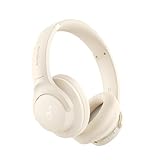
- Block the World, Keep the Music: Four built-in mics work together to filter out background noise — whether you're in a packed office, on a crowded commute, or moving through a busy street — so every beat comes through clean and clear. (Not available in AUX-in mode.)
- Two Ways to Hear More: BassUp technology delivers deep, punchy bass and crisp highs in wireless mode — then step it up further by plugging in the included AUX cable to unlock Hi‑Res certified audio for studio-level clarity.
- 40 Hours. 5-Minute Top-Up: With ANC on, a single charge keeps you listening through days of commutes and long-haul flights. Running low? Just 5 minutes plugged in gives you 4 more hours — so you're never stuck waiting.
- Two Devices, Zero Hassle: Stay connected to your laptop and phone at the same time. Audio switches automatically to whichever device needs you — so a call never interrupts your flow, and getting back to your playlist is just as easy. Designed for commuters and remote workers who move smoothly between work and personal listening throughout the day.
- Your Sound, Your Rules: The soundcore app puts everything at your fingertips — dials your ideal EQ with presets or build your own, flip between ANC, Normal, and Transparency modes on the fly, or wind down with built-in white noise. One app, total control.
Recreating the experience today
Choose between historical hardware and modern equipment according to the experience you want, not simply the appearance.
| Priority | Better direction |
|---|---|
| Historical authenticity | Tested original period headphone, with restoration where necessary |
| Reliability | New-production wired model |
| Retro appearance | Current retro-styled headphone |
| Public transit | Closed-back or isolating design |
| Home listening | Open-back or open-air design |
| Sports | Modern secure-fit sports headphone rather than fragile vintage hardware |
| Walkman compatibility | Simple, efficient wired headphones with a standard plug |
| Wireless convenience | Modern Bluetooth model, accepting that it is not period accurate |
Why original hardware needs inspection
- Foam pads deteriorate and may need replacement.
- Plastic can become brittle, while cables develop intermittent faults and damaged strain reliefs.
- Earbud filters and housings can accumulate contamination.
- Drivers may have changed performance after decades of storage.
- Some vintage equipment uses unusual plugs, regional model numbers, or proprietary connectors.
- Higher-impedance headphones may play quietly from a weak portable output; sensitivity and impedance should match the player.
- Modern inline microphones and remotes may not behave correctly with vintage hardware.
Do not assume that a photograph proves provenance. Listings may label later replacement accessories as original Walkman headphones, and reissues may look period-correct while containing modern wireless electronics. Bose’s counterfeit-product warning is a useful general reminder to use official or authorized sellers for branded modern products.
Current retro-styled options
Koss’s official store showed the following price signals on August 16, 2026; prices and availability can change.
| Model | Official price signal | Best use | Important limitation |
|---|---|---|---|
| Porta Pro | $49.99 | Recognizable 1984 lineage, wired listening, home or quiet environments | Open design leaks sound and offers little isolation |
| Porta Pro Wireless | $99.99 | Porta Pro styling with Bluetooth convenience | Not historically authentic |
| Porta Pro Utility | $49.99 | Retro design with detachable connectivity | Not an untouched 1984 configuration |
| KPH40 Retro | $29.99 | Lower-cost, lightweight period-inspired look | Not an original 1980s model |
| KPH30 Wireless | $59.99 | Casual everyday wireless use | Less suitable for a technically authentic Walkman setup |
| Replacement cushions | Approximately $9.99 | Refreshing comfort and appearance on compatible Koss models | Cannot restore failed drivers, cables, or brittle plastic |
Official buying information is available through Koss’s Walkman-style collection and 1980s-and-1990s retro collection. A current Porta Pro preserves a recognizable design lineage; it should not be presented as an exact reproduction of every 1984 component.
The 1980s headphone legacy
The decade’s decisive innovation was not one driver, one plug, or one format. It was the combination of portability, lower weight, new fits, lifestyle specialization, and cultural visibility. The Walkman made headphones mobile; earbuds made them smaller; sports models made movement a design requirement; the Porta Pro showed that compact portable headphones could still make comfort and spacious sound central; and CD raised expectations for the quality a headphone system might reveal.
Headphones in the 1980s were still wired, mostly analog, imperfectly fitting, and vulnerable to leakage and cable failure. That is precisely why the decade remains important: it established the behavioral and design framework from which later wireless, noise-cancelling, and computational products evolved.
Quick Recap
Product prices and availability are accurate as of the date/time indicated and are subject to change. Any price and availability information displayed on Amazon at the time of purchase will apply.