Recommended Free Tools
Some links on this page are affiliate links: if you buy through them we may earn a commission, at no extra cost to you.
Yes, a public movie screening in the United States generally requires permission from the copyright owner or an authorized licensing representative. Buying, renting, borrowing, or downloading a copy does not by itself grant the right to show it publicly. Whether a screening counts as public depends on the venue, audience, and circumstances—not just whether tickets are sold. A narrow statutory exception may apply in some face-to-face teaching situations, but calling an event educational is not enough on its own.
This guide explains the federal copyright baseline, the limits of common assumptions, and how to check permission for a specific screening. It is general information about U.S. law, not a determination of the rights for any particular film or event.
What makes a movie screening public under U.S. law?
U.S. copyright law gives the copyright owner the exclusive right to perform a motion picture publicly, subject to statutory exceptions and limitations. The right to perform is separate from the right to own or watch a copy. The baseline appears in 17 U.S.C. § 106.
What’s actually slowing this PC down?
Pick the symptom - the matching free tool is one click away.
The law’s definition of a public performance is broader than a ticketed theater. Under 17 U.S.C. § 101, a performance can be public when it takes place at a place open to the public or at a place where a substantial number of people outside the normal circle of a family and its social acquaintances are gathered. The definition also addresses performances communicated or transmitted to the public.
Popular on Amazon

- 【90 Degree Full Function USB C Adapter】Supports the latest USB4 standard for up to 40Gbps of bandwidth, 8K video support, and up to 240W Fast charging; Support USB PD 3.1 Extended Power Range (EPR) including 140W, 180W and 240W. Your productivity is easily doubled. *Warm Tip: For the best fit, please make sure the USB-C port is fully exposed; thick or bulky cases may affect compatibility.
- 【Reliable Quality】Made from high-quality, scratch-resistant aluminum alloy, delicate metal frame. get excellent wear resistance and heat dissipation. Non-Slip Design for easier insertion and removal.
- 【Small and portable】Ultra thin size, ultra compact design, a petite physique that matches the minimalist design of your modern laptops. Coming with a slim figure that won't block the port next to the one it's plugged into.
- 【Compatibility】Widely work with most usb c, thunderbolt 4/3 devices. Compatibilit for ROG Ally, Steam Deck, Switch, MacBook Pro, Quest 3 VR headset, Surface Book 2, iPhone 18/17/16/15, Samsung Galaxy S23/S22/S21, Note 20/10, Google Pixel, ChromeBook, etc.
- 【Excellence Customer Support】If you experience any issues or cable failure, simply reach out to our dedicated customer service team. We provide a prompt response within 18 hours, providing you with the necessary technical support to resolve any concerns.
That means admission is not the deciding test. A free showing at a library, community center, campus, workplace, or outdoor event may still be public. Nor does a small audience automatically make a showing private: the audience’s relationship to one another and the setting matter. Apply the statutory language to the actual facts rather than relying on labels such as “private,” “community,” or “members only.”
For an organizer, the practical question is not simply “Will the public pay to enter?” It is whether the performance is covered by a license or a specific statutory exception. If the event is open to people beyond a normal family or social gathering, treat permission as something to verify before advertising or scheduling the film.
Does buying, renting, or streaming a movie let me show it publicly?
No. A lawful copy gives you access to the movie under the terms that apply to that copy or service; it does not automatically give you public exhibition rights. The distinction applies whether the copy is purchased, rented, borrowed, downloaded, or accessed through a personal streaming account.
Free tools Windows power users keep installed
One-click scans. No signup required.
Swank’s movie-event FAQ explains that renting, purchasing, lending, or downloading a movie does not provide the right to exhibit it publicly outside the home unless the screening is properly licensed. A personal subscription or library loan should not be treated as an event license unless its terms expressly cover the proposed public use.
This distinction can be easy to miss because the copy itself may be perfectly legitimate. But copyright separates ownership or possession of a particular copy from the copyright owner’s separate performance right. Having a DVD on hand, receiving a film from a filmmaker, or being able to press “play” is not proof that the organizer has the necessary public performance authorization.
Also popular on Amazon

- 5-in-1 Connectivity: Equipped with a 4K HDMI port, a 5 Gbps USB-C data port, two 5 Gbps USB-A ports, and a USB C 100W PD-IN port. Note: The USB C 100W PD-IN port supports only charging and does not support data transfer devices such as headphones or speakers.
- Powerful Pass-Through Charging: Supports up to 85W pass-through charging so you can power up your laptop while you use the hub. Note: Pass-through charging requires a charger (not included). Note: To achieve full power for iPad, we recommend using a 45W wall charger.
- Transfer Files in Seconds: Move files to and from your laptop at speeds of up to 5 Gbps via the USB-C and USB-A data ports. Note: The USB C 5Gbps Data port does not support video output.
- HD Display: Connect to the HDMI port to stream or mirror content to an external monitor in resolutions of up to 4K@30Hz. Note: The USB-C ports do not support video output.
- What You Get: Anker 332 USB-C Hub (5-in-1), welcome guide, our worry-free 18-month warranty, and friendly customer service.
When in doubt, ask the rights holder or an authorized licensing representative whether the exact copy or streaming method and the planned exhibition are covered. Do not infer permission from the fact that a film is readily available to watch at home.
Can a free, nonprofit, or small event skip a license?
Not automatically. Free admission, nonprofit status, fundraising purpose, a limited audience, or a small venue does not by itself establish that the screening is outside the public-performance right.
Quick wins for a faster PC:
Fix the driver behind crashes, sound loss and screen glitchesFind Drivers →Clear out junk files and repair common Windows errorsFree Scan →Scan for outdated or missing drivers - takes under a minuteDriver Scan →Those facts may matter to the legal analysis or to a licensor’s terms, but none is a blanket substitute for permission. A free community documentary night may still be a public performance if it takes place in a public venue or brings together people outside the normal family and social circle. Likewise, a nonprofit’s mission does not alone answer whether a statutory exception applies.
Do not rely on informal rules such as “under a certain number of people is fine,” “no one is making money,” or “we are only showing it once.” The sources identified here do not establish a general audience-size threshold, free-event exemption, or one-time-use exception. If an event has unusual facts, confirm the legal position with an authorized source or counsel rather than treating a familiar rule of thumb as law.
Can a school show a movie without a license?
Sometimes a limited statutory teaching exception may apply, but a school setting or educational purpose alone does not make every screening exempt. The relevant provision is the face-to-face teaching exception in 17 U.S.C. § 110(1), and the actual use must satisfy the statutory requirements.
Also popular on Amazon

- Sleek 7-in-1 USB-C Hub: Features an HDMI port, two USB-A 3.0 ports, and a USB-C data port, each providing 5Gbps transfer speeds. It also includes a USB-C PD input port for charging up to 100W and dual SD and TF card slots, all in a compact design.
- Flawless 4K@60Hz Video with HDMI: Delivers exceptional clarity and smoothness with its 4K@60Hz HDMI port, making it ideal for high-definition presentations and entertainment. (Note: Only the HDMI port supports video projection; the USB-C port is for data transfer only.)
- Double Up on Efficiency: The two USB-A 3.0 ports and a USB-C port support a fast 5Gbps data rate, significantly boosting your transfer speeds and improving productivity.
- Fast and Reliable 85W Charging: Offers high-capacity, speedy charging for laptops up to 85W, so you spend less time tethered to an outlet and more time being productive.
- What You Get: Anker USB-C Hub (7-in-1), welcome guide, 18-month warranty, and our friendly customer service.
The U.S. Copyright Office’s Fair Use FAQ distinguishes qualifying face-to-face teaching from entertainment use; it says that an entertainment showing requires clearance or a performance license. In other words, a film shown as part of qualifying instruction is not automatically the same as a movie night, student event, fundraiser, or general campus program.
Do these 3 things before closing this tab:
1Fix the driver behind crashes, sound loss and screen glitches2Clear out junk files and repair common Windows errors3Scan for outdated or missing drivers - takes under a minuteBefore relying on the exception, assess the actual activity against the statute. Consider whether the showing is genuinely part of face-to-face teaching and whether the other statutory conditions are met. A teacher’s presence, a brief discussion afterward, or describing an event as “educational” does not, by itself, establish that the exception applies. The Copyright Office’s FAQ is a useful starting point, but it does not decide the facts of a particular screening.
If the showing is primarily entertainment or the fit is uncertain, seek written clearance or a license. Schools and colleges should not assume that an institution-wide educational mission grants blanket permission for all movie events; licensing providers may offer organizational routes, but coverage and terms still need confirmation.
How do I get permission for a specific movie event?
Start with the copyright owner or an authorized licensing representative, then confirm in writing that the permission covers the exact film and event. A provider’s general description of its services is not proof that a particular title, format, venue, or use is included.
- Define the event. Record the film title and version, screening date, country, venue, audience, whether admission is charged, whether fundraising is involved, and how the event will be promoted. Note whether there will be one showing or multiple showings and how the film will be accessed.
- Find an authorized contact. Ask the copyright owner or an authorized film-licensing representative whether it can clear the title for this use. Swank describes licensing for movie events in its FAQ. The Motion Picture Licensing Corporation describes its organizational Public Performance License as covering works from major movie and television studios and smaller producers. These are possible routes to investigate, not guarantees that a specific film or screening is covered.
- Ask about the exact title and version. Confirm that the representative has authority for the selected documentary, edition, language, and format. Do not assume a provider’s general catalog or license description covers every title.
- Describe the planned use accurately. Give the representative the venue, date, territory, audience, admission and fundraising details, publicity plan, and number of showings. Ask whether the proposed event fits the license and whether any restrictions apply.
- Review the terms before committing. Confirm the permitted date and location, audience and event type, number of screenings, admission rules, advertising limits, and any conditions on how the film is presented. Ask about the current fee and lead time directly; they can depend on the title and use.
- Keep the authorization. Save the written license or clearance and the terms that apply. Make sure the person handling the screening can refer to them, and do not expand the event beyond the granted permission without checking first.
For a particular event, the applicable license, cost, and availability cannot be determined without those details. A provider may not represent every film or have rights for every territory or use. If no licensing route confirms coverage, contact the rights holder or obtain legal advice rather than treating silence or a provider’s broad marketing language as approval.
Also popular on Amazon

- Portable and powerful USB-C HUB: BENFEI USB Type-C HUB, with super-soft and knot-free silicone woven design cable, meets most mobile office needs. Compact, lightweight, stylish, and powerful portable USB C Hub equipped with 1 x HDMI port, 1 x 100W charging, and 3 x USB ports. 18-month warranty, 24-hour response, to ensure you feel at ease when using our product.
- Design centered on comfort and reliability: Thanks to BENFEI's end-to-end in-house cable production capability, in-house PCBA and assembly capability, using the industry's most advanced silicone woven design and process, 20cm cable in length, no knots, super-soft, the HUB is easy to use in all scenarios: laptop, tablet, stand etc. Super-soft, 25000+ life cycles, to meet your daily carrying and office needs.
- 100W Charging: Support up to 90W USB C pass-through charging via Type-C port to keep your laptop powered. 10W is reserved for other interface operations. No data and video function on the Type-C port.
- 4K HDMI Display: The HDMI port supports media display at resolutions up to 4K 30Hz, keeping every incredible moment detailed and ultra vivid. Please note that the C port of the Host device needs to support video output.
- Transfer Files in Seconds: Transfer files and from your laptop at speeds up to 10 Gbps with USB A 3.2 port. Extra 2 USB A 2.0 ports are perfectly for your keyboards and mouse.
What should I compare when choosing a licensing route?
Compare the actual scope of permission, not just the name or breadth of a license. A single-event clearance and an organizational license may be structured differently, and neither should be assumed to cover a use that its written terms do not identify.
- Title availability: Is the exact film and version covered, and does the representative have authority for it?
- License structure: Is permission tied to one event, or does an organizational license apply? If the latter, verify who and what it covers.
- Location and territory: Does permission apply in the country and at the venue where the screening will happen?
- Event details: Are the date, audience, admission, fundraising, and number of showings within the license’s scope?
- Publicity and conditions: Are there limits on advertising, use of film artwork, or presentation of the work? Confirm what the license allows instead of assuming ordinary event promotion is included.
- Fee and timing: Request a current quote and ask how much time approval takes. No general fee or lead time can be stated for every film and event.
Do not compare providers using a headline claim alone. The useful comparison is whether each route can authorize this film for this audience, at this place and time, under the conditions your event needs.
What mistakes can put an event at risk?
The most avoidable problems come from treating a familiar circumstance as a legal exemption or from failing to check whether a license matches the event. These checks help prevent both errors.
- Assuming free means private: Public status is not defined only by whether anyone pays. Consider the venue and audience under the statutory definition.
- Relying on the copy: A purchased DVD, borrowed disc, download, or home-viewing subscription is not itself evidence of public exhibition rights.
- Calling every school event instructional: The teaching exception is limited. Evaluate the real activity and statutory conditions, not just the host institution or event description.
- Assuming a broad license covers every title: Ask whether the exact film, version, territory, date, venue, and audience are included.
- Changing the plan after approval: A change in venue, date, number of showings, or event format may fall outside the permission already granted. Check before making the change.
- Starting promotion before clearance: Confirm permission and its publicity terms before announcing the film, especially if the license limits how the title or artwork may be used.
- Relying on an oral summary alone: Keep the written authorization and conditions so the organizer can show what permission was actually granted.
If a planned screening is imminent and coverage remains unclear, pause the event announcement or showing while you seek confirmation. For a disputed or fact-sensitive question, a lawyer can assess how the statute applies; a licensing provider can confirm the scope of the rights it controls.
Does a documentary screening follow a different rule?
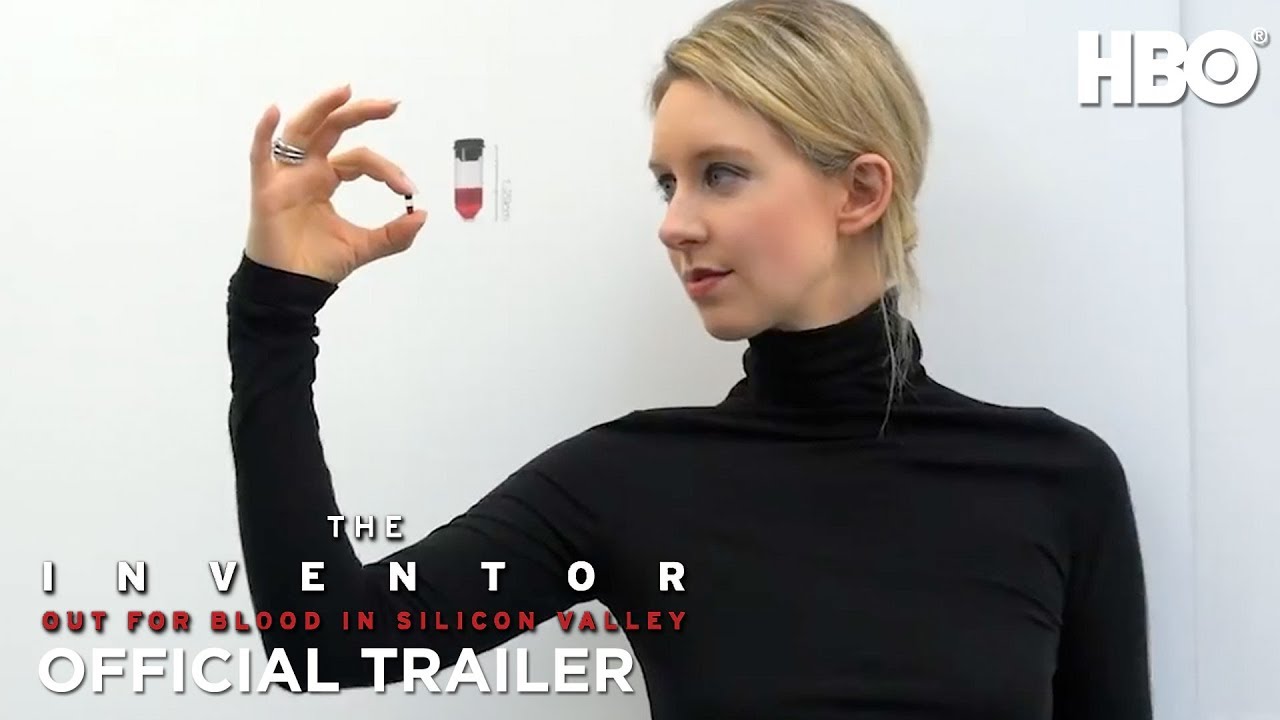
No general documentary-only exemption appears in the federal baseline described here. A documentary is still a motion picture for purposes of the public-performance question, so the same distinction between a home-viewing copy and public exhibition permission applies.
Also popular on Amazon

- 【Read before You Buy】 Note: This adapter is USB 2.0 version and cannot transmit HDM, VGA, or other video signals. Nevertheless, they are fully capable of charging devices,duplicating files, and can be seamlessly integrated with USB-C earphones, wireless network adapters, and SD card adapters.
- 【Easy to Use and Safe】Thanks to modern manufacturing techniques, we've made these adapters sufficiently compact so that they can remain inserted in your device without noticeable protrusion or inconvenience. This means you don't have to constantly plug and unplug them, reducing the likelihood of wear and misalignment, and making them more convenient to carry around.
- 【Reliable Quality】Engineered for enhanced durability, durable aluminum alloy shell material,get excellent wear resistance and heat dissipation,the male USB C and female USB connectors & the male USB and female USB C connectors are designed to be plugged and unplugged up to 20000 times. Provides data transfer, device charging, memory space expansion, and additional computer peripherals.
- 【Think more for you】Do you need to connect a USB-C-enabled device to an odd device that only has USB-A ports? Then these USB-A male to USB-C female adapters are made for you.Simply insert the adapter into the USB-A port on the device, and you can instantly connect your USB-C device to the device that originally didn't have the correct connection port.
- 【Trusted xiwxi Quality and Service】As a responsible brand seller, you will receive xiwxi's 12-month Quality assurance and lifetime friendly customer service, you're not just buying a product,you're investing in peace of mind with all-round quality and exceptional customer service.
A filmmaker, distributor, archive, or other rights holder may be able to authorize a screening, but the organizer should confirm that the person granting permission controls the relevant rights. Permission to host a filmmaker or to discuss a documentary does not by itself answer whether the film can be shown. Likewise, permission for one event should not be presumed to extend to another date, venue, territory, or audience.
For documentary organizations, libraries, film societies, and community groups, the practical process is the same: identify the exact film and event, ask an authorized source for coverage, and retain the written terms. The event’s documentary or educational mission may be relevant to the facts, but it does not replace that rights check.
Where does that leave an event organizer?
For a U.S. screening outside a clearly applicable statutory exception, obtain authorization before showing the film to a public audience. A consumer copy is not a public-performance license, and free admission or a school affiliation does not automatically remove the need for permission. The safest next step is to give an authorized representative the event details and get written confirmation that the exact title and use are covered.
Windows Errors? Fix Them Before They Spread
Repair common Windows errors and clear accumulated junk for a smoother, more stable PC - no reinstall needed.Free scan · no reinstallOutdated Drivers Are Slowing You Down
One free scan finds every outdated or missing driver and matches the right update for your exact hardware.Free scan · exact hardware matchFrequently Asked Questions
Can I show a movie outdoors in a park or courtyard?
An outdoor setting does not by itself make a screening private or exempt. A park or courtyard may be open to the public, so identify the venue, audience, and event conditions when asking the rights holder or licensing representative about permission.
Does showing only a clip instead of the whole movie avoid permission?
A short excerpt is not automatically exempt from copyright rules. Whether a statutory limitation applies depends on the particular use and facts; do not assume that shortening the screening settles the public-performance question.
Can I advertise the film title before the license is approved?
Check with the licensing representative before promoting the title, because event permission may include conditions on publicity or use of film artwork. If approval is still pending, avoid implying that the screening is cleared.
Does a filmmaker’s permission cover every part of a documentary?
Not necessarily. Confirm that the person giving permission is authorized to grant public exhibition rights for the film and the specific event, rather than assuming that an association with the production gives them authority over all relevant rights.





Say something about this film