What’s actually slowing this PC down?
Pick the symptom - the matching free tool is one click away.
Some links on this page are affiliate links: if you buy through them we may earn a commission, at no extra cost to you.
Neither body-camera footage nor civilian video automatically proves the whole story. Each is evidence of what its camera and microphone captured. Police footage often comes with stronger institutional records, metadata and retention controls, while civilian video may provide an independent angle or show events before officers arrived. Investigators and courts test both against viewpoint, audio, timing, continuity, authenticity, chain of custody and other evidence.
What a recording can establish—and what it cannot
A video exhibit can directly support findings about visible movements, audible words, sequence, location cues and timing within the portion actually recorded. It may show who entered a frame, whether an object was in a person’s hand, how long an exchange lasted, or what commands were audible. Those are observations tied to the recording.
The recording does not automatically establish what happened outside the frame, what occurred before the camera was turned on, a person’s unrecorded intention, or the identity of someone whose face or voice is unclear. Authentication answers whether the exhibit is what its proponent claims it is; it does not resolve every inference a party asks the court to draw from it.
Both types of footage can be incomplete. A camera can be pointed away, blocked, out of focus, affected by darkness or glare, unable to capture quiet speech, or stopped before the crucial moment. A file can also contain a gap, missing audio, a time-setting error or an unexplained change in format. Those limits are evaluated rather than assumed away.
Popular on Amazon

- 128GB Large Memory: Built in 128G Large Memory,there will be plenty of space to store all video captured throughout your upcoming working days
- 1296P HD,NIGHT VISION :1296P HD recording, this body camera equipped with high-intensity infrared LEDs, also capture clear footage up to 50 feet away in pitch-black darkness
- Long Battery Life:A powerful 3500mAh battery lets you record footage for up to 11 hours in a row, 2 Inch LCD monitor allows you to instantly watch back previous recordings
- Safety: the camera has password protection to prevent unauthorized changes on menu.Password or password-free setting to suit different requirements
- Simple operation: camera can be connected to any computer to read the disk automatically.
What police body-camera footage can show
Official observations and interactions
Scottish prosecution guidance identifies several uses for body-worn video (BWV): it may capture the first accounts from victims, suspects or witnesses; interactions with members of the public; an officer’s decisions and actions; the demeanour and physical or mental state of individuals; the atmosphere during an incident; people’s actions; and the location of evidence. In a case involving an arrest, for example, the recording may preserve the words exchanged, the apparent condition of the participants and the point at which an item was found.
That evidence is still limited to the camera’s position and operating state. A chest-mounted unit generally sees a different height and angle from a bystander’s phone. A person standing behind the officer, a hand below the lens or an event to the side may never appear. Microphones can favor the wearer’s voice while reducing a quieter speaker’s words.
Provenance and agency controls
British Columbia standards define a body-worn camera as a wearable video-and-audio recording system and require agencies to establish rules for activation, processing, storage, access, privacy and retention. The standards also require that BWC video not be altered and that an automated, immutable audit trail record who accessed it, when and what action was taken. Such controls can document where a file came from and how it was handled.
Those controls improve provenance; they do not make the footage complete or infallible. The camera may not have been activated, may have malfunctioned, or may have stopped at a policy-defined point. Recording policies can materially affect what exists. A Bureau of Justice Assistance FAQ reports that, in the Mesa Police Department’s 2013 experience, the same 50 officers averaged 1,353 video files per month during a six-month period with a less restrictive policy— a 42% decline in activations compared with the preceding period. The figure describes that agency’s policy change and period, not a universal activation rate.
Also popular on Amazon

- 1080P HD & 6FT NIGHT VISION-Records clear 1080P HD video day and night; built-in infrared delivers sharp footage in total darkness, ideal for night patrols, garage security, and low-light dispute documentation.
- 5-HOUR BATTERY & LOOP RECORDING- Supports up to 5 hours of continuous recording; automatic loop recording overwrites oldest files when full, ensuring no critical moment is missed during long shifts, outdoor work, or all-day travel.
- 64GB HIGH-SPEED MICROSD CARD INCLUDED-Pre-installed 64GB high-speed card stores 10–11 hours of video; plug-and-play ready for security personnel, inspectors, and travelers to start recording immediately.
- ULTRA-LIGHTWEIGHT & DISCREET DESIGN -Only 0.19oz with an adjustable clip for secure attachment to collars, backpacks, helmets, or car visors; comfortable all-day wear for law enforcement, sports, dash cam, and on-the-go use.
- TIMESTAMP & MOTION DETECTION-Timestamp meets legal evidence standards for work logs and incident reports; motion detection activates recording only on movement to save power, perfect for security monitoring and property watch.
Policy exceptions and missing moments
Departments may permit or require officers to pause recording during protected conversations, inside certain private locations, while speaking with victims, or when handling sensitive information. The governing policy, dispatch record and event log therefore matter. A gap is not automatically proof of misconduct, but an unexplained gap can become an important issue about whether the file is a complete account.
What civilian video can show
Independent and earlier viewpoints
A bystander’s phone, security camera or other civilian device may capture an angle no officer camera had. It can show an officer from the front while a body camera faces a person’s back, include several people at once, or preserve the moments before police arrived. Multiple civilian recordings can also reveal movement across a wider area when each individual clip is narrow.
Independence is useful but not conclusive. The person filming may be moving, frightened, far away or partially obstructed. Automatic exposure can darken a face; digital zoom can magnify pixels without adding detail; wind and crowd noise can make speech ambiguous. A civilian camera’s clock may be wrong, and a phone may have begun recording after the event was already under way.
Quick wins for a faster PC:
Scan for outdated or missing drivers - takes under a minuteDriver Scan →Clear out junk files and repair common Windows errorsFree Scan →Fix the driver behind crashes, sound loss and screen glitchesFind Drivers →Native files versus online copies
The strongest civilian exhibit is usually the native file obtained from the device or its original storage, together with information showing when, where and by whom it was made. A social-media post, repost, screen recording or edited highlight may omit the beginning or end, alter the apparent timing, strip metadata and add another generation of compression. It can be a valuable lead, but its online presentation is not automatically the evidential original.
Also popular on Amazon
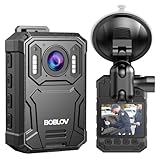
- Enhanced Visuals with 2K/38MP Resolution: The BOBLOV KJ23PRO body camera offers stunning 2K video and 38MP photo clarity. Ideal for law enforcement and personal documentation, this body worn camera captures every detail with precision and sharpness
- 4000mAh Battery with 15 Hours Recording Time: Equipped with an inner 4000mAh battery, the KJ23PRO body camera with audio supports up to 15 hours of continuous recording at 1080P. Perfect for long shifts, it ensures you document every critical moment without interruptions
- Night Vision with Five IR Lights: The KJ23PRO body camera excels in low light conditions with its five IR lights. This feature makes it perfect for night patrols and surveillance, providing clear visibility and recording quality even in complete darkness
- Loop recording ensures crucial moments: The BOBLOV KJ23PRO defaults to 10-minute video segments. When the memory card storage reaches its limit, the device will automatically overwrite the oldest recordings, ensuring that the latest important videos are continuously recorded
- Built-in 128GB Memory: The KJ23PRO body camera comes with 128GB of built-in memory, offering ample storage for high-definition video and audio files without frequent changing memory cards,get ready to use when you get the wearable camera
The National Institute of Justice explains that, for admissibility and persuasive value, the proponent must show the information is a true and accurate representation of the data originally contained in the media, whether acquisition was by law enforcement, a civilian witness or a victim. The person who recorded the clip, a recipient who can describe the transfer, or a witness familiar with a reliable acquisition process may supply that foundation.
Body-camera footage and civilian video compared
| Question | Body-camera footage | Civilian video |
|---|---|---|
| Viewpoint | Usually close to the wearer, with a predictable but narrow field of view; the lens may face away from side actions. | May provide a wider, higher or opposing angle, but the operator may move, zoom, obstruct the lens or stop filming. |
| Audio | Often records the wearer’s speech clearly; breathing, clothing, wind and distance can affect other voices. | Quality varies by device and distance; crowd noise, wind and handling can obscure or desynchronize speech. |
| Activation and continuity | Start and stop times may be governed by agency policy and recorded in system logs; missed activation and policy pauses remain possible. | The operator chooses when to start and stop; the file may be one segment of a longer event. |
| Provenance | Agency systems may preserve metadata, retention records and immutable access logs. | Provenance depends on the device, account, download record and people who handled the file. |
| Editing and compression | An agency may create an evidential clip or redacted copy from a protected master; the master and export history matter. | Native files are preferable; reposts, screen recordings and edited clips can remove context and metadata. |
| Independent perspective | Shows what the wearer could see and hear, not necessarily what other participants saw. | Can corroborate or contradict the officer’s angle and may capture events before police arrival. |
| Legal treatment | Still requires authentication, disclosure and any required privacy or hearsay analysis. | Must meet the same jurisdiction-specific foundation requirements; civilian origin does not make it inadmissible. |
How investigators and courts test reliability
1. Viewpoint, field of view and blind spots
Start by mapping the camera’s height, direction, distance and movement. Ask what was in front of the lens, what was behind or to the side, and whether a body, vehicle or object blocked the view. A frame that appears to show a hand may not reveal what the hand held immediately before or after it entered the image. A wide civilian shot may establish relative positions while a close body-camera view supplies clearer words; neither necessarily answers the other camera’s blind spot.
2. Audio quality and synchronization
Determine whether speech is intelligible, whether voices can be distinguished, and whether wind, sirens or overlapping talk affects a particular word. Check that audio and video remain synchronized. An audible command can support a finding that it was spoken, but an unclear response should not be treated as a definite admission merely because the picture appears continuous.
3. Start time, stop time and gaps
Compare the file’s duration with dispatch logs, 911 calls, witness accounts and neighboring cameras. Identify whether the recording begins before the disputed act and continues afterward. A gap may result from activation policy, battery or storage limits, a deliberate stop, or a technical fault; its significance depends on the surrounding records and explanation.
Also popular on Amazon

- 【4K Ultra HD Body Camera with Immersive 150° POV View】Capture your world in stunning detail with this body camera featuring 4K/30fps video and a 150° ultra-wide-angle lens. The expanded field of view delivers an immersive first-person perspective, making it perfect as a POV camera for travel adventures, daily vlogging, pet moments, outdoor activities, and unforgettable memories. Built-in microphone records clear audio to bring your videos to life. (Note: This camera does not feature EIS or mechanical image stabilization.)
- 【1.47" HD Display Screen for Real-time Review】Enjoy easy viewing anytime with the built-in 1.47" HD screen. Preview footage, replay videos, and manage files directly on the camera without connecting to your phone. The compact display makes it easier to check your shots while traveling, vlogging. Quickly review your footage on the go and make sure you never miss the perfect moment
- 【Instant Vertical Video for TikTok, YouTube】Create content faster with native 16:9 landscape and 9:16 vertical video modes. This mini body camera lets you switch formats directly from the camera menu—no cropping or editing required. Upload your videos instantly to TikTok, YouTube, Instagram, and other social platforms
- 【WiFi App Control & 64GB Card】Stay connected with a stable WiFi connection and the dedicated Viipulse App. Connect your camera to iOS or Android smartphones to remotely adjust shooting settings, preview the live view in real time, and download videos directly to your phone. The included 64GB memory card lets you start recording right away, while USB-C OTG transfer makes it easy to move footage to compatible Android devices and iPhone 15 or newer
- 【Magnetic Mount for Sports & Outdoor】Designed for adventure, this lightweight sport camera weighs only 44g and works as a versatile clip on camera, magnetic camera, bike camera, or Motorcycle camera. The powerful magnetic mounting system allows hands-free recording on bikes, motorcycles, metal surfaces, helmets, backpacks, and more. Capture your rides, outdoor adventures, and daily experiences from your own perspective
4. Native data, metadata and file history
Examiners may look at creation and modification dates, device identifiers, frame rate, codec, GPS or other embedded data when available. Metadata can be changed by ordinary software, so it is not a substitute for testimony and a documented acquisition. A hash or similar integrity record can show that a working copy matches the file received, but it does not prove that the original camera captured every event in dispute.
5. Editing, redaction and compression
Ask whether the exhibit is a protected master, an agency export, a redacted evidential clip, a phone copy, a screen recording or a platform download. Redaction can be lawful and necessary for privacy while still requiring documentation of what was removed and why. Re-encoding can lower resolution, discard audio channels or change timing metadata. The court may admit a derived clip if its creation is explained and the unedited material is available for inspection.
6. Corroboration and contradiction
Compare the recording with dispatch and radio traffic, other cameras, witness statements, photographs, medical records, physical damage, location data and recovered objects. Independent agreement on a time, sound or movement strengthens the inference. A contradiction does not automatically identify which source is wrong; differences may reflect angle, delay, memory or an incomplete segment.
PC Slower Than It Used to Be?
A free scan shows the junk files, broken settings and background clutter dragging Windows down - then fixes them in one click.Free scan · Windows 10 & 11Crashes, No Sound, or Screen Glitches?
Random freezes, missing sound and display glitches usually trace back to one bad driver. Find and replace yours safely.Free scan · under a minute7. Legal context
Authentication, privacy, disclosure, hearsay and expert-evidence rules vary by jurisdiction and by proceeding. U.S. Federal Rule of Evidence 901 requires evidence “sufficient to support a finding that the item is what the proponent claims it is.” Examples include testimony from a witness with knowledge, distinctive characteristics, or evidence describing a reliable process or system. A New York appellate decision describes video admissibility as a matter for the trial court’s discretion when a sufficient foundation is offered, including authentication through circumstantial characteristics. Those U.S. examples do not create a universal test for Canadian, Scottish, U.K. or other proceedings.
Also popular on Amazon
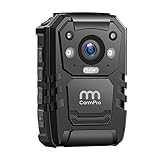
- 64GB Large Memory: Built in 64G Large Memory, there will be plenty of space to store all video captured throughout your upcoming working days
- 1440P UHD, IR NIGHT VISION : 1440P UHD recording, this body camera equipped with high-intensity infrared LEDs, also capture clear footage up to 50 feet away in pitch-black darkness
- Ambarella H22 Chipset & Long Battery Life: CammPro I826 Pro adopts Latest Ambarella H22 high-performance chipset. A powerful 3500mAh battery lets you record footage for up to 14hours in a row, 2 Inch LCD monitor allows you to instantly watch back previous recordings
- Safety: the camera has password protection to prevent unauthorized changes on menu. This 2K body worn camera offers great security throughout your upcoming shifts as a security guard, police officer,or bouncer.
- Password or password-free setting to suit different requirements, Built for work environments: Camera is extremely rugged and durable, capable of withstanding the harshest weather and working conditions
Can civilian video prove police misconduct?
It can provide direct support for a specific, visible proposition—for example, that an officer struck a person, spoke particular words, pointed a weapon or continued an action after a stated condition. The clip may be especially significant when it supplies an angle absent from body-camera footage or records the period before officers activated cameras.
Whether it proves a legal violation depends on the rule being applied, the facts outside the frame and the reliability of the exhibit. A clip showing force does not by itself establish whether the force was lawful under the jurisdiction’s standard, what threat preceded it, or what warnings were given off camera. Present the complete recording and surrounding evidence so the fact-finder can evaluate those issues rather than relying on an isolated highlight.
Is body-camera footage more reliable than a cellphone video?
“Reliable” has several meanings. Body-camera systems often offer stronger institutional provenance: controlled storage, access logs, retention policies and records showing an export. A cellphone may offer a more independent or informative viewpoint. Reliability therefore depends on the question being asked.
Do these 3 things before closing this tab:
1Fix the driver behind crashes, sound loss and screen glitches2Repair Windows errors before they cause bigger problems3Scan for outdated or missing drivers - takes under a minute- For chain of custody: an agency-managed system may provide more documentation, although the proponent still must establish that the exhibit is the relevant file and explain any export or redaction.
- For coverage: a civilian camera may show an event the officer’s lens missed, while the body camera may capture close-range speech that a distant phone cannot resolve.
- For completeness: neither format wins automatically; compare activation, continuity, obstructions and the time before and after recording.
- For independence: civilian footage can test an officer’s account, but the filmer’s position, relationship to the participants and handling history must be examined.
Can edited or social-media video be used in court?
Potentially, yes. An edited clip is not disqualified solely because it is edited, but the offering party must explain what it is, how it was created, what was removed and whether the original is available. The opposing party can challenge completeness, authenticity, chain of custody, unfair prejudice or misleading presentation.
A social-media link is usually a lead rather than a secure evidential copy. Platforms may transcode the file, replace the original upload, remove metadata or display only a selected segment. Preserve the page as encountered, record the account and retrieval time, and seek the underlying file from the uploader or device owner. Do not claim that a download is the camera’s native original unless its provenance supports that description.
How to preserve a video as evidence
- Keep the native file. Save the original file in its existing format when lawful and feasible. Keep the phone, memory card or download record that can establish how it was obtained.
- Secure a complete segment. Request the full relevant recording, including a reasonable period before and after the disputed event, rather than only a short edited excerpt.
- Write a provenance note. Record the date and time zone, location, device or account, source person, file name, method of acquisition and every transfer. Note whether anyone trimmed, converted, enhanced or redacted it.
- Make working copies. Do not repeatedly re-encode the only copy. Give investigators or counsel the preserved file and provenance note so they can create analysis copies while protecting the original.
- Preserve online context. For a social-media source, record the exact account, post, visible caption, displayed date, URL and retrieval time, then seek the uploader’s native file.
- Maintain access records. Keep a simple log of who received the file, when, for what purpose and whether the file was copied or opened. A professional evidence system may automate hashes, permissions and audit trails, but a contemporaneous written log is still useful.
- Disclose limitations honestly. Identify missing audio, a gap, low resolution, a wrong device clock or an unavailable original. Concealing a weakness can damage credibility more than the weakness itself.
U.K. forensic procedure describes a definitive “Master Copy” that is documented, sealed and stored so a court can examine it to confirm authenticity. The exact packaging and retention rules differ elsewhere, but the underlying principle is broadly useful: protect an unchanged master and document every derivative copy.
Questions to ask when footage conflicts
- Which camera was recording first, and which stopped first?
- Do the cameras’ clocks use the same time zone and have they been checked against a reliable event?
- Is a silent interval caused by distance and noise, or is the audio channel absent?
- Does a body-mounted lens swing away at the moment of contact?
- Is the civilian clip the original file or a platform-transcoded copy?
- Are there other recordings covering the same position or time?
- Can a witness explain the file’s creation and every transfer?
- What evidence addresses events outside the frame?
- What privacy, disclosure and authentication rules govern this proceeding?
Bottom line for evaluating either format
Treat body-camera footage as a documented but viewpoint-limited record, and civilian video as a potentially independent but provenance-sensitive record. The strongest case usually comes from matching each recording’s visible and audible facts with dispatch data, witnesses, other cameras and physical evidence. The decisive question is not which label—“police” or “civilian”—the file carries, but whether the proponent can show what was recorded, when and where it was recorded, that it remained materially unchanged, and how far the recording actually reaches.
Free tools Windows power users keep installed
One-click scans. No signup required.






Say something about this film