Quick wins for a faster PC:
Clear out junk files and repair common Windows errorsFree Scan →Fix the driver behind crashes, sound loss and screen glitchesFind Drivers →OpenAI’s Sora launched on December 9, 2024—not today. The first review showed a powerful tool for rapid visual experimentation, but not a consistently production-ready video generator. OpenAI later discontinued the Sora web and app experiences on April 26, 2026, so the launch and its review should now be read as historical coverage.
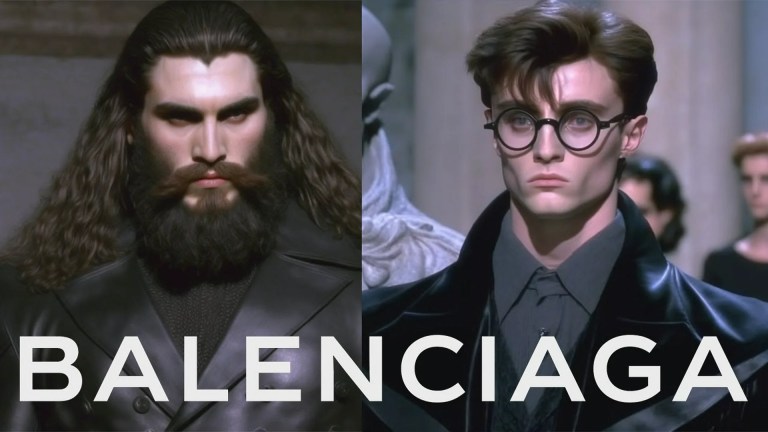
OpenAI’s Sora did launch publicly—but on December 9, 2024, not today. The release moved Sora from research preview into a consumer-facing product called Sora Turbo, with tools for generating and transforming short videos from text, images, and video. The first widely reported review, by Marques Brownlee, suggested that Sora was most impressive as a fast visual-ideation tool: it could produce striking stylized, animated, and abstract clips, but it was much less dependable when a scene demanded realistic anatomy, persistent objects, or complicated physical movement.


There is also an important update for anyone reading this after the launch: OpenAI says that the Sora web and app experiences were discontinued on April 26, 2026. The original review is therefore a historical snapshot of the product’s launch, not a current sign-up or buying guide. OpenAI’s documentation says the Sora API is scheduled for discontinuation on September 24, 2026, although that date is time-sensitive and may change.
What launched on December 9, 2024?
OpenAI released Sora Turbo, describing it as significantly faster than the model shown in its February 2024 research preview. Rather than appearing as a standard feature inside ChatGPT, the launch used a dedicated Sora web experience.
Windows Errors? Fix Them Before They Spread
Repair common Windows errors and clear accumulated junk for a smoother, more stable PC - no reinstall needed.Free scan · no reinstallOutdated Drivers Are Slowing You Down
One free scan finds every outdated or missing driver and matches the right update for your exact hardware.Free scan · exact hardware matchThe launch version supported several kinds of input and creation:
- Text-to-video: describe a scene and generate a short clip.
- Image-to-video: animate a still image.
- Video transformation: remix or otherwise alter existing footage.
- Blending: combine visual ideas or clips.
- Video extension: continue an existing sequence.
- Frame filling: generate missing material between frames.
- Storyboard creation: arrange prompts into a sequence of scenes.
OpenAI documented output of up to 1080p resolution and up to 20 seconds, with multiple aspect ratios and resolutions available. Those specifications describe the launch product and should not be treated as current service availability after the web and app shutdown.
What the first review found
Marques Brownlee’s December 9, 2024 review examined Sora’s features, image-to-video generation, strengths, and limitations. TechCrunch’s contemporaneous coverage also described a product interface built around experimentation and sharing, including a curated feed, saved videos, folders, visible prompts for community creations, remix controls, and a storyboard mode for sequencing prompts.
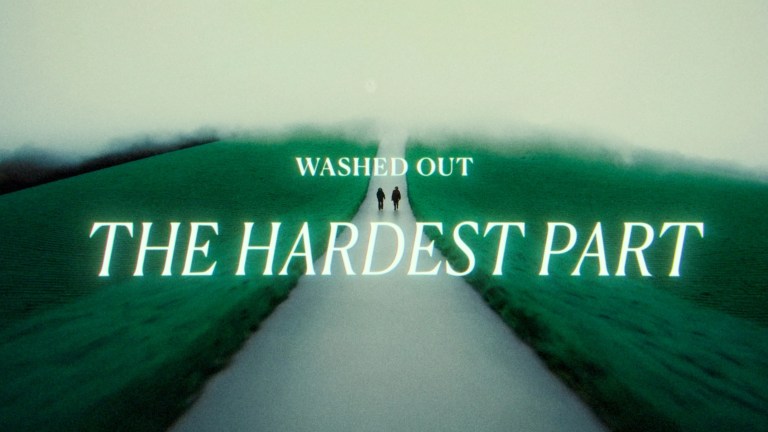
The strongest impression was not that Sora had solved video generation. Instead, it made the process of trying visual ideas unusually quick. A creator could move from a written concept to a short animated result, inspect what worked, then remix or revise it. That made Sora especially interesting for mood boards, title cards, visual development, short-form concepts, and stylized experiments.
Free tools Windows power users keep installed
One-click scans. No signup required.
Brownlee’s review also illustrated why the output was not yet a dependable substitute for conventional production. Difficult scenes could look convincing for a moment and then break when the model had to maintain physical and spatial continuity.
Where Sora looked strongest
- Stylized visuals: animation, abstract imagery, and deliberately artificial aesthetics could hide some of the weaknesses that become obvious in photorealistic footage.
- Short visual concepts: the system was useful for quickly exploring an idea rather than committing to a full production.
- Title-card and atmosphere work: highly designed shots, transitions, and visual textures were a better fit than extended action.
- Image animation: starting from an existing image gave creators another way to direct the composition and visual identity of a clip.
- Iteration: remixing, extension, blending, and storyboard features encouraged trying several variations instead of treating the first generation as final.
Where the results broke down
The recurring problems were familiar generative-video failures, but they matter greatly in documentary, narrative, and commercial work:
Rank #2

- 【AI Real-Time Translation & ChatGPT Assistant】AI glasses break language barriers instantly with AI real-time translation. The built-in ChatGPT voice assistant helps you communicate, learn, and handle travel or business conversations smoothly—ideal for conferences, overseas trips, and daily use.
- 【4K Ultra HD】 Smart glasses feature 4K resolution for clear, detailed visuals, making them suitable for travel, outdoor activities, everyday moments, and daily use.
- 【Bluetooth Music & Hands-Free Calls 】Smart glasses provide Bluetooth music and crystal-clear hands-free calls with an open-ear design. Stay aware of your surroundings while listening—comfortable for long wear and safer for commuting, cycling, and outdoor use.
- 【IP65 Waterproof & Long Battery Life】 AI glasses are designed for daily wear with IP65 waterproof protection against sweat, rain, and dust. The built-in 290mAh battery provides reliable performance for workdays and travel—no anxiety when you’re on the go.
- 【Smart App Control & Object Recognition】Smart glasses connect to the companion app for easy setup, file management, and feature control. They support AI object recognition to help identify items and improve your daily efficiency—perfect for travel exploration and a smart lifestyle.
- Object permanence: an object could change shape or identity as it moved through a scene.
- Occlusion errors: when one subject passed in front of or behind another, the model could lose track of their spatial relationship.
- Anatomical confusion: legs and other body parts could become distorted, particularly during walking or extended movement.
- Continuity problems: details that should remain fixed could drift between frames.
- Long-action weakness: the more a prompt demanded sustained, physically coherent motion, the more opportunities there were for errors to appear.
The practical conclusion from the launch coverage is straightforward: Sora was more compelling for visual ideation than for reliable photorealistic production. It could create a powerful short moment, but creators still needed judgment, selection, editing, and often multiple generations to make that moment usable.
Why the distinction between “impressive” and “production-ready” matters
A generated clip can look excellent in a still frame or during a brief passage without being usable as a complete shot. A filmmaker may need a character to enter from a particular side, pick up a specific object, walk a measured distance, and leave the frame while preserving wardrobe, identity, lighting, and geography. Those requirements are much stricter than producing an attractive few seconds.
Sora’s launch capabilities were therefore best understood as part of a creative workflow:
- Write a visual idea with a clear subject, setting, style, camera direction, and action.
- Generate several short possibilities.
- Reject clips with continuity, anatomy, or composition errors.
- Remix promising results rather than assuming the first output is final.
- Use storyboard sequencing to explore how separate moments might fit together.
- Edit the selected material in a conventional video workflow.
Anyone learning this process may find an AI video workflow guide useful for prompt structure, storyboarding, and iterative production planning. That is a learning resource—not a way to regain access to Sora, which OpenAI later discontinued on the web and in its app.
How Sora was described technically
OpenAI described Sora as a diffusion model using a transformer architecture and visual “spacetime patches.” In simplified terms, the system generated video by working with visual information across both image space and time, rather than treating every frame as an isolated picture.
OpenAI’s system documentation said the model was designed to preserve subjects across frames and to follow descriptive prompts more faithfully. The company also described recaptioning techniques associated with DALL·E 3: prompts could be expanded or re-described in ways intended to improve the model’s understanding of the requested scene.
Those design goals help explain both the appeal and the limitations of the launch. Sora was built to understand a prompt as a scene unfolding through time, but understanding the requested action did not guarantee that every object, limb, or physical interaction would remain correct throughout the clip.
Safety measures included at launch
OpenAI said the launch included safeguards for text, image, and video inputs. The company described restrictions involving minors and likenesses, along with moderation related to violent, sexual, self-harm, illegal, and misleading content. It also reported external red-team testing of more than 15,000 generations between September and December 2024.
The launch included provenance measures as well. OpenAI described visible and invisible signals and C2PA metadata intended to help identify content’s origin. These measures can support verification and disclosure, but they should not be interpreted as eliminating the risk of deceptive synthetic video. Metadata can be removed or lost during downstream processing, and a provenance signal does not by itself establish that the depicted event is real.
What the launch meant for documentary and factual video
For documentary creators, Sora’s most defensible use was illustrative rather than evidentiary. It could help visualize an abstract concept, create a stylized historical reconstruction, explore an opening sequence, or develop a treatment before filming. It could not serve as proof that an event occurred, and generated footage required clear labeling when an audience might mistake it for recorded reality.
Recommended Free Tools
The model’s continuity problems were also more than cosmetic in factual storytelling. A changing face, incorrect object, or physically impossible movement can alter the meaning of a scene. A responsible workflow should preserve the distinction between:
- camera footage of an actual event;
- archival material;
- computer-generated reconstruction;
- AI-generated illustrative footage; and
- editorial graphics or animation.
For a documentary, the safest practice is to label generated sequences prominently, retain production records, avoid presenting synthetic images as eyewitness evidence, and verify any provenance information after exporting or editing.
Availability: what is and is not current
| Claim | Correct framing |
|---|---|
| “Sora is launching today” | Historical wording referring to December 9, 2024. |
| Sora Turbo left research preview | True of the December 2024 launch. |
| Sora supported text, image, and video inputs | True of the documented launch version. |
| Readers can sign up at sora.com and generate clips now | Do not make this claim. OpenAI says the Sora web and app experiences ended April 26, 2026. |
| Readers can purchase a current Sora subscription | Do not present launch-era Plus or Pro availability as current. |
| Sora API availability | OpenAI documentation lists September 24, 2026 as a scheduled discontinuation date; check the latest official documentation before publishing time-sensitive updates. |
The launch in retrospect
Sora’s December 2024 release mattered because it turned one of OpenAI’s most publicized text-to-video research projects into a consumer-facing creative product. Its combination of text-to-video, image animation, video transformation, remixing, storyboards, and short high-resolution output made it easier to explore a visual concept without conventional filming.
But the first review also captured the central tension accurately. Sora could be visually striking while remaining unreliable at the things that make footage production-ready: persistent subjects, correct anatomy, stable object relationships, and coherent physical action. Its launch value was therefore greatest in rapid experimentation and visual development—not in replacing a camera crew, an editor, a visual-effects team, or a fact-checking process.
What’s actually slowing this PC down?
Pick the symptom - the matching free tool is one click away.
That is the useful way to read the original review now: as an account of an important moment in generative video, and as an early demonstration of both the technology’s creative promise and its difficulty with reality.
Frequently Asked Questions
When did OpenAI’s Sora launch?
Sora launched publicly on December 9, 2024, as Sora Turbo, after OpenAI’s February 2024 research preview.
Can people still use Sora?
No. OpenAI says the Sora web and app experiences were discontinued on April 26, 2026. OpenAI’s documentation also lists September 24, 2026 as the scheduled discontinuation date for the Sora API, subject to change.
What could Sora do at launch?
The launch version accepted text, image, and video inputs and supported text-to-video, image animation, remixing, blending, video extension, and filling missing frames. OpenAI documented output up to 1080p and 20 seconds.
What were Sora’s biggest strengths and weaknesses?
The first review suggested Sora was most useful for stylized, animated, abstract, and short-form visual ideas. It was less reliable when scenes required persistent objects, accurate anatomy, or extended physical action.
The Bottom Line
Sora launched on December 9, 2024 as Sora Turbo, offering text-, image-, and video-based creation with clips of up to 1080p and 20 seconds in the documented launch version. The first review found it strongest for stylized, animated, abstract, and short-form visual experimentation—not demanding realistic scenes with precise continuity or anatomy. OpenAI later discontinued the Sora web and app experiences on April 26, 2026, so this is historical launch coverage rather than a current access guide.
Quick Recap
Product prices and availability are accurate as of the date/time indicated and are subject to change. Any price and availability information displayed on Amazon at the time of purchase will apply.