Do these 3 things before closing this tab:
1Scan for outdated or missing drivers - takes under a minute2Repair Windows errors before they cause bigger problems3Fix the driver behind crashes, sound loss and screen glitchesSome links on this page are affiliate links: if you buy through them we may earn a commission, at no extra cost to you.
Yes, Spotify Web Player is good quality for everyday listening, but it is not Spotify’s highest-fidelity option. Spotify lists Web Player playback at approximately 128 kbit/s AAC on Free and 256 kbit/s AAC on Premium. Its current documentation lists Lossless playback—up to 24-bit/44.1 kHz FLAC—for supported native apps and devices, not the Web Player.
Spotify Web Player audio quality at a glance
| Playback route | Spotify-listed music quality |
|---|---|
| Free Web Player | AAC, approximately 128 kbit/s |
| Premium Web Player | AAC, approximately 256 kbit/s |
| Premium native app, Very High setting | Up to approximately 320 kbit/s |
| Premium Lossless, where available | Up to 24-bit/44.1 kHz FLAC |
These are Spotify’s approximate listed figures, not a promise that every stream runs at precisely the same bitrate in every playback condition. The figures apply to music; podcasts have separate quality settings and rates. Spotify’s audio-quality table distinguishes Web Player from desktop, mobile, and tablet apps.
What do codec and bitrate tell you?
A codec is the format used to encode audio; the Web Player uses AAC. Bitrate describes how much encoded data is delivered each second. Spotify uses lossy compression for its Web Player streams: the encoding reduces file size by discarding some audio information. FLAC, by contrast, is lossless; decoding it reproduces the encoded source without that information loss.
Bit depth and sample rate describe other properties of digital audio. Spotify’s Lossless ceiling is 24-bit/44.1 kHz: 24-bit is the stated bit depth and 44.1 kHz is the sample rate. That is lossless audio, but it is not the same as higher sample-rate hi-res formats such as 24-bit/96 kHz or 24-bit/192 kHz.
#1 Best Overall
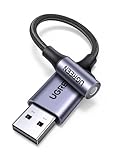
- 2 in 1 USB Audio Adapter: UGREEN USB to 3.5mm jack audio adapter supports both listening and talking. In-line control and microphone function allows you to chat while gaming. This USB Aux adapter enables you to connect headphones, headset, speakers with 3.5mm jack to your PC through the USB A port. [*Note: The 3.5mm adapter can support the connection of a single microphone for use. Please note that the 3.5mm male microphone's attribute requirement is TRRS]
- 24bit 96KHz High Quality Sound: Built-in advanced smart chip, USB sound card supports CTIA and OMIP standard headsets. The USB to Aux adapter facilitates high-resolution audio output and noise reduction up to 24bit/96kHz (others are 16bit/48kHz)to enhance the original sound quality of your PC devices. Note: Microphone does not support 24bit 96KHz, only headphones can
- Built to Last: With aluminium alloy shell, the Aux to USB adapter is more durable and portable than other plastic USB audio adapter. Nylon braided design of USB to audio jack adapter ensures stable audio transmission. 10000+ bend tests prove that USB headset adapter can prevent damage caused by tangling and scratching
- Broad Compatibility: This USB external sound card is compatible with Windows 11/10/98SE/ME/2000/XP/Server 2003/Vista/7/8, Linux//Raspberry Pi, MacBook Pro 2019, MacBook Air 2018, PS5/ PS4, Switch 2, Google Chromebook, Windows Surface Pro 3. *Note: Does not support Apple headphone line control
- Plug and Play: No driver is required, just plug and play. USB bus-powered, no external power is required for this convenient sound card. *Note:Supports regular headphones with a resistance of less than 50 ohms, but does not support high-resistance headphones
Bitrate figures alone do not establish which stream will sound better. AAC and other codecs do not use bits in identical ways, so comparing their bitrate numbers directly is misleading. A well-encoded AAC stream at 256 kbit/s can sound excellent. The recording and mastering, playback chain, volume, room noise, and listener all shape the result too.
Is Spotify Web Player lossless?
Spotify’s current quality table lists Premium Web Player at approximately 256 kbit/s AAC, while it lists Lossless for supported Premium desktop, mobile, and tablet playback. Spotify’s Lossless announcement likewise describes availability for supported mobile, desktop, tablet, and many Spotify Connect devices. The practical conclusion is that the Web Player is not a listed Lossless playback route; having Premium does not make browser playback Lossless.
Rank #2

- 【USB external sound card audio adapter】This USB to aux adapter supports listening and speaking,Easily adds a 3.5mm TRRS aux port integrated microphone-in and audio out interface to your devices
- 【High Quality Sound】 Equipped with an advanced built-in DAC chip, this USB sound card supports both CTIA and OMIP standard headphones. This USB to Aux adapter delivers stable 16-bit/48kHz audio output and effective noise reduction, faithfully reproducing and enhancing the original sound quality. Note: The 3.5mm male microphone jack does not support TS or TRS connectors
- 【Wide Compatibility】USB to 3.5mm Jack Audio Adapter support TRRS headsets and microphones.USB male wide compatibility with Windows 10/9/8/7/Vista/XP,Linux,Mac OS X google Chromebook,Raspberry Pi, PS4,PS5 and Windows Surface 3 etc
- 【Plug and Play】USB Sound Adapter no driver required,USB headset adapter plug and play;the durable nylon braided cable of the USB audio adapter ensures stable transmission and allows you to use your 3.5mm headphones more conveniently.USB to 3.5 mm port will be automatically recognized by system in seconds
- 【Portable and Durable】USB to audio jack adapter is equipped with an aluminum shell.The nylon braided of the USB to 3.5mm jack audio adapter is more durable,smaller and lighter than other plastic shells and PVC cable USB audio adapter,ensuring a much longer lasting life
That is a statement about Spotify’s current documentation, not a prediction about future product changes. If you want Spotify’s Lossless option, use a supported native app or compatible Connect device and check that Lossless is active for the track and output you are using.
Recommended Free Tools
Web Player vs. Spotify’s native apps
| Web Player | Native Spotify app |
|---|---|
| No installation; convenient on shared, temporary, or restricted computers | Adjustable quality controls, including Lossless where available |
| Premium is listed at approximately 256 kbit/s AAC | Premium Very High is listed at approximately 320 kbit/s; Lossless is available on supported playback routes |
| Not listed as a Lossless playback route | Supports offline downloads and broader device integration |
| Useful when convenience matters more than maximum quality | Better suited to wired listening, supported Connect devices, and quality selection |
On Windows, Spotify has also introduced Exclusive Mode for Premium users in its native app. It is intended to bypass ordinary system mixing for bit-perfect playback, but availability and trade-offs depend on the app and setup. It is not a Web Player feature. See What Hi-Fi’s coverage of Exclusive Mode and check Spotify’s own app information for current availability.
Rank #3

- Upgraded USB C DAC for Better Sound Quality This USB C DAC audio adapter converts digital audio into clean analog sound, delivering clearer vocals, improved detail, and more balanced output than basic Type-C adapters.
- Built-In Headphone Amplifier for Stable Output Designed with an integrated headphone amplifier, this DAC adapter provides consistent volume and improved driving power for most wired 3.5mm headphones.
- USB C to 3.5mm Audio Adapter for Modern Devices Use this USB C to 3.5mm audio adapter to connect your favorite wired headphones to smartphones, tablets, and laptops without a headphone jack.
- Low Noise Type C DAC for Music, Calls & Gaming The advanced Type-C DAC reduces background noise and signal interference, making it suitable for music listening, video streaming, voice calls, and gaming.
- Plug and Play USB C DAC Audio Dongle Compact and lightweight design with no drivers required. Simply plug in and enjoy improved sound anywhere—at home, at work, or on the go.
Do not assume the native app must sound better in every casual comparison. The result depends on the selected app quality, whether Lossless is active, volume normalization, system audio handling, output device, and whether the same track master is being compared. Premium AAC 256 is already a strong everyday stream; the native app’s advantage is access to higher quality options, not a guaranteed dramatic audible difference for every listener.
How to enable Lossless in Spotify
- Open the native Spotify app, not
open.spotify.com. - Go to Settings & Privacy, then Media Quality.
- Select Lossless where the option is available.
- During playback, check for Spotify’s Lossless indicator when applicable.
Spotify says the setting and indicator apply where the account, market, track, app, and playback device support the feature. If the option is missing, check that you have Premium, update the app, and verify that you are looking in the native app rather than the Web Player. A selected Connect device or a track without an available Lossless source may also be the limiting factor. Spotify’s rollout and device qualifications are described in its Lossless announcement and Lossless Connect information.
Rank #4
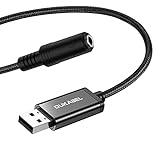
- 2 in 1 Essential: DuKabel USB to aux adapter supports listening + speaking, dual functions. Easily adds a 3.5mm TRRS aux port (integrated microphone-in and audio out interface) to your devices. This stereo to usb adapter can work for your PC, PS4, PS5, Laptop, Desktop, and more. *DO NOT work for TV/Car/PS3/Truck etc.
- 0 to 1 Setup: The DuKabel USB audio adapter is super easy to setup. Simply plug and play. The USB port will be automatically recognized by system in seconds. No driver download required, no external power required.
- One for All Compatibility: Usb audio jack adapter support CTIA standards TRRS headsets and microphones. No system limitation. Support Windows 10/8.1/8/7/Vista/XP, Mac OS X, Linux, Google Chromebook, Windows Surface 3 pro, Raspberry Pi and PS4, PS5 etc.
- Smart Chip: The usb external sound card is built-in with DUKABEL's exclusive advanced chip for the better listening experience. Efficiently Decoding the signal of sound, and optimizely amplifying the analog signal to make a much clear sound. For optimize experience, we recommend to use with DuKabel cables.
- Compact yet Durable: Usb to microphone jack adapter with premium metal casing and durable braided cord, ensuring a much longer lasting life. Much more durable than other plastic casing USB adapters.
Can you hear the difference?
Lossless is technically different from lossy AAC: it does not discard information through the encoding process. That does not mean every listener will reliably hear a difference between Lossless and high-bitrate lossy playback. A quiet room, revealing wired headphones or speakers, and difficult musical passages can make differences easier to assess, but no result is guaranteed.
Outdated Drivers Are Slowing You Down
One free scan finds every outdated or missing driver and matches the right update for your exact hardware.Free scan · exact hardware matchPC Slower Than It Used to Be?
A free scan shows the junk files, broken settings and background clutter dragging Windows down - then fixes them in one click.Free scan · Windows 10 & 11For a useful comparison, play the same track and version through the same device, match the volume closely, and keep normalization consistent. Switch between the sources promptly rather than relying on memory, and try more than one kind of music. Louder playback often seems clearer or more detailed even when it is not; normalization is a listening preference, but changing it between samples can confound a comparison.
Best Value
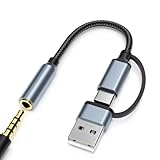
- 2-in-1 Dual-Interface: Combines both USB-C and USB-A connectors with a 3.5mm audio jack, letting you connect headphones or speakers to phones, tablets, laptops, or PCs. One compact adapter for all your devices — no extra dongles needed.
- DAC Chip for Hi-Fi Sound: Integrated DAC digital audio converter ensures clear, balanced, and detailed sound. Ideal for usb c headphone adapter, usb audio jack, and type c to aux users who want better sound quality.
- TRRS 3.5mm Audio & Mic Support: The 3.5mm headphone jack supports full TRRS function — microphone input, in-line control, and high-quality voice calls.
- Braided Cable & Alloy Housing: Featuring a nylon braided cord and aluminum alloy housing, this usb c to headphone jack adapter is heat-resistant, tangle-free, and made for long-lasting use.
- Wide Compatibility: Compatible with iPhone 15 / 16 / 17 Series, iPad Pro (M4 / M2 / M1), iPad Air (M2 / 5th Gen), iPad Mini (6th Gen), Samsung Galaxy S21 / S22 / S23 / S24 / Z Flip / Fold, Google Pixel 6 / 7 / 8 / 9, OnePlus 11 / 12, and more. Also works with MacBook Air / Pro, Windows laptops / PCs, USB audio interfaces, car stereos, and desktop speakers via USB-C or USB-A — a true all-in-one audio adapter.
Bluetooth and the rest of the audio chain
Spotify’s source stream is only one stage. Bluetooth headphones or speakers may receive audio encoded again using a wireless codec supported by both devices. The exact result varies by hardware and connection; Spotify Lossless does not guarantee that the complete wireless path remains lossless. Some supported Spotify Connect devices can play Lossless directly, but support varies by model.
A wired connection to a capable playback device is the simpler way to assess source quality. A DAC or amplifier may improve the output chain, but it cannot restore audio information already discarded by AAC encoding. Expensive headphones do not turn Web Player playback into Lossless either. Mastering, the app and system path, transmission, speakers or headphones, and listening conditions all matter.
Which setup makes sense for you?
| Listener or situation | Practical choice |
|---|---|
| Casual laptop listening, office, or ordinary earbuds | Premium Web Player is generally more than adequate; Free is listed at a lower AAC rate. |
| Shared or locked-down computer | Use the Web Player for convenience; it is a reasonable compromise when installing software is not practical. |
| Wired headphones, DAC, monitors, or hi-fi system | Use the native app and select Lossless where available, or Very High if not. |
| Windows listener seeking system-level control | Use the native app; check whether Exclusive Mode is available on your setup. |
| Bluetooth listener | Prioritize the headphones or speaker and the connection quality; a Lossless source may not remain lossless over wireless transmission. |
| Listener seeking hi-res beyond 24-bit/44.1 kHz | Compare services that advertise broader hi-res catalogs, alongside device support and ecosystem fit. |
Should you switch to another music service?
Switching makes the most sense if you specifically want broader hi-res options, lossless playback in a preferred device ecosystem, spatial audio, or features and catalog information that better match your habits. It is less compelling to switch solely because another service has a larger bitrate number: device support, mastering, interface, discovery, library, and price matter too.
The Tool Desk
Outbyte Driver Updater FREEScan for outdated or missing drivers - takes under a minuteDriver Scan →Outbyte PC Repair FREERepair Windows errors before they cause bigger problemsFix Now →- Apple Music: Includes Lossless and Spatial Audio, with support across Apple devices and other platforms. Apple lists the U.S. Individual plan at $11.99/month after the displayed introductory offer; promotions and terms can change. It may suit listeners already in Apple’s ecosystem, while Spotify users who rely on its discovery, playlists, and social features may prefer to stay. See Apple Music plans and Apple’s Lossless guidance.
- Qobuz: Emphasizes lossless and hi-res streaming and album-oriented information. Its U.S. offers page shows prices from $10.83/month depending on offer and billing arrangement. It is worth comparing for dedicated listeners, but fit depends on app and platform preferences. See Qobuz’s current offers.
- TIDAL: Offers high-quality playback and supported hardware integrations. TIDAL says updated U.S. subscription pricing began applying on billing dates on or after August 3, 2026, so check its current price notice rather than relying on an older quoted plan amount.
- Amazon Music Unlimited: Amazon describes HD as at least 16-bit/44.1 kHz and says the service includes HD, Ultra HD, and Spatial Audio content. It may fit Prime or Alexa households; interface and discovery preferences can be deciding factors. See Amazon’s Music FAQ.
Plan prices, introductory offers, market availability, and device support can change. Check the linked official pages for current terms in your country before switching.
Podcasts use different quality figures
Spotify lists podcast audio separately from music: approximately 96 kbit/s on most devices and approximately 128 kbit/s in the Web Player. Mobile and tablet Low mode can reduce podcast quality to approximately 24 kbit/s. Those figures should not be confused with the Web Player music figures above.
Quick Recap
Product prices and availability are accurate as of the date/time indicated and are subject to change. Any price and availability information displayed on Amazon at the time of purchase will apply.

